Affordable World-class Treatment - Accredited Hospitals - Free Treatment Plan in 24 Hrs
Share your details to receive a personalised treatment plan, estimated costs, hospital recommendations, and expert guidance, “completely free.”
Your information is protected with HIPAA-compliant security standards. We only share your details with hospitals after your consent.
The cost of Deep Brain Stimulation in South Africa is USD 25000 - USD 50000
Additionally, factors like the duration of treatment, the need for follow-up care, and the use of advanced technologies or specialized treatments can further influence the overall cost.
DBS is a neurosurgical procedure in which electrodes are implanted in certain areas of the patient’s brain to provide relief from neurological disorders such as Parkinson’s disease, essential tremor, and dystonia to mention but a few. In this process, a small device that functions like a pacemaker is placed within the person’s head. It delivers mild electrical currents to the target sites in the brain to facilitate the control of abnormal function within the organ. Electrodes are placed into the desired locations, and a device, called a pulse generator, is implanted under the skin in the upper chest, near the collarbone.
DBS can also help to minimize the effects of the diseases especially when drugs have proven ineffective in treating the patients. They are normally done with patients awake and under local anesthesia as the position of electrodes must be correct. Thus, even though DBS does not affect the cause of the disease, in some cases, it does not require the constant presence of a specific disease – it only treats symptoms, and their adjustment can be carried out at any time.
| City | Cost (USD) | |
|---|---|---|
| Cape Town | $25,000 – $50,000 | Explore More |
| Durban | $25,000 – $50,000 | Explore More |
| Johannesburg | $25,000 – $50,000 | Explore More |


Our dedicated Medical Patient Advisors are here to answer your questions, help you compare treatment options, estimate costs, and guide you through every step of your healthcare journey.
Deep brain stimulation (DBS) is a neurosurgical procedure that involves the implantation of electrodes within the specific targeted areas of the brain. It is used to treat a variety of disabling neurological symptoms.
Deep brain stimulation uses a neurostimulator, commonly referred to as a deep brain stimulator, to deliver electrical stimulation to targeted areas in the brain that control movement.
The impulse sent by the deep brain stimulator interferes with and blocks the electrical signals that cause tremors and other Parkinson’s disease symptoms. The targeted areas most often include the thalamus, subthalamic nucleus, and globus pallidus. Deep brain stimulation procedure has a long history of research. It was first introduced in 1987 and The Food and Drug Administration (FDA) approved deep brain stimulation treatment for essential tremor and Parkinson's disease in 1997.
A pacemaker-like device inserted under the skin in the upper chest regulates the amount of stimulation during deep brain stimulation. The electrodes in the brain are connected to this device by a wire that passes beneath the skin.
Deep brain stimulation treatment has proven effective in most cases, but it could potentially result in serious complications and side effects. This is the main reason why deep brain stimulation treatment is used only for patients whose symptoms are not appropriately controlled with medications.
People with movement disorders can benefit from deep brain stimulation. Among these are dystonia, Parkinson's disease, and essential tremor. Additionally, obsessive-compulsive disorder and other mental illnesses are treated with it. Also, the Food and Drug Administration has approved deep brain stimulation as a treatment to lessen seizures in people with epilepsy that is difficult to treat.
Deep brain stimulation is utilised for patients whose symptoms cannot be managed with medication.
Consult a neurologist if you experience severe shaking, stiffness, involuntary movements, or side effects from medication that disrupt your daily life, or if you have a poorly treated movement or neurological disorder. Early evaluation helps determine if DBS is a good option for you.
Neuropsychological testing, brain scans (MRI or CT scans), and sometimes a short trial stimulation are all involved in preparation. Patients may have to discuss reasonable expectations and potential risks with their care team, adjust their medication schedule, and refrain from taking certain medications before surgery.
The brain electrode is implanted in three to six hours, often under local anesthesia. Chest stimulator placement is performed independently. Multiple outpatient sessions are needed for programming and adjustments; hospital stays can last a few days.
Especially for Parkinson's patients, DBS can significantly enhance overall mobility and independence in daily living, reduce medication dosages, and alleviate symptoms such as tremors, rigidity, and motor fluctuations.
Multiple follow-up visits to optimise stimulation settings, heal the wound, and adjust the initial device are all part of the recovery process. Patients can taper their medication gradually. Physical therapy, psychotherapy, and lifestyle modifications are often recommended.
Though success depends on the situation, it is usually high for many patients. Approximately 60 to 80% of individuals with Parkinson's disease experience a notable improvement in symptoms. Long-term improvements are based on the progression of the disease and the individualised features of each patient.
Durban, South Africa
Our experienced Medical Patient Advisors have supported 100,000+ patients across 120+ countries with personalised treatment plans, hospital recommendations, cost estimates, and travel assistance, all free.
✓ Free Consultation ✓ No Obligation ✓ Personalized Treatment Plan ✓ Response Within 24 Hours
Your medical info has is HIPAA-style confidential. We never share with hospitals without your consent.

Opinion & Option
We submit the most accurate opinion and options from one or more countries for your review
Consult Privately
Consult with a certified specialist privately on our telemedicine platform even before you decide to travel
Logistics
We handle flights, visas, transfers, and accommodation—so you can focus on your health.
Recovery
Our In-house rehabilitation service packages to better your recovery and treatment outcome

Patient Chloe Diane Mii Tangaroa has become worse over the last five years. She was suffering from chronic anxiety and…

The hospital services and the kind staff have exceeded my expectations. I appreciate the experts at Artemis Hospital for providing…
The cost of Deep Brain Stimulation procedure starts from USD 48500 in South Africa. Deep Brain Stimulation in South Africa is conducted across several COHSASA certified hospitals.
Deep Brain Stimulation cost in South Africa varies from one hospital to the other. The Deep Brain Stimulation package cost usually includes all the expenses related to pre and post surgery expenses of the patient. The Deep Brain Stimulation procedure in South Africa includes the fees of the surgeon, hospitalization and anesthesia as well. Extended hospital stay, complications after the surgery or new diagnosis may affect the overall cost of Deep Brain Stimulation in South Africa.
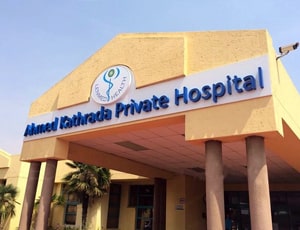
Many hospitals in South Africa perform Deep Brain Stimulation. Some of the most renowned hospitals for Deep Brain Stimulation in South Africa include the following:
While the speed of recovery may vary from patient to patient, they are still required to stay for about 21 days after discharge. This time frame is important to ensure that the surgery was successful and the patient is fit to fly back.
There are certain expenses additional to the Deep Brain Stimulation cost that the patient may have to pay for. These are the chanrges for daily meals and hotel stay outside the hospital. The per day cost in this case may start from USD 50 per person.
Some of the best cities in South Africa which offer Deep Brain Stimulation are:
After the Deep Brain Stimulation takes place, the average duration of stay at the hospital is about 2 days. During the recovery, the patient is carefully monitored and control tests are performed to see that everything is okay. If required, physiotherapy sessions are also planned during recovery in hospital.
The average rating for Deep Brain Stimulation hospitals in South Africa is 2.9. This rating is automatically calculated on the basis of several parameters such as the infrastructure of the hospital, quality of services, nursing support and other services.
There are more than 3 hospitals that offer Deep Brain Stimulation in South Africa. Such clinics have the required infrastructure and a dedicated unit where patients can be treated. These hospitals comply with all the rules and regulations as dictated by the regulatory bodies and medical association in South Africa
Some of the top doctors for Deep Brain Stimulation in South Africa are:
Have your reports reviewed by independent oncology experts to help you make a confident treatment decision, all online within 48 hours.
Upload Your Reports