Your Notifications
All done, no notifications

Spinal Fusion Cost in Thailand

Costs starts from USD12000 to USD17000
Filters

How Much Does Spinal Fusion Cost in Thailand?

The cost of Spinal Fusion in Thailand typically ranges between USD 12000 - USD 17000.

However, this cost can vary depending on several factors, including the type and severity of the condition, treatment techniques chosen, the healthcare facility's location and reputation, the treating professionals' experience and specialisation, and the patient's overall health status.

Additionally, factors like the duration of treatment, the need for follow-up care, and the use of advanced technologies or specialised treatments can further influence the overall cost.

Factors Influencing the Cost of Spinal Fusion:

Spinal fusion refers to surgery joining two or more bones in any spine section. If the bones are joined, then they cannot move. Pain may be avoided because movement is reduced.

A surgeon places bone, or a material that looks like bone, between two spinal bones in spinal fusion. The bones can be stabilised with metal rods, screws, or plates. Then, the bones can fuse and heal as one.

Cost of Spinal Fusion in Major Cities of Thailand

CityMinimum Cost (USD)Minimum Cost (THB)Maximum Cost (USD)Maximum Cost (THB)
BangkokUSD 12000392520USD 17000556070
KrabiUSD 10800353268USD 15300500463

Spinal Fusion Cost : A Global Comparison

CountryMinimum CostMinimum Local CurrencyMaximum CostMaximum Local Currency
CzechiaUSD 10000CZK 220200USD 25000CZK 550500
IndiaUSD 6500INR 556660USD 9500INR 813580
IsraelUSD 17000ILS 60180USD 45000ILS 159300
LithuaniaUSD 5525LTL 18899USD 8825LTL 30188
MalaysiaUSD 12000MYR 50880USD 17000MYR 72080
PolandUSD 5000PLN 18800USD 15000PLN 56400
Saudi ArabiaUSD 5000SAR 18750USD 15000SAR 56250
SingaporeUSD 50000SGD 64500USD 100000SGD 129000
South AfricaUSD 5000ZAR 89850USD 15000ZAR 269550
South KoreaUSD 14500KRW 19951710USD 28000KRW 38527440
SpainUSD 20000ESP 2940798USD 30000ESP 4411197
Switzerlandget request
ThailandUSD 12000THB 392520USD 17000THB 556070
TunisiaUSD 5000TND 14900USD 15000TND 44700
TurkeyUSD 10000TRY 390600USD 22000TRY 859320
United Arab EmiratesUSD 6000AED 22020USD 17500AED 64225
United KingdomUSD 7500GBP 5550USD 13700GBP 10138

Need Help Planning Your Treatment Abroad?

Your 24/7 AI Health Assistant

Spinal fusion surgery is a type of spinal procedure used to join two or more bones permanently in the spine and to prevent movement between them. The bones that are joined are called vertebrae. Spinal fusion surgery is performed along with other surgical procedures such as foraminotomy or laminectomy and after diskectomy in the neck. It is required if the patient has an injury or a fracture of the vertebrae. The spine will become weak due to an infection or tumors. Spinal fusion is also performed in abnormal curvatures that result from scoliosis or kyphosis.

Why is spinal fusion surgery required

Spinal fusion is a procedure that links two or more bones in the spine to enhance stability, address issues, or alleviate pain. It can be employed for various purposes:

Reshaping the Spine: Spinal fusion helps correct spine formation abnormalities, such as sideways curvature (scoliosis).

Addressing Weakness or Instability: When excessive movement between two spinal bones causes instability, often due to severe arthritis, spinal fusion makes the spine more secure.

Dealing with Damaged Disks: After removing a damaged disk, spinal fusion may stabilize the spine and promote overall structural integrity.

In spinal fusion, two or more vertebrae in the spinal column are stitched together surgically to create a single, stable unit. It is usually done to correct spinal instability, slipped discs, spinal abnormalities (like scoliosis), chronic back pain, or spinal injuries. The goals are to minimise pain and inhibit harmful bone-to-bone motion. However, it is not suitable for all, especially those with infections or certain bone disorders, and it does not enhance flexibility.

In spinal fusion, two or more vertebrae in the spinal column are stitched together surgically to create a single, stable unit. It is usually done to correct spinal instability, slipped discs, spinal abnormalities (like scoliosis), chronic back pain, or spinal injuries. The goals are to minimise pain and inhibit harmful bone-to-bone motion. However, it is not suitable for all, especially those with infections or certain bone disorders, and it does not enhance flexibility.

Your physician will review your medical history, check for any previous back problems or surgery, and discuss your symptoms before surgery. MRIS, CT scans, and X-rays are often needed imaging studies. If a transfusion is required, you may need to temporarily discontinue certain medications, avoid food before surgery, and even donate your blood. The physician will explain the risks, fusion type, and rehabilitation plan.

  • Anaesthesia: You’ll be asleep during surgery.
  • Incision: A cut is made in your back, neck, or side, depending on where the problem is.
  • Disc or bone removal: Damaged discs or bone pieces may be removed.
  • Bone graft placement: A piece of bone or bone-like material is placed between the vertebrae to help them grow together.
  • Metal hardware: Screws, rods, or plates can be employed to hold the bones in position as they fuse.
  • Closure: The wound is closed using stitches or staples.

Spinal fusion typically takes two to six hours, depending on how many vertebrae are involved.

Complications may involve infection, bleeding, blood clotting, nerve damage, or incorrect bone fusion. In the future, individuals may need further surgery or develop pain near the transplant. Following fusion, the spine can deteriorate faster in the areas surrounding it.

Spinal fusion stabilises the spine, eliminates or reduces pain, and allows individuals to return to normal activities. In most instances where other therapies fail, it improves quality of life. Most individuals experience general function improvement, even though the fused area does not regain motion.

You may stay two to four days in the hospital. Pain is controlled with medication. You will not be able to lift, bend, or twist for a few weeks. You may be given a back brace. Strength and motion are regained through physical therapy. Although complete healing takes six to twelve months, most individuals recover enough to return to work in four to six weeks.

Depending on your overall health and the reason for the surgery, the success rate of spinal fusion is between 70% and 90%. Most patients notice increased stability and reduced pain. In the event of proper healing, revision surgeries are uncommon, and fusion is generally permanent.

Top Selling Packages for Spinal Fusion

Spinal Fusion/ Fixation- 1 level

Amrita Hospital, Faridabad, India

USD 6000 USD 6500

Spinal Fusion/ Fixation- 2 level

Amrita Hospital, Faridabad, India

USD 7600 USD 8100

Vertebroplasty
Vertebroplasty

Amrita Hospital, Faridabad, India

USD 6400 USD 7100

Would you like some help? We are available.

Get Help
Explore Hospitals ( 6 )
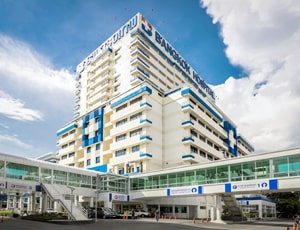
Spinal Fusion in Bangkok Hospital: Costs, Top Doctors, and Reviews

Bangkok, Thailand

  • Joint Commission International, or JCI

Types of Spinal Fusion in Bangkok Hospital and its associated cost

Treatment OptionApproximate Cost Range (USD)Approximate Cost Range (THB)
Spinal Fusion (Overall)5628 - 16809198080 - 591866
Anterior Lumbar Interbody Fusion (ALIF)6826 - 13412235326 - 487955
Posterior Lumbar Interbody Fusion (PLIF)5558 - 11070199986 - 400988
Transforaminal Lumbar Interbody Fusion (TLIF)6693 - 13619244152 - 487618
Lateral Lumbar Interbody Fusion (LLIF)6680 - 13293245319 - 481316
Cervical Fusion5574 - 11448201924 - 408076
Thoracic Fusion5684 - 11391197036 - 409886
  • Address: Bangkok Dusit Medical Services, Nong Prue, Bang Phli, Samut Prakan, Thailand
  • Facilities related to Bangkok Hospital: SIM, TV inside room, Accommodation, Choice of Meals
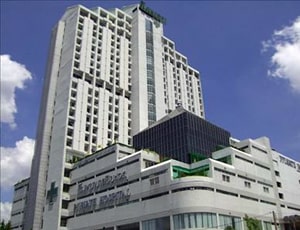
Spinal Fusion in Vejthani Hospital: Costs, Top Doctors, and Reviews

Bangkok, Thailand

  • Joint Commission International, or JCI

Types of Spinal Fusion in Vejthani Hospital and its associated cost

Treatment OptionApproximate Cost Range (USD)Approximate Cost Range (THB)
Spinal Fusion (Overall)5622 - 17238204637 - 589888
Anterior Lumbar Interbody Fusion (ALIF)6632 - 13332235677 - 485250
Posterior Lumbar Interbody Fusion (PLIF)5525 - 11353200275 - 394376
Transforaminal Lumbar Interbody Fusion (TLIF)6688 - 13680242801 - 472050
Lateral Lumbar Interbody Fusion (LLIF)6799 - 13597243599 - 474195
Cervical Fusion5528 - 11480202268 - 395201
Thoracic Fusion5622 - 11316203111 - 400906
  • Address: Vejthani Hospital, 1 Soi Lat Phrao 111 Klong-Chan Bangkapi Bangkok, Thailand
  • Facilities related to Vejthani Hospital: Choice of Meals, Interpreter, SIM, TV inside room, Accommodation
Spinal Fusion in Phyathai 2 International Hospital: Costs, Top Doctors, and Reviews

Bangkok, Thailand

  • Joint Commission International, or JCI

Types of Spinal Fusion in Phyathai 2 International Hospital and its associated cost

Treatment OptionApproximate Cost Range (USD)Approximate Cost Range (THB)
Spinal Fusion (Overall)5527 - 16817198723 - 588281
Anterior Lumbar Interbody Fusion (ALIF)6691 - 13256239629 - 479917
Posterior Lumbar Interbody Fusion (PLIF)5722 - 11028200256 - 396187
Transforaminal Lumbar Interbody Fusion (TLIF)6659 - 13233242840 - 489054
Lateral Lumbar Interbody Fusion (LLIF)6777 - 13239237972 - 476954
Cervical Fusion5671 - 11083199762 - 400536
Thoracic Fusion5541 - 11192196446 - 405966
  • Address: Phyathai 2 Hospital, Phahonyothin Road, Phaya Thai, Thailand
  • Facilities related to Phyathai 2 International Hospital: Choice of Meals, Interpreter, SIM, TV inside room, Accommodation
Spinal Fusion in Krabi Nakharin International Hospital: Costs, Top Doctors, and Reviews

Krabi, Thailand

  • Joint Commission International, or JCI

Types of Spinal Fusion in Krabi Nakharin International Hospital and its associated cost

Treatment OptionApproximate Cost Range (USD)Approximate Cost Range (THB)
Spinal Fusion (Overall)5672 - 17066199100 - 597784
Anterior Lumbar Interbody Fusion (ALIF)6624 - 13240235925 - 490392
Posterior Lumbar Interbody Fusion (PLIF)5572 - 11196202885 - 408239
Transforaminal Lumbar Interbody Fusion (TLIF)6667 - 13652239839 - 478145
Lateral Lumbar Interbody Fusion (LLIF)6707 - 13672235661 - 474216
Cervical Fusion5542 - 11181198096 - 407536
Thoracic Fusion5716 - 11371200065 - 393202
  • Address: Krabi Nakharin International Hospital, Pak Nam, Mueang Krabi District, Krabi, Thailand
  • Facilities related to Krabi Nakharin International Hospital: Health Insurance Coordination, Mobility Accessible Rooms, Private Rooms, Religious Facilities, Nursery / Nanny Services
Spinal Fusion in Kasemrad Ramkhamhaeng Hospital: Costs, Top Doctors, and Reviews

Bangkok, Thailand

  • Joint Commission International, or JCI

Types of Spinal Fusion in Kasemrad Ramkhamhaeng Hospital and its associated cost

Treatment OptionApproximate Cost Range (USD)Approximate Cost Range (THB)
Spinal Fusion (Overall)5603 - 16778200871 - 590868
Anterior Lumbar Interbody Fusion (ALIF)6715 - 13433237452 - 481091
Posterior Lumbar Interbody Fusion (PLIF)5523 - 11233201501 - 401816
Transforaminal Lumbar Interbody Fusion (TLIF)6734 - 13476237986 - 488238
Lateral Lumbar Interbody Fusion (LLIF)6891 - 13307238888 - 476452
Cervical Fusion5732 - 11001203949 - 403551
Thoracic Fusion5691 - 11121202989 - 393201
  • Address: kasemrad hospital ramkamhang Ramkhamhaeng Road, Saphan Sung, Bangkok, Thailand
  • Facilities related to Kasemrad Ramkhamhaeng Hospital: Online Doctor Consultation, Post operative followup, Mobility Accessible Rooms, Rehabilitation, Religious Facilities
Spinal Fusion in Piyavate Hospital: Costs, Top Doctors, and Reviews

Bangkok, Thailand

  • Joint Commission International, or JCI
  • ISO 9001

Types of Spinal Fusion in Piyavate Hospital and its associated cost

Treatment OptionApproximate Cost Range (USD)Approximate Cost Range (THB)
Spinal Fusion (Overall)5610 - 16937202967 - 606568
Anterior Lumbar Interbody Fusion (ALIF)6862 - 13228244487 - 479264
Posterior Lumbar Interbody Fusion (PLIF)5684 - 11385199446 - 407778
Transforaminal Lumbar Interbody Fusion (TLIF)6675 - 13256242122 - 491539
Lateral Lumbar Interbody Fusion (LLIF)6682 - 13703242895 - 474880
Cervical Fusion5567 - 11039199488 - 406615
Thoracic Fusion5572 - 11207196938 - 394585
  • Address: Piyavate Hospital, Khlong Samsen Road, Bang Kapi, Huai Khwang, Bangkok, Thailand
  • Facilities related to Piyavate Hospital: Choice of Meals, Interpreter, TV inside room, Accommodation, Airport Transfer

Need Some Advice From Our Experts?

Request a Call Back Now!

Our team of healthcare experts would be happy to assist you

trusted Patientstrusted Patients+99
Trusted by 50000+ Patients
Required | alphabets and spaces
Required | A valid, working email address
Required | A valid contact

Process Involved for Spinal Fusion in Thailand

  • Pre-Surgical Management: Imaging (X-rays, MRIs, CT scans) and lab tests; anesthetic workup.
  • Surgery: Bone grafting with the use of metal rods for stabilisation; screws or plates; can be done through an open or minimally invasive technique.
  • Postoperative Recovery: 2-5 day hospital stay for early physical therapy, and full recovery from 3 to 12 months.
  • Individuals with severe spinal instability, scoliosis, herniated disc, fracture, and degenerative disc disease.
  • Chronic back pain unrelieved by conservative treatment.
  • The candidates should be in good state of overall health.
  • Laminectomy
  • Discectomy
  • Kyphoplasty or Vertebroplasty
  • Reduces chronic pain and spinal instability.
  • Corrects deformities (scoliosis).
  • Prevents further spinal damage and improves mobility.
  • Orthopedic spine surgeon
  • Neurosurgeon
  • Rehabilitation Specialist
  • Fill out the inquiry form: Fill out the form to provide us with the relevant information about your condition.
  • Consult with Our Healthcare Expert: One of our qualified specialists will contact you for a consultation.
  • Receive a Detailed Treatment Plan: After examining your situation, we will provide you with a detailed treatment plan that includes expert views and cost breakdowns for various choices.
  • Choose your preferred option: Choose the treatment option that suits you the best.

Instantly Connect with our Spinal Fusion Specialists

Doctor 1
Doctor 2
Doctor 3
Doctor 4
Doctor 5
Doctor 6
Doctor 7
Doctor 8
Our Services to Better your Experience

Opinion & Option

We submit the most accurate opinion and options from one or more countries for your review

Consult Privately

Consult with a certified specialist privately on our telemedicine platform even before you decide to travel

Logistics

We handle flights, visas, transfers, and accommodation—so you can focus on your health.

Recovery

Our In-house rehabilitation service packages to better your recovery and treatment outcome

Other Popular Countries for Spinal Fusion

Our network connects you with the leading medical tourism destinations globally, offering a wide range of cities, top doctors, and flexible pricing options.

Vietnam
Turkey
United Arab Emirates
Italy

Frequently Asked Questions

A. On average, Spinal Fusion in Thailand costs about USD 12,000. In Thailand, Spinal Fusion is conducted across many multispecialty hospitals.

A. The cost of Spinal Fusion in Thailand may differ from one medical facility to the other. The top hospitals for Spinal Fusion in Thailand cover all the expenses related to the pre-surgery investigations of the candidate. The Spinal Fusion package in Thailand includes the fees of the surgeon, hospitalization, and anesthesia as well. A prolonged hospital stay due to delayed recovery, new diagnosis, and complications after surgery may increase the cost of Spinal Fusion in Thailand.

A. Many hospitals across the country offer Spinal Fusion to international patients. For quick reference, the following are some of the leading hospitals for Spinal Fusion in Thailand:

  • Kasemrad Ramkhamhaeng Hospital
  • Phyathai 2 International Hospital
  • Private Hospital
  • Vejthani Hospital
  • Bangkok Hospital
  • Krabi Nakharin International Hospital

A. After the Spinal Fusion in Thailand, the patient is supposed to stay in a guest house for another 25 days. This duration of stay is recommended to complete all the necessary follow-ups and control tests to ensure that the surgery was successful.

A. Thailand is one of the most popular countries for Spinal Fusion in the world. The country offers the best treatment of Spinal Fusion, the best doctors, and advanced hospital infrastructure. Some of the other top destinations for Spinal Fusion include the following:

  • Israel
  • India
  • the United Kingdom
  • South Africa
  • Singapore
  • Lithuania
  • Poland
  • the United Arab Emirates
  • Czechia
  • South Korea

A. There are certain additional costs that the patient has to pay apart from the Spinal Fusion cost. These include the cost of accommodation and meals outside the hospital. The per day cost in this case may range around USD 25.

A. many cities offer Spinal Fusion in Thailand, including the following:

  • Bangkok
  • Krabi

A. The average duration of stay at the hospital after Spinal Fusion is about 4 days for proper care and monitoring. During the recovery, the patient is carefully monitored and control tests are performed to see that everything is okay. If required, physiotherapy sessions are also planned during recovery in the hospital.

A. Apart from good services, the hospitals are known to follow all standard and legal guidelines as dictated by the local medical affairs body or organization.

A. Decompression surgery or Laminectomy attenuates pressure on the spinal cord by removal of the ‘lamina’ portion of the vertebrae. Now the primary reason why one should resort to Thailand for medical tourism over any other company is that it can save you a lot of money. There are numerous spine surgeons based in Thailand who perform their job stupendously. Also, Thailand is one of the incredible countries that have cutting-edge technology alongside some knowlagable and expert surgeons.

A. Spinal surgeries can unequivocally, be a lavish affair and this is one of the fundamental reasons why people resort to medical tourism. Spinal surgeries, while they are comparatively posh in the home countries of the patient, cost the most in the USA. A single surgery may cost around $11000 to $25000 in the USA, while the same may cost around $7000 to a maximum of $15500 in Thailand.

A. There are copious hospitals and doctors in Thailand that perform spinal surgery and help people outpace spinal or vertebral issues. Some of them are enlisted below:

  • Bangkok Dusit Medical Services, Bangkok, Thailand
  • Vejthani Hospital, Bangkok, Thailand
  • Krabi Nakhrani Hospital, Krabi, Thailand
  • Yanhee International Hospitals, Thailand
  • Phyathai 2 International Hospital, Bangkok, Thailand

A. To stabilize the damaged region, lessen discomfort, and enhance spinal function, spinal fusion surgery joins two or more vertebrae in the spine. Conditions like spondylolisthesis, degenerative disc disease, spinal stenosis, and other types of spinal instability are frequently treated with this operation.

A. The success rate of spinal surgery performed in Thailand can be acknowledged from the statistics of patients visiting the country every year, with this sole purpose. Every single several thousand people visit Thailand to undergo spinal surgery. This is because there are best-of-the-breed surgeons in Thailand and the hospitals here are well equipped with state-of-the-art technology and are also subject to continuous upgradations.

A. Yes, minimally invasive spine surgery can be availed in Thailand. One of the top-ranked hospitals for such a surgery is Paolo Hospital, in Phyathai, Thailand. One of the oldest and privately owned hospitals in Thailand, Paolo Hospital is renowned for its exceptionally outstanding and knowledgeable surgeons and low-cost coverage. So if you are looking for minimally invasive spine surgery in Thailand, this can unequivocal, be one of your best choices to resort to.

Spinal surgery is the only recourse to resort to when your spinal disease becomes highly aggravated. And because it is the only recourse left, one must take as many precautions as possible and make sure that the surgery is done, complying with every warning and making backups for every risk.

A. Reduction or elimination of pain resulting from degenerative diseases, spinal instability, or nerve compression is the main advantage of spinal fusion.

  • Pain relief frequently improves a person's quality of life and everyday functioning by enabling them to participate in activities they may have avoided because they were uncomfortable.
  • In spinal abnormalities such as spondylolisthesis or scoliosis, spinal fusion can be very helpful as it stabilizes the afflicted region of the spine.
  • By stabilizing the spine, one can lessen the chance that degenerative diseases or abnormalities will increase over time if treatment is not received.
  • Spinal fusion is a treatment option for misaligned or deformed spines that helps realign the spine to a more normal position.
  • Spinal fusion relieves nerve compression by stabilizing the vertebrae and perhaps eliminating structures (such as bone spurs or ruptured discs) that compress nerves.
  • An overall higher quality of life is often associated with decreased pain and more functionality, which includes better sleep, mood, and levels of physical activity.

A. Following spinal fusion surgery, various phases of recovery need to be carefully managed to promote optimal healing and a return to regular activities. What to anticipate during the recuperation phase is outlined below:

  • Patients often spend one to four days in the hospital, depending on the surgery's intricacy and each patient's rate of recovery.
  • Medication for pain management includes muscle relaxants, opioids, and nonsteroidal anti-inflammatory medicines (NSAIDs).
  • After surgery, physical therapy frequently starts a few weeks later and focuses on mild exercises to increase the range of motion and strengthen the core muscles.
  • Keep away from any activities that require high-impact motions, intense exercise, or heavy lifting.
  • The surgeon will schedule routine follow-up appointments to evaluate the status of the fusion, track healing, and make any necessary adjustments to the treatment plan. The state of the spinal fusion may be assessed by X-rays or other imaging tests.

A. Below is a comprehensive summary of the various kinds of spinal fusion procedures:

  • The posterior spinal fusion procedure is carried out by making an incision across the back's midline. The back provides the surgeon with access to the spine. To stabilize the spine, the surgeon removes any troublesome discs or bone spurs, inserts an implant or bone graft material between the vertebrae, and employs metal instrumentation, such as screws and rods.
  • Anterior Spinal Fusion: Usually done through the belly, this procedure involves making an incision in the front of the body. The spine is accessed from the front by the surgeon. After the damaged disc is removed, a synthetic spacer or bone transplant is placed in between the vertebrae. The spine can be stabilized from the front using a plate.
  • Lateral Spinal Fusion: Also referred to as Extreme Lateral Interbody Fusion (XLIF), this procedure requires making a side incision in the patient. The disc is removed, the spine is opened laterally (from the side), and an implant or bone graft is inserted. This method reduces the amount of spinal muscle disturbance.
  • Smaller incisions and specialized tools are used in minimally invasive spinal fusion procedures to achieve the fusion with the least amount of tissue damage possible. Surgeons use endoscopic tools or tubular retractors to access the spine through small incisions, place the bone graft or implant, and perform the fusion with less muscle retraction.
  • Dynamic Stabilization: This technique makes use of flexible implants that stabilize the damaged spinal section while yet permitting some degree of movement. To preserve some motion and promote spinal stability, dynamic stabilizing devices such as flexible rods or tethering systems are implanted in place of rigid fusion.
  • Foraminotomy with Fusion: This procedure combines foraminotomy, which involves removing bone or tissue from the foramina to release pressure on the nerves, with spinal fusion to stabilize the injured area. The damaged area is stabilized by the surgeon performing a fusion technique after performing a foraminotomy to decompress nerves.
  • Transforaminal Lumbar Interbody Fusion (TLIF): This procedure is done via the foramen, which is the opening where the nerve root leaves the spinal column, using a posterior approach. Through the foramen, the surgeon removes the damaged disc, implants new bone, and uses equipment to support the spine.

A. A spinal fusion joins two or more vertebrae to improve stability, treat an issue, or lessen pain. Using spinal fusion, one can:

  • Reposition of the vertebrae- Spinal fusion can assist in addressing issues related to the formation of the spine. One illustration would be scoliosis or the sideways curvature of the spine.
  • Instability or weakening of the spine- The spine may become unstable if there is excessive movement between two spinal bones. This is a typical side effect of severe spinal arthritis. The spine may become more stable after spinal fusion.
  • Damaged disk- After a damaged disk is removed, the spine may be stabilized by spinal fusion.
  • Fractures- At a certain point, instability may result from fractures in the spine, such as those caused by trauma or osteoporosis. A 1-level fusion can offer stability and aid in healing for fractures that only affect one section and do not improve with conservative measures.
  • Idiopathic Scoliosis- Although less common, a 1-level fusion may be taken into consideration in certain cases of mild idiopathic scoliosis affecting a single segment to treat symptoms and stop the condition from progressing.

A. In general, spinal fusion is safe. Spinal fusion surgery is not without risk, though. Among the potential risks are:

  • Infection.
  • Inadequate healing of wounds.
  • Sickened.
  • Blood Clots
  • Damage to the blood vessels or Surrounding nerves in the spine.
  • The site of the bone graft pains.
  • Recurring symptoms.

A. Although there is a set recovery period after 1-level spinal fusion surgery, each patient's experience will differ depending on several variables, such as the particular technique utilized, the patient's general health, and compliance with postoperative care instructions. This is an example of a typical rehabilitation timeline with expectations at each level:

  • Hospital Stay: Depending on the patient's condition and any complications, this stay usually lasts one to four days.
  • Drugs: Medication is used to control pain, and it may consist of opioids, NSAIDs, and muscle relaxants.
  • Wound Care: Adhere to the detailed recommendations for maintaining a clean, dry, and sterile surgery site.
  • After surgery, physical therapy typically starts two to six weeks later and focuses on mild exercises to increase the range of motion and strengthen the muscles that support it.
  • Sustained Pain Management: As symptoms improve, medication is gradually tapered off as pain is managed according to the patient's progress in recovery.
  • Assessment: Consistent follow-up with the surgeon to address any concerns and make sure the fusion is progressing as planned.

Following a one-level spinal fusion procedure, recovery often takes several weeks to months. First, early mobility and pain control are the main priorities. Next, activity levels are gradually increased, and physical therapy is implemented.

The majority of patients should exhibit noticeable improvements in the first three to six months, and by the sixth to twelve months, they should have fully recovered and resumed their regular activities. A full recovery depends on following up with your healthcare physician, engaging in physical therapy, and adhering to postoperative care instructions.

Author

Nimra Haseeb

MSc Biochemistry

4 Years of Experience

Miss Nimra Haseeb is a medical researcher and a scientific content writer. She holds a Bachelor’s degree in Biotechnology and a Master’s in Biochemistry from Integral University, Lucknow.With strong experience in healthcare research, she specializes in secondary research, clinical data analysis, and evidence-based medical writing. Her work focuses on transforming complex scientific and medical information into clear, accurate, and reliable healthcare content for patients and healthcare audiences. She is also experienced in interpreting medical studies and healthcare trends to deliver well-researched and informative content that supports better health awareness and decision-making.. View More

Reviewer

⁠Dr Rakesh Kumar Dua

Spine & Neurosurgeon

25 Years of Experience

Dr. Rakesh Dua has more than 25+ years of clinical experience in spine surgeries. He is currently providing his services as Director, Neuro & Spine Surgery at Fortis Hospital, Shalimar Bagh. Before joining Fortis Hospital, he was associated with Max super-specialist Hospital, Shalimar Bagh as Director Neurosurgery & Head Neuro Spine, and with UCMS & GTB hospital as head of the neurosurgery department. View More