The cost of Deep Brain Stimulation in Malaysia is USD 30000 - USD 45000
Additionally, factors like the duration of treatment, the need for follow-up care, and the use of advanced technologies or specialized treatments can further influence the overall cost.
DBS is a neurosurgical procedure in which electrodes are implanted in certain areas of the patient’s brain to provide relief from neurological disorders such as Parkinson’s disease, essential tremor, and dystonia to mention but a few. In this process, a small device that functions like a pacemaker is placed within the person’s head. It delivers mild electrical currents to the target sites in the brain to facilitate the control of abnormal function within the organ. Electrodes are placed into the desired locations, and a device, called a pulse generator, is implanted under the skin in the upper chest, near the collarbone.
DBS can also help to minimize the effects of the diseases especially when drugs have proven ineffective in treating the patients. They are normally done with patients awake and under local anesthesia as the position of electrodes must be correct. Thus, even though DBS does not affect the cause of the disease, in some cases, it does not require the constant presence of a specific disease – it only treats symptoms, and their adjustment can be carried out at any time.
| City | Minimum Cost (USD) | Minimum Cost (MYR) | Maximum Cost (USD) | Maximum Cost (MYR) |
|---|---|---|---|---|
| Kuala Lumpur | USD 30000 | 127200 | USD 45000 | 190800 |
| Country | Minimum Cost | Minimum Local Currency | Maximum Cost | Maximum Local Currency |
|---|---|---|---|---|
| India | USD 25000 | INR 2141000 | USD 40000 | INR 3425600 |
| Israel | USD 40810 | ILS 144467 | USD 58300 | ILS 206382 |
| Lithuania | USD 25000 | LTL 85518 | USD 40000 | LTL 136828 |
| Malaysia | USD 30000 | MYR 127200 | USD 45000 | MYR 190800 |
| Morocco | get request | |||
| Poland | USD 20000 | PLN 75200 | USD 35000 | PLN 131600 |
| Saudi Arabia | USD 25000 | SAR 93750 | USD 40000 | SAR 150000 |
| Singapore | USD 55000 | SGD 70950 | USD 90000 | SGD 116100 |
| South Africa | USD 25000 | ZAR 449250 | USD 50000 | ZAR 898500 |
| South Korea | USD 56000 | KRW 77054880 | USD 65000 | KRW 89438700 |
| Spain | USD 65000 | ESP 9557594 | USD 80000 | ESP 11763192 |
| Switzerland | get request | |||
| Thailand | USD 30000 | THB 981300 | USD 37000 | THB 1210270 |
| Tunisia | USD 20000 | TND 59600 | USD 35000 | TND 104300 |
| Turkey | USD 21000 | TRY 820260 | USD 28000 | TRY 1093680 |
| United Arab Emirates | USD 52000 | AED 190840 | USD 186000 | AED 682620 |
| United Kingdom | USD 43000 | GBP 31820 | USD 60000 | GBP 44400 |
Need Help Planning Your Treatment Abroad?
Your 24/7 AI Health Assistant 
Deep brain stimulation (DBS) is a neurosurgical procedure that involves the implantation of electrodes within the specific targeted areas of the brain. It is used to treat a variety of disabling neurological symptoms.
Deep brain stimulation uses a neurostimulator, commonly referred to as a deep brain stimulator, to deliver electrical stimulation to targeted areas in the brain that control movement.
The impulse sent by the deep brain stimulator interferes with and blocks the electrical signals that cause tremors and other Parkinson’s disease symptoms. The targeted areas most often include the thalamus, subthalamic nucleus, and globus pallidus. Deep brain stimulation procedure has a long history of research. It was first introduced in 1987 and The Food and Drug Administration (FDA) approved deep brain stimulation treatment for essential tremor and Parkinson's disease in 1997.
A pacemaker-like device inserted under the skin in the upper chest regulates the amount of stimulation during deep brain stimulation. The electrodes in the brain are connected to this device by a wire that passes beneath the skin.
Deep brain stimulation treatment has proven effective in most cases, but it could potentially result in serious complications and side effects. This is the main reason why deep brain stimulation treatment is used only for patients whose symptoms are not appropriately controlled with medications.

Amrita Hospital, Faridabad, India
USD 33000 USD 34000

Aakash Healthcare Super Speciality Hospital, Delhi, India
USD 26000 USD 31200

Istinye University Medical Park Gaziosmanpasa Hospital, Istanbul, Turkey
USD 25000 USD 30000
Would you like some help? We are available.
Get Help
Kuala Lumpur, Malaysia
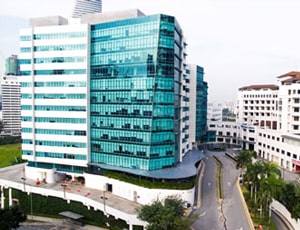
Prince Court is a private medical facility in the center of Kuala Lumpur that has 277 individual beds. Our dedication is to provide you with the best treatment possible from the time you arrive until you depart, healthier and happier. We are well-known for our top-notch facilities, cutting-edge technology, and friendly customer service.

Kuala Lumpur, Malaysia
Parkway Pantai located in Kuala Lumpur, Malaysia is accredited by JCI. Also listed below are some of the most prominent infrastructural details:

Kuala Lumpur, Malaysia
Sunway Medical Centre has initiated a comprehensive expansion plan close to its current hospital facility to enhance its ability to provide services to the global market. The new Cancer Radiosurgery Center and Nuclear Medicine Center, which will also house additional Centers of Excellence like the Digestive Health Center and Dialysis Center, marked the completion of Tower C's first phase in October 2016.

Kuala Lumpur, Malaysia
In Kuala Lumpur, Malaysia, ParkCity Medical Centre is a 300-bed, cutting-edge, interdisciplinary private hospital that provides award-winning private healthcare in an environment of lush vegetation.

Kuala Lumpur, Malaysia
Subang Jaya Medical Center is renowned for pioneering radiation oncology treatments and infrastructure in Malaysia. The hospital also has a state-of-the-art Cancer Radiosurgery Centre (CRC), which is fully furnished with the latest medical technology for cancer detection, monitoring, and treatment.

Kuala Lumpur, Malaysia
Situated at the junction of Petaling Jaya and Shah Alam, close to the Oasis Ara, Ara Damansara Medical Centre boasts a serene, luxurious ambiance.
The Centre has been awarded several prestigious awards such as the Global Health Asia Pacific Awards 2023, Newsweek Best Specialized Hospital APAC 2023, Healthcare Asia Awards 2023, and Malaysian Healthcare Wellness Excellence.

Kuala Lumpur, Malaysia
As a tertiary care hospital, Bukit Tinggi Medical Centre (BTMC) is committed to providing high-quality, reasonably priced healthcare.
With a focus on patient care and a team of committed medical professionals and personnel, we want to realize our ambition of becoming Klang's go-to healthcare provider. Orthopedics, neurosurgery, cardiac surgery, obstetrics and gynecology, pediatrics and rehabilitation, aesthetic surgery, and other specialties are all part of our multidisciplinary team approach. Additionally, BTMC has a Health Screening Center that provides a range of health packages to meet the requirements of diverse patient types.

Kuala Lumpur, Malaysia
Need Some Advice From Our Experts?
Our team of healthcare experts would be happy to assist you

+99


Opinion & Option
We submit the most accurate opinion and options from one or more countries for your review
Consult Privately
Consult with a certified specialist privately on our telemedicine platform even before you decide to travel
Logistics
We handle flights, visas, transfers, and accommodation—so you can focus on your health.
Recovery
Our In-house rehabilitation service packages to better your recovery and treatment outcome
Our network connects you with the leading medical tourism destinations globally, offering a wide range of cities, top doctors, and flexible pricing options.


A. A neurosurgical method called deep brain stimulation (DBS) treats movement abnormalities associated with essential tremor, Parkinson's disease (PD), dystonia, and other neurological illnesses by using electrical stimulation and implanted electrodes.
For movement disorders or neuropsychiatric diseases, doctors might use DBS when a patient's everyday activities are impacted by the side effects of their medication or when the medicines have lost their effectiveness.
A. Deep brain stimulation (DBS) is a neurosurgical procedure that can treat a variety of conditions as mentioned below:
A. DBS is safe and effective when administered to properly selected patients. Although there are risks and possible adverse effects, they are usually minor and curable.
A. Most of the pulse generators use specialized, long-lasting batteries. These devices' typical batteries have a three to five-year lifespan. Some electronic devices are managed by rechargeable batteries, which have an average nine-year lifespan. Surgery is required to replace the battery as well, however, this process is typically quicker and less involved than the first surgery to implant the pulse generator. The battery replacement will still take place the same day you return home.
A. It connects to one or two small wires that are placed into certain parts of the brain. The electrodes stimulate the targeted area with high frequency when the pulse generator is turned on. Some of the electrical signals in the brain that lead to Parkinson's disease symptoms can be altered by this stimulation.
A. The following are possible adverse effects of deep brain stimulation:
A. The recovery after deep brain stimulation surgery depends on person to person and the medical condition. After surgery, you will most likely need to spend a day or two in the hospital. The area where your skin was cut can be a little uncomfortable. You'll probably need to return to the doctor several times after you go home. The system will be adjusted by the doctor depending on your symptoms.
A. According to the studies, In some cases. Deep brain Stimulation or DBS may be an effective treatment for depression.
A. Depending on whether one or two DBS leads are inserted, the process will require three to five hours. After surgery, a CT or MRI scan will be performed to verify lead placement, and you will start taking your medicine if it was stopped during the procedure. After spending one or two nights in the hospital, you will be discharged.
A. Many hospitals perform Deep Brain Stimulation in Malaysia. Some of the best hospitals for Deep Brain Stimulation in Malaysia include the following:
A. The patient recovery time may differ from individual to individual case. However, on average, a patient is supposed to stay for about twenty days in the country after his discharge. This time frame is important to ensure that the surgery is successful and that the patient is fit to fly back.
A. Apart from the Deep Brain Stimulation cost, the patient may have to pay for additional daily expenses such as for a guest house after discharge and meals. The per day cost in this case may start from USD 100 per person.
A. Many cities offer Deep Brain Stimulation in Malaysia, including the following:
A. After the Deep Brain Stimulation takes place, the average duration of stay at the hospital is about two days. This phase is important to ensure that the patient is recovering well and is clinically stable. During this time, several tests are performed before the patient is deemed suitable for discharge.
A. There are several hospitals that offer Deep Brain Stimulation in Malaysia. The above-mentioned hospitals are approved to perform the surgery and have the proper infrastructure and facilities to handle this condition. These hospitals comply with all the rules and regulations as dictated by the regulatory bodies and medical associations in Malaysia.

Spine & Neurosurgeon
25 Years of Experience
Dr. Rakesh Dua has more than 25+ years of clinical experience in spine surgeries. He is currently providing his services as Director, Neuro & Spine Surgery at Fortis Hospital, Shalimar Bagh. Before joining Fortis Hospital, he was associated with Max super-specialist Hospital, Shalimar Bagh as Director Neurosurgery & Head Neuro Spine, and with UCMS & GTB hospital as head of the neurosurgery department. View More
Last Reviewed - January 2026