Your Notifications
All done, no notifications

Deep Brain Stimulation Cost in Vietnam

USD 25000 - USD 60000

Affordable World-class Treatment - Accredited Hospitals - Free Treatment Plan in 24 Hrs

2
Days in Hospital
4-8 hrs
Procedure Time
60 - 80%
Success Rate
Deep Brain Stimulation: Cost, Procedure and Clinics | MediGence
JCI/ISO 100,000+ Patients 24X7 Coordinator Visa & Travel handled
Your all-in-one medical travel platform for treatment, recovery & care.

Get Your Personalised Treatment Plan in Just 24 Hours.

Share your details to receive a personalised treatment plan, estimated costs, hospital recommendations, and expert guidance, “completely free.”

Required | alphabets and spaces
Required | A valid, working email address
Required | A valid contact
Connect with an Expert

Your information is protected with HIPAA-compliant security standards. We only share your details with hospitals after your consent.

Estimated Treatment Cost
USD 25000 - USD 60000
All-inclusive • Hospital + Medications + Recovery Assistance + Dedicated Care Coordinator

International Quality. Affordable Care.

How Much Does Deep Brain Stimulation Cost in Vietnam?

In Vietnam, the cost of Deep Brain Stimulation (DBS) typically falls between USD 15000 - USD 25000, depending on a number of variables, including the condition being treated, the type and brand of neurostimulator used, whether the procedure is unilateral or bilateral, the infrastructure of the hospital, the skill of the neurosurgeon, and the overall complexity of the surgery.

The overall cost may also be impacted by additional costs for pre-operative neurological evaluations and imaging (MRI/CT), intraoperative monitoring, anesthesia, hospital stays, device programming sessions, post-operative drugs, and follow-up care.

Factors Influencing the Cost of Deep Brain Stimulation

  • Type of DBS Procedure: Costs vary depending on the neurological condition being treated. Bilateral procedures or those requiring more advanced targeting techniques are typically more expensive.
  • Type and Brand of Neurostimulator: Advanced or rechargeable neurostimulator devices tend to cost more than standard models, influencing the overall procedure cost.
  • Hospital and Location: Leading hospitals in Hanoi, Ho Chi Minh City, and Da Nang charge higher fees due to state-of-the-art neurosurgical suites, intraoperative imaging, and specialized neuro-navigation systems.
  • Surgeon’s Expertise: Experienced functional neurosurgeons with expertise in stereotactic brain surgery and DBS implantation may charge higher consultation and surgical fees.
  • Complexity of the Case: Patients with atypical brain anatomy, prior surgeries, or additional neurological conditions may require longer operative time, more imaging, or additional electrodes, increasing the total cost.
  • Post-Operative Care: Programming sessions, follow-up visits, device adjustments, and post-surgical medications all contribute to the overall treatment expense.

What's included in your Deep Brain Stimulation quote?

Deep Brain Stimulation (DBS)
Surgical implantation of electrodes to manage movement disorders and neurological conditions
Neurosurgeon consultation
Pre-surgery evaluation, treatment planning, and follow-up consultations
Hospital stay & supportive care
Surgery, anaesthesia, device implantation, nursing care, and recovery monitoring
Follow-up monitoring
Device programming, neurological assessment, and routine follow-up visits
Visa & medical-visa invite letter
Airport pickup & transfers

Cost of Deep Brain Stimulation in Major Cities of Vietnam

CityCost (USD)
Can Tho $15,000 – $25,000 Explore More
Ha noi $12,000 – $20,000 Explore More
Ho Chi Minh $15,000 – $25,000 Explore More
Nha Trang $13,500 – $22,500 Explore More
Phu Quoc $13,500 – $22,500 Explore More

Deep Brain Stimulation - Vietnam Vs the World

$0 - $0
$15k - $25k
$21k - $28k
$25k - $40k
$25k - $40k
$28k - $45k
$30k - $45k
$30k - $37k
$41k - $58k
$43k - $60k
$55k - $90k
$56k - $65k
$65k - $80k
Dr. Vihan Gautam
Author

BPT, MS in Healthcare Mgmt

4 Years of Experience

Dr. Vihan Gautam is a distinguished Rehabilitation Specialist and Healthcare Management Professional, holding a Bachelor of Physiotherapy (BPT) from Rajiv Gandhi University of Health Sciences and a Master of Science in Healthcare Management (MSc) from the prestigious University of London, United Kingdom. With specialized clinical experience and his advanced medical knowledge in neuro-rehabilitation, musculoskeletal disorders, and evidence-based physiotherapy practices, enables him to develop patient-centered rehabilitation protocols and AI-driven care models that deliver measurable functional recovery outcomes. His diverse contributions across international rehabilitation programs, multidisciplinary care, and AI-driven healthcare initiatives uniquely position him as an emerging leader in neuro-rehabilitative care globally.
View More
⁠Dr Rakesh Kumar Dua
Reviewer

Spine & Neurosurgeon

25 Years of Experience

Last Reviewed - June 2026

Dr. Rakesh Dua has more than 25+ years of clinical experience in spine surgeries. He is currently providing his services as Director, Neuro & Spine Surgery at Fortis Hospital, Shalimar Bagh. Before joining Fortis Hospital, he was associated with Max super-specialist Hospital, Shalimar Bagh as Director Neurosurgery & Head Neuro Spine, and with UCMS & GTB hospital as head of the neurosurgery department.
View More

Need Help Choosing the Right Treatment? Talk to a Medical Advisor

Our dedicated Medical Patient Advisors are here to answer your questions, help you compare treatment options, estimate costs, and guide you through every step of your healthcare journey.

15 min
Average response time

Serving Patients Worldwide in Multiple Languages.

Deep brain stimulation (DBS) is a neurosurgical procedure that involves the implantation of electrodes within the specific targeted areas of the brain. It is used to treat a variety of disabling neurological symptoms.

Deep brain stimulation procedures are used to treat several disorders, such as:

  • Parkinson's disease
  • Dystonia
  • Epilepsy
  • Tourette syndrome
  • Obsessive-compulsive disorder
  • Chronic Pain

Deep brain stimulation uses a neurostimulator, commonly referred to as a deep brain stimulator, to deliver electrical stimulation to targeted areas in the brain that control movement.

The impulse sent by the deep brain stimulator interferes with and blocks the electrical signals that cause tremors and other Parkinson’s disease symptoms. The targeted areas most often include the thalamus, subthalamic nucleus, and globus pallidus. Deep brain stimulation procedure has a long history of research. It was first introduced in 1987 and The Food and Drug Administration (FDA) approved deep brain stimulation treatment for essential tremor and Parkinson's disease in 1997.

A pacemaker-like device inserted under the skin in the upper chest regulates the amount of stimulation during deep brain stimulation. The electrodes in the brain are connected to this device by a wire that passes beneath the skin.

Deep brain stimulation treatment has proven effective in most cases, but it could potentially result in serious complications and side effects. This is the main reason why deep brain stimulation treatment is used only for patients whose symptoms are not appropriately controlled with medications.

Explore Hospitals ( 9 )

Ha noi, Vietnam

200+ Beds · 309+ Procedures
JCI

Ha noi, Vietnam

500+ Beds · 308+ Procedures
JCI

Ho Chi Minh, Vietnam

178+ Beds · 309+ Procedures
JCI
Starting
USD 35000

Phu Quoc, Vietnam

150+ Beds · 293+ Procedures
JCI
Starting
USD 25000

Ha noi, Vietnam

500+ Beds · 308+ Procedures
JCI
Starting
USD 30000

Ha noi, Vietnam

500+ Beds · 304+ Procedures
JCI
Starting
USD 25000

Da Nang, Vietnam

222+ Beds · 295+ Procedures
JCI

Nha Trang, Vietnam

150+ Beds · 295+ Procedures
JCI
Starting
USD 25000

Can Tho, Vietnam

155+ Beds · 295+ Procedures
JCI
Starting
USD 30000

Get Your Deep Brain Stimulation
Plan in 24 hrs.

Our experienced Medical Patient Advisors have supported 100,000+ patients across 120+ countries with personalised treatment plans, hospital recommendations, cost estimates, and travel assistance, all free.

HIPAA-Compliant Data SecurityShared Only with Your Consent

Free Consultation No Obligation Personalized Treatment Plan Response Within 24 Hours

Required | alphabets and spaces
Required | A valid, working email address
Required | A valid contact

Your medical info is kept HIPAA-style confidential. We never share with hospitals without your consent.

Jenny Wilson
Your Dedicated Medical Patient Advisor
Treatment planning • Hospital coordination • Multilingual support • Response within 15 minutes.
Our Services to Better your Experience

Opinion & Option

We submit the most accurate opinion and options from one or more countries for your review

Consult Privately

Consult with a certified specialist privately on our telemedicine platform even before you decide to travel

Logistics

We handle flights, visas, transfers, and accommodation—so you can focus on your health.

Recovery

Our In-house rehabilitation service packages to better your recovery and treatment outcome

Patient Stories

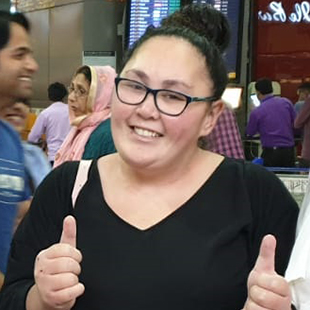
Chloe from Australia underwent Deep Brain Stimulation Surgery in India
Chloe Diane Mii Tangaroa
Chloe Diane from Australia underwent Deep Brain Stimulation Surgery in India

Patient Chloe Diane Mii Tangaroa has become worse over the last five years. She was suffering from chronic anxiety and…

Nevine Safwat
Nevine Safwat
Ms. Safwat Underwent DBS Surgery in Artemis Hospital, India

The hospital services and the kind staff have exceeded my expectations. I appreciate the experts at Artemis Hospital for providing…

Frequently Asked Questions

The cost of Deep Brain Stimulation (DBS) in Vietnam is USD 15000 - 25000 and varies depending on the neurological condition, type of DBS system, number of electrodes, surgical technique, hospital, surgeon's expertise, device manufacturer, hospitalisation, and post-operative programming. The overall cost may include neurological evaluation, brain imaging, neuropsychological assessment, DBS electrodes and pulse generator, surgery, hospitalisation, programming, and follow-up care.

Patients should choose a functional neurosurgeon or neurosurgeon specialising in DBS, preferably working with a movement-disorders neurologist. Consider the doctor's experience with DBS for the specific condition, number of procedures performed, expertise in electrode placement and programming, access to advanced imaging and surgical navigation, and availability of long-term follow-up. A multidisciplinary DBS team is particularly important for patient selection and device optimisation.

DBS can significantly improve symptoms in patients, but the success rate varies between 60-80%. Outcomes depend on the underlying condition, symptom type, disease duration, target selected, electrode placement, medication response, and overall health. DBS is generally used to control symptoms rather than cure the underlying neurological disease. The treating team can provide an individualised expectation after assessment.

DBS is most established for Parkinson's disease, essential tremor, and certain forms of dystonia. It may also be considered for selected patients with other movement disorders or specific treatment-resistant neurological conditions. Candidacy depends on diagnosis, symptom severity, medication response, overall health, and the patient's suitability for brain surgery.

No. DBS does not cure Parkinson's disease or stop its underlying progression. It can substantially reduce certain motor symptoms, such as tremor, rigidity, and dyskinesia, in appropriately selected patients. Medication is often continued after DBS, although some patients may be able to reduce their medication under specialist supervision.

The DBS leads are generally implanted in the brain and connected to a pulse generator implanted under the skin, usually in the chest. The system is intended for long-term use. The pulse generator may eventually need replacement or recharging depending on whether the patient has a rechargeable or non-rechargeable system.

The duration varies according to the surgical approach, number of targets, imaging and navigation methods, and whether the procedure is performed awake or under general anaesthesia. DBS is typically performed in stages involving stereotactic placement of the brain electrodes followed by implantation of the pulse generator, although protocols differ between centres.

The timing depends on the condition and DBS protocol. Some benefits may be noticed after the device is activated, while achieving optimal symptom control often requires multiple programming sessions and medication adjustments over several weeks or months. The DBS team gradually adjusts stimulation settings to maximise benefit while limiting side effects.

Advanced DBS centres may use MRI-guided planning, stereotactic navigation, intraoperative imaging, microelectrode recording, directional leads, rechargeable or non-rechargeable pulse generators, and advanced programming systems in Vietnam. Some centres may also use newer image-guided or asleep DBS approaches. The technology selected depends on the patient's condition, target area, anatomy, and treatment goals.

Potential complications include bleeding in the brain, infection, seizures, headache, confusion, neurological symptoms, lead displacement, hardware problems, and stimulation-related side effects. Some patients may experience changes in speech, balance, mood, cognition, or other functions depending on the stimulation target and settings. The surgical and programming teams carefully monitor patients to reduce these risks.

Patients should prepare their neurological records, medication history, brain MRI/CT scans, previous treatment reports, movement-disorder assessments, and details of previous surgeries or therapies. The DBS team may request additional imaging, neuropsychological testing, medication-response assessments, and other investigations. Patients should also provide information about implanted medical devices, allergies, and other medical conditions.

Yes. International patients can usually arrange an online consultation with a DBS specialist before travelling through the MediGence platform. The doctor can review neurological records, brain imaging, medication history, symptom progression, and previous treatments to determine whether DBS evaluation is appropriate.

Patients should generally carry:
  • Passport and travel documents
  • Brain MRI or CT scans and reports
  • Neurologist's reports
  • Diagnosis and disease history
  • Current and previous medication records
  • Previous treatment and surgery reports
  • Neuropsychological assessment, if available
  • Previous DBS or other implanted-device records, if applicable
  • Blood-test results
  • Details of allergies and existing medical conditions
  • International patients may need to stay for several days to a few weeks, depending on the DBS protocol used by the centre. The stay may include pre-operative assessment, surgery, initial recovery, device activation or programming, and follow-up adjustments. Some patients require additional programming visits after returning home, so follow-up arrangements should be discussed before travelling.

    Initial recovery from DBS surgery generally takes several weeks, although patients may resume some daily activities relatively soon after surgery depending on their condition. Device programming and medication adjustments can continue for weeks or months to achieve the best symptom control. Recovery and improvement vary according to the underlying neurological disorder and the patient's response to stimulation.

    Complications are assessed by the neurosurgical or neurology team. Infection may require antibiotics or, in severe cases, hardware-related treatment. Stimulation-related side effects can often be managed by changing the programming parameters. Hardware problems or lead displacement may require additional intervention. Patients should receive clear instructions regarding warning signs and have access to their DBS team after returning home.

    International patients can submit their neurological reports, brain scans, medication history, diagnosis, and previous treatment records for specialist review. The DBS team can determine whether further evaluation is required and whether the patient may be a suitable candidate. Once the treatment plan is confirmed, consultations, surgery, hospitalisation, accommodation, transportation, and post-operative programming can be coordinated.

    Vietnam may offer access to experienced functional neurosurgeons, movement-disorder neurologists, specialised DBS centres, advanced stereotactic technology, modern neuroimaging, and multidisciplinary treatment teams. Patients may also have access to different DBS systems and programming technologies. When choosing a centre, patients should consider the team's DBS experience, surgical infrastructure, programming expertise, long-term follow-up services, and experience treating the specific neurological condition.

    DBS treatment is customised according to the neurological condition and target symptoms. Options may include:
  • Subthalamic nucleus (STN) DBS, commonly used for selected patients with Parkinson's disease
  • Globus pallidus internus (GPi) DBS for selected movement disorders
  • Ventral intermediate nucleus (VIM) DBS for certain forms of tremor
  • DBS for selected cases of dystonia
  • DBS for specific medication-resistant movement disorders
  • Rechargeable or non-rechargeable DBS systems
  • Directional DBS systems for more precise stimulation
  • Image-guided or advanced stereotactic DBS approaches
  • Not Sure About Your Treatment Plan? Get a Free Second Opinion

    Have your reports reviewed by independent oncology experts to help you make a confident treatment decision, all online within 48 hours.

    Upload Your Reports
    Free second opinion on your CAR-T plan