The cost of a CART in India typically ranges between USD 80000 - USD 120000. However, this cost can vary depending on several factors, including the type and severity of the condition, treatment techniques chosen, the healthcare facility's location and reputation, the treating professionals' experience and specialization, and the patient's overall health status.
Additionally, factors like the duration of treatment, the need for follow-up care, and the use of advanced technologies or specialized treatments can further influence the overall cost.
CART is an acronym for a promising experimental type of cancer treatment called Chimeric Antigen Receptor T-cell therapy and mainly targets blood malignancies such as leukemia and lymphoma. This therapy is done by modifying the patient’s T-cells (one form of white blood cells) in the laboratory and making them have a receptor that homes in on cancerous cells. These engineered T-cells are then transduced back into the patient, they go on to hunt for cancer cells to kill.
CART therapy is rather effective, particularly in the cases of the treatment efficacy of which has not been rather impressive. It is individual treatment, which means that is independent of the cancer type in the patient. There are risks for cytokine release syndrome (CRS), as well as neurotoxicity that should be closely watched out for, but this option is hopeful for cancer patients who normally cannot be treated with conventional treatments.
| City | Minimum Cost (USD) | Minimum Cost (INR) | Maximum Cost (USD) | Maximum Cost (INR) |
|---|---|---|---|---|
| Amroha | USD 64000 | 5480960 | USD 96000 | 8221440 |
| Delhi | USD 80000 | 6851200 | USD 120000 | 10276800 |
| Faridabad | USD 80000 | 6851200 | USD 120000 | 10276800 |
| Kochi | USD 80000 | 6851200 | USD 120000 | 10276800 |
| Mumbai | USD 80000 | 6851200 | USD 120000 | 10276800 |
| Country | Minimum Cost | Minimum Local Currency | Maximum Cost | Maximum Local Currency |
|---|---|---|---|---|
| Czechia | get request | |||
| India | USD 80000 | INR 6851200 | USD 120000 | INR 10276800 |
| Lithuania | USD 300000 | LTL 1026210 | USD 500000 | LTL 1710350 |
| Malaysia | USD 75000 | MYR 318000 | USD 125000 | MYR 530000 |
| Saudi Arabia | USD 373000 | SAR 1398750 | USD 500000 | SAR 1875000 |
| Singapore | - | - | USD 475000 | SGD 612750 |
| Spain | USD 30000 | ESP 4411197 | USD 56000 | ESP 8234234 |
| Switzerland | USD 373000 | CHF 309590 | USD 500000 | CHF 415000 |
| Thailand | USD 150000 | THB 4906500 | USD 470000 | THB 15373700 |
| Tunisia | USD 100000 | TND 298000 | USD 200000 | TND 596000 |
| Turkey | USD 25000 | TRY 976500 | USD 55000 | TRY 2148300 |
| United Arab Emirates | USD 200000 | AED 734000 | USD 300000 | AED 1101000 |
| United Kingdom | USD 373000 | GBP 276020 | USD 475000 | GBP 351500 |
Need Help Planning Your Treatment Abroad?
Your 24/7 AI Health Assistant 
CAR T-cell therapy represents a groundbreaking approach to harnessing the power of the body's immune system to combat cancer. By modifying T cells, a subset of white blood cells, in a laboratory setting, these cells are empowered to recognize and eliminate cancer cells with precision. Often categorized as a form of cell-based gene therapy, CAR T-cell therapy involves altering the genetic makeup of T cells, equipping them with the ability to target specific cancer antigens.
This innovative treatment has demonstrated remarkable efficacy, particularly in cases where conventional therapies have proven ineffective. Its ability to reprogram the immune system to target and destroy cancer cells marks a significant advancement in cancer treatment strategies.
CAR T cell therapy is classified as follows:
Antigen-based classification: It includes
Would you like some help? We are available.
Get Help
Delhi, India
BLK-Max Super Speciality Hospital, located in New Delhi, is the leading best-in-class healthcare institution in India, providing tertiary and quaternary care. 650 + beds including 162 critical care beds, 22 OTs with 1,500+ clinical professionals allied to health are at the hospital's disposal. JCI, NABH, and NABL accredited. The hospitals are a leader in transplants, cancer care, and robotic surgery education and implementation. Established in1959 by Dr. B.L. Kapur, the hospital combines state-of-the-art technology with patient-centric values including compassion, efficiency, and consistency.

Gurgaon, India
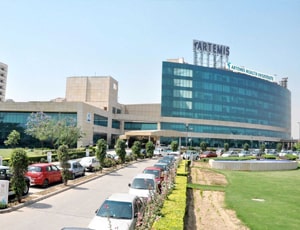
Artemis Hospital, established in 2007 in Gurgaon, India, is a 750+ bed, state-of-the-art multi-speciality hospital and the first in Gurgaon accredited by JCI and NABH. A flagship of the Apollo Tyres Group, it offers advanced care across cardiology, oncology, orthopaedics, neurology, and transplant medicine, supported by modern infrastructure and 60+ world-class operating theatres. Its Centres of Excellence span critical areas like heart, cancer, neurosciences, orthopaedics, and women & child care. Guided by values of Service, Compassion, and Integrity, Artemis combines innovation, technology, and affordability, making it a trusted international healthcare destination for comprehensive and compassionate patient care.

Gurgaon, India
Medanta – The Medicity, Gurugram, founded by renowned cardiac surgeon Dr. Naresh Trehan, is a leading multi-super speciality hospital offering advanced yet affordable healthcare. Spread across a 43-acre campus, it houses 1,391 beds, 270 ICU beds, 40 operation theatres, and 900+ doctors across 30+ specialities. Accredited by JCI, NABH, and NABL, Medanta is designed per American Institute of Architects’ healthcare guidelines. Recognised as the Best Private Hospital in India (2020–2025) and among the World’s Top 250 Hospitals (Newsweek 2024), it excels in Cardiac Care, Cancer, Neurosciences, Gastro, Orthopaedics, and Renal Care, ensuring world-class, collaborative, and compassionate treatment.

Mumbai, India

Ghaziabad, India

Gurgaon, India

Delhi, India
Fortis Escorts Heart Institute, located in New Delhi, was founded in 1988 and is a JCI-accredited cardiac care centre, as well as the largest private heart hospital in the Asia-Pacific region. The hospital has 285 beds, five cath labs, state-of-the-art ICUs, and NABL-accredited labs and offers advanced cardiac care surgery 24?7. The hospital also provides advanced cardiac treatment, but is particularly well-known for heart transplants as well as minimally invasive cardiac surgery and paediatric cardiology. The hospital offers world-class facilities and patient-centric services, providing comprehensive support to all international patients.

Chennai, India
Fortis Healthcare Chennai, part of India’s leading Fortis network with 33 hospitals and 5,700+ beds, is a 180-bed multispecialty facility featuring 60 ICU beds, 4 advanced OTs, and a digital cath lab. Staffed by 160 consultants, it delivers world-class, patient-centric care across cardiology, neurology, orthopaedics, and critical care. It has 4 JCI & 26 NABH accredited Hospitals.

Delhi, India
Types of CAR-T in Max Super Speciality Hospital, Patparganj and its associated cost
| Treatment Option | Approximate Cost Range (USD) | Approximate Cost Range (INR) |
|---|---|---|
| CAR-T | 60939 - 86511 | 4969674 - 7097089 |

Mohali, India
Fortis Hospital, Mohali, is a leading 400+ bed tertiary care hospital across 8.22 acres, accredited by JCI, NABH, and NABL, offering 42 specialties. The hospital excels in Cardiac Sciences, Oncology, Neurosciences, Orthopaedics, Robotic Surgery, and Transplants. Fortis Cancer Institute provides advanced cancer care with robotic surgery, LINAC, PET-CT, and a multidisciplinary Tumor Board. The Cardiac Centre features 3 high-end cath labs, heart transplants, and expert cardiologists. Neurosciences and Orthopaedics Centres offer advanced brain, spine, joint, and trauma care. Fortis Paalna ensures world-class maternity and neonatal services, including high-risk pregnancy management and stem cell collection, making it a top healthcare destination in North India.
Need Some Advice From Our Experts?
Our team of healthcare experts would be happy to assist you

+99


Opinion & Option
We submit the most accurate opinion and options from one or more countries for your review
Consult Privately
Consult with a certified specialist privately on our telemedicine platform even before you decide to travel
Logistics
We handle flights, visas, transfers, and accommodation—so you can focus on your health.
Recovery
Our In-house rehabilitation service packages to better your recovery and treatment outcome
Our network connects you with the leading medical tourism destinations globally, offering a wide range of cities, top doctors, and flexible pricing options.


CAR-T Cell therapy represents a groundbreaking approach in the treatment of certain cancers, especially for patients who have not had success with conventional therapies.
The cost of CAR-T starts from USD 80,000 and goes up to USD 120,000.
Different hospitals have different pricing policies when it comes to the cost of CAR-T in India. The top hospitals for CAR-T in India cover all the expenses related to the pre-surgery investigations of the candidate. Typically, the package cost of CAR-T in India includes the expenses related to the surgeon's fee, anesthesia, hospital, meals, nursing, and ICU stay. Many things may increase the cost of CAR-T in India, including prolonged hospital stays and complications after the procedure.
Therapy with chimeric antigen receptor (CAR) T cells is used to treat certain forms of blood cancer. Your cancer-fighting T cells are given a lab-made gene by scientists as part of the treatment. The alteration facilitates T cell cancer detection and elimination. When other therapies don't work or blood cancer returns, medical professionals may employ this one.
Blood cancer may occasionally be treated by CAR T-cell therapy. In some cases, it prolongs the survival of patients with certain blood malignancies.
Your immune system tracks proteins known as antigens on the surface of foreign cells to recognise them, including cancer.
Typical CAR-T treatment candidates include:
The main uses of CAR-T therapy are for the treatment of certain blood malignancies, such as:
The usefulness of CAR-T therapy for solid tumors, such as pancreatic, prostate, and breast malignancies, is still being investigated, but these uses are still in the experimental stages. The efficacy of the therapy may differ depending on the particular cancer type and patient-specific circumstances.
Multiple possible side effects of CAR-T therapy exist, with varying degrees of severity. Among the most prevalent and important are:
A systemic inflammatory reaction known as cytokine release syndrome (CRS) can happen following specific immunotherapies, such as CAR-T treatment. It is caused by immune cells, especially T cells, being activated and proliferating and releasing a lot of cytokines, which are substances that help for managing immunological responses.
CAR-T cells target cancer cells upon recognition, which causes a rapid release of cytokines into the bloodstream, which subsequently causes CRS. The symptoms can vary in intensity and include the following:
CRS is categorized into four degrees, from mild (grade 1) to severe (grade 4), according to its degree. Severe instances might need to be hospitalized and treated closely.
Yes, depending on the particular cancer kind, the patient's health, and the treatment plans, CAR-T therapy can be utilized in addition to other treatments. The following are some possible combinations of CAR-T therapy and other treatments:
Healthcare professionals carefully assess patients and take into account several criteria, including patient health, prior treatments, and the kind of cancer, before deciding whether to combine CAR-T therapy with other treatments.
Your doctor might advise that you stay in the hospital right away following treatment because this treatment has the potential to cause major side effects. Your length of stay in the hospital could range from seven to ten days, depending on your condition and any adverse effects. For the first month following treatment, you should aim to live close to your treatment facility by car. Additionally, you'll need:
There are many hospitals that perform CAR-T in India. Some of the most renowned hospitals for CAR-T in India include the following:
After discharge from the hospital, the patient has to stay for another 30 days in the country for complete recovery. This time frame is important to ensure that the surgery was successful and the patient is fit to fly back.
Apart from the cost of CAR-T, the patient is also required to pay additionally for daily meals and guest house accommodation. These charges start from USD 50 per person.
Which are the best cities in India for CAR-T Procedure?
Some of the popular cities in India that offer CAR-T include the following:
Many CAR-T surgeons offer video telemedicine consultations to patients who need this treatment. Some of them include the following:
| Doctor | Cost | Schedule Your Appointment |
|---|---|---|
| Dr. Shivam Vatsal Agarwal | USD 14 | Schedule Now |
| Dr. Dinesh Chandra Katiyar | USD 35 | Schedule Now |
| Dr. Sunil Kumar Gupta | USD 35 | Schedule Now |
| Dr. Dinesh Pendharkar | USD 14 | Schedule Now |
| Dr. Sumant Gupta | USD 14 | Schedule Now |
| Dr. Gurdeep Singh Sethi | USD 44 | Schedule Now |
The patient is supposed to stay at the hospital for about 2 days after CAR-T for monitoring and care. The patient is subjected to several biochemistry and radiological scans to see that everything is okay and the recovery is on track. After making sure that the patient is clinically stable, discharge is planned.
The average rating for CAR-T hospitals in India is 3.9. This rating is automatically calculated based on several parameters such as the infrastructure of the hospital, quality of services, nursing support, and other services.
There are more than 2 hospitals that offer CAR-T in India. The above-listed clinics are approved to perform the surgery and have the proper infrastructure to handle CAR-T patients. Additionally, these hospitals are known to comply with international standards as well as local legal requirements for the treatment of patients.

Surgical Oncologist
15 Years of Experience
Dr. Prateek Varshney is a renowned Surgical Oncologist. He has experience of more than 15+ years in surgical Oncology. He is currently practicing as a consultant at Metro Mass Hospital and Cancer Institute. He was also previously associated as a consultant with Sir Ganga Ram Hospital and as a professor at Gujarat Cancer Research Institute. View More