Your Notifications
All done, no notifications

VSD Closure / Repair (Adult) Cost in Turkey

Costs starts from USD9900 to USD12100
Filters

How Much Does VSD Closure/Repair Cost in Turkey?

The cost of VSD Closure Repair in Turkey typically ranges between USD 9900 - USD 12100.

However, this cost can vary depending on several factors, including the type and severity of the condition, treatment techniques chosen, the healthcare facility's location and reputation, the treating professionals' experience and specialisation, and the patient's overall health status.

Additionally, factors like the duration of treatment, the need for follow-up care, and the use of advanced technologies or specialised treatments can further influence the overall cost.

Factors Influencing the Cost of VSD Closure/Repair:

Ventricular septal defect (VSD) is the most common congenital (present at birth) heart defect and frequently occurs in conjunction with other heart defects or problems. A small VSD is typically mild and has few or no symptoms, but a larger hole may need to be repaired to prevent permanent damage and complications.

A VSD is a hole or opening (defect) in the septum, the wall that divides the heart's two bottom chambers (ventricles).

The wall separating the chambers usually shuts before the fetus is born, preventing oxygen-rich blood from mingling with oxygen-poor blood at birth. If the hole doesn't seal, the body may receive less oxygen, or the heart may pump more blood.

Cost of VSD Closure / Repair (Adult) in Major Cities of Turkey

CityMinimum Cost (USD)Minimum Cost (TRY)Maximum Cost (USD)Maximum Cost (TRY)
AnkaraUSD 9900386694USD 12100472626
AntalyaUSD 9900386694USD 12100472626
ElazigUSD 8910348025USD 10890425363
IstanbulUSD 9900386694USD 12100472626
IzmirUSD 9900386694USD 12100472626
KocaeliUSD 9900386694USD 12100472626
OrduUSD 9900386694USD 12100472626
SamsunUSD 9900386694USD 12100472626
TokatUSD 8910348025USD 10890425363
TrabzonUSD 8910348025USD 10890425363
UsakUSD 8910348025USD 10890425363
ZonguldakUSD 8910348025USD 10890425363

VSD Closure / Repair (Adult) Cost : A Global Comparison

CountryMinimum CostMinimum Local CurrencyMaximum CostMaximum Local Currency
IndiaUSD 4500INR 385380USD 5500INR 471020
LithuaniaUSD 10000LTL 34207USD 15000LTL 51310
MalaysiaUSD 10000MYR 42400USD 15000MYR 63600
MoroccoUSD 5000MAD 46150USD 12000MAD 110760
PolandUSD 5000PLN 18800USD 15000PLN 56400
Saudi ArabiaUSD 10000SAR 37500USD 20000SAR 75000
SingaporeUSD 20000SGD 25800USD 28000SGD 36120
SpainUSD 20000ESP 2940798USD 40000ESP 5881596
SwitzerlandUSD 30000CHF 24900USD 50000CHF 41500
ThailandUSD 10000THB 327100USD 13000THB 425230
Tunisiaget request
TurkeyUSD 9900TRY 386694USD 12100TRY 472626
United Arab EmiratesUSD 15000AED 55050USD 30000AED 110100
United Kingdomget request

Need Help Planning Your Treatment Abroad?

Your 24/7 AI Health Assistant

A ventricular septal defect, or VSD, is a condition where there is a hole in the wall between the two lower chambers of the heart, present from birth. It's the most common congenital heart defect and can occur alongside other heart issues. A small hole usually causes minor or no symptoms, but a larger one may require repair to prevent lasting damage and complications.

Ventricular septal defects (VSD) occur in around one-third of 1% of newborns, but it's less likely for adults to be diagnosed since the defect often closes naturally during childhood in 90% of cases. VSDs linked to heart attacks are exceptionally rare nowadays, with less than 1% of all heart attacks being associated with them, thanks to modern treatment methods.

The exact cause of ventricular septal defects (VSD) at birth remains unknown. However, it can be associated with other heart defects, heart conditions, or genetic disorders. The use of specific anti-seizure medications (sodium valproate and phenytoin) or alcohol consumption during pregnancy may potentially elevate the risk of a child developing VSD, although further research is needed to establish these as definite causes.

A rare known cause of VSD is its occurrence as a side effect of a heart attack.

Ventricular septal defects (VSD) come in four main types, each differing in location and hole structure:
  • Membranous: This is the most common, constituting about 80% of cases. It occurs in the upper part of the ventricular wall.
  • Muscular: Found in approximately 20% of VSD cases in infants, this type often involves multiple holes in the heart wall.
  • Inlet: Positioned just below the tricuspid valve in the right ventricle and the mitral valve in the left ventricle, blood passing through the ventricles must navigate this type of VSD.
  • Outlet (conoventricular): Creating a hole just before the pulmonary valve in the right ventricle and before the aortic valve in the left ventricle, this type connects the two chambers, requiring blood to pass through the VSD on its way through both valves.

Closure of VSD improves general heart function, reduces complications such as heart failure or pulmonary hypertension, decreases abnormal blood flow between the heart's ventricles, and facilitates normal child development and growth.

If your child or you have symptoms such as fatigue, poor growth or feeding, shortness of breath, frequent respiratory infections, or a heart murmur on physical exam, visit a doctor. Early identification and treatment improve results and reduce complications.

Physical exam, echocardiogram, chest X-ray, ECG, and possibly cardiac MRI or catheterisation are all components of the preparation process. Risks of anaesthesia, fasting orders, and current medications need to be addressed with patients (or parents). Preoperative counselling is provided, especially in children.

  • Surgical Closure: After open-heart surgery performed under general anaesthesia, a suture or patch is employed to close the defect.
  • Catheter-Based Closure: A minimally invasive procedure where a device is inserted into a blood vessel via a catheter.
  • Medical Management: Medication can be employed to manage symptoms in minor faults until they resolve spontaneously or further intervention is needed.

Surgical closure of a VSD usually takes 3–5 hours. The hospital stay is five to ten days. The hospital stay for catheter-based procedures is shorter, at one to two days.

  • Bleeding
  • Infection
  • Abnormal heartbeat
  • Insufficient closure, or residual shunt
  • Blockage of the heart

Closures of VSD allow children to grow normally, enhance the heart's efficiency, relieve symptoms, prevent heart and lung damage later in life, and reduce the necessity of lifelong medical treatment.

Rest, activity restrictions, echocardiogram, and, as needed, antibiotics or antiarrhythmics form the course of recovery. Children generally get back to their usual activities within several months.

Minimal recurrence occurs, and surgical and catheter-based closure is successful. Outcomes are excellent in the long term, particularly in patients who are managed early before they develop complications.Surgical success was 91.4%, and success with the VSD closure device was 92.3%. 14.3% of patients died in the hospital.

Would you like some help? We are available.

Get Help
Explore Hospitals ( 22 )
VSD Closure / Repair (Adult) in Medipol Bahçelievler Hospital: Costs, Top Doctors, and Reviews

Istanbul, Turkey

  • Joint Commission International, or JCI

Medipol Bahcelievler Hospital is a medical institution providing a full range of medical and individualized approaches to its patients. Medipol has the ambition to bring high quality and maximum security to people in need by employing state-of-the-art technologies in medicine. They ensure that the health of the patients is improved by fashioning unique physician specialty treatment programs.

Medipol Bahcelievler Hospital provides an exceptional position in the healthcare industry with a policy of clear communication, professionalism, and reliability to patient expectations. Medipol Bahçelievler Hospital is situated in the European Side of Istanbul, dedicated to 24-hour health care for you and your loved ones, equipped with a fully functional operation theatre and ICUs with state-of-the-art equipment, laboratory, emergency, and advanced treatment rooms

VSD Closure / Repair (Adult) in Florence Nightingale Hospital: Costs, Top Doctors, and Reviews

Istanbul, Turkey

  • Joint Commission International, or JCI

The first green hospital in Turkey, Istanbul Florence Nightingale Hospital, was inaugurated in 2013. Group The Florence Nightingale hospitals are the first Turkish hospitals to be granted Joint Commission International (JCI) accreditation, and they continue to be associated and work with esteemed healthcare organizations.

The Florence Nightingale Group treats 250,000 outpatients and 70,000 inpatients annually, demonstrating its excellence. The hospitals have a capacity of 804 inpatient beds, 141 ICU beds, and 40 operating rooms, and perform 20,000+ procedures annually, of which 1,000 are cardiac operations for children and 2,000 are for adults. For conducting difficult orthopedic, general surgery, minimally invasive, and other heart treatments, the facility stands out. All operating rooms can be interconnected by audio-visual to a 300-person conference room and global hubs, enabling interactive medical teaching and scientific activity.

Interpreter and translator services for languages such as Turkish, Azerbaijani, Bulgarian, Arabic, English, Persian, Serbian, Russian, Albanian, Macedonian, German, Bosnian, and Romanian are available.

The hospital has specialized departments such as Cardiology and Cardiac Surgery, IVF and Infertility, Nephrology, Oncology and Oncosurgery, Spine Surgery, Neurology and Neurosurgery, Orthopedics, Gynecology, and Obesity or Bariatric Surgery. With an extensively qualified and experienced team of advisors and interpreters, Florence Nightingale Istanbul is committed to providing one-stop service from beginning to end, 24 hours a day, 7 days a week.

VSD Closure / Repair (Adult) in Antalya Anadolu Hastanesi: Costs, Top Doctors, and Reviews

Antalya, Turkey

Types of VSD Closure / Repair (Adult) in Antalya Anadolu Hastanesi and its associated cost

Treatment OptionApproximate Cost Range (USD)Approximate Cost Range (TRY)
VSD (Overall)5584 - 13780168335 - 401462
Primary Surgical Closure6179 - 9112180417 - 272261
Primary Surgical Closure7398 - 11218215822 - 335738
Transcatheter VSD Closure8411 - 13636257277 - 413605
  • Address:
  • Facilities related to Antalya Anadolu Hastanesi: Choice of Meals, Interpreter, TV inside room, Accommodation, Airport Transfer
VSD Closure / Repair (Adult) in Medical Park Usak Hospital: Costs, Top Doctors, and Reviews

Usak, Turkey

  • Joint Commission International, or JCI

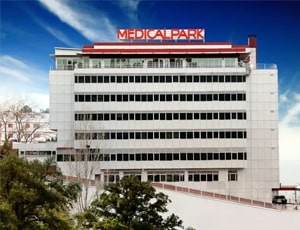
Medical Park is Turkey's largest network of hospitals, with hospitals in 17 cities across the country. The hospitals of Medical Park Group have the latest equipment for accurate diagnosis and effective treatment.

The existence of Medical Park in Uşak, one of the biggest and most reputable healthcare institutions in the nation, is essential to the city's further expansion and transformation into a center of high-quality healthcare. The hospital provides modern medical services, advanced technology, and a staff of highly skilled experts who provide patients in Uşak and the neighboring provinces with compassionate and efficient treatment as part of its dedication to providing high-quality healthcare for everyone.

VSD Closure / Repair (Adult) in Medical Park Tarsus Hospital: Costs, Top Doctors, and Reviews

Istanbul, Turkey

  • Joint Commission International, or JCI

Types of VSD Closure / Repair (Adult) in Medical Park Tarsus Hospital and its associated cost

Treatment OptionApproximate Cost Range (USD)Approximate Cost Range (TRY)
VSD (Overall)5622 - 13484172788 - 398146
Primary Surgical Closure5993 - 9111187004 - 272066
Primary Surgical Closure7292 - 11011217941 - 332674
Transcatheter VSD Closure8551 - 13482254728 - 405831
  • Address:
  • Facilities related to Medical Park Tarsus Hospital: Online Doctor Consultation, Post operative followup, Mobility Accessible Rooms, Rehabilitation, Religious Facilities
VSD Closure / Repair (Adult) in Medical Park Trabzon Star Hospital: Costs, Top Doctors, and Reviews

Trabzon, Turkey

  • Joint Commission International, or JCI

Types of VSD Closure / Repair (Adult) in Medical Park Trabzon Star Hospital and its associated cost

Treatment OptionApproximate Cost Range (USD)Approximate Cost Range (TRY)
VSD (Overall)5722 - 13788171985 - 402928
Primary Surgical Closure5979 - 9233182978 - 273735
Primary Surgical Closure7426 - 11295222510 - 335135
Transcatheter VSD Closure8494 - 13763255599 - 399032
  • Address: Pazarkap, Medical Park Trabzon Hastanesi, Devlet Sahil Yolu Caddesi, Ortahisar/Trabzon, Turkey
  • Facilities related to Medical Park Trabzon Star Hospital: Online Doctor Consultation, Post operative followup, Mobility Accessible Rooms, Rehabilitation, Air Ambulance
VSD Closure / Repair (Adult) in VM Medical Park Ankara: Costs, Top Doctors, and Reviews

Ankara, Turkey

  • Joint Commission International, or JCI

Types of VSD Closure / Repair (Adult) in VM Medical Park Ankara and its associated cost

Treatment OptionApproximate Cost Range (USD)Approximate Cost Range (TRY)
VSD (Overall)5541 - 13280170950 - 404762
Primary Surgical Closure6052 - 9162187155 - 283650
Primary Surgical Closure7310 - 11086221103 - 344852
Transcatheter VSD Closure8375 - 13217259918 - 404617
  • Address: Kent Koop Mah., Medical Park Ankara Hastanesi, 1868. Sok., Batkent/Yenimahalle/Yenimahalle/Ankara, Turkey
  • Facilities related to VM Medical Park Ankara: Online Doctor Consultation, Post operative followup, Mobility Accessible Rooms, Rehabilitation, Air Ambulance
VSD Closure / Repair (Adult) in Medical Park Tokat Hospital: Costs, Top Doctors, and Reviews

Tokat, Turkey

  • Joint Commission International, or JCI

Types of VSD Closure / Repair (Adult) in Medical Park Tokat Hospital and its associated cost

Treatment OptionApproximate Cost Range (USD)Approximate Cost Range (TRY)
VSD (Overall)5558 - 13755171818 - 409604
Primary Surgical Closure6000 - 9101180569 - 279807
Primary Surgical Closure7153 - 11126224144 - 345562
Transcatheter VSD Closure8555 - 13654251734 - 405034
  • Address: Yeilrmak, Medical Park Tokat Hastanesi, Vali Zekai G
  • Facilities related to Medical Park Tokat Hospital: Health Insurance Coordination, Mobility Accessible Rooms, Private Rooms, Religious Facilities, Nursery / Nanny Services
VSD Closure / Repair (Adult) in VM Medical Park Samsun Hospital: Costs, Top Doctors, and Reviews

Samsun, Turkey

  • Joint Commission International, or JCI

Types of VSD Closure / Repair (Adult) in VM Medical Park Samsun Hospital and its associated cost

Treatment OptionApproximate Cost Range (USD)Approximate Cost Range (TRY)
VSD (Overall)5725 - 13338172447 - 406355
Primary Surgical Closure6194 - 9320183880 - 275548
Primary Surgical Closure7205 - 11076220130 - 343257
Transcatheter VSD Closure8363 - 13468252555 - 401012
  • Address: Cumhuriyet, Medical Park, 39. Sokak, Atakum/Samsun, Turkey
  • Facilities related to VM Medical Park Samsun Hospital: Online Doctor Consultation, Post operative followup, Mobility Accessible Rooms, Rehabilitation, Air Ambulance
VSD Closure / Repair (Adult) in Avcilar Anadolu Hospital: Costs, Top Doctors, and Reviews

Istanbul, Turkey

  • Joint Commission International, or JCI

Types of VSD Closure / Repair (Adult) in Avcilar Anadolu Hospital and its associated cost

Treatment OptionApproximate Cost Range (USD)Approximate Cost Range (TRY)
VSD (Overall)5661 - 13511169260 - 398027
Primary Surgical Closure6053 - 9021179587 - 272314
Primary Surgical Closure7322 - 11100221103 - 339851
Transcatheter VSD Closure8406 - 13392251309 - 410072
  • Address: Mustafa Kemal Paa,
  • Facilities related to Avcilar Anadolu Hospital: Health Insurance Coordination, Mobility Accessible Rooms, Private Rooms, Religious Facilities, Nursery / Nanny Services

Need Some Advice From Our Experts?

Request a Call Back Now!

Our team of healthcare experts would be happy to assist you

trusted Patientstrusted Patients+99
Trusted by 50000+ Patients
Required | alphabets and spaces
Required | A valid, working email address
Required | A valid contact

Process Involved for VSD Closure / Repair (Adult) in Turkey

  • Evaluation & Preparatory Stage: It includes access to detailed history, diagnostic tests and cardiac hypertension evaluation, followed by pre-surgery preparation.
  • Procedure Stage: Catheter-based closure and surgical repair
  • Postoperative Stage: Intensive monitoring and pain & infection management
  • Rehabilitation & Follow-Up Care
  • Significant Left-to-Right Shunting
  • Heart Failure Symptoms
  • Pulmonary Hypertension
  • Endocarditis Risk
  • Progressive Heart Enlargement (LV Dilatation)
  • Patients with Symptoms of Heart Failure or Pulmonary Overload
  • Pulmonary Hypertension
  • Infective Endocarditis
  • Left Ventricular Enlargement
  • Mechanical Valves are composed of durable materials like Carbon and Titanium.
  • Biological Valves are composed of animal tissues like cow and pig.
  • Pulmonary Hypertension Management
  • Valve Repair or Replacement
  • Aneurysm Repair
  • Pacemaker Implantation
  • Coronary Artery Bypass Grafting (CABG)
  • Improves Heart Efficiency
  • Prevents Heart Failure
  • Reduces Pulmonary Hypertension Risk
  • Lowers Endocarditis Risk
  • Enhances Quality of Life & Longevity
  • Cardiac Surgeon
  • Interventional Cardiologist
  • Perfusionist
  • Cardiologist
  • Physiotherapist
  • Rehabilitation Specialists
  • Fill out the inquiry form: Fill out the form to provide us with the relevant information about your condition.
  • Consult with Our Healthcare Expert: One of our qualified specialists will contact you for a consultation.
  • Receive a Detailed Treatment Plan: After examining your situation, we will provide you with a detailed treatment plan that includes expert views and cost breakdowns for various choices.
  • Choose your preferred option: Choose the treatment option that suits you the best.

Instantly Connect with our VSD Closure / Repair (Adult) Specialists

Doctor 1
Doctor 2
Doctor 3
Doctor 4
Doctor 5
Doctor 6
Doctor 7
Doctor 8
Our Services to Better your Experience

Opinion & Option

We submit the most accurate opinion and options from one or more countries for your review

Consult Privately

Consult with a certified specialist privately on our telemedicine platform even before you decide to travel

Logistics

We handle flights, visas, transfers, and accommodation—so you can focus on your health.

Recovery

Our In-house rehabilitation service packages to better your recovery and treatment outcome

Other Popular Countries for VSD Closure / Repair (Adult)

Our network connects you with the leading medical tourism destinations globally, offering a wide range of cities, top doctors, and flexible pricing options.

Singapore
United Arab Emirates
Malaysia
Italy

Conditions treated by VSD Closure / Repair (Adult)

Frequently Asked Questions

A. An aperture in the heart is called a ventricular septal defect (VSD). Congenital heart defects are frequent cardiac conditions that exist from birth. The ventricles, or lower chambers of the heart, are divided by a hole in the wall.

A hole in the heart that exists from birth is known as a ventricular septal defect (VSD) or congenital heart defect. The opening is situated between the left and right ventricles, the lower heart chambers. It permits blood that is rich in oxygen to return to the lungs rather than being circulated throughout the body.

A. On average, VSD Closure / Repair (Adult) in Turkey costs about $9900. Many multispecialty hospitals that are SAS, JCI, and TEMOS certified are approved to operate a VSD Closure / Repair (Adult) in Turkey

A. VSD Closure / Repair (Adult) package cost in Turkey has different inclusions and exclusions. Many hospitals cover the cost of pre-surgical investigations of the patient in the treatment package. The treatment cost usually includes the expenses related to hospitalization, surgery, nursing, medicines, and anesthesia. Many things may increase the cost of VSD Closure / Repair (Adult) in Turkey, including prolonged hospital stay and complications after the procedure.

The location and size of the ventricular septal defect (VSD), the patient's general health, and the presence of symptoms all influence the available treatment choices for VSDs in adults. Below is a summary of the available treatments:

  • Medications to lessen the strain on the heart and regulate blood pressure, doctors may prescribe diuretics, antihypertensives, and medicines to treat the symptoms of heart failure.
  • In adults, open heart surgery is the most usual method for correcting a VSD. The procedure entails opening the chest, patching or suturing the VSD closed, and employing a heart-lung machine to replace the failing heart. Usually, general anesthesia is used to perform this kind of surgery.
  • Transcatheter Closure: To implant a closure device—a sort of plug or occluder—across the VSD, a catheter is inserted into a blood artery, commonly in the groin, and guided to the heart. In some circumstances, this less invasive method may be taken into consideration instead of open heart surgery.
  • Medication and lifestyle modifications are part of heart failure management, which aims to enhance heart health and symptoms.
  • Management of Pulmonary Hypertension: To manage excessive blood pressure in the lungs, medications or other treatments may be required.
  • Treatment for Arrhythmias: Medication or techniques such as ablation may be used to address arrhythmias.

A. The length of recuperation following ventricular septal defect (VSD) closure surgery might differ based on several variables, such as the procedure type, general health, and the presence of complications. Here's a basic overview of what to expect:

  • After open heart surgery, patients usually stay in the hospital for five to seven days. The exact amount of time depends on how well the patient is recovering and whether there are any complications. A minimally invasive procedure to correct the VSD can result in a 2–4 day hospital stay, at most.
  • Pain Control: Medications are used to treat pain and discomfort. Most patients have some discomfort at the surgery site, and they might require pain medication for a few days or weeks.
  • Return to Normal Activities: A full recovery, which includes going back to more demanding activities or sports, may take several months, but many patients can resume their regular daily routines in as little as six to eight weeks. You must follow the advice of your surgeon regarding when to start exercising again.
  • Long-Term Recovery: It could take several months to fully recover, taking into account any potential changes in heart function and adaption to the closure. A cardiologist should be consulted regularly to assess development and resolve any issues.

A. Ventricular septal defect (VSD) closure does have some risks, much like any major operation. Even though many patients recover without any issues, it's crucial to be aware of the following possible risks:

  • Infection: With today's sophisticated surgical methods and medications, the danger of infection at the incision site or within the heart is minimal.
  • Bleeding: Bleeding after surgery may happen from the inside or the outside and may need further treatments or blood transfusions.
  • Heart Rhythm Issues: As the heart recovers from surgery, arrhythmias, or irregular heart rhythms, may appear. These might only last a short while or need more care.
  • Cardiac Complications: Although less often, complications include problems with the heart's pumping function or heart valves are a possibility.
  • Stroke: Blood clots that develop during or after surgery carry a small but potential risk of stroke.
  • Reopening of the VSD: Occasionally, the defect may not shut all the way or the closure device may move, necessitating further treatments.
  • Pneumonia or Respiratory Problems: Patients recovering from surgery may be more susceptible to developing pneumonia or other respiratory conditions, especially if they have underlying medical conditions.
  • Reaction to Anesthesia: Unfavorable anesthesia-related reactions are possible with any major operation, although the anesthesiology staff takes great care to prevent these.
  • Prolonged Recovery: Depending on their unique medical circumstances and the particulars of the surgery, some patients may need a longer or more difficult recovery period.

A. Ventricular septal defect (VSD) in adults can occasionally manifest with symptoms that are distinct from those in children. The severity of the VSD and whether it results in serious problems with blood flow or not typically determine the symptoms. Among the typical signs of VSD in adults are:

  • Breathlessness: Mostly during exercise or physical activity, as a result of increased blood flow to the lungs.
  • Fatigue: Extended periods of exhaustion or fatigue, frequently caused by the heart pumping more forcefully than normal.
  • Palpitations: If there are concomitant arrhythmias, irregular or fast heartbeats may manifest.
  • Swelling: Edema or swelling brought on by fluid retention in the legs, ankles, or abdomen; this condition can be brought on by heart failure.
  • Chest Pain: Although less frequent, people may feel pain or discomfort in their chests.
  • Recurrent Respiratory Infections: Aberrant blood flow may make people more vulnerable to lung infections like pneumonia.
  • Cyanosis: A bluish tinge to the skin, lips, or fingers that may occur if there is a substantial blood shunt and low blood oxygen levels as a result of a VSD.
  • Exercise Intolerance: When the heart's efficiency is compromised, physical activity or exercise becomes difficult.

A. A child's ventricular septal defects (VSDs) can sometimes be identified shortly after birth. Ventricular septal defects, or VSDs, may, nevertheless, be undetected until later in life. An ultrasound performed during pregnancy may occasionally reveal a ventricular septal defect (VSD) before the baby is born. The following tests are performed to aid in the diagnosis of ventricular septal defect:

  • Echocardiography: The most popular test for identifying a ventricular septal defect is this one. The heart in motion can be visualized through the use of sound waves. The efficiency of blood flow via the heart and heart valves can be seen in an echocardiography.
  • ECG, or electrocardiogram: This rapid and simple examination captures the heart's electrical activity. It may display the heart rate in both rapid and slow waves.
  • Chest Radiography: An X-ray of the chest can reveal the state of the lungs and heart. It can detect an enlarged heart and excess fluid in the lungs.
  • Oximetry of the pulse: The blood's oxygen content is measured by a fingertip sensor. Insufficient oxygen levels could indicate a heart or lung issue.
  • Catheterization of the heart: A thin, flexible tube called a catheter is placed into an arm or groin blood vessel during this test, and it is then guided through the blood vessels and into the heart. It allows medical professionals to assess the function of the heart's chambers and valves as well as diagnose congenital cardiac abnormalities.
  • Cardiac MRI (magnetic resonance imaging): Radio waves and magnetic fields are utilized to produce finely detailed images of the heart. This test may be requested by a medical professional if additional information is required following an echocardiography.
  • CT scan (computerized tomography): The heart is seen in depth using a series of X-rays. If an echocardiography didn't give enough information, it might be performed.

A. A thorough evaluation by a medical professional, usually a cardiologist or cardiac surgeon, is necessary to determine if you are a candidate for ventricular septal defect (VSD) closure surgery. These are a few elements that are typically taken into account:

  • Size and Location: Large VSDs or those that result in a substantial blood shunt between the ventricles of the heart are more likely to need to be closed. The surgical technique may also be affected by the VSD's location.
  • Symptoms: Surgery may be recommended if you experience symptoms connected to the VSD, such as exhaustion, heart failure, exercise intolerance, or shortness of breath.
  • Effect on Heart Function: Echocardiography and MRI tests are used to evaluate the impact of VSD on heart function. Significant changes in the heart's structure or pumping efficiency could point to the necessity for surgery.
  • Associated Complications: Surgical closure may be required if you experience complications from the VSD, such as pulmonary hypertension or endocarditis.
  • Age and General Health: It's critical to consider both your age and overall health. Patients who are younger or in better general health might make better surgical candidates. Individuals who are older or have major comorbidities might require a more comprehensive evaluation.

A. About two hours will pass throughout the treatment. A tiny, flexible tube called a catheter is inserted into many groin blood vessels by the medical professional. There will be a little device within one of the catheters. The catheter is threaded by the healthcare professional to the ventricular septum within the blood vessel.

VSD Closure / Repair (Adult) in Turkey is offered by multiple hospitals across the country. Some of the most renowned hospitals for VSD Closure / Repair (Adult) in Turkey include the following:

A. The recovery of the patient may vary, depending on several factors. However, on average, a patient is supposed to stay for about 21 days in the country after discharge. This period is important to conduct all the follow-up tests to ensure that the surgery was successful and the patient can go back to the home country.

A. There are certain additional costs that the patient has to pay apart from the VSD Closure / Repair (Adult) cost. These charges start from USD 50 per person.

A. Many cities offer VSD Closure / Repair (Adult) in Turkey, including the following:

  • Ankara
  • Antalya
  • Istanbul
  • Fethiye

The patient is supposed to stay at the hospital for about 3 days after VSD Closure / Repair (Adult) for monitoring and care. This phase is important to ensure that the patient is recovering well and is clinically stable. During this time, several tests are performed before the patient is deemed suitable for discharge.

A. The average rating for VSD Closure / Repair (Adult) hospitals in Turkey is 3.6. Several parameters such as hospital infrastructure, pricing policy, quality of services, politeness of staff, etc. contribute to the rating.

A. There are more than 17 hospitals that offer VSD Closure / Repair (Adult) in Turkey. The above-listed clinics are approved to perform the surgery and have the proper infrastructure to handle VSD Closure / Repair (Adult) patients. Apart from good services, the hospitals are known to follow all standard and legal guidelines as dictated by the local medical affairs body or organization.

A. Some of the renowned doctors for VSD Closure / Repair (Adult) in Turkey are:

Author

Dr. Abdullah Rahil

MPT (Neuro)

5 Years of Experience

Dr. Abdullah Rahil, M.P.T. (Neurology), is a dedicated physiotherapy professional specializing in orthopedic, neurological, and musculoskeletal rehabilitation. With strong clinical expertise, he focuses on improving patient mobility, reducing pain, and restoring functional independence through evidence-based rehabilitation techniques. He is skilled in advanced therapeutic approaches that support effective rehabilitation and recovery for a wide range of musculoskeletal and neurological conditions, focusing on improving mobility, reducing pain, and restoring functional independence. Dr. Rahil has extensive experience managing diverse rehabilitation cases. His patient-centered approach emphasizes personalized treatment plans, continuous assessment, and comprehensive rehabilitation to achieve optimal recovery outcomes. . View More

Reviewer

Dr. Naresh Kumar Goyal

Cardiologist

21 Years of Experience

Dr. Naresh Kumar Goyal is highly trained as a cardiologist with exposure in virtually all aspects of cardiology. He qualified with an MD in internal medicine in 1999 from SMS Medical College, Jaipur, and served in the Cardiology Department as an honorary resident. From this stage, he also started with training in the temporary pacing of the pacemaker as well as interventional services. View More