Your Notifications
All done, no notifications

PDA Closure Cost in Saudi Arabia

Costs starts from USD18000 to USD32000
Filters

How Much Does PDA Closure Cost in Saudi Arabia?

The cost of PDA Closure in Saudi Arabia is available on request

However, this cost can vary depending on several factors, including the type and severity of the condition, treatment techniques chosen, the healthcare facility's location and reputation, the treating professionals' experience and specialisation, and the patient's overall health status.

Additionally, factors like the duration of treatment, the need for follow-up care, and the use of advanced technologies or specialised treatments can further influence the overall cost.

Factors Influencing the Cost of PDA Closure:

A heart condition known as patent ductus arteriosus (PDA) affects some babies, usually those born prematurely. PDA affects blood flow between the heart and lungs.

The PDA will start to decrease and close on its own during the first few days of life in most kids with otherwise normal hearts. The lungs may receive more blood if they remain open for an extended period. The likelihood of issues is higher if the PDA is significant. By the child's one year old, some minor PDAs that don't shut early will seal themselves.

Following is the list of countries and the associated costs for PDA Closure:

CountryMinimum CostMinimum Local CurrencyMaximum CostMaximum Local Currency
IndiaUSD 5000INR 415750USD 6500INR 540475
TurkeyUSD 5850TRY 176319USD 7150TRY 215501

Need Help Planning Your Treatment Abroad?

Your 24/7 AI Health Assistant

Patent ductus arteriosus (PDA) is a congenital heart condition where there's an ongoing opening between two major blood vessels. This happens when the usual closure of a vessel, called the “ductus arteriosus”, doesn't occur after birth. While a small PDA may not pose issues and might not need treatment, a larger, untreated one can lead to complications like weakened heart muscles and heart failure. Treatment options include regular checkups, medications, or a procedure to close the opening if necessary.

The exact reason why DA remains open (patent) in some infants is still unknown. However, girls are twice as likely to suffer from PDA as boys. Additionally, PDA may occur in combination with other heart defects as well.

PDA, if left untreated, may lead to several complications. Because of the flow of oxygenated blood from the aorta to the pulmonary artery and the mixing of blood, the vessels of the lungs have to handle a large amount of blood. The larger the volume of blood that enters the pulmonary artery, the greater they have to cope with the increased pressure. This may lead to long-term damage to the lungs.

Patent Ductus Arteriosus (PDA) can be classified into different types based on various factors such as size, clinical presentation, and associated conditions. The primary types include:

  • Small PDA: these are typically asymptomatic.may not require immediate treatment.
  • Moderate-sized PDA: May cause mild symptoms or complications.
Treatment decisions depend on individual cases
  • Large PDA: More likely to cause noticeable symptoms.Increased risk of complications like heart failure.
  • Complex PDA: PDA occurs alongside other heart abnormalities.
  • Symptomatic PDA: This PDA has noticeable symptoms such as poor feeding, breathing difficulties, or fatigue.
  • PDA in Preterm Infants: This is more common in premature babies, and may close on its own or require medical intervention.

The classification helps healthcare professionals tailor treatment plans based on the specific characteristics and needs of individuals with Patent Ductus Arteriosus.

PDA closure aims to eliminate the abnormal blood flow between the pulmonary artery and the aorta caused by a persistent ductus arteriosus. This fetal blood connection fails to close after birth. This treatment enhances long-term cardiovascular growth and health by avoiding complications such as growth retardation, pulmonary hypertension, heart failure, and a high risk of endocarditis.

Children with symptoms of PDA, including poor feeding, rapid breathing, failure to thrive, fatigue during feeding, or a heart murmur, must be evaluated by a paediatrician or cardiologist. Premature infants can have PDA detected by routine echocardiograms even without symptoms. In adults, undiagnosed PDA may present as fatigue, palpitations, or shortness of breath.

Preparation involves a thorough physical examination, echocardiography to verify the diagnosis and estimate size and effect, chest X-ray, and laboratory tests. Patients (or parents) are educated regarding the procedure. In most instances, fasting for several hours before the procedure is necessary. Preterm babies might require stabilisation in the NICU before intervention.

  • Transcatheter closure: A catheter is guided to the heart through a vein in the groin. An occlusion device or coil is used to stop the PDA. This is the recommended approach for most newborns, children, and adults.
  • Surgical Ligation: When catheter-based closure is impractical, particularly in extremely small or preterm neonates, surgical ligation is used. The PDA is clipped or tied off after a little incision is made in the chest.

The majority of the patients are hospitalised for one to two days, and transcatheter closure occurs in a period of one to two hours. A hospital stay of up to a week is often required following surgical ligation, which lasts from one to three hours, especially in the case of premature infants.

  • Bleeding
  • Infection
  • Residual shunting
  • Injury to nearby structures
  • Allergic reaction to contrast dye

PDA closure decreases the danger of heart failure and pulmonary hypertension, reduces volume load on the heart and lungs, improves neonatal growth and feeding, and reduces long-term cardiovascular issues. It typically normalises circulation and development.

Recovery is usually quick after transcatheter closure. There may be mild soreness or discomfort in the groin, and activity might be limited temporarily. Surgical patients take longer to recover and are observed for respiratory complications and wound healing. Successful closure is confirmed by follow-up echocardiography.

PDA closure with catheter-based procedures has a high success rate of 95–99%. Additionally, surgical ligation works quite well. Excellent results are achieved over the long term, especially with early treatment. Most patients don't have any further heart issues and lead regular lives.

Top Selling Packages for PDA Closure

PDA Closure
PDA Closure

Artemis Health Institute, Gurgaon, India

USD 6750 USD 7300

PDA Closure
PDA Closure

Medipol Bahçelievler Hospital, Istanbul, Turkey

USD 12000 USD 14400

PDA Closure
PDA Closure

Fortis Hospital, Shalimar Bagh, Delhi, India

USD 6000 USD 6500

Would you like some help? We are available.

Get Help
Explore Hospitals ( 4 )
PDA Closure in NMC Chronic Care Specialized Hospital: Costs, Top Doctors, and Reviews

Jeddah, Saudi Arabia

NMC Chronic Care Specialized Hospital is a 200-bed long-term acute care (LTAC) facility located in Jeddah, Saudi Arabia. The hospital specializes in providing high-quality inpatient medical and critical care for pediatric, adult, and geriatric patients with long-term and acute healthcare needs. In addition to its inpatient services, NMC Chronic Care operates a stand-alone outpatient dialysis unit, offering specialized care for patients with kidney conditions. The hospital is also known for its comprehensive home healthcare program, delivering essential medical services directly to patients' homes. This includes a range of services such as nursing care, wound care, IV therapy, hemodialysis, physiotherapy, and respiratory care, all tailored to improve the quality of life and promote recovery in the comfort of the patient's environment. With its patient-centered approach and dedicated team of healthcare professionals, NMC Chronic Care Hospital ensures continuous, compassionate care across a variety of medical needs.

PDA Closure in Riyadh Care Hospital: Costs, Top Doctors, and Reviews

Riyadh, Saudi Arabia

  • Joint Commission International, or JCI

Apart from in-detail treatment procedures available, Riyadh Care Hospital located in Riyadh, Saudi Arabia has a wide variety of facilities available for International Patients. Some of the facilities which are provided by them are Accommodation, Airport Transfer, Choice of Meals, Interpreter, SIM, TV inside room. Also listed below are some of the most prominent infrastructural details:

  • This healthcare organisation is equipped with modern and advanced healthcare instruments.
  • Riyadh Care Hospital has a 325 bed capacity.
  • The Department of Emergency and Department of Children Emergency work round the clock to provide the best of emergency care services.
  • Respiratory Therapy and Dialysis Center takes care of the respiratory and renal conditions of the patients.
  • Medical Rehabilitation Center provides the best in class rehabilitation and recovery services to the patients.
  • Laboratory, Blood Bank, Physical Therapy and Radiology departments are also present.
  • Intensive & Medium Care Unit for Children and Newborns and Intensive Care Unit for Cardiac conditions are also worth a mention for the outstanding work they are doing.
  • Pharmacies for inpatients, outpatients and emergencies.
  • The Intensive Care Unit is working to provide care for advanced and critical care.
PDA Closure in Care national Hospital: Costs, Top Doctors, and Reviews

Riyadh, Saudi Arabia

  • Joint Commission International, or JCI

Apart from in-detail treatment procedures available, Care National Hospital located in Riyadh, Saudi Arabia has a wide variety of facilities available for International Patients. Some of the facilities which are provided by them are Accommodation, Airport Transfer, Choice of Meals. Also listed below are some of the most prominent infrastructural details:

  • International patient care services of Care National Hospital is also at par with global standards. They provide all kinds of assistance to the patients coming from different nationalities to get required treatment.
  • Innovative healthcare practices are employed in the hospital and the healthcare providers routinely go over and above to provide the best treatment that any patient could get.
  • The hospital specialises in providing patients with customised healthcare options.
  • A multispecialty hospital with integrated departments, it has a bed capacity of 459.
  • Homecare services are also routinely provided to the patients of Care National Hospital, Riyadh, Saudi Arabia.
  • Outpatient Clinics include the following:
  • Department of Binoculars
  • Emergency Department
  • Radiology Department
  • Laboratory
  • Blood Bank
  • Department of Physical Therapy
  • Pharmacy
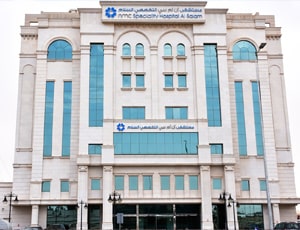
PDA Closure in NMC Specialty Hospital Al Salam: Costs, Top Doctors, and Reviews

Riyadh, Saudi Arabia

Apart from in-detail treatment procedures available, NMC Specialty Hospital Al Salam located in Riyadh, Saudi Arabia has a wide variety of facilities available for International Patients. Some of the facilities which are provided by them are Accommodation, Airport Transfer, Choice of Meals, Interpreter, SIM, TV inside room. Also listed below are some of the most prominent infrastructural details:

  • The hospital is situated at a prime location with easy access from Mecca-Khurais Road and Al-Imam Shafi road
  • 100 Hospital Rooms
  • 25 Intensive Care Units with modern equipment
  • 24-hour Pharmacy
  • 24-hour Emergency Services
  • Laboratory

Need Some Advice From Our Experts?

Request a Call Back Now!

Our team of healthcare experts would be happy to assist you

trusted Patientstrusted Patients+99
Trusted by 50000+ Patients
Required | alphabets and spaces
Required | A valid, working email address
Required | A valid contact

Process Involved for PDA Closure in Saudi Arabia

  • Preoperative Evaluation Stage: Imaging confirms the diagnosis, and PDA size and heart function are evaluated.
  • Procedure Selection: Catheter-Based Closure (Minimally Invasive) & Surgical Ligation (Open Surgery)
  • Closure Procedure: PDA closure can be accomplished surgically with a chest incision or with a catheter-based technique through the groin.
  • Postoperative Care: Vital signs, oxygen levels, pain control, and infection prevention are all monitored for the patient in the intensive care unit.
  • Long-Term Follow-Up & Monitoring
  • Large PDA
  • Respiratory Distress in Preterm Infants
  • Recurrent Lung Infections
  • Risk of Infective Endocarditis
  • Heart Enlargement & Strain
  • Preterm & Full-Term Infants
  • Children with Significant PDA
  • Adults with Persistent PDA
  • Patients with Normal Pulmonary Pressure
  • No Severe Contraindications
  • Cardiac Catheterization
  • Guided PDA Closure
  • Surgical PDA Ligation (open surgery)
  • Pulmonary Hypertension Assessment
  • Post-Closure Monitoring
  • Prevents Heart Overload
  • Improves Breathing & Oxygen Levels
  • Lowers Risk of infectious inflammation in heart lining
  • Enhances Long-Term Heart Health
  • Minimally Invasive with Quick Recovery
  • Pediatric Cardiologist
  • Interventional Cardiologist
  • Cardiothoracic Surgeon
  • Fill out the inquiry form: Fill out the form to provide us with the relevant information about your condition.
  • Consult with Our Healthcare Expert: One of our qualified specialists will contact you for a consultation.
  • Receive a Detailed Treatment Plan: After examining your situation, we will provide you with a detailed treatment plan that includes expert views and cost breakdowns for various choices.
  • Choose your preferred option: Choose the treatment option that suits you the best.

Instantly Connect with our PDA Closure Specialists

Doctor 1
Doctor 2
Doctor 3
Doctor 4
Doctor 5
Doctor 6
Doctor 7
Doctor 8
Our Services to Better your Experience

Opinion & Option

We submit the most accurate opinion and options from one or more countries for your review

Consult Privately

Consult with a certified specialist privately on our telemedicine platform even before you decide to travel

Logistics

We handle flights, visas, transfers, and accommodation—so you can focus on your health.

Recovery

Our In-house rehabilitation service packages to better your recovery and treatment outcome

Other Popular Countries for PDA Closure

Our network connects you with the leading medical tourism destinations globally, offering a wide range of cities, top doctors, and flexible pricing options.

Italy
United Arab Emirates
Singapore
Vietnam

Frequently Asked Questions

PDA Closure package cost in Saudi Arabia has different inclusions and exclusions. The cost quoted by some of the best hospitals for PDA Closure in Saudi Arabia generally covers the pre-surgery investigations of the patient. The treatment cost usually includes the expenses related to hospitalization, surgery, nursing, medicines, and anesthesia. Post-surgical complications, new findings and delayed recovery may have an impact on the total PDA Closure cost in Saudi Arabia.

There are several best hospitals for PDA Closure in Saudi Arabia. For quick reference, the following are some of the leading hospitals for PDA Closure in Saudi Arabia:

  1. Riyadh Care Hospital
  2. Care National Hospital
  3. NMC Specialty Hospital Al Salam

After PDA Closure in Saudi Arabia, the patient is supposed to stay in guest house for another 18 days. This duration of stay is recommended to complete all the necessary follow-ups and control tests to ensure that the surgery was successful.

While Saudi Arabia is considered to be one of the best destinations for PDA Closure owing to the standard of Hospitals, and expertise of doctors; there are a select few destinations which provide comparable quality of healthcare for this procedure. Some of such countries are:

  1. Switzerland
  2. Tunisia
  3. India
  4. South Korea
  5. Morocco
  6. Turkey
  7. Greece
  8. the United Arab Emirates
  9. South Africa
  10. Spain

There are certain additional cost that the patient has to pay apart from the PDA Closure cost. These include the cost of accommodation and meals outside hospital. The per day cost in this case may range around USD$ 55.

Some of the popular cities in Saudi Arabia that offer PDA Closure include the following:

  • Riyadh

The average duration of stay at the hospital after PDA Closure is about 3 days for proper care and monitoring. The doctors team review the patient's recovery during this time with the help of blood tests and imaging scans. Once they feel that everything is on track, the patient is discharged.

These hospitals are approved to perform the surgery and have proper infrastructure to handle PDA Closure patients.

Author

Dr. Abdullah Rahil

MPT (Neuro)

5 Years of Experience

Dr. Abdullah Rahil, M.P.T. (Neurology), is a dedicated physiotherapy professional specializing in orthopedic, neurological, and musculoskeletal rehabilitation. With strong clinical expertise, he focuses on improving patient mobility, reducing pain, and restoring functional independence through evidence-based rehabilitation techniques. He is skilled in advanced therapeutic approaches that support effective rehabilitation and recovery for a wide range of musculoskeletal and neurological conditions, focusing on improving mobility, reducing pain, and restoring functional independence. Dr. Rahil has extensive experience managing diverse rehabilitation cases. His patient-centered approach emphasizes personalized treatment plans, continuous assessment, and comprehensive rehabilitation to achieve optimal recovery outcomes. . View More

Reviewer

Dr. Naresh Kumar Goyal

Cardiologist

21 Years of Experience

Dr. Naresh Kumar Goyal is highly trained as a cardiologist with exposure in virtually all aspects of cardiology. He qualified with an MD in internal medicine in 1999 from SMS Medical College, Jaipur, and served in the Cardiology Department as an honorary resident. From this stage, he also started with training in the temporary pacing of the pacemaker as well as interventional services. View More