Your Notifications
All done, no notifications

Cardiac Valve Replacement Cost in India

Costs starts from USD5000 to USD7000
Filters

How Much Does Cardiac Valve Replacement Cost in India?

The cost of a Cardiac Valve Replacement in India typically ranges between USD 5000 - USD 7000. However, this cost can vary depending on several factors, including the type and severity of the condition, treatment techniques chosen, the healthcare facility's location and reputation, the treating professionals' experience and specialization, and the patient's overall health status.

Additionally, factors like the duration of treatment, the need for follow-up care, and the use of advanced technologies or specialized treatments can further influence the overall cost.

Factors Influencing the Cost of Cardiac Valve Replacement:

Cardiac Valve Replacement is an operation to replace the diseased or damaged cardiac valve with a clinically sound prosthetic cardiac valve- mechanical or tissue. Mechanical valves that are constructed from metals like titanium are used for the younger population, while biological valves in which the material is derived from animals or humans, are used for the older population in that they require minimal anticoagulation therapy over the long-term. So there are also less invasive techniques that entail a small incision as well as time to heal in the operating theater.

The other alternative is Transcatheter Aortic Valve Replacement (TAVR), where a new valve is put in with a catheter through the groin or chest since most elderly and high-risk patients cannot undergo regular surgery. However, cardiac valve replacement has some risks including valve-related infection, thromboembolism, stroke, and bleeding especially in patients with mechanical valves who have to take warfarin all their lives.

Cost of Cardiac Valve Replacement in Major Cities of India

CityMinimum Cost (USD)Minimum Cost (INR)Maximum Cost (USD)Maximum Cost (INR)
AhmedabadUSD 4500385380USD 6300539532
BangaloreUSD 5000428200USD 7000599480
ChennaiUSD 5000428200USD 7000599480
DelhiUSD 5000428200USD 7000599480
Delhi NcrUSD 5000428200USD 7000599480
FaridabadUSD 5000428200USD 7000599480
GhaziabadUSD 5000428200USD 7000599480
GurgaonUSD 5000428200USD 7000599480
GurugramUSD 5000428200USD 7000599480
HyderabadUSD 5000428200USD 7000599480
KochiUSD 5000428200USD 7000599480
KolkataUSD 5000428200USD 7000599480
MohaliUSD 4500385380USD 6300539532
MumbaiUSD 5000428200USD 7000599480
NoidaUSD 5000428200USD 7000599480
PanjimUSD 4500385380USD 6300539532
PuneUSD 4500385380USD 6300539532

Cardiac Valve Replacement Cost : A Global Comparison

CountryMinimum CostMinimum Local CurrencyMaximum CostMaximum Local Currency
CzechiaUSD 15000CZK 330300USD 30000CZK 660600
HungaryUSD 4391HUF 1567938USD 8031HUF 2867709
IndiaUSD 5000INR 428200USD 7000INR 599480
IsraelUSD 12000ILS 42480USD 39000ILS 138060
LithuaniaUSD 21000LTL 71835USD 25000LTL 85518
MalaysiaUSD 7000MYR 29680USD 15000MYR 63600
MoroccoUSD 10000MAD 92300USD 25000MAD 230750
PolandUSD 10000PLN 37600USD 25000PLN 94000
Saudi ArabiaUSD 7285SAR 27319USD 15699SAR 58871
SingaporeUSD 30000SGD 38700USD 60000SGD 77400
South AfricaUSD 7405ZAR 133068USD 16007ZAR 287646
South KoreaUSD 20000KRW 27519600USD 40000KRW 55039200
SpainUSD 38000ESP 5587516USD 50000ESP 7351995
SwitzerlandUSD 40000CHF 33200USD 60000CHF 49800
ThailandUSD 10000THB 327100USD 14000THB 457940
TunisiaUSD 8000TND 23840USD 15000TND 44700
TurkeyUSD 3500TRY 136710USD 28500TRY 1113210
United Arab EmiratesUSD 28000AED 102760USD 45000AED 165150
United KingdomUSD 13550GBP 10027USD 42900GBP 31746

Need Help Planning Your Treatment Abroad?

Your 24/7 AI Health Assistant

Heart valve surgery is a procedure performed to address heart valve disease, a condition characterized by malfunctioning of one or more of the four heart valves responsible for maintaining proper blood flow through the heart. The four valves include the mitral, tricuspid, pulmonary, and aortic valves, each equipped with flaps (leaflets for the mitral and tricuspid valves, and cusps for the aortic and pulmonary valves) that regulate blood flow direction during each heartbeat. When these valves fail to open and close correctly, it disrupts blood flow within the heart and to the body.

Valve replacement includes four procedures:

  • Aortic valve replacement (AVR)
  • Mitral valve replacement (MVR)
  • Tricuspid valve replacement (TVR)
  • Pulmonary valve replacement (PVR)

The aortic valve and the mitral valve replacements are the most common. Pulmonary and tricuspid valve replacements are uncommon in adults.

Why Cardiac valve replacement is performed?

Heart valve surgery aims to address heart valve disease, which typically presents in two forms:

Valve Stenosis: This occurs when a valve becomes narrowed, restricting blood flow.

Valve Regurgitation: This condition involves a leak in a valve that allows blood to flow backward, disrupting normal circulation.

Types:

The following are the types of Cardiac Valve Replacement:

  • Valvuloplasty
  • Annuloplasty

When the heart's aortic and mitral valves are severely damaged by stenosis (narrowing), regurgitation (leaking), or both, an AVR-MVR is performed to ensure the painless passage of blood through the heart and pumping away to prevent heart failure or other complications.

Symptoms such as chest pain, shortness of breath (particularly with exertion or lying down), fatigue, fainting spells, or leg swelling should prompt a consult because they may represent serious valve problems that need evaluation.

Preparations include imaging such as echocardiography and cardiac catheterisation, plus routine labs. Certain medications may have to be stopped for the procedure, other existing conditions must be well-controlled, and fasting is required. Your preop evaluation will determine your fitness for surgery.

The patient is put under general anesthesia, and, according to the approach taken (open-heart or minimally invasive), the chest wall is entered through both valves; the heart is stopped, and the heart-lung machine takes over blood circulation. The pathological valves are removed and replaced with artificial valves: mechanical or tissue valves.

Depending on the complexity and surgical approach, the procedure usually lasted six to eight hours.

  • Bleeding
  • Infection
  • Stroke
  • Heart rhythm problems
  • Kidney injury
  • Blood clots,
  • Valve dysfunction

Dual valve replacement greatly enhances heart function, improves symptomatology, and improves life quality. It also lessens the risk of heart failure and associated complications in the long term.

After spending 1 to 2 days in the ICU, one spends between 5 and 10 days in the hospital. Total convalescence, including rehabilitation, may take 8 to 12 weeks. Life-long follow-up is needed for some people who need blood thinners, especially if mechanical valves have been implanted.

Success rates vary somewhere between 80 and 90%, depending on age, general health, and cardiac performance before surgery. In properly selected patients, results are usually excellent.

Top Selling Packages for Cardiac Valve Replacement

AVR/ MVR- Replacement- Mechanical

Amrita Hospital, Faridabad, India

USD 8200 USD 8700

AVR/ MVR- Repair
AVR/ MVR- Repair

Amrita Hospital, Faridabad, India

USD 5500 USD 6000

AVR/ MVR- Replacement- Tissue

Amrita Hospital, Faridabad, India

USD 9500 USD 10000

Would you like some help? We are available.

Get Help
Explore Hospitals ( 67 )
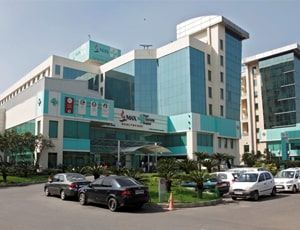
Cardiac Valve Replacement in Max Super Speciality Hospital, Saket: Costs, Top Doctors, and Reviews

Delhi, India

  • Joint Commission International, or JCI
  • National Accreditation Board for Hospitals & Healthcare Providers (NABH)

Max Smart Super Speciality Hospital, Saket, is a 250-bed tertiary care hospital awarded NABH accreditation, which provides advanced medical care in various specialities such as Cardiac Sciences, Orthopaedics, Neurology, Urology, Kidney Transplant, Paediatrics, and Obstetrics & Gynaecology. The hospital provides quality, safe, integrated, and patient-centric medical care using modular OTs, ICUs, Cath Labs, CT, MRI and Dialysis units.

Cardiac Valve Replacement in Manipal Hospital, Hebbal: Costs, Top Doctors, and Reviews

Bangalore, India

  • National Accreditation Board for Testing and Calibration Laboratories (NABL)
  • National Accreditation Board for Hospitals & Healthcare Providers (NABH)

Types of Cardiac Valve Replacement in Manipal Hospital, Hebbal and its associated cost

Treatment OptionApproximate Cost Range (USD)Approximate Cost Range (INR)
Cardiac Valve Replacement (Overall)6587 - 14217543557 - 1164244
Aortic Valve Replacement6790 - 11137555425 - 919441
Mitral Valve Replacement7094 - 12205580108 - 1000222
Pulmonary Valve Replacement6604 - 10622541731 - 872888
Ross Procedure9663 - 15150791374 - 1252223
Transcatheter Valve8136 - 13223665825 - 1083085
Double Valve Replacement10670 - 16715875003 - 1372035
Tricuspid Valve Replacement8605 - 14222705461 - 1170864
  • Address: Columbia Asia Hospital, Rajaji Nagar, Bengaluru, Karnataka, India
  • Facilities related to Manipal Hospital, Hebbal: Choice of Meals, SIM, TV inside room, Accommodation, Airport Transfer
Cardiac Valve Replacement in Clear Medi Hospital, Karkardooma: Costs, Top Doctors, and Reviews

Delhi, India

  • National Accreditation Board for Hospitals & Healthcare Providers (NABH)
  • National Accreditation Board for Testing and Calibration Laboratories (NABL)

Types of Cardiac Valve Replacement in Clear Medi Hospital, Karkardooma and its associated cost

Treatment OptionApproximate Cost Range (USD)Approximate Cost Range (INR)
Cardiac Valve Replacement (Overall)6619 - 14238542233 - 1170160
Aortic Valve Replacement6797 - 11200558555 - 913991
Mitral Valve Replacement7115 - 12169584513 - 1003621
Pulmonary Valve Replacement6591 - 10615542736 - 873168
Ross Procedure9679 - 15154790305 - 1251633
Transcatheter Valve8105 - 13165668634 - 1077703
Double Valve Replacement10684 - 16680869686 - 1379492
Tricuspid Valve Replacement8593 - 14224705648 - 1161037
  • Address: ClearMedi Hospital Vasundhara, Sector 15, Vasundhara, Ghaziabad, Uttar Pradesh, India
  • Facilities related to Clear Medi Hospital, Karkardooma: Choice of Meals, Interpreter, SIM, TV inside room, Accommodation
Cardiac Valve Replacement in VPS Rockland Hospital: Costs, Top Doctors, and Reviews

Gurgaon, India

  • National Accreditation Board for Hospitals & Healthcare Providers (NABH)
  • National Accreditation Board for Testing and Calibration Laboratories (NABL)

Types of Cardiac Valve Replacement in VPS Rockland Hospital and its associated cost

Treatment OptionApproximate Cost Range (USD)Approximate Cost Range (INR)
Cardiac Valve Replacement (Overall)6569 - 14166541651 - 1159963
Aortic Valve Replacement6823 - 11149558938 - 914084
Mitral Valve Replacement7091 - 12158581413 - 999119
Pulmonary Valve Replacement6604 - 10623542186 - 875142
Ross Procedure9651 - 15252794009 - 1243015
Transcatheter Valve8089 - 13259667718 - 1086193
Double Valve Replacement10679 - 16669875575 - 1373406
Tricuspid Valve Replacement8659 - 14243707973 - 1160284
  • Address: VPS Rockland Hospital, Sector 5, IMT Manesar, Gurugram, Haryana, India
  • Facilities related to VPS Rockland Hospital: Mobility Accessible Rooms, Religious Facilities, Translator, Airport Pick up, Online Doctor Consultation
Cardiac Valve Replacement in The Madras Institute of Orthopedics and Traumatology: Costs, Top Doctors, and Reviews

Chennai, India

  • National Accreditation Board for Hospitals & Healthcare Providers (NABH)
  • Joint Commission International, or JCI

Types of Cardiac Valve Replacement in The Madras Institute of Orthopedics and Traumatology and its associated cost

Treatment OptionApproximate Cost Range (USD)Approximate Cost Range (INR)
Cardiac Valve Replacement (Overall)6144 - 13103495656 - 1084444
Aortic Valve Replacement6331 - 10291510673 - 852413
Mitral Valve Replacement6446 - 11350542409 - 920923
Pulmonary Valve Replacement6168 - 9809499197 - 798279
Ross Procedure8926 - 13956724956 - 1144405
Transcatheter Valve7597 - 12088616583 - 982829
Double Valve Replacement9912 - 15376810730 - 1269638
Tricuspid Valve Replacement7902 - 13230656881 - 1057314
  • Address: MIOT International, Mount Poonamallee Road, Sathya Nagar, Manapakkam, Chennai, Tamil Nadu, India
  • Facilities related to The Madras Institute of Orthopedics and Traumatology: Interpreter, SIM, Airport Transfer, Accommodation
Cardiac Valve Replacement in Sanar International Hospital: Costs, Top Doctors, and Reviews

Gurugram, India

  • National Accreditation Board for Hospitals & Healthcare Providers (NABH)
  • Joint Commission International, or JCI

Sanar International Hospital is a multispeciality hospital based on Golf Course Road in Gurugram, a part of Delhi NCR. It was founded in 2018 and houses one of the most comprehensive and advanced surgical care specialties. This 150-bedded facility is committed to providing the best patient experiences and healthcare services is the core of the hospital’s mission. Staffed by a group of visionary and competent medical professionals who are well-versed in their fields and eminent for their empathy and understanding, Sanar International Hospital provides optimal care to its patients, making it a popular

Specialties in the Hospital such as Heart, Bone, and Joint neurosciences, Cancer, Kidney and Liver Transplant, and other successful procedures along with experienced medical professionals have made a mark for themselves among domestic patients and international patients who come to India to have the finest healthcare services. It follows strict international practices and believes that the centricity of the patient is essential for providing high-quality care through world-class infrastructure and state-of-the-art facilities. The technologies offered by the Hospital include Digital X-rays, MRI, CT, Ultrasound, transfusion medicine, pharmacy, laboratory services, 24 hrs emergency and ambulance services.

It offers more than 20 plus specialties such as General Medicine, Anesthesiology, Cardiac Sciences, Ophthalmology, Gastroenterology, Hematology, Orthopedics, General Surgery & Surgical, Cardiothoracic Surgery, Hepato Biliary Surgery, Pediatrics, Liver Transplantation, and Critical Care Medicine. The Hospital has a highly skilled medical staff of neuro-anesthetists, neurologists, specialized neurocritical care experts, neurosurgeons neuropsychologists, and neuropsychiatrists. There are specific centers for the treatment of epilepsy, stroke, brain tumors, movement disorders, spinal problems, and headaches.

Cardiac Valve Replacement in Manipal Hospital, Ghaziabad: Costs, Top Doctors, and Reviews

Ghaziabad, India

  • National Accreditation Board for Hospitals & Healthcare Providers (NABH)
  • National Accreditation Board for Testing and Calibration Laboratories (NABL)

Founded in 2010, Manipal Hospital-Ghaziabad (formerly Columbia Asia Hospital) is a well-known multispecialty hospital accredited by the National Accreditation Board for Hospitals and Healthcare Providers (NABH). With 100 beds, the hospital is committed to providing effective and reasonably priced healthcare in a clean and safe setting. The hospital has several departments that are known for their expertise, including Orthopaedics, Internal Medicine, Gastroenterology, Plastic Surgery, Obstetrics and Gynecology, ENT, and more. Due to this recognition, the hospital is now regarded as one of the best medical establishments in the Ghaziabad area.

Cardiac Valve Replacement in Apollo Hospital International Limited: Costs, Top Doctors, and Reviews

Ahmedabad, India

  • National Accreditation Board for Hospitals & Healthcare Providers (NABH)
  • Joint Commission International, or JCI

Types of Cardiac Valve Replacement in Apollo Hospital International Limited and its associated cost

Treatment OptionApproximate Cost Range (USD)Approximate Cost Range (INR)
Cardiac Valve Replacement (Overall)6598 - 14224542043 - 1159488
Aortic Valve Replacement6821 - 11209560347 - 912818
Mitral Valve Replacement7089 - 12221580952 - 997732
Pulmonary Valve Replacement6590 - 10707542154 - 872226
Ross Procedure9649 - 15159790464 - 1244411
Transcatheter Valve8142 - 13227663392 - 1081385
Double Valve Replacement10679 - 16676874123 - 1367560
Tricuspid Valve Replacement8604 - 14143705781 - 1163089
  • Address: Apollo Hospital, Prabhat Chowk, 61, Ghatlodiya, Chanakyapuri, Ahmedabad, Gujarat, India
  • Facilities related to Apollo Hospital International Limited: Post operative followup, Mobility Accessible Rooms, Online Doctor Consultation, Air Ambulance, Religious Facilities
Cardiac Valve Replacement in Manipal Hospital, Gurugram: Costs, Top Doctors, and Reviews

Gurgaon, India

  • National Accreditation Board for Testing and Calibration Laboratories (NABL)
  • National Accreditation Board for Hospitals & Healthcare Providers (NABH)

Types of Cardiac Valve Replacement in Manipal Hospital, Gurugram and its associated cost

Treatment OptionApproximate Cost Range (USD)Approximate Cost Range (INR)
Cardiac Valve Replacement (Overall)6617 - 14208543393 - 1164318
Aortic Valve Replacement6772 - 11208556194 - 912795
Mitral Valve Replacement7100 - 12162580301 - 996354
Pulmonary Valve Replacement6572 - 10612540849 - 875199
Ross Procedure9659 - 15154791254 - 1243354
Transcatheter Valve8080 - 13132668690 - 1083488
Double Valve Replacement10650 - 16731875163 - 1371654
Tricuspid Valve Replacement8608 - 14197707879 - 1168029
  • Address: Manipal Hospital, Gurugram, Carterpuri Road, Block F, Palam Vihar, Gurugram, Haryana, India
  • Facilities related to Manipal Hospital, Gurugram: Post operative followup, Mobility Accessible Rooms, Online Doctor Consultation, Air Ambulance, Religious Facilities
Cardiac Valve Replacement in Manipal Hospitals Goa, Dona Paula: Costs, Top Doctors, and Reviews

Panjim, India

  • National Accreditation Board for Hospitals & Healthcare Providers (NABH)

Types of Cardiac Valve Replacement in Manipal Hospitals Goa, Dona Paula and its associated cost

Treatment OptionApproximate Cost Range (USD)Approximate Cost Range (INR)
Cardiac Valve Replacement (Overall)6586 - 14188540700 - 1170073
Aortic Valve Replacement6834 - 11136559574 - 915288
Mitral Valve Replacement7072 - 12140584164 - 1000918
Pulmonary Valve Replacement6578 - 10667539396 - 874706
Ross Procedure9596 - 15198789304 - 1247537
Transcatheter Valve8147 - 13168664067 - 1078535
Double Valve Replacement10648 - 16677870237 - 1375269
Tricuspid Valve Replacement8647 - 14192710054 - 1168939
  • Address: Manipal Hospital, Panjim, Goa, India
  • Facilities related to Manipal Hospitals Goa, Dona Paula: Post operative followup, Mobility Accessible Rooms, Online Doctor Consultation, Air Ambulance, Religious Facilities

Need Some Advice From Our Experts?

Request a Call Back Now!

Our team of healthcare experts would be happy to assist you

trusted Patientstrusted Patients+99
Trusted by 50000+ Patients
Required | alphabets and spaces
Required | A valid, working email address
Required | A valid contact

Process Involved for Cardiac Valve Replacement in India

  • Diagnosis & Pre-Surgical Evaluation
    • Echocardiogram, CT scan, or cardiac MRI
    • Electrocardiogram (ECG) & stress tests
    • Blood tests
  • Pre-Surgery Preparations
    • Adjusting medications
    • Healthy Lifestyle changes
    • Discussion of valve choice
  • Surgical Valve Replacement: SAVR (open-heart), TAVR (minimally invasive)
  • Post-Surgical Recovery: ICU observation, cardiac monitoring
  • Long-Term Rehabilitation & Follow-Up
  • Aortic Valve Narrowing
  • Aortic Valve Leakage
  • Mitral Valve Thickens and Narrows
  • Sudden Cardiac Arrest Risk
  • Mitral Valve Leakage
  • Tricuspid & Pulmonary Valve Disease
  • Endocarditis & Valve Damage
  • Severe ralve risease like stenosis or regurgitation
  • Shortness of breath, fatigue, dizziness, or chest pain.
  • Failed previous valve repair or replacement
  • Mechanical Valves are composed of durable materials like Carbon and Titanium.
  • Biological Valves are composed of animal tissues like cow and pig.
  • Coronary Artery Bypass Grafting (CABG)
  • Balloon Valvuloplasty
  • Atrial Fibrillation (AFib) Ablation
  • Pacemaker or ICD Implantation
  • Annuloplasty (Valve Repair)
  • Left Ventricular Assist Device (LVAD)
  • Eliminates valve narrowing
  • Relieves Symptoms
  • Prevents Complications of stroke, heart failure and arrhythmias
  • Long-Term Durability
  • Improved Life Expectancy
  • Cardiac Surgeon
  • Interventional Cardiologist
  • Cardiologist
  • Rehabilitation Specialist
  • Fill out the inquiry form: Fill out the form to provide us with the relevant information about your condition.
  • Consult with Our Healthcare Expert:One of our qualified specialists will contact you for a consultation
  • Receive a Detailed Treatment Plan:After examining your situation, we will provide you with a detailed treatment plan that includes expert views and cost breakdowns for various choices.
  • Choose your preferred option: Choose the treatment option that suits you the best.

Instantly Connect with our Cardiac Valve Replacement Specialists

Doctor 1
Doctor 2
Doctor 3
Doctor 4
Doctor 5
Doctor 6
Doctor 7
Doctor 8
Our Services to Better your Experience

Opinion & Option

We submit the most accurate opinion and options from one or more countries for your review

Consult Privately

Consult with a certified specialist privately on our telemedicine platform even before you decide to travel

Logistics

We handle flights, visas, transfers, and accommodation—so you can focus on your health.

Recovery

Our In-house rehabilitation service packages to better your recovery and treatment outcome

Other Popular Countries for Cardiac Valve Replacement

Our network connects you with the leading medical tourism destinations globally, offering a wide range of cities, top doctors, and flexible pricing options.

Italy
Turkey
Spain
United Kingdom

Conditions treated by Cardiac Valve Replacement

Frequently Asked Questions

A. Aortic Valve Replacement cost in India starts from about USD 5000. Cardiac Valve Replacement in India is available across many hospitals in different states.

A. Aortic and mitral valve replacement surgeries are both focused on treating severe dysfunction in these heart valves, but they include various valves, procedures, and considerations.

AspectAortic Valve ReplacementMitral Valve Replacement
LocationBetween the left ventricle and aortaBetween the left atrium and left ventricle
Surgical ApproachesTypically involves sternotomyOften involves sternotomy, but minimally invasive options exist
Postoperative CareGradual resumption of physical activityOften more emphasis on managing atrial fibrillation
Prognosis and OutcomesHigh survival rates, especially with early interventionLong-term outcomes depend on overall health and the presence of other conditions

A. Several considerations, including the particular valve pathology, the patient's health, and the overall clinical situation, suggest that one of the two valve replacement options—aortic or mitral valve replacement—be chosen over double valve replacement. AVR and MVR procedures may be considered for the following conditions:

  • Patients with Symptoms: Patients with severe valve malfunction who are symptomatic are typically advised to have AVR or MVR since treating the issue can greatly reduce symptoms and enhance quality of life.
  • Asymptomatic Patients: Unless there is a significant danger of untimely complications, asymptomatic patients with severe valve disease may occasionally be watched over and treated conservatively until symptoms appear.
  • AVR or MVR Alone: Focusing on the pathophysiology of a single valve, this procedure typically entails less complexity and danger than double valve replacement.
  • Enhanced Symptoms: Treating a single valve can greatly enhance heart performance and alleviate symptoms in people with isolated valve disease. often has a positive long-term outcome provided no further issues arise and the other valve is operating normally.

A. Aortic Stenosis: Constrains blood flow from the left ventricle into the aorta by narrowing the orifice of the aortic valve.

  1. Aortic regurgitation is the backflow of blood into the left ventricle from the aorta due to aortic valve leakage.
  2. A narrowing of the mitral valve aperture that prevents blood from flowing from the left atrium into the left ventricle is known as mitral stenosis.
  3. Mitral regurgitation: A leak in which blood flows from the left ventricle back into the left atrium due to a leak in the mitral valve.
  4. A narrowing of the tricuspid valve that prevents blood from flowing from the right atrium to the right ventricle is known as tricuspid stenosis.
  5. Tricuspid regurgitation is the backflow of blood from the right ventricle into the right atrium caused by tricuspid valve leakage.
  6. A narrowing of the pulmonary valve that prevents blood from flowing from the right ventricle to the pulmonary artery is known as pulmonary stenosis.
  7. Blood can return from the pulmonary artery into the right ventricle due to pulmonary regurgitation, which is a leakage of the pulmonary valve.
  8. A heart valve infection known as "infective endocarditis" has the potential to seriously harm the valve.
  9. Rheumatic fever, a consequence of untreated strep throat, damages the heart valves, resulting in rheumatic heart disease.

A. A narrowing of the pulmonary valve that prevents blood from flowing from the right ventricle to the pulmonary artery is known as pulmonary stenosis.

  • Blood can return from the pulmonary artery into the right ventricle due to pulmonary regurgitation, which is a leakage of the pulmonary valve.
  • A heart valve infection known as "infective endocarditis" has the potential to seriously harm the valve.
  • Rheumatic fever, a consequence of untreated strep throat, damages the heart valves, resulting in rheumatic heart disease.

A. Following Aortic Valve Replacement (AVR) and Mitral Valve Replacement (MVR) surgery, there are several steps involved in recovery to guarantee appropriate healing and heart function restoration. While both surgeries involve a similar general recovery phase, there are particulars associated with each kind of valve replacement.

  1. Throughout your recuperation, attend your follow-up appointments so your physician can keep an eye on your progress.
  2. Recognizing symptoms including shortness of breath, unusual swelling, or chest pain and promptly reporting them to a medical professional.
  3. Anticoagulants: To prevent blood clots, recipients with mechanical valves must take anticoagulation therapy for the rest of their lives.
  4. Additional medications, such as those used to control cholesterol, blood pressure, and other conditions.
  5. Patients' ability to engage in some activities may be limited for a few weeks to months, contingent upon their own recuperation and general health. Never accept more than you can manage. It is normal to feel easily tired during the first three weeks following surgery.
  6. For a few weeks following surgery, avoid driving. If advised, take part in a cardiac rehabilitation program that offers information, supervised exercise, and support for making lifestyle modifications.
  7. After surgery, avoid handling anything weighing more than fifteen pounds for the first six to eight weeks.
  8. Consult your physician about your return to work schedule. Usually, six to twelve weeks follow surgery.

A. Indeed, there are several risks and possible side effects associated with valve replacement surgery, regardless of whether the aortic or mitral valves need to be replaced. The kind of valve prosthesis being used, the surgical technique, and the patient's general condition are some of the variables that can affect these risks.

  • Severe bleeding during or following surgery.
  • Infection inside the heart or at the location of the incision.
  • Disturbance of the blood supply to the brain could result in a stroke.
  • Arrhythmias, or irregular heartbeats, like atrial fibrillation.
  • Issues with the replacement valve, such as malfunctions or incorrect operation.
  • Clot development in the lungs or heart.
  • Decreased renal function or renal failure.
  • Risk of thrombosis and requirement for anticoagulation for life.
  • An aortic wall rupture.
  • Valve infection in the heart.
  • The mitral valve ring might get calcified.
  • Problems with the healing of the incision site.

A. Aortic Valve Replacement cost in India varies from one hospital to the other. The top hospitals for Cardiac Valve Replacement in India cover all the expenses related to the pre-surgery investigations of the candidate.

The treatment cost usually includes the expenses related to hospitalization, surgery, nursing, medicines, and anesthesia. Post-surgical complications, new findings, and delayed recovery may have an impact on the total Cardiac Valve Replacement cost in India.

A. Many hospitals perform Aortic Valve Replacement in India. For quick reference, the following are some of the leading hospitals for Aortic Valve Replacement Surgery in India:

  1. Narayana Institute of Cardiac Sciences
  2. Manipal Hospital, Hebbal
  3. BLK-Max Super Speciality Hospital
  4. Dharamshila Narayana Superspeciality Hospital
  5. Indraprastha Apollo Hospital
  6. Fortis Hospital, Shalimar Bagh
  7. Fortis Hospital
  8. Star Hospitals
  9. Manipal Hospital, Gurugram
  10. Shanti Mukund Hospital

A. The recovery of the patient may vary, depending on several factors. However, on average, a patient is supposed to stay in the country for about 21 days after discharge. This is important to ensure that the surgery is successful. During this time, control and follow-up tests take place to check for medical fitness.

A. India is considered to be one of the best places for Cardiac Valve Replacement in the world. This is because of the availability of some of the best doctors, advanced medical technology, and good hospital infrastructure. However, some of the other popular destinations for Cardiac Valve Replacement include the following:

  1. Spain
  2. Greece
  3. Hungary
  4. Israel
  5. Tunisia
  6. Malaysia
  7. Lithuania
  8. Poland
  9. Morocco
  10. Turkey

A. Apart from the Aortic Valve Replacement cost, the patient may have to pay for additional daily expenses such as for a guest house after discharge and meals. The per day extra expenses in India per person is about USD 25

Which are the best cities in India for Aortic Valve Replacement Procedures?

Many cities offer Aortic Valve Replacement in India, including the following:

  • New Delhi
  • Ahmedabad
  • Bengaluru
  • Hyderabad
  • New Delhi

A. After the Aortic Valve Replacement takes place, the average duration of stay at the hospital is about 5 days. The doctor's team reviews the patient's recovery during this time with the help of blood tests and imaging scans. Once they feel that everything is on track, the patient is discharged.

A. The overall rating for hospitals providing Cardiac Valve Replacement in India is 5.0. Several parameters such as hospital infrastructure, pricing policy, quality of services, politeness of staff, etc. contribute to the rating.

A. There are more than 60 hospitals that offer Aortic Valve Replacement in India. Apart from good services, the hospitals are known to follow all standard and legal guidelines as dictated by the local medical affairs body or organization.

Author

Nimra Haseeb

MSc Biochemistry

4 Years of Experience

Miss Nimra Haseeb is a medical researcher and a scientific content writer. She holds a Bachelor’s degree in Biotechnology and a Master’s in Biochemistry from Integral University, Lucknow.With strong experience in healthcare research, she specializes in secondary research, clinical data analysis, and evidence-based medical writing. Her work focuses on transforming complex scientific and medical information into clear, accurate, and reliable healthcare content for patients and healthcare audiences. She is also experienced in interpreting medical studies and healthcare trends to deliver well-researched and informative content that supports better health awareness and decision-making.. View More

Reviewer

Dr. Naresh Kumar Goyal

Cardiologist

21 Years of Experience

Dr. Naresh Kumar Goyal is highly trained as a cardiologist with exposure in virtually all aspects of cardiology. He qualified with an MD in internal medicine in 1999 from SMS Medical College, Jaipur, and served in the Cardiology Department as an honorary resident. From this stage, he also started with training in the temporary pacing of the pacemaker as well as interventional services. View More