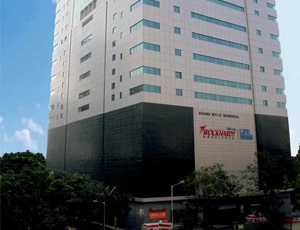
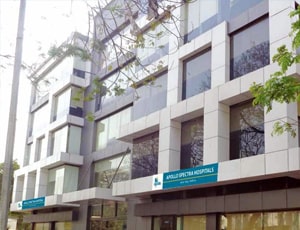
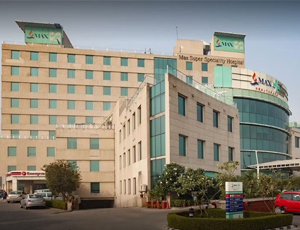
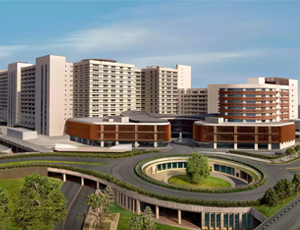
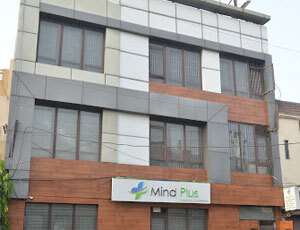
In India, Aakash Healthcare Super Speciality Hospital provides comprehensive orthopaedic care, addressing musculoskeletal conditions that affect bones, joints, muscles, and ligaments. The department provides advanced surgical treatments, including joint replacements and fracture management, using minimally invasive techniques to enhance recovery. A multidisciplinary team collaborates to deliver personalised, patient-centred care, supported by advanced diagnostics and imaging. Post-surgical rehabilitation programs help restore mobility and function. The hospital focused on orthopaedic research and innovation.
Accredited by NABL and NABH, Aakash Healthcare ensures high standards of safety, quality, and global healthcare excellence.

In India, Aster Medcity offers extensive orthopaedic care, addressing musculoskeletal conditions affecting bones, joints, muscles, and ligaments. The department provides advanced surgical treatments, including joint replacements and fracture management, using minimally invasive techniques to enhance recovery. A multidisciplinary team collaborates to deliver personalised, patient-centred care, supported by advanced diagnostics and imaging. Post-surgical rehabilitation programs help restore mobility and function.
Aster Medcity in Kochi is Kerala's first quaternary care hospital to be recognised for meeting world healthcare standards. It holds JCI and NABH accreditation and certification for Green Operation Theatres and Nursing Excellence.

Pushpawati Singhania Research Institute (PSRI) in Delhi offers extensive orthopaedic care through a multidisciplinary team of specialists, including doctors, nurses, and physical therapists. The department covers subspecialties such as spine, sports medicine, pediatric orthopaedics, ortho-oncology, and more. Services include diagnosis, treatment, surgery, rehabilitation, and follow-up care using advanced techniques. Specialised procedures include arthroscopic ACL reconstruction, shoulder stabilisation, limb salvage surgery, and joint replacements. The orthopaedic oncology unit treats musculoskeletal tumours and cancers. With a patient-centric approach, the Pushpawati Singhania Research Institute (PSRI) aims to restore mobility and improve the quality of life for individuals with various musculoskeletal conditions, both surgically and non-surgically.
Pushpawati Singhania Research Institute (PSRI) , New Delhi, is accredited by the Joint Commission International (JCI) and the National Accreditation Board for Hospitals & Healthcare Providers (NABH), reflecting its commitment to excellence in healthcare services.


Max Smart Super Speciality Hospital in Saket, Delhi offers an extensive orthopaedic care through a multidisciplinary team of specialists, including doctors, nurses, and physical therapists. The department covers subspecialties such as spine, sports medicine, pediatric orthopedics, ortho-oncology, and more. Services include diagnosis, treatment, surgery, rehabilitation, and follow-up care using advanced techniques. Specialised procedures include arthroscopic ACL reconstruction, shoulder stabilization, limb salvage surgery, and joint replacements. The orthopaedic oncology unit treats musculoskeletal tumours and cancers. With a patient-centric approach, Max Smart Super Speciality Hospital aims to restore mobility and improve quality of life for those with various musculoskeletal conditions, both surgically and non-operatively.
Max Smart Super Speciality Hospital in Saket, New Delhi, is accredited by the Joint Commission International (JCI) and the National Accreditation Board for Hospitals & Healthcare Providers (NABH), reflecting its commitment to excellence in healthcare services.


Max Super Speciality Hospital offers extensive orthopaedic care in India, addressing musculoskeletal conditions affecting bones, joints, muscles, and ligaments. The department provides advanced surgical treatments, including joint replacements and fracture management, using minimally invasive techniques to enhance recovery. A multidisciplinary team collaborates to deliver personalised, patient-centred care, supported by advanced diagnostics and imaging. Post-surgical rehabilitation programs help restore mobility and function.
Max Super Speciality Hospital in Shalimar Bagh, New Delhi, is accredited by JCI and NABH. These accreditations highlight its adherence to international healthcare quality and patient safety standards.


The Orthopedics Department at Amrita Hospital in India offers advanced diagnosis, treatment, and rehabilitation for a wide range of musculoskeletal conditions. With a team of highly skilled orthopedic surgeons and specialists, the department provides both surgical and non-surgical care tailored to patients of all ages.
Services include joint replacement (hip, knee, and shoulder), arthroscopic surgery, treatment of fractures and trauma, spine surgery, and sports injury management. The department also specialises in pediatric orthopedics and the correction of congenital deformities. Equipped with modern operating rooms, digital imaging (X-ray, MRI, CT), and a dedicated physiotherapy unit, the department ensures accurate diagnosis, minimally invasive procedures, and effective post-operative recovery in India.

Rajagiri Hospital offers extensive orthopaedic care in India, addressing musculoskeletal conditions affecting bones, joints, muscles, and ligaments. The department provides advanced surgical treatments, including joint replacements and fracture management, using minimally invasive techniques to enhance recovery. A multidisciplinary team collaborates to deliver personalised, patient-centred care, supported by advanced diagnostics and imaging. Post-surgical rehabilitation programs help restore mobility and function.
Rajagiri Hospital holds accreditations from JCI, NABH, and NABL. These accreditations affirm the hospital's commitment to international standards in healthcare quality, patient safety, and laboratory excellence.


At Jaypee Hospital Noida, the orthopaedics department offers cutting-edge musculoskeletal care, including joint replacements, spine procedures, sports injury treatment, and trauma care.
The facility guarantees a quicker recovery and the best results by using robotic-assisted operations and minimally invasive procedures.
The NABH and NABL-accredited Jaypee Hospital Noida ensures the safety and quality of all orthopaedic surgeries. The department uses an integrated strategy that is customised to meet each patient's needs, from diagnostics to rehabilitation.
Jaypee Hospital Noida has established itself as a leading provider of complete orthopaedic care, thanks to its state-of-the-art facilities and skilled medical staff.

The Orthopaedic Department at Wockhardt Hospital, a New Age Hospital in India, focuses on diagnosing and treating conditions of the musculoskeletal system, including bones, joints, ligaments, tendons, and muscles.
Key procedures include joint replacements (hip, knee, shoulder), arthroscopy, spine surgery, and trauma care. Non-surgical options like physiotherapy, bracing, and pain management are also offered. The department uses advanced technologies such as minimally invasive surgery, robotic surgery, and 3D-printed implants to enhance recovery and outcomes. Orthopaedic specialists treat fractures, arthritis, spinal deformities, sports injuries, and congenital conditions. Post-surgical rehabilitation and lifestyle counselling are integral to restoring full function.
Wockhardt Hospitals in Mumbai are accredited by NABH, JCI, QAI, and NABL, ensuring high standards of care and patient safety.

Sri Ramachandra Medical Centre offers extensive orthopaedic care in India, addressing musculoskeletal conditions affecting bones, joints, muscles, and ligaments. The department provides advanced surgical treatments, including joint replacements and fracture management, using minimally invasive techniques to enhance recovery. A multidisciplinary team collaborates to deliver personalised, patient-centred care, supported by advanced diagnostics and imaging. Post-surgical rehabilitation programs help restore mobility and function. The hospital also houses the Hiranandani Orthopaedic Medical Education (HOME) unit, which is focused on orthopaedic research and innovation.
Accredited by JCI and NABH, SRMC Hiranandani ensures high standards of safety, quality, and global healthcare excellence.It was the first teaching hospital in India to receive JCI accreditation.

Seven Hills Hospital offers extensive orthopaedic care in India, addressing musculoskeletal conditions affecting bones, joints, muscles, and ligaments. The department provides advanced surgical treatments, including joint replacements and fracture management, using minimally invasive techniques to enhance recovery. A multidisciplinary team collaborates to deliver personalised, patient-centred care, supported by advanced diagnostics and imaging. Post-surgical rehabilitation programs help restore mobility and function. The hospital also houses the Orthopaedic Medical Education (HOME) unit, which is focused on orthopaedic research and innovation.
Accredited by JCI and NABH, Seven Hills ensures high standards of safety, quality, and global healthcare excellence.
Ask your healthcare adviser for the best multiple options and choose the one that meets your expectations

If you need help with your bones or joints, India is an excellent destination for treatment. The doctors are competent and utilise specialised tools to address issues such as knee pain or hip trouble. These surgeries help you heal more quickly and return to walking or playing sooner. Nurses are kind and ensure you feel safe and supported.
Many families choose India because it offers excellent cars, similar to those in Western countries, at a lower price. Hospitals are clean, modern, and you don’t have to wait long for surgery. Everything is explained easily, so you always understand what’s happening. That’s why people from all over the world come to India to experience better health.
The following are the reasons to choose an Orthopaedics Hospital in India:-
Leading Orthopaedic Hospitals in India provide exceptional care to international patients, ensuring a seamless and comfortable experience. These dedicated services include:
| Doctor Name | Cost | Book Appointment |
|---|---|---|
| Dr. Puneet Mishra | 32 USD | Book Now |
| Dr. Saif Nabi Shah | 16.52 USD | Book Now |
| Dr. Sujoy Kumar Bhattacharjee | 23 USD | Book Now |
| Dr. Rajeev Verma | 23 USD | Book Now |
| Dr. Mandeep Singh | 23 USD | Book Now |
| Procedure Name | Cost | Length of Hospital Stay |
|---|---|---|
| Knee Replacement | USD 6900 | 1 Day |
| Hip Replacement | USD 8800 | 1 Day |
| Shoulder Replacement | USD 8500 | 2 Days |
| ACL Reconstruction | USD 3000 | 1 Day |
| Limb Lengthening | USD 5000 | 2 Days |
| Bow Leg Correction | USD 3800 | 1 Day |
| Disc Replacement | USD 6500 | 1 Day |
| ORIF | USD 4700 | 1 Day |
| TLIF | USD 5000 | Not Required |
| Meniscectomy | USD 7400 | 1 Day |
| Carpal Tunnel Release | USD 2000 | 2 Days |

If chronic knee pain or arthritis is keeping you from living fully, India's cutting-edge robotic knee surgery offers new hope for a pain-free, active life. In 2025, this advanced procedure is transforming patient experiences with unmatched precision
In India, national and international organisations shape the standards for healthcare accreditation in oncology care to ensure that oncology services are high-quality, effective, and patient-centred.
India is home to several world-class multispecialty hospitals that offer some of the best orthopaedic treatments. The multispecialty hospitals are equipped with the latest technology, expert orthopaedic surgeons, and extensive treatment options from fractures to complex joint replacements and spine surgeries. Here are some of the most popular multispecialty hospitals for orthopaedic treatments in India:
India is considered to have one of the best orthopaedic centres in the India, as well as world-class treatments in multispecialty hospitals—some popular multispecialty hospitals for orthopaedic treatment in India.
There are many reasons why Indian healthcare is chosen, especially for international patients looking for quality and affordable treatment. India is a popular destination for medical tourism for the following reasons:
There are various crucial aspects that one needs to consider when selecting optimal care for orthopaedic treatments in India. Here are the factors one must evaluate before making a decision:
Orthopaedic hospitals in India offer the following services that specialise in treating patients from outside. Among the essential services provided are:
Yes, orthopaedic hospitals in India generally provide complete pre-and post-operative care. Before surgery, hospitals conduct complete evaluations, including diagnostic tests, consultations, and pre-surgery counselling, to ensure the patient is prepared for the procedure. After surgery, hospitals provide rehabilitation services, such as physiotherapy, pain management, and follow-up check-ups, to monitor patients' recovery.
Many hospitals also provide exceptional care to attend to the needs of individual patients for a smooth recovery. This support also offers lifestyle guidance and long-term care plans to allow the patient to regain mobility with minimal complications afterwards.
Orthopaedic surgery is a medical speciality that diagnoses, prevents, or treats conditions or injuries affecting your musculoskeletal system. Your musculoskeletal system comprises your:
Your musculoskeletal system supports your posture, allows you to move, and supports your body weight. However, due to an accident or underlying medical condition, your range of motion may be restricted, or you may experience pain in these areas of your body. Orthopaedic surgery fixes musculoskeletal system injuries or provides routine maintenance.
In [India, orthopaedic hospitals and clinics have all the diagnostic services that will help accurately assess musculoskeletal conditions. The diagnostic services include:
India provides robotic surgeries for orthopaedic treatments. The standard procedures are robotic knee and hip replacements and spine surgeries.
Some of the benefits of robotic surgeries:
Many orthopaedic surgeons in India are trained by the best national and international institutions and are known for handling traditional and modern treatments. The latest technology backs India’s healthcare system, and doctors are abreast of the most advanced surgical techniques, ensuring a hundred per cent result on several occasions and positivity in a patient's outcome.
The length of the hospital stay depends on the procedure. Minor surgeries, such as arthroscopy or minor fractures, may require 1-2 days of hospitalisation. However, more extensive procedures, like joint replacement or spine surgery, will need 4-7 days, which includes time for post-surgical recovery and physiotherapy.
Ortho hospitals in India manage various treatments and procedures involving musculoskeletal disorders. A few of the key treatments and procedures include:
The other healthcare accreditation is the Joint Commission International, it is a not-for-profit organization that has given certification to numerous healthcare institutions in India and abroad. A benchmark has been set by National Accreditation Board for Hospitals & Healthcare Providers (NABH). India has two accreditation standards for its healthcare organisations. National Accreditation Board for Hospitals & Healthcare Providers has been recognised as one of these standards.
The general medical needs of patients are also taken care of by these hospitals. The topmost multispecialty hospitals in India are Max Super Specialty Hospital, Delhi, Medanta Medicity Hospital, Gurgaon, Artemis Hospital, Gurgaon, Fortis Hospital, Noida, Indraprastha Apollo Hospital Delhi and Nanavati Hospital, Mumbai. Indian multispecialty hospitals offer world class medical treatment at affordable cost. Many different kinds of surgeries are performed at these hospitals and they have several specialties.
India has a large pool of highly professional, competent, and qualified doctors who are known for providing treatment with high precision and accuracy. India is synonymous with quality healthcare at affordable cost. Indian healthcare infrastructure is equivalent to international health standards and equate to high end technologies at par with the western world. India has several things going for it that ensures that it is the most favored destination for medical travelers such as ease of communication, ease of travel, alternative treatment availability and visa assistance.
The doctors and surgeons in India provide you with the best of medical care and you feel right at home under their care. Skill and application of that skill with precision ensures that Indian doctors are considered proficient in their work. No matter what new healthcare challenges are present before them, the doctors in India face and overcome them with a lot of confidence. Indian medical fraternity boasts of being an alumni of the best educational institutions in the world.
When traveling to India for medical treatment, you need to carry documents like medical history, test reports, records, doctor referral notes, passport copies, residence/ driver’s license/ bank statement/ details of Health insurance, if any. When you are traveling to another country, the most important thing is packing. The documents can be country specific so please check the documents before traveling. You can start your travel journey by making a list of things and ensuring that you pack them all before leaving.
Popular procedures that are being performed in India are, The steep rise in the number of popular procedures performed regularly in India is also because of a number of good hospitals and related healthcare facilities. The positive evolution towards increasingly advanced techniques and technologies has lead to a steady upgradation in the popular procedures performed in India. In Indian medical landscape, procedures like heart surgeries, orthopaedic procedures, organ transplants and cancer treatments are gaining popularity because of good doctors and the relatively lower costs of treatment.
You need to keep yourself updated with a travel advisory issued by the Indian government or contact your hospital in India for complete information on vaccination guidelines. It is essential for medical travellers coming to India as well to get protection from different diseases. Essential vaccinations and up-to-date immunisations are needed for every kind of international travel. Your India visit would be safer if you have vaccinated yourself with hepatitis A, hepatitis B, Covid, typhoid fever, Japanese encephalitis, rabies, DPT, measles, yellow fever medicines.
Hospitals in India offer world-class facilities to international patients to ensure safety and comfort throughout their stay in India. There are many facilities available at Indian hospitals such as room reservation, visa and embassy assistance, hotel services and apartment bookings, language interpretation services, tele-consults and pre departure evaluation. The needs and requirements of you or your family members are met by the hospitals which makes your stay comfortable. In India, the hospitals have seamlessly functioning international patient care centers that provide all kinds of assistance to medical tourists.
India is a hub for medical tourism due to its excellent medical services that are on par with developed countries. Mumbai, Delhi, Kolkata, Bengaluru and Hyderabad are the leading medical tourism destinations in India. Medical tourism destinations in India are growing fast and growing well, this is in no small measure to the promotion of the sector by the Government of India in collaboration with the private players. India has grown into a medical tourism destination owing to the world class healthcare facilities, patient care and affordable medical care plans.