The cost of Breast Cancer Treatment in Singapore is USD 3000 - USD 17000
Additionally, factors like the duration of treatment, the need for follow-up care, and the use of advanced technologies or specialized treatments can further influence the overall cost.
Breast cancer therapy depends on the type of the disease and its stage, as well as the patient’s health condition. The traditional treatment methods are surgery (lumpectomy or mastectomy), irradiation to eliminate the remnants of cancerous cells, and chemotherapy to eliminate the growth of cancer cells. Hormone therapy is applied in hormone receptor-positive cancers and the targeted therapy includes medicines that have an effect on specific molecules and stop the cancer. Immunotherapy is also applied, let’s say, in aggressive types of cancer such as triple-negative breast cancer to boost the immune defenses against the disease.
Besides the main treatments, there are therapies that target bone metastases, as well as palliative treatment which aims to ease the symptoms of the advanced stages of the disease. The length of stay is short, as cognitive and behavioral therapy, individual and group, is tailored and frequently integrated to optimize outcomes. Early detection of relapses and side effects necessitates regular follow-up care after the person with cancer has completed therapy.
| City | Minimum Cost (USD) | Minimum Cost (SGD) | Maximum Cost (USD) | Maximum Cost (SGD) |
|---|---|---|---|---|
| Novena | USD 3000 | 3870 | USD 17000 | 21930 |
| Singapore | USD 3000 | 3870 | USD 17000 | 21930 |
| Country | Minimum Cost | Minimum Local Currency | Maximum Cost | Maximum Local Currency |
|---|---|---|---|---|
| India | USD 4500 | INR 385380 | USD 6000 | INR 513840 |
| Israel | USD 13375 | ILS 47348 | USD 18000 | ILS 63720 |
| Malaysia | USD 7500 | MYR 31800 | USD 28000 | MYR 118720 |
| Saudi Arabia | USD 5000 | SAR 18750 | USD 20000 | SAR 75000 |
| Singapore | USD 3000 | SGD 3870 | USD 17000 | SGD 21930 |
| South Africa | USD 5000 | ZAR 89850 | USD 20000 | ZAR 359400 |
| South Korea | USD 7500 | KRW 10319850 | USD 18000 | KRW 24767640 |
| Spain | USD 5000 | ESP 735200 | USD 15000 | ESP 2205598 |
| Switzerland | USD 50000 | CHF 41500 | USD 200000 | CHF 166000 |
| Thailand | USD 7500 | THB 245325 | USD 23000 | THB 752330 |
| Tunisia | USD 5000 | TND 14900 | USD 15000 | TND 44700 |
| Turkey | USD 7650 | TRY 298809 | USD 9350 | TRY 365211 |
| United Arab Emirates | - | - | USD 15000 | AED 55050 |
| United Kingdom | USD 20000 | GBP 14800 | USD 100000 | GBP 74000 |
Need Help Planning Your Treatment Abroad?
Your 24/7 AI Health Assistant 
Breast cancer is a type of cancer that originates in the cells of the breast. While it can occur in men as well, it is far more prevalent in women.
Following skin cancer, breast cancer stands as the second most frequently diagnosed cancer among women in the United States. However, it's crucial to recognize that breast cancer is not exclusive to women, as everyone is born with some breast tissue, making it a condition that can affect individuals of any gender.
Improved breast cancer screening techniques enable healthcare providers to detect the presence of breast cancer at an earlier stage. Early cancer detection greatly increases the chances of effective therapy and recovery.
The exact reason that causes breast cancer is unclear, even though every eighth woman suffers from it. However, several factors have been associated with the development of breast cancer. Some of the breast cancer risk factors include:
The risk of breast cancer naturally increases as women age. The risk is also higher in women who have a family history of breast or ovarian cancer, possess BRCA1 and BRCA2 genes, or have had their periods before the age of 12.
The main types of breast cancer are based on where the cancer begins, whether it's in the ducts or lobules of the breast, and whether it has spread beyond its original location. The two broad categories are in situ (confined to the site of origin) and invasive (has spread beyond the original location). Here are some common types:
Would you like some help? We are available.
Get Help
Novena, Singapore
Mount Elizabeth Novena Hospital located in Novena, Singapore is accredited by JCI. Also listed below are some of the most prominent infrastructural details:

Singapore, Singapore
Mount Elizabeth Hospital located in Singapore, Singapore is accredited by JCI. Also listed below are some of the most prominent infrastructural details:

Singapore, Singapore
Gleneagles Hospital, located on Napier Road in Singapore, is a leading private healthcare institution offering comprehensive medical services and advanced clinical care. With 221 beds and a strong team of medical specialists, the hospital holds the Singapore Quality Class certification for excellence in healthcare. Its state-of-the-art facilities include ICU, HDU, NICU, Urgent Care Centre, operating theatres, radiology, endoscopy, laboratories, and rehabilitation units. Gleneagles specializes in orthopaedics, oncology, women’s health, and gastroenterology, offering tailored programs for cancer, bone, and gut health. With modern maternity packages and patient-friendly rooms, the hospital ensures compassionate, high-quality care focused on safety, comfort, and recovery.

Singapore, Singapore
Parkway East Hospital located in Joo Chiat Pl, Singapore is accredited by JCI. Also listed below are some of the most prominent infrastructural details:

Singapore, Singapore
Apart from in-detail treatment procedures available, Farrer Park Hospital located in Connexion, Singapore has a wide variety of facilities available for International Patients. Some of the facilities which are provided by them are Accommodation, Airport Transfer, Choice of Meals, Interpreter, SIM, TV inside room. Also listed below are some of the most prominent infrastructural details:

Singapore, Singapore
Need Some Advice From Our Experts?
Our team of healthcare experts would be happy to assist you

+99


Opinion & Option
We submit the most accurate opinion and options from one or more countries for your review
Consult Privately
Consult with a certified specialist privately on our telemedicine platform even before you decide to travel
Logistics
We handle flights, visas, transfers, and accommodation—so you can focus on your health.
Recovery
Our In-house rehabilitation service packages to better your recovery and treatment outcome
Our network connects you with the leading medical tourism destinations globally, offering a wide range of cities, top doctors, and flexible pricing options.


Mrs. Jennifer, a 46-year-old educator from the Philippines, led an active life. She did not give her health any special consideration aside from the typical life responsibilities of work, family, and church.
A. Many hospitals perform Breast Cancer Treatment in Singapore. For quick reference, the following are some of the leading hospitals for Breast Cancer Treatment in Singapore:
A. After discharge from the hospital, the patient has to stay for three to four weeks in the country for complete recovery. During this time, the patient undergoes medical tests and consultations to ensure that the treatment was successful and that the patient is safe to return.
A. Singapore is one of the most popular countries for Breast Cancer Treatment in the world. The country offers the best treatment for Breast Cancer Treatment, the best doctors, and advanced hospital facilities. Some of the other top destinations for Breast Cancer Treatment include the following:
A. Apart from the Breast Cancer Treatment cost, the patient may have to pay for additional daily expenses such as meals and other value-added services. The per day extra expenses in Singapore per person is about USD 150
A. Many cities offer Breast Cancer Treatment in Singapore, including the following:
A. Following breast cancer treatment, hospital stays often last one week in order to provide appropriate care and monitoring. For the patient to recover fully and feel at ease following surgery, this period of time is important. The patient is doing well following surgery, according to a number of tests, and can be released.
A. The hospitals providing Breast Cancer Treatment in Singapore are very highly rated. Several parameters, such as hospital facilities, pricing policy, quality of services, and staff politeness, contribute to the rating.
A. There are about more than three Breast Cancer Treatment hospitals in Singapore that are best known for their services. These hospitals are approved to perform the surgery and have the proper infrastructure to handle Breast Cancer Treatment patients.
A. some of the top oncologists for breast cancer treatment in Singapore are listed below:
A. Diagnosed with breast cancer means many trips to hospitals or cancer care centers and the success rate highly depends on the stage of breast cancer. In Singapore, the scenario of breast cancer tells the success story of those patients who get acquainted with their early symptoms. According to Singapore’s latest cancer registry report, the patients who were diagnosed at stage 1 had a 91% chance of surviving as compared to 21 % of cancer patients who were diagnosed at stage 4.
A. A few of the Breast Cancer Treatment Options are listed as follows:
A. Yes, reconstructive surgery is available after breast cancer treatment for individuals who have undergone a mastectomy. The goal of breast reconstruction is to restore the appearance of the breast, helping individuals feel more confident and whole. Reconstruction can be done using either implants or the patient’s own tissue (autologous reconstruction). There are also options for preserving or reconstructing the nipple and areola. The timing of reconstructive surgery can vary: it can be done immediately after the mastectomy or delayed, depending on the patient’s preferences and the type of cancer treatment they undergo. Consultations with a plastic surgeon are important to explore the best options.
A. Preparing for breast cancer surgery involves several important steps to ensure a smoother recovery and better outcomes:
A. Factors that may increase the risk of breast cancer include:
A. The recovery period after breast cancer treatment depends on the type of treatment, stage of cancer, and individual health conditions. The recovery time after surgery, a mastectomy, is generally 4 to 6 weeks, while in lumpectomy cases, it usually takes between 1 and 2 weeks. It may take much longer for one to regain full mobility. The patient may still be suffering side effects of chemotherapy for many months after the therapy has ended, with fatigue lingering the most after the treatment which could take another half-year to one full year for almost everyone to recover. Skin irritation and fatigue are normal after radiation therapy; though side effects usually improve in a few weeks, full recovery may take anywhere from 3 to 6 months. Hormonal- and targeted therapies can cause joint pain and fatigue that can last for several months. In general, most people take 3 to 6 months to recover physically.

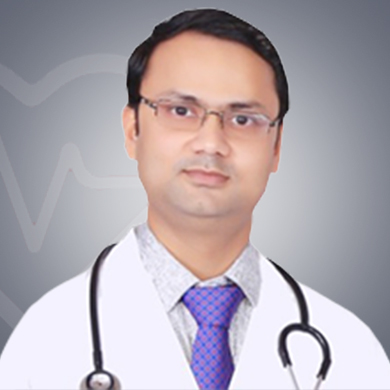
Surgical Oncologist
15 Years of Experience
Dr. Prateek Varshney is a renowned Surgical Oncologist. He has experience of more than 15+ years in surgical Oncology. He is currently practicing as a consultant at Metro Mass Hospital and Cancer Institute. He was also previously associated as a consultant with Sir Ganga Ram Hospital and as a professor at Gujarat Cancer Research Institute. View More