Explore trusted hospitals and care options, or get personalised support to find a suitable option based on your treatment needs, preferences, and budget.

Choosing Manipal Hospital, Dwarka for LASIK gives patients access to experienced refractive surgeons, advanced corneal mapping and diagnostic systems, precision laser platforms, and structured postoperative eye care. Established in 2018, the NABH accredited hospital in Delhi, India has 380 beds and provides specialised ophthalmic and refractive surgery services.
LASIK is generally performed using topical anaesthetic eye drops and typically takes a short time for both eyes. The surgeon creates the corneal flap, uses an excimer laser to reshape the corneal tissue according to the planned correction, and repositions the flap. Patients may experience temporary dryness, blurred vision, light sensitivity, or visual disturbances during the early recovery period. Follow-up examinations help monitor corneal healing and visual outcomes.
Guven Hospital is a trusted healthcare provider for LASIK, offering laser vision correction supported by experienced ophthalmic surgeons, advanced diagnostic systems, and modern refractive surgery facilities. Established in 1975, the GHA accredited hospital is situated in Ankara, Turkey and has 254 beds.
LASIK reshapes the cornea so that incoming light can be focused more accurately onto the retina, reducing dependence on glasses or contact lenses for many appropriately selected patients. The procedure uses a microkeratome or femtosecond laser to create the corneal flap, followed by precise excimer laser ablation. A detailed eye examination helps determine whether LASIK or another refractive procedure is more suitable for the patient's vision and corneal characteristics.
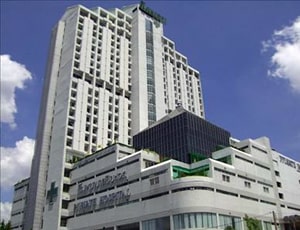
Choosing Piyavate Hospital for LASIK gives patients access to experienced refractive surgeons, advanced corneal mapping and diagnostic systems, precision laser platforms, and structured postoperative eye care. Established in 1993, the JCI, ISO accredited hospital in Bangkok, Thailand has 150 beds and provides specialised ophthalmic and refractive surgery services.
LASIK is generally performed using topical anaesthetic eye drops and typically takes a short time for both eyes. The surgeon creates the corneal flap, uses an excimer laser to reshape the corneal tissue according to the planned correction, and repositions the flap. Patients may experience temporary dryness, blurred vision, light sensitivity, or visual disturbances during the early recovery period. Follow-up examinations help monitor corneal healing and visual outcomes.
Dr. Rela Institute and Medical Centre provides specialised LASIK with a focus on precise corneal reshaping, advanced laser technology, and individualised postoperative eye care. Established in 2018, the NABH, NABL accredited hospital is located in Chennai, India and operates 450 beds, with modern ophthalmic, diagnostic, and refractive surgery infrastructure.
LASIK can reduce refractive errors by modifying the shape of the cornea to improve the eye's ability to focus light. Treatment planning considers the patient's prescription, corneal thickness and topography, tear-film condition, eye health, and expected visual requirements. A detailed preoperative assessment helps the ophthalmology team determine eligibility for LASIK, identify potential risk factors, and select the most appropriate laser correction strategy.
At Can Hospital, LASIK is performed using specialised laser vision-correction technology and comprehensive preoperative eye assessment. Established in 2017, this JCI, NABH accredited hospital in Izmir, Turkey has 95 beds and offers advanced ophthalmology and refractive surgery services.
LASIK may be considered for adults with a stable refractive error who meet appropriate corneal and ocular health criteria. Before treatment, the ophthalmologist evaluates visual acuity, refractive error, corneal thickness and shape, tear-film health, pupil characteristics, and other factors that may affect surgical suitability. The laser treatment is then customized according to the patient's individual corneal measurements and vision-correction requirements.
Vinmec Times City offers advanced LASIK using modern laser vision-correction techniques and individualized ophthalmic care plans. Established in 2012, the JCI accredited hospital is located in Ha noi, Vietnam and has 500 beds, providing comprehensive eye care for local and international patients.
LASIK is a refractive eye surgery used to correct common vision problems such as myopia, hyperopia, and astigmatism. During the procedure, a thin corneal flap is created and lifted, after which an excimer laser reshapes the underlying corneal tissue to correct the eye's focusing power. The flap is then repositioned to allow the cornea to heal naturally.
Vinmec Phu Quoc Hospital provides specialised LASIK with a focus on precise corneal reshaping, advanced laser technology, and individualised postoperative eye care. Established in 2015, the JCI accredited hospital is located in Phu Quoc, Vietnam and operates 150 beds, with modern ophthalmic, diagnostic, and refractive surgery infrastructure.
LASIK can reduce refractive errors by modifying the shape of the cornea to improve the eye's ability to focus light. Treatment planning considers the patient's prescription, corneal thickness and topography, tear-film condition, eye health, and expected visual requirements. A detailed preoperative assessment helps the ophthalmology team determine eligibility for LASIK, identify potential risk factors, and select the most appropriate laser correction strategy.
Casa di Cura La Madonnina offers advanced LASIK using modern laser vision-correction techniques and individualized ophthalmic care plans. Established in 1958, the SSN accredited hospital is located in milan, Italy and has 560 beds, providing comprehensive eye care for local and international patients.
LASIK is a refractive eye surgery used to correct common vision problems such as myopia, hyperopia, and astigmatism. During the procedure, a thin corneal flap is created and lifted, after which an excimer laser reshapes the underlying corneal tissue to correct the eye's focusing power. The flap is then repositioned to allow the cornea to heal naturally.
Faridabad, India
At Sarvodaya Hospital and Research Centre, LASIK is performed using specialised laser vision-correction technology and comprehensive preoperative eye assessment. Established in 1997, this NABH, NABL accredited hospital in Faridabad, India has 500 beds and offers advanced ophthalmology and refractive surgery services.
LASIK may be considered for adults with a stable refractive error who meet appropriate corneal and ocular health criteria. Before treatment, the ophthalmologist evaluates visual acuity, refractive error, corneal thickness and shape, tear-film health, pupil characteristics, and other factors that may affect surgical suitability. The laser treatment is then customized according to the patient's individual corneal measurements and vision-correction requirements.
Apollo Spectra Hospitals is a trusted healthcare provider for LASIK, offering laser vision correction supported by experienced ophthalmic surgeons, advanced diagnostic systems, and modern refractive surgery facilities. Established in 2012, the JCI, NABL, UKAS accredited hospital is situated in Delhi, India and has 30 beds.
LASIK reshapes the cornea so that incoming light can be focused more accurately onto the retina, reducing dependence on glasses or contact lenses for many appropriately selected patients. The procedure uses a microkeratome or femtosecond laser to create the corneal flap, followed by precise excimer laser ablation. A detailed eye examination helps determine whether LASIK or another refractive procedure is more suitable for the patient's vision and corneal characteristics.
Czech Medical Center offers advanced LASIK using modern laser vision-correction techniques and individualized ophthalmic care plans. Established in 1996, the JCI accredited hospital is located in Brno, Czechia and it has adequate bed capacity, providing comprehensive eye care for local and international patients.
LASIK is a refractive eye surgery used to correct common vision problems such as myopia, hyperopia, and astigmatism. During the procedure, a thin corneal flap is created and lifted, after which an excimer laser reshapes the underlying corneal tissue to correct the eye's focusing power. The flap is then repositioned to allow the cornea to heal naturally.
Riyadh, Saudi Arabia
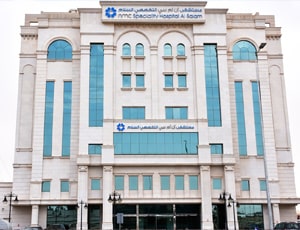
At NMC Specialty Hospital Al Salam, LASIK is performed using specialised laser vision-correction technology and comprehensive preoperative eye assessment. Established in 1999, this CBAHI accredited hospital in Riyadh, Saudi Arabia has 100 beds and offers advanced ophthalmology and refractive surgery services.
LASIK may be considered for adults with a stable refractive error who meet appropriate corneal and ocular health criteria. Before treatment, the ophthalmologist evaluates visual acuity, refractive error, corneal thickness and shape, tear-film health, pupil characteristics, and other factors that may affect surgical suitability. The laser treatment is then customized according to the patient's individual corneal measurements and vision-correction requirements.
Madrid, Spain
Choosing University Hospital Quironsalud Madrid for LASIK gives patients access to experienced refractive surgeons, advanced corneal mapping and diagnostic systems, precision laser platforms, and structured postoperative eye care. Established in 2006, the ISO, JCI accredited hospital in Madrid, Spain has 575 beds and provides specialised ophthalmic and refractive surgery services.
LASIK is generally performed using topical anaesthetic eye drops and typically takes a short time for both eyes. The surgeon creates the corneal flap, uses an excimer laser to reshape the corneal tissue according to the planned correction, and repositions the flap. Patients may experience temporary dryness, blurred vision, light sensitivity, or visual disturbances during the early recovery period. Follow-up examinations help monitor corneal healing and visual outcomes.
Choosing Dexeus University Hospital for LASIK gives patients access to experienced refractive surgeons, advanced corneal mapping and diagnostic systems, precision laser platforms, and structured postoperative eye care. Established in 1973, the JCI accredited hospital in Barcelona, Spain has 200 beds and provides specialised ophthalmic and refractive surgery services.
LASIK is generally performed using topical anaesthetic eye drops and typically takes a short time for both eyes. The surgeon creates the corneal flap, uses an excimer laser to reshape the corneal tissue according to the planned correction, and repositions the flap. Patients may experience temporary dryness, blurred vision, light sensitivity, or visual disturbances during the early recovery period. Follow-up examinations help monitor corneal healing and visual outcomes.
Torrevieja, Spain
Choosing Quironsalud Torrevieja Hospital for LASIK gives patients access to experienced refractive surgeons, advanced corneal mapping and diagnostic systems, precision laser platforms, and structured postoperative eye care. Established in 2006, the ISO accredited hospital in Torrevieja, Spain has 119 beds and provides specialised ophthalmic and refractive surgery services.
LASIK is generally performed using topical anaesthetic eye drops and typically takes a short time for both eyes. The surgeon creates the corneal flap, uses an excimer laser to reshape the corneal tissue according to the planned correction, and repositions the flap. Patients may experience temporary dryness, blurred vision, light sensitivity, or visual disturbances during the early recovery period. Follow-up examinations help monitor corneal healing and visual outcomes.
| Speciality | Ophthalmology |
| Procedure | LASIK |
| Success Rate | 90-99% |
| Recovery Time | A few days to a few weeks |
| Treatment Time | 15-20 minutes per eye |
| Chances of Recurrence | Very low |
LASIK refers to Laser-Assisted in Situ Keratomileusis. It is a popular refractive eye surgery that aims to correct nearsightedness, farsightedness, and astigmatism. The procedure involves reshaping the cornea using a laser to improve the way light rays are focused on the retina. This surgery can help enhance vision.
Medical conditions that can be treated through LASIK include:
The recovery process after LASIK typically involves a relatively quick healing period. Patients may experience some discomfort, mild burning, or itching in the eyes immediately after the procedure. Eye drops are prescribed to alleviate these symptoms and aid in the healing process. It is essential to avoid rubbing the eyes and refrain from strenuous activities for a few days. Most patients can resume normal activities within a day or two, and their vision should gradually improve over the next few weeks. Regular follow-up visits with the eye surgeon are scheduled to monitor the healing progress and ensure optimal visual outcomes.

Ophthalmology is a medical field relating to conditions of the eye. It is a branch of medicine, that deals with physiology, anatomy, surgery, and treatment of the visual pathways of the eyes