Your Notifications
All done, no notifications

Anterior Cruciate Ligament (ACL) Reconstruction Cost in Egypt

USD 3000 - USD 6500

Affordable World-class Treatment - Accredited Hospitals - Free Treatment Plan in 24 Hrs

1
Days in Hospital
1-2 hrs
Procedure Time
85 - 90%
Success Rate
Anterior Cruciate Ligament (ACL) Reconstruction: Cost, Procedure and Clinics
JCI/ISO 100,000+ Patients 24X7 Coordinator Visa & Travel handled
Your all-in-one medical travel platform for treatment, recovery & care.

Get Your Personalised Treatment Plan in Just 24 Hours.

Share your details to receive a personalised treatment plan, estimated costs, hospital recommendations, and expert guidance, “completely free.”

Required | alphabets and spaces
Required | A valid, working email address
Required | A valid contact
Connect with an Expert

Your information is protected with HIPAA-compliant security standards. We only share your details with hospitals after your consent.

Estimated Treatment Cost
USD 3000 - USD 6500
All-inclusive • Hospital + Medications + Recovery Assistance + Dedicated Care Coordinator

International Quality. Affordable Care.

What's included in your Anterior Cruciate Ligament (ACL) Reconstruction quote?

ACL Reconstruction
Arthroscopic surgery to reconstruct a torn anterior cruciate ligament using a graft
Orthopaedic consultation
Pre-surgery evaluation, treatment planning, and follow-up consultations
Hospital stay & supportive care
Surgery, anaesthesia, nursing care, and recovery monitoring
Follow-up monitoring
Physiotherapy guidance, knee assessment, and routine follow-up visits
Visa & medical-visa invite letter
Airport pickup & transfers

Cost of Anterior Cruciate Ligament (ACL) Reconstruction in Major Cities of Egypt

CityCost (USD)
Alexandria Get Quote Explore More
Cairo Get Quote Explore More

Anterior Cruciate Ligament Reconstruction - Egypt Vs the World

$0 - $0
$2k - $15k
$3k - $4k
$3k - $6k
$5k - $12k
$6k - $15k
$6k - $11k
$6k - $13k
$6k - $10k
$6k - $7k
$7k - $12k
$8k - $18k
$17k - $21k
$20k - $50k
Fauzia Zeb Fatima
Author

M.Pharm

4 Years of Experience

Fauzia Zeb is a distinguished medical and scientific content writer with a robust academic foundation in pharmaceutical sciences, holding a B.Pharm and M.Pharm degree from prestigious institutions, including MIT and Jamia Hamdard University. Her comprehensive expertise in pharmacology, clinical sciences, and biomedical research enables her to translate complex medical and scientific concepts into precise, evidence-based content tailored for diverse audiences. Specializing in peer-reviewed articles, clinical blog posts, and research-driven publications, she demonstrates a consistent ability to bridge the gap between advanced medical science and accessible, audience-specific communication.
View More
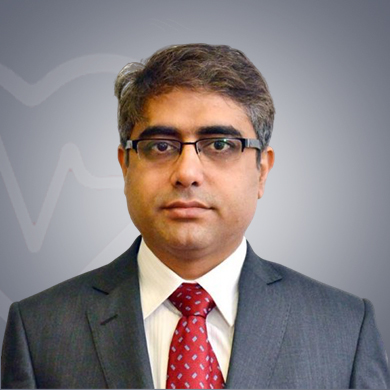
Dr. Manoj Miglani
Reviewer

Orthopedic Surgeon

22 Years of Experience

Last Reviewed - June 2026

Known for his soft-spoken nature, Dr. Manon Miglani had completed his MBBS from Maulana Azad Medical College and MS (Ortho) for All India Institute of Medical Sciences. Dr. Miglani was awarded AO spine fellowship from Queen’s Medical Center, Nottingham and he also received Stryker fellowship in Arthroplasty from Indraprastha Apollo Hospital. Dr. Manon Miglani has provided his expert services to various hospitals of Delhi and NCR including AIIMS, Indraprastha Apollo, Jaipur Golden hospital, and Artemis hospital Presently, Dr. Manon is the additional director of Fortis, Vasant Kunj and senior consultant at Fortis, Shalimar Bagh.
View More

Need Help Choosing the Right Treatment? Talk to a Medical Advisor

Our dedicated Medical Patient Advisors are here to answer your questions, help you compare treatment options, estimate costs, and guide you through every step of your healthcare journey.

15 min
Average response time

Serving Patients Worldwide in Multiple Languages.

Anterior cruciate ligament (ACL) reconstruction involves replacing the injured ACL with tissue to restore normal knee function. The ACL is a vital stabilizing ligament in the knee that connects the femur to the tibia. It plays a crucial role in facilitating proper movement of the tibia and enables pivoting or sudden changes in leg direction, thereby protecting the knee from damage.

ACL reconstruction is recommended for addressing various knee problems, including:

  • Instability or a sensation of the knee giving way during daily activities
  • Persistent knee pain
  • Inability to resume sports or other activities due to knee instability
  • Concurrent injuries to other ligaments
  • Presence of a meniscus tear
Explore Hospitals ( 2 )

Cairo, Egypt

3000+ Beds · 185+ Procedures
JCI
Starting
USD 3000

Alexandria, Egypt

3000+ Beds · 185+ Procedures
JCI
Starting
USD 3000

Get Your Anterior Cruciate Ligament (ACL) Reconstruction
Plan in 24 hrs.

Our experienced Medical Patient Advisors have supported 100,000+ patients across 120+ countries with personalised treatment plans, hospital recommendations, cost estimates, and travel assistance, all free.

HIPAA-Compliant Data SecurityShared Only with Your Consent

Free Consultation No Obligation Personalized Treatment Plan Response Within 24 Hours

Required | alphabets and spaces
Required | A valid, working email address
Required | A valid contact

Your medical info is kept HIPAA-style confidential. We never share with hospitals without your consent.

Jenny Wilson
Your Dedicated Medical Patient Advisor
Treatment planning • Hospital coordination • Multilingual support • Response within 15 minutes.
Our Services to Better your Experience

Opinion & Option

We submit the most accurate opinion and options from one or more countries for your review

Consult Privately

Consult with a certified specialist privately on our telemedicine platform even before you decide to travel

Logistics

We handle flights, visas, transfers, and accommodation—so you can focus on your health.

Recovery

Our In-house rehabilitation service packages to better your recovery and treatment outcome

Patient Stories

Sumaya Matsushima
Sumaya Matsushima
17 Yr Old Patient from Japan Underwent ACL Reconstruction in India

Sumaya, a 17yr old football player had injured herself while playing football on the training ground. She was suffering from…

Maxime Loic Feudjou Nguegang
Mr. Maxime Underwent ACL and Meniscus Repair in Aakash Healthcare Super Speciality Hospital, India

Maxime Loic Feudjou Nguegang from Zambia got injured while playing football and was suffering from an ACL injury.

Frequently Asked Questions

The cost of Anterior Cruciate Ligament (ACL) Reconstruction in Egypt is Get a Quote , and varies depending on the hospital, surgeon's expertise, type of graft, surgical technique, diagnostic tests, and rehabilitation requirements. The total cost may include consultations, imaging, anaesthesia, surgery, hospitalisation, medications, and post-operative physiotherapy.

Some of the best hospitals in Egypt for Anterior Cruciate Ligament (ACL) Reconstruction include:
  • Saudi German Hospital
  • Choose an orthopaedic or sports medicine specialist with experience in ACL reconstruction and knee ligament injuries. Consider the surgeon's qualifications, experience with arthroscopic procedures, surgical outcomes, hospital affiliation, and experience treating international patients. It is also advisable to review the recommended surgical technique and rehabilitation plan during the consultation.

    ACL reconstruction generally has favourable outcomes when performed in appropriately selected patients and followed by structured rehabilitation. Success rate, such as 85-90%, depends on factors such as the severity of the injury, graft selection, surgical technique, patient age and activity level, and adherence to physiotherapy. Rather than relying on a single success percentage, patients should discuss expected outcomes and individual prognosis with their surgeon.

    ACL reconstruction may use an autograft, taken from the patient's own tissue, or an allograft from a donor. Common autograft options include the patellar tendon, hamstring tendon, and quadriceps tendon. The choice depends on factors such as age, activity level, sporting requirements, previous surgery, and surgeon preference.

    Yes. ACL reconstruction is commonly performed using arthroscopic techniques. A small camera is inserted through a small incision to visualise the knee joint, while specialised instruments are used through additional small incisions to remove the damaged ligament and place the graft.

    Many patients are able to begin walking with crutches soon after surgery, depending on the surgical findings and the surgeon's rehabilitation protocol. Weight-bearing may initially be restricted or modified. Physiotherapy focuses on restoring knee movement, reducing swelling, and gradually improving strength and stability.

    Returning to sports is usually a gradual process and should be based on strength, stability, movement control, and functional testing, rather than a fixed date alone. Many athletes require approximately 6-12 months or longer before returning to high-demand pivoting sports. Returning too early may increase the risk of reinjury.

    Yes. ACL injuries can occur alongside meniscus or cartilage damage. If these injuries are identified during imaging or surgery, the surgeon may repair or treat them during the same procedure when clinically appropriate. Combining procedures can influence rehabilitation and weight-bearing requirements.

    Hospitals may use arthroscopic ACL reconstruction, minimally invasive surgical techniques, advanced imaging, and modern graft fixation systems. Depending on the injury and patient's needs, surgeons may use autografts such as patellar tendon, hamstring, or quadriceps tendon grafts, or selected allografts. Computer-assisted or navigation-supported techniques may also be available at advanced centres.

    Potential risks include infection, bleeding, blood clots, knee stiffness, persistent pain or swelling, graft failure, nerve or blood vessel injury, and reduced range of motion. Some patients may also experience difficulty returning to their previous level of sports activity or develop additional knee problems. The surgeon will assess individual risk factors before surgery.

    International patients should obtain a medical evaluation and share previous MRI scans, X-rays, medical reports, prescriptions, and details of previous knee treatments with the treating team. Patients may also need blood tests or other pre-operative assessments. Travel arrangements, accommodation, insurance, medical visa requirements, and post-operative rehabilitation should be planned before departure.

    Yes. Many hospitals and orthopaedic centres offer online consultations for international patients in Egypt. During the consultation, the specialist can review MRI or X-ray images, medical history, symptoms, previous treatments, and physical limitations to determine whether ACL reconstruction may be appropriate. A preliminary treatment plan and estimated cost may also be discussed.

    Patients should generally carry their passport, medical reports, MRI or X-ray images, previous surgical records, medication list, laboratory reports, referral letters, and insurance documents, where applicable. Keeping both digital and printed copies of important medical records can make the evaluation and hospital admission process easier.

    The required stay depends on the patient's condition, surgical approach, recovery, and rehabilitation plan. ACL reconstruction is often performed as a short-stay or day-care procedure, but international patients may need to remain in Egypt for approximately 1-2 weeks or longer to attend follow-up consultations and ensure they are medically fit to travel. The treating hospital should provide an individualised timeline.

    Initial recovery generally takes several weeks, but full rehabilitation commonly takes 6-12 months, particularly for patients intending to return to pivoting sports. Physiotherapy usually begins soon after surgery and progresses through stages involving mobility, strength, balance, and sport-specific training. The exact recovery timeline varies according to the graft, surgical findings, physical condition, and rehabilitation progress.

    If a complication occurs, the patient should contact the treating hospital or surgeon promptly. Depending on the problem, treatment may involve medication, additional physiotherapy, imaging, drainage, or further surgery. International patients should clarify the hospital's post-operative support and follow-up arrangements before returning home.

    International patients can begin by submitting their medical records and imaging reports for evaluation. After reviewing the case, the hospital may provide a treatment recommendation, estimated cost, and proposed treatment schedule. Once the patient confirms the plan, assistance may be available with hospital appointments, travel arrangements, medical visa documentation, accommodation, and local coordination, depending on the healthcare provider.

    Egypt may offer access to experienced orthopaedic surgeons, specialised sports medicine centres, modern hospitals, arthroscopic surgical techniques, and structured rehabilitation programmes. International patients may also benefit from coordinated medical travel services and potentially competitive treatment costs. The suitability of Egypt should ultimately be assessed based on the surgeon, hospital, treatment quality, rehabilitation support, and overall treatment plan.

    Treatment depends on the patient's age, activity level, degree of ligament damage, associated injuries, and knee stability. Options may include conservative treatment with physiotherapy and activity modification, or surgical ACL reconstruction using autograft or allograft tissue in Egypt. Arthroscopic ACL reconstruction is commonly used, and associated meniscus or cartilage injuries may be treated during the same procedure when required.

    Not Sure About Your Treatment Plan? Get a Free Second Opinion

    Have your reports reviewed by independent oncology experts to help you make a confident treatment decision, all online within 48 hours.

    Upload Your Reports
    Free second opinion on your CAR-T plan