Your Notifications
All done, no notifications

Cost of Brain Tumour Treatment Worldwide

Get a Quote

Affordable World-class Treatment - Accredited Hospitals - Free Treatment Plan in 24 Hrs

5
Days in Hospital
3-6 hrs
Procedure Time
60 - 85%
Success Rate
Brain Tumor Treatment
JCI/ISO 100,000+ Patients 24X7 Coordinator Visa & Travel handled
Your all-in-one medical travel platform for treatment, recovery & care.

Get Your Personalised Treatment Plan in Just 24 Hours.

Share your details to receive a personalised treatment plan, estimated costs, hospital recommendations, and expert guidance, “completely free.”

Required | alphabets and spaces
Required | A valid, working email address
Required | A valid contact
Connect with an Expert

Your information is protected with HIPAA-compliant security standards. We only share your details with hospitals after your consent.

Estimated Treatment Cost
All-inclusive • Hospital + Medications + Recovery Assistance + Dedicated Care Coordinator

International Quality. Affordable Care.

A cell growth inside or close to the brain is called a brain tumor. Brain tissue can develop brain tumors and/or may also occur near brain tissue. Neural pathways, the pituitary, pineal, and brain surface membranes are all near one another. These tumors are known as metastatic brain tumors or secondary brain tumors.

Factors that affect the cost of Brain Tumour Treatment:

  • Tumor Type and Location: A brain tumor's type and location within the brain can affect the treatment's complexity and associated expenses. Certain tumors might be easier to reach and cure, while others that are situated in important brain regions might need more involved and specialized operations.
  • Treatment Strategy: Surgery, radiation therapy, targeted therapy, chemotherapy, and/or immunotherapy are frequently used in conjunction with the treatment of brain tumors. The kind and stage of the tumor, the patient's general condition, and the intended course of treatment will all influence the suggested course of action. Every treatment technique has its price tag, and combination therapy may raise overall costs.
  • Surgical Procedures: If possible, removing the brain tumor surgically is the primary line of treatment. Surgeon fees, anesthetic costs, hospital facility fees, operating room costs, and post-operative care are all included in the cost of brain tumor surgery. Costs may vary depending on the intricacy of the procedure and the requirement for specialist tools or methods.
  • Radiation therapy: Radiation therapy can be used alone, in conjunction with surgery and/or chemotherapy, to treat brain cancers. Radiation therapy costs cover treatment sessions, equipment utilization, and associated medical personnel. The nature and size of the tumor, among other parameters, determine how many radiation treatments are needed.
  • Chemotherapy: Certain forms of brain tumors, especially those that are developing quickly or have spread to other parts of the body, may be treated with chemotherapy medications. Chemotherapy costs include prescription drugs, related administration costs, and supporting care (blood tests, anti-nausea drugs, etc.).
  • Immunotherapy and targeted therapy: Although they can be costly, these two types of treatment are options for certain brain tumors. These therapies are frequently limited to treating particular kinds of brain cancers with particular genetic abnormalities or biomarkers.
  • Imaging and Diagnostic Tests: MRI, CT, PET, and biopsies are examples of diagnostic tests whose costs are included in the total cost. These procedures are used to diagnose tumors, stage them, and track their response to treatment.
  • Healthcare Provider Fees: The cost is increased by the fees charged to neurosurgeons, radiologists, pathologists, oncologists, radiation oncologists, and other medical professionals who diagnose and treat brain tumors.
  • Hospital Stay and More Services: It's important to budget for the costs associated with being in a hospital, such as lodging, meals, medical supervision, prescription drugs, and more services.
  • Geographic Location: The cost of medical care varies by location and can be affected by local market rivalry, healthcare facility accessibility, and cost of living.
  • Supporting Care and Other Services: The total cost of treating a brain tumor may also include the costs of supporting care services including occupational therapy, speech therapy, physical therapy, rehabilitation, and palliative care.
CountryCostLocal_currency
United KingdomUSD 14256 - 3276411262 - 25884
TurkeyUSD 16500 - 30000497310 - 904200
SpainUSD 1940017848
United StatesUSD 8000 - 224878000 - 22487
SingaporeUSD 4200056280
Fauzia Zeb Fatima
Author

M.Pharm

4 Years of Experience

Last Reviewed - June 2026

Fauzia Zeb is a distinguished medical and scientific content writer with a robust academic foundation in pharmaceutical sciences, holding a B.Pharm and M.Pharm degree from prestigious institutions, including MIT and Jamia Hamdard University. Her comprehensive expertise in pharmacology, clinical sciences, and biomedical research enables her to translate complex medical and scientific concepts into precise, evidence-based content tailored for diverse audiences. Specializing in peer-reviewed articles, clinical blog posts, and research-driven publications, she demonstrates a consistent ability to bridge the gap between advanced medical science and accessible, audience-specific communication.
View More
⁠Dr Rakesh Kumar Dua
Reviewer

Spine & Neurosurgeon

25 Years of Experience

Last Reviewed - June 2026

Dr. Rakesh Dua has more than 25+ years of clinical experience in spine surgeries. He is currently providing his services as Director, Neuro & Spine Surgery at Fortis Hospital, Shalimar Bagh. Before joining Fortis Hospital, he was associated with Max super-specialist Hospital, Shalimar Bagh as Director Neurosurgery & Head Neuro Spine, and with UCMS & GTB hospital as head of the neurosurgery department.
View More

Need Help Choosing the Right Treatment? Talk to a Medical Advisor

Our dedicated Medical Patient Advisors are here to answer your questions, help you compare treatment options, estimate costs, and guide you through every step of your healthcare journey.

15 min
Average response time

Serving Patients Worldwide in Multiple Languages.

A brain tumor is an abnormal growth of cells in the brain which can be cancerous or non-cancerous. This growth can occur in any part of the brain or originate elsewhere in the body and spread to the brain.

It is a fairly common condition that affects millions of people worldwide. An undiagnosed brain tumor can be fatal, making it crucial to undergo specific tests and begin treatment promptly once the diagnosis is confirmed.

The two most common symptoms of a brain tumor are increasingly severe headaches and blurred vision. Additionally, individuals with this condition may experience seizures, confusion, nausea, vertigo, impaired speech, and loss of balance.

Treatment for a brain tumor depends on several factors, including the type, size, and location of the tumor, as well as the overall health of the patient and age. These considerations are taken by the doctor while preparing a brain tumor treatment plan.

Different treatment modalities can be used to treat brain tumor patients and surgery, chemotherapy, and radiation therapy are among them. Usually, a combination of treatment modalities is used to conduct brain tumor treatment.

Brain tumors are of various types, determined by the cells they consist of. Tumor cell testing in the lab helps identify the type of Tumor. Some are noncancerous or benign, while others are cancerous or malignant. Benign tumors typically grow slowly, while malignant tumors tend to overgrow.

Following are the different types of Brain Tumor:

  • Gliomas: It can be the most common type of malignant brain tumor.
  • Pineal tumors: The tumors that grow around the brain’s Pineal gland.
  • Meningiomas: The brain tumors that start in the membranes around the brain and spinal cord.
  • Nerve tumors: The Tumors refer to the growth of abnormal cells around the nerves.
  • Pituitary tumors: This type of tumor grows in the pituitary gland.
  • Pineal tumors: Tumor that originates in or around the pineal gland.

A brain tumour is treated to remove or shrink it, relieve symptoms like headaches or seizures, and prevent further neurological damage. Treatment may be curative, life-prolonging, or palliative depending on the type.

Those who suffer from ongoing headaches, visual distortions, seizures, unexplained nausea, mental and personality changes, or weakness in one or more limbs should consider early consultation, especially if these symptoms continue to worsen or prevent them from participating in daily activities.

The preparations included neurological examination and multiple imaging procedures, such as an MRI or CT scan. A biopsy may need to be done to ascertain the tumour type. Then, the patient will receive instructions, such as withholding medications, fasting before the procedure, and consultations with various specialists, such as neurosurgeons, oncologists, and anesthetists.

In many brain tumours, surgical resection is deemed the primary mode of treatment. It involves a craniotomy, whereby the surgeon removes part of the skull to gain access to the area and obtain the excised tumour. Lesser forms of surgical intervention are also applied, e.g., stereotactic radiosurgery and endoscopic surgery. Depending on the nature of the tumour, postoperative treatment commonly consists of radiotherapy and/or chemotherapy.

Brain tumour surgery can last 2 to 6 hours or more, depending on the size and location of the tumour. Hospitalisation generally involves 3 to 10 days, with longer durations for more complicated cases.

  • Bleeding
  • Infection
  • Swelling
  • Stroke
  • Damage to the surrounding brain tissue
  • Cognitive impairments

Treatment relieves symptoms and kills the tumour wherever possible. In malignant situations, it also increases the survival time. Treatment also improves comfort and the ability to execute day-to-day activities in non-curable cases.

Rest, physiotherapy, and gradual resumption of normal activities constitute post-operative rehabilitation. Depending on the case, speech therapy or occupational therapy might be required. In most cases, further management involves repeated imaging and oncological treatments such as chemotherapy and radiation.

Success varies by type, grade, and location of the tumor. After the surgical procedure, benign conditions have high rates of cure. Treating malignant tumors may be more difficult, but the ultimate purpose is lifespan extension and symptom control.

Explore Hospitals ( 191 )

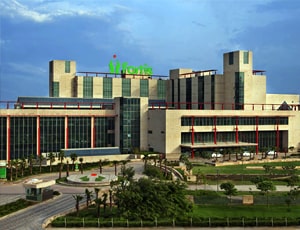
Noida, India

1200+ Beds · 197+ Procedures
NABH
Starting
USD 2750

Mohali, India

276+ Beds · 218+ Procedures
JCI NABH
Starting
USD 5500

Delhi, India

4.8 - 2 reviews · 162+ Beds · 204+ Procedures
NABH
Starting
USD 6440

Delhi, India

100+ Beds · 146+ Procedures
NABH NABL

Faridabad, India

425+ Beds · 275+ Procedures
NABL NABH
Starting
USD 7500

Mumbai, India

315+ Beds · 258+ Procedures
JCI NABH
Starting
USD 6000

Gurgaon, India

3.5 - 3 reviews · 311+ Beds · 274+ Procedures
JCI NABH NABL
Starting
USD 6670

Delhi, India

539+ Beds · 305+ Procedures
JCI NABH
Starting
USD 6500

Bangalore, India

280+ Beds · 271+ Procedures
NABL NABH
Starting
USD 8000

Delhi, India

100+ Beds · 168+ Procedures
NABH NABL
Starting
USD 6290

Get Your Brain Tumour Treatment
Plan in 24 hrs.

Our experienced Medical Patient Advisors have supported 100,000+ patients across 120+ countries with personalised treatment plans, hospital recommendations, cost estimates, and travel assistance, all free.

HIPAA-Compliant Data SecurityShared Only with Your Consent

Free Consultation No Obligation Personalized Treatment Plan Response Within 24 Hours

Required | alphabets and spaces
Required | A valid, working email address
Required | A valid contact

Your medical info is kept HIPAA-style confidential. We never share with hospitals without your consent.

Process Involved for Brain Tumour Treatment

  • Consultation: Discuss the diagnosis, staging, and treatment with a neurologist, neurosurgeon, or oncologist.
  • Preoperative Evaluation: Imaging studies (like MRI or CT scans) and a neurologic examination are performed to define the location, size, and effect on brain function of the tumor.
  • Discussion with Treatment: The treatment possibilities, such as surgery, radiation, chemotherapy, targeted therapy, or a combination, are discussed based on the tumor type and stage.
  • Surgical Planning: When surgery is being recommended, the procedure, including removal of the tumor or biopsy, and the risk involved is disclosed.
  • Post-Surgery, Follow-up: Routine follow-up examinations and imaging are arranged to track progress, identify recurrence, and address possible side effects or complications.
  • Primary brain tumors (gliomas, glioblastomas and meningiomas)
  • Metastatic brain tumors
  • Brain lymphoma
  • Pituitary tumors
  • Individuals with primary brain tumors or metastatic brain cancer are recommended to undergo treatment.
  • The type, site, size, and grade of the tumor, as well as the patient's overall health and medical history, all influence the patient's suitability for treatment.
  • Surgical resection
  • Chemotherapy
  • Radiation therapy
  • Immunotherapy
  • Targeted therapy
  • It can prevent or control tumor growth, particularly with initial-stage detection and proper treatment.
  • Enhances quality of life and alleviates symptoms such as headache, seizures, or neurological deficits.
  • Prevents recurrence or metastasis of tumors using combination therapies.
  • Neurologist
  • Neurosurgeon
  • Medical Oncologist
  • Radiation Oncologist
  • Fill out the inquiry form: Fill out the form to provide us with the relevant information about your condition.
  • Consult with Our Healthcare Expert: One of our qualified specialists will contact you for a consultation.
  • Receive a Detailed Treatment Plan: After examining your situation, we will provide you with a detailed treatment plan that includes expert views and cost breakdowns for various choices.
  • Choose your preferred option: Choose the treatment option that suits you the best.
Jenny Wilson
Your Dedicated Medical Patient Advisor
Treatment planning • Hospital coordination • Multilingual support • Response within 15 minutes.
Our Services to Better your Experience

Opinion & Option

We submit the most accurate opinion and options from one or more countries for your review

Consult Privately

Consult with a certified specialist privately on our telemedicine platform even before you decide to travel

Logistics

We handle flights, visas, transfers, and accommodation—so you can focus on your health.

Recovery

Our In-house rehabilitation service packages to better your recovery and treatment outcome

Not Sure About Your Treatment Plan? Get a Free Second Opinion

Have your reports reviewed by independent oncology experts to help you make a confident treatment decision, all online within 48 hours.

Upload Your Reports
Free second opinion on your CAR-T plan

Get Insight with our Blogs

Key Advantages of Minimally Invasive Brain Tumor Surgery
Neurology

Key Advantages of Minimally Invasive Brain Tumor Surgery

Surgery for brain tumors has always caused problems for patients due to the large cuts made to perform the surgery, as well as the long lengths of time patients stay in the hospital after surgery and for them to recover from their surgeries.

Published: 09 Jun, 2026
Updated: 09 Jun, 2026