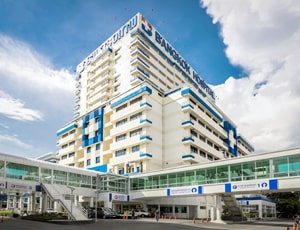
The cost of the Norwood procedure in Thailand typically ranges between USD 18000.
However, this cost can vary depending on several factors, including the type and severity of the condition, treatment techniques chosen, the healthcare facility's location and reputation, the treating professionals' experience and specialisation, and the patient's overall health status.
Additionally, factors like the duration of treatment, the need for follow-up care, and the use of advanced technologies or specialised treatments can further influence the overall cost.
A Norwood procedure is a surgery that most surgeons do for a baby with hypoplastic left heart syndrome. This procedure lets the right side of the baby's heart send oxygenated blood to the body. Usually, your heart's left side takes care of this. In a baby with HLHS, the heart's left side isn't developed enough to do it.
After this procedure, your baby's lower heart chamber, the right ventricle, continues to pump blood to the lungs without oxygen. But it also carries out the left ventricle's function, which supplies the body with oxygen-rich blood.
| City | Cost (USD) | Cost (THB) |
|---|---|---|
| Bangkok | USD 18000 | 588780 |
| Country | Minimum Cost | Minimum Local Currency | Maximum Cost | Maximum Local Currency |
|---|---|---|---|---|
| Czechia | USD 11000 | CZK 242220 | USD 30000 | CZK 660600 |
| India | USD 10000 | INR 856400 | USD 12000 | INR 1027680 |
| Israel | USD 7200 | ILS 25488 | USD 8800 | ILS 31152 |
| Lithuania | USD 25000 | LTL 85518 | USD 40000 | LTL 136828 |
| Malaysia | USD 25000 | MYR 106000 | USD 50000 | MYR 212000 |
| Morocco | USD 15000 | MAD 138450 | USD 30000 | MAD 276900 |
| Poland | USD 30000 | PLN 112800 | USD 50000 | PLN 188000 |
| Saudi Arabia | get request | |||
| Singapore | USD 125000 | SGD 161250 | USD 200000 | SGD 258000 |
| Spain | USD 50000 | ESP 7351995 | USD 100000 | ESP 14703990 |
| Thailand | - | - | USD 18000 | THB 588780 |
| Tunisia | USD 15000 | TND 44700 | USD 30000 | TND 89400 |
| Turkey | USD 18000 | TRY 703080 | USD 25000 | TRY 976500 |
| United Arab Emirates | USD 22000 | AED 80740 | USD 28000 | AED 102760 |
| United Kingdom | get request | |||
Need Help Planning Your Treatment Abroad?
Your 24/7 AI Health Assistant 
The Norwood procedure enhances blood circulation in newborns with hypoplastic left heart syndrome (HLHS). This surgery allows the right ventricle to compensate for an underdeveloped left ventricle and aorta. Post-operation, the right ventricle pumps blood to the lungs for oxygenation and also circulates oxygen-rich blood throughout the body.
This surgery allows the right side of a baby’s heart to send oxygen-rich blood to the body, a function typically performed by the left side. In a baby with HLHS, the left side of the heart is not developed enough to handle this task.
After the surgery, the right ventricle continues its normal function of pumping deoxygenated blood to the lungs. However, it also takes on the role of the left ventricle by pumping oxygenated blood to the rest of the body.
While this does not maintain the separation between oxygenated and deoxygenated blood like a normal heart, it significantly improves oxygen delivery to the baby’s cells and tissues, offering a better quality of life despite not being a perfect solution.
Who needs to have a Norwood procedure?
Babies with hypoplastic left heart syndrome (HLHS) require this surgery within the first few weeks of life. Due to their underdeveloped left ventricle, the Norwood procedure allows their right ventricle to execute the functions of both ventricles.
For the first few days after birth, a baby’s blood can flow between the aorta and pulmonary artery through the patent ductus arteriosus, allowing the right ventricle to send blood to both the lungs and the body. However, once this opening closes naturally after birth, the right ventricle can no longer send blood to the body, necessitating the Norwood procedure.
Would you like some help? We are available.
Get Help
Bangkok, Thailand
Types of Norwood Procedure in Bangkok Hospital and its associated cost
| Treatment Option | Approximate Cost Range (USD) | Approximate Cost Range (THB) |
|---|---|---|
| Stage I (Norwood Procedure) | 11188 - 18780 | 395256 - 685940 |
| Stage II (Glenn Procedure) | 9133 - 17140 | 316049 - 591884 |
| Stage III (Fontan Procedure) | 13252 - 22875 | 481209 - 803671 |

Bangkok, Thailand

Types of Norwood Procedure in Bangpakok 9 International Hospital and its associated cost
| Treatment Option | Approximate Cost Range (USD) | Approximate Cost Range (THB) |
|---|---|---|
| Stage I (Norwood Procedure) | 11095 - 19026 | 408249 - 681584 |
| Stage II (Glenn Procedure) | 8874 - 16830 | 323034 - 589348 |
| Stage III (Fontan Procedure) | 13563 - 22565 | 476250 - 794162 |
Need Some Advice From Our Experts?
Our team of healthcare experts would be happy to assist you

+99


Opinion & Option
We submit the most accurate opinion and options from one or more countries for your review
Consult Privately
Consult with a certified specialist privately on our telemedicine platform even before you decide to travel
Logistics
We handle flights, visas, transfers, and accommodation—so you can focus on your health.
Recovery
Our In-house rehabilitation service packages to better your recovery and treatment outcome
Our network connects you with the leading medical tourism destinations globally, offering a wide range of cities, top doctors, and flexible pricing options.


A. The cost of Norwood Procedure in Thailand may differ from one medical facility to the other. The top hospitals for Norwood Procedure in Thailand cover all the expenses related to the pre-surgery investigations of the candidate. The treatment cost usually includes the expenses related to hospitalization, surgery, nursing, medicines, and anesthesia. A prolonged hospital stay due to delayed recovery, new diagnosis, and complications after surgery may increase the cost of the Norwood Procedure in Thailand.
A. There are several best hospitals for Norwood Procedure in Thailand. For quick reference, the following are some of the leading hospitals for Norwood Procedure in Thailand:
A. After the Norwood Procedure in Thailand, the patient is supposed to stay in a guest house for another 28 days. This duration of stay is recommended to complete all the necessary follow-ups and control tests to ensure that the surgery was successful.
A. Thailand is considered to be one of the best places for Norwood Procedure in the world. This is because of the availability of some of the best doctors, advanced medical technology, and good hospital infrastructure. However, some of the other popular destinations for Norwood Procedure include the following:
A. There are certain expenses additional to the Norwood Procedure cost that the patient may have to pay for. These are the charges for daily meals and hotel stays outside the hospital. The extra charges may vary averaging around USD 25.
A.Norwood Procedure in Thailand is offered in almost all metropolitan cities, including the following:
A. After the Norwood Procedure takes place, the average duration of stay at the hospital is about 7 days. The doctor's team reviews the patient's recovery during this time with the help of blood tests and imaging scans. Once they feel that everything is on track, the patient is discharged.
A. Out of all the hospitals in Thailand, there are about 4 best hospitals for Norwood Procedure. These hospitals have the required expertise as well as the infrastructure available to handle patients who need Norwood Procedure
A. Around USD 18,000 is the cost of the Norwood procedure in Thailand. Only some of the best and most certified hospitals in Thailand perform the Norwood procedure for international patients.
A. For the Norwood operation, the in-hospital survival rate is 90%. The survival rates following a five-year Norwood operation vary from 60% to 75%. For certain children, HLHS can turn fatal very quickly, and they won't survive the second stage of surgery.
60% of youngsters do not require a heart transplant and survive six years following surgery. Twenty years following surgery, the survival rate is essentially unchanged.
A. Yes, there are specialized pediatric surgeons in Thailand who work on Norwood procedures. A few of them are listed below-
Some other world-renowned surgeons who offer this procedure are
A. Aortic or pulmonary artery narrowing (stenosis) risks associated with the Norwood operation.
A. During the first few weeks of life, babies with hypoplastic left heart syndrome require this procedure.
Certain infants might not be eligible for a Norwood treatment because of things like being born too soon, being small for their gestational age (SGA), or having serious health issues. Pulmonary artery bands may be employed in certain situations to control lung blood flow and enhance body circulation.
A. There are different stages involved in the Norwood procedure. The surgeon doing the Norwood operation will:
A. After the Norwood operation, the in-hospital survival rate is almost 90%. The range of five-year survival rates is 60% to 75%. Sadly, some kids with HLHS could die suddenly from complications that arise before they can have the second surgery.
About sixty percent of youngsters survive six years after surgery without requiring a heart transplant; this percentage stays consistent until roughly 20 years after surgery.
After surgery, babies with congenital conditions related to heart problems, premature birth, or lower birth weight typically have a less favorable outcome.
A. other alternate for HLHS surgeries other than the Norwood procedure are as follows:
All of the blood returning from the upper body goes to the lungs following this treatment. To supply organs and tissues throughout the body, blood that has more oxygen in it is pumped to the aorta.
The Fontan operation allows the remaining blood that is deficient in oxygen to return to the lungs from the body. There is minimal mixing of oxygen-poor and oxygen-rich blood in the heart following this procedure. Thus, the skin ought to stop appearing gray or blue.
A. Following surgery or a transplant, a child needs regular checks by a cardiac physician with expertise in congenital heart disease to detect any potential complications. For some issues, a child could require more care or medication. Antibiotics may be required for certain children before dental or other treatments to help avoid infections. Some kids might also need to restrict their physical activity.
A. Thailand offers relatively affordable pediatric heart surgery, which makes it a popular alternative for families looking for economical treatment options. Additionally, Thailand provides a helpful and patient-focused atmosphere, with numerous institutions offering specialized medical tourism services to help with travel, lodging, and continuing treatment. The kind people and mild weather of the nation add to the overall good experience.
A. Another popular location for pediatric heart surgery is Thailand, which is renowned for its advanced healthcare infrastructure and highly qualified medical personnel. The nation provides innovative cardiac care for children, including complicated surgeries and rehabilitation following surgery. Thai hospitals follow worldwide healthcare standards and are fitted with the latest technology.

Alvina Hasan is a dedicated medical researcher and scientific writer with a strong foundation in pharmaceutical sciences. She holds a B.Pharm from Jamia Hamdard University and an M.Pharm in Quality Assurance from DIPSAR University.
With deep medical expertise and a strong interest in healthcare communication, she focuses on transforming complex clinical and scientific information into clear, engaging, and easy-to-understand narratives. She develops insightful healthcare articles and research-driven content designed to support both medical professionals and patients, helping bridge the gap between advanced medical knowledge and practical understanding.
Readers can explore her published research and articles here:
https://carcinogenesis.com/index.php/JOC/article/view/868
https://carcinogenesis.com/index.php/JOC/article/view/870
. View More
Cardiologist
21 Years of Experience
Dr. Naresh Kumar Goyal is highly trained as a cardiologist with exposure in virtually all aspects of cardiology. He qualified with an MD in internal medicine in 1999 from SMS Medical College, Jaipur, and served in the Cardiology Department as an honorary resident. From this stage, he also started with training in the temporary pacing of the pacemaker as well as interventional services. View More
Last Reviewed - January 2026