The cost of Norwood Procedure in Malaysia is USD 25000 - USD 50000
However, this cost can vary depending on several factors, including the type and severity of the condition, treatment techniques chosen, the healthcare facility's location and reputation, the treating professionals' experience and specialisation, and the patient's overall health status.
Additionally, factors like the duration of treatment, the need for follow-up care, and the use of advanced technologies or specialised treatments can further influence the overall cost.
A Norwood procedure is a surgery that most surgeons do for a baby with hypoplastic left heart syndrome. This procedure lets the right side of the baby's heart send oxygenated blood to the body. Usually, your heart's left side takes care of this. In a baby with HLHS, the heart's left side isn't developed enough to do it.
After this procedure, your baby's lower heart chamber, the right ventricle, continues to pump blood to the lungs without oxygen. But it also carries out the left ventricle's function, which supplies the body with oxygen-rich blood.
| City | Minimum Cost (USD) | Minimum Cost (MYR) | Maximum Cost (USD) | Maximum Cost (MYR) |
|---|---|---|---|---|
| Kuala Lumpur | USD 25000 | 106000 | USD 50000 | 212000 |
| Country | Minimum Cost | Minimum Local Currency | Maximum Cost | Maximum Local Currency |
|---|---|---|---|---|
| Czechia | USD 11000 | CZK 242220 | USD 30000 | CZK 660600 |
| India | USD 10000 | INR 856400 | USD 12000 | INR 1027680 |
| Israel | USD 7200 | ILS 25488 | USD 8800 | ILS 31152 |
| Lithuania | USD 25000 | LTL 85518 | USD 40000 | LTL 136828 |
| Malaysia | USD 25000 | MYR 106000 | USD 50000 | MYR 212000 |
| Morocco | USD 15000 | MAD 138450 | USD 30000 | MAD 276900 |
| Poland | USD 30000 | PLN 112800 | USD 50000 | PLN 188000 |
| Saudi Arabia | get request | |||
| Singapore | USD 125000 | SGD 161250 | USD 200000 | SGD 258000 |
| Spain | USD 50000 | ESP 7351995 | USD 100000 | ESP 14703990 |
| Thailand | - | - | USD 18000 | THB 588780 |
| Tunisia | USD 15000 | TND 44700 | USD 30000 | TND 89400 |
| Turkey | USD 18000 | TRY 703080 | USD 25000 | TRY 976500 |
| United Arab Emirates | USD 22000 | AED 80740 | USD 28000 | AED 102760 |
| United Kingdom | get request | |||
Need Help Planning Your Treatment Abroad?
Your 24/7 AI Health Assistant 
The Norwood procedure enhances blood circulation in newborns with hypoplastic left heart syndrome (HLHS). This surgery allows the right ventricle to compensate for an underdeveloped left ventricle and aorta. Post-operation, the right ventricle pumps blood to the lungs for oxygenation and also circulates oxygen-rich blood throughout the body.
This surgery allows the right side of a baby’s heart to send oxygen-rich blood to the body, a function typically performed by the left side. In a baby with HLHS, the left side of the heart is not developed enough to handle this task.
After the surgery, the right ventricle continues its normal function of pumping deoxygenated blood to the lungs. However, it also takes on the role of the left ventricle by pumping oxygenated blood to the rest of the body.
While this does not maintain the separation between oxygenated and deoxygenated blood like a normal heart, it significantly improves oxygen delivery to the baby’s cells and tissues, offering a better quality of life despite not being a perfect solution.
Who needs to have a Norwood procedure?
Babies with hypoplastic left heart syndrome (HLHS) require this surgery within the first few weeks of life. Due to their underdeveloped left ventricle, the Norwood procedure allows their right ventricle to execute the functions of both ventricles.
For the first few days after birth, a baby’s blood can flow between the aorta and pulmonary artery through the patent ductus arteriosus, allowing the right ventricle to send blood to both the lungs and the body. However, once this opening closes naturally after birth, the right ventricle can no longer send blood to the body, necessitating the Norwood procedure.
Would you like some help? We are available.
Get Help
Kuala Lumpur, Malaysia
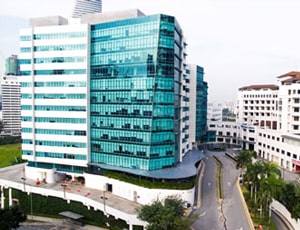
Prince Court is a private medical facility in the center of Kuala Lumpur that has 277 individual beds. Our dedication is to provide you with the best treatment possible from the time you arrive until you depart, healthier and happier. We are well-known for our top-notch facilities, cutting-edge technology, and friendly customer service.

Kuala Lumpur, Malaysia
Parkway Pantai located in Kuala Lumpur, Malaysia is accredited by JCI. Also listed below are some of the most prominent infrastructural details:

Kuala Lumpur, Malaysia
In Kuala Lumpur, Malaysia, ParkCity Medical Centre is a 300-bed, cutting-edge, interdisciplinary private hospital that provides award-winning private healthcare in an environment of lush vegetation.

Kuala Lumpur, Malaysia
Subang Jaya Medical Center is renowned for pioneering radiation oncology treatments and infrastructure in Malaysia. The hospital also has a state-of-the-art Cancer Radiosurgery Centre (CRC), which is fully furnished with the latest medical technology for cancer detection, monitoring, and treatment.

Kuala Lumpur, Malaysia
Situated at the junction of Petaling Jaya and Shah Alam, close to the Oasis Ara, Ara Damansara Medical Centre boasts a serene, luxurious ambiance.
The Centre has been awarded several prestigious awards such as the Global Health Asia Pacific Awards 2023, Newsweek Best Specialized Hospital APAC 2023, Healthcare Asia Awards 2023, and Malaysian Healthcare Wellness Excellence.

Kuala Lumpur, Malaysia
As a tertiary care hospital, Bukit Tinggi Medical Centre (BTMC) is committed to providing high-quality, reasonably priced healthcare.
With a focus on patient care and a team of committed medical professionals and personnel, we want to realize our ambition of becoming Klang's go-to healthcare provider. Orthopedics, neurosurgery, cardiac surgery, obstetrics and gynecology, pediatrics and rehabilitation, aesthetic surgery, and other specialties are all part of our multidisciplinary team approach. Additionally, BTMC has a Health Screening Center that provides a range of health packages to meet the requirements of diverse patient types.
Need Some Advice From Our Experts?
Our team of healthcare experts would be happy to assist you

+99


Opinion & Option
We submit the most accurate opinion and options from one or more countries for your review
Consult Privately
Consult with a certified specialist privately on our telemedicine platform even before you decide to travel
Logistics
We handle flights, visas, transfers, and accommodation—so you can focus on your health.
Recovery
Our In-house rehabilitation service packages to better your recovery and treatment outcome
Our network connects you with the leading medical tourism destinations globally, offering a wide range of cities, top doctors, and flexible pricing options.


A. There are several best hospitals for Norwood Procedure in Malaysia. The following are some of the most renowned hospitals for Norwood Procedure in Malaysia:
Upon discharge from the hospital after the Norwood Procedure in Malaysia, the patients are advised to stay for about 28 days for recovery. This period is important to conduct all the follow-up tests to ensure that the surgery was successful and the patient can go back to the home country.
A. Malaysia is one of the most popular countries for Norwood Procedure in the world. The country offers the best treatment of Norwood Procedure, the best doctors, and advanced hospital infrastructure. Some of the other top destinations for Norwood Procedure include the following:
A. There are certain additional costs that the patient has to pay apart from the Norwood Procedure cost. These include the cost of accommodation and meals outside the hospital. The per day cost in this case may range around USD 100.
A. Some of the popular cities in Malaysia that offer Norwood Procedure include the following:
A. The patient is supposed to stay at the hospital for about 7 days after the Norwood Procedure for monitoring and care. The patient is subjected to several biochemistry and radiological scans to see that everything is okay and the recovery is on track. After making sure that the patient is clinically stable, discharge is planned.
A. There are more than 5 hospitals that offer Norwood Procedure in Malaysia. Apart from good services, the hospitals are known to follow all standard and legal guidelines as dictated by the local medical affairs body or organization.
A. Norwood procedure is an open-heart surgery, done to infants with Hypoplastic left heart syndrome which is a congenital heart disease caused by missing structures normally found on the left side of the heart. It is the first of three phases of surgery that address HLHS and try to establish a working circulation to blood the lungs and the rest of the body. The procedure is elaborate, and most often conducted within the first weeks of the newborn’s life.
A. Hypoplastic left heart syndrome is a developmental abnormality of the left side structures of the heart including the left ventricle left atrium and mitral and aortic valves. This in turn hinders an adequate supply of oxygenated blood to the body's organs and can result in a severe condition if there is no surgical intervention
A. In most cases, the Norwood procedure is usually done in the early days or weeks of the baby’s life. It involves several key steps:
A. Like any complex surgery, the Norwood procedure carries risks, including:
A. The process of healing after the Norwood procedure may be long, patients should stay at the hospital for 2 to 4 weeks. After the surgery, the child will be observed in the intensive care unit (ICU) to notice early signs of complications or not.
When all these symptoms have been noticed and diagnosed in the child, the child may take time to recover and even grow, however, it takes some time between three to six months for the child to be fully redeemed. A pediatric cardiologist is recommended after the surgery and throughout the long term, to observe the heart and its growth or development.
A. The success rate for the Norwood procedure has also been on the rise, due to advances in surgery and post-surgery management. But it remains one of the most high-risk surgeries; patients are expected to survive at between 60–80% in the first year following the surgery. These may include; the severity of the child’s condition, the presence of other complications, and the level of experience of the surgical team.
A. Children who have undergone Norwood procedure have many options that depend on the success of the preliminary surgery, subsequent ones, such as Glenn and Fontan, and cardiovascular health. Although the procedure many times enables many children to grow and even survive beyond childhood others require constant medical checkups and other operations to enable proper functioning of the heart.
Almost all children with HLHS will need to have ongoing contact with pediatric cardiologists and may have associated problems including arrhythmias, heart failure, or developmental problems.
A. If your child was born with hypoplastic left heart syndrome, the first surgery you are most likely to be advised to undergo is the Norwood procedure. HLHS is usually discovered prenatally using ultrasound or within days of birth using echo. A pediatric cardiologist will assess the condition and determine the extent to which the child’s heart structure can support normal circulation and thus recommends for Norwood procedure if the heart structure is not efficient enough.
A. In the recovery process, parents should be prepared for a long time that their child will be in the hospital and should also be watched in the ICU for several weeks. As such, the child will require more attention to cater for the pain prevent infection, and monitoring of the heart.
Parents will also be required to keep a check on the healthcare team to confirm the recovery of the heart. It is also relevant for parents, since the process may be stressful and overwhelming, some kind of counseling may be useful.

Cardiologist
21 Years of Experience
Dr. Naresh Kumar Goyal is highly trained as a cardiologist with exposure in virtually all aspects of cardiology. He qualified with an MD in internal medicine in 1999 from SMS Medical College, Jaipur, and served in the Cardiology Department as an honorary resident. From this stage, he also started with training in the temporary pacing of the pacemaker as well as interventional services. View More