Browse verified doctors or let our care team help you find the doctor best suited to your condition, treatment goals, and budget.
At Kaplan Medical Centre, Angioplasty is performed using advanced cardiac catheterization technology and personalized treatment plans. Established in 1953, this JCI accredited hospital in Rehovot, Israel has 1100 beds and offers comprehensive cardiovascular services.
Angioplasty may be recommended for patients with significant narrowing or blockage of a coronary artery that restricts blood flow to the heart muscle. The procedure involves passing a catheter through a blood vessel to the affected artery and using a small balloon to widen the narrowed segment. In many cases, a coronary stent is inserted to support the artery and reduce the risk of it becoming narrowed again. Doctors assess angiography findings and the patient's clinical condition before determining whether angioplasty is appropriate.
Abu Dhabi, United Arab Emirates
Medeor 24X7 International Hospital, Al Ain provides specialized Angioplasty with a focus on minimally invasive treatment, patient safety, and effective restoration of blood flow. Established in 2007, the JCI accredited hospital is located in Abu Dhabi, United Arab Emirates and operates 250 beds with modern cardiac infrastructure.
Angioplasty is a minimally invasive procedure used to open narrowed or blocked blood vessels, particularly coronary arteries. The cardiologist guides a catheter through a blood vessel to the site of the blockage and inflates a small balloon to widen the artery. A stent may then be placed to provide ongoing support and maintain blood flow. Before the procedure, the medical team reviews the patient's symptoms, medical history, angiography findings, and overall health to determine the appropriate treatment strategy. After angioplasty, follow-up care and prescribed medications are important for maintaining the benefits of treatment.
Apollo Multispecialty Hospitals is a trusted healthcare provider for Angioplasty, offering modern interventional cardiology services supported by experienced cardiologists and advanced cardiac infrastructure. Established in 2003, the JCI, ISO accredited hospital is situated in Kolkata, India and has 700 beds.
Angioplasty is a catheter-based treatment that can improve blood flow through narrowed coronary arteries. It is commonly performed using a balloon catheter, and a stent may be deployed to maintain the opening of the treated artery. The procedure may be used for stable coronary artery disease in selected patients or as an emergency treatment during certain acute coronary syndromes. Before treatment, cardiologists evaluate the location and severity of arterial blockage using coronary angiography and other relevant tests.
Apollo Hospital provides specialized Angioplasty with a focus on minimally invasive treatment, patient safety, and effective restoration of blood flow. Established in 1983, the JCI accredited hospital is located in Chennai, India and operates 550 beds with modern cardiac infrastructure.
Angioplasty is a minimally invasive procedure used to open narrowed or blocked blood vessels, particularly coronary arteries. The cardiologist guides a catheter through a blood vessel to the site of the blockage and inflates a small balloon to widen the artery. A stent may then be placed to provide ongoing support and maintain blood flow. Before the procedure, the medical team reviews the patient's symptoms, medical history, angiography findings, and overall health to determine the appropriate treatment strategy. After angioplasty, follow-up care and prescribed medications are important for maintaining the benefits of treatment.
Fortis Hospital is a trusted healthcare provider for Angioplasty, offering modern interventional cardiology services supported by experienced cardiologists and advanced cardiac infrastructure. Established in 2004, the NABH, NABL accredited hospital is situated in Noida, India and has 400 beds.
Angioplasty is a catheter-based treatment that can improve blood flow through narrowed coronary arteries. It is commonly performed using a balloon catheter, and a stent may be deployed to maintain the opening of the treated artery. The procedure may be used for stable coronary artery disease in selected patients or as an emergency treatment during certain acute coronary syndromes. Before treatment, cardiologists evaluate the location and severity of arterial blockage using coronary angiography and other relevant tests.
Manipal Hospital, Yeshwantpur offers advanced Angioplasty using modern catheter-based techniques and internationally accepted cardiac treatment protocols. Established in 2022, the JCI, NABH, NABL accredited hospital is located in Bangalore, India and has 250 beds, providing comprehensive cardiovascular care for local and international patients.
Angioplasty is a minimally invasive procedure used to restore blood flow through a narrowed or blocked artery, most commonly the coronary arteries supplying the heart. During the procedure, a thin catheter with a balloon is guided to the narrowed area, where the balloon is inflated to widen the artery. A stent may be placed to help keep the artery open and maintain blood flow. Angioplasty may be performed for significant coronary artery disease or during certain heart attacks.
BGS Gleneagles Global Hospitals offers advanced Angioplasty using modern catheter-based techniques and internationally accepted cardiac treatment protocols. Established in 2007, the NABH, NABL accredited hospital is located in Bangalore, India and has 500 beds, providing comprehensive cardiovascular care for local and international patients.
Angioplasty is a minimally invasive procedure used to restore blood flow through a narrowed or blocked artery, most commonly the coronary arteries supplying the heart. During the procedure, a thin catheter with a balloon is guided to the narrowed area, where the balloon is inflated to widen the artery. A stent may be placed to help keep the artery open and maintain blood flow. Angioplasty may be performed for significant coronary artery disease or during certain heart attacks.
Choosing Wockhardt Hospital, Umrao for Angioplasty gives patients access to experienced interventional cardiologists, advanced catheterization facilities, and comprehensive cardiac care. Established in 2014, the NABH accredited hospital in Mumbai, India has 350 beds and provides specialized cardiovascular treatment.
Angioplasty may be advised when a narrowed or blocked coronary artery is limiting blood flow and causing symptoms or when urgent restoration of blood flow is required. During the procedure, a catheter is guided to the affected artery, where a balloon is inflated to widen the narrowed area. A stent is commonly placed to help keep the artery open. Following angioplasty, patients are monitored and receive medications and lifestyle guidance to support cardiovascular health and reduce the risk of future artery blockage.
At Jimenez Diaz Foundation University Hospital, Angioplasty is performed using advanced cardiac catheterization technology and personalized treatment plans. Established in 1935, this ISO, JCI accredited hospital in Madrid, Spain has 686 beds and offers comprehensive cardiovascular services.
Angioplasty may be recommended for patients with significant narrowing or blockage of a coronary artery that restricts blood flow to the heart muscle. The procedure involves passing a catheter through a blood vessel to the affected artery and using a small balloon to widen the narrowed segment. In many cases, a coronary stent is inserted to support the artery and reduce the risk of it becoming narrowed again. Doctors assess angiography findings and the patient's clinical condition before determining whether angioplasty is appropriate.
Medical Park Gebze Hospital is a trusted healthcare provider for Angioplasty, offering modern interventional cardiology services supported by experienced cardiologists and advanced cardiac infrastructure. Established in 2015, the JCI accredited hospital is situated in Kocaeli, Turkey and has 120 beds.
Angioplasty is a catheter-based treatment that can improve blood flow through narrowed coronary arteries. It is commonly performed using a balloon catheter, and a stent may be deployed to maintain the opening of the treated artery. The procedure may be used for stable coronary artery disease in selected patients or as an emergency treatment during certain acute coronary syndromes. Before treatment, cardiologists evaluate the location and severity of arterial blockage using coronary angiography and other relevant tests.
Choosing Quironsalud Marbella Hospital for Angioplasty gives patients access to experienced interventional cardiologists, advanced catheterization facilities, and comprehensive cardiac care. Established in 1979, the ISO accredited hospital in Marbella, Spain has 120 beds and provides specialized cardiovascular treatment.
Angioplasty may be advised when a narrowed or blocked coronary artery is limiting blood flow and causing symptoms or when urgent restoration of blood flow is required. During the procedure, a catheter is guided to the affected artery, where a balloon is inflated to widen the narrowed area. A stent is commonly placed to help keep the artery open. Following angioplasty, patients are monitored and receive medications and lifestyle guidance to support cardiovascular health and reduce the risk of future artery blockage.
Clinique Internationale Marrakech provides specialized Angioplasty with a focus on minimally invasive treatment, patient safety, and effective restoration of blood flow. Established in 2016, the accredited hospital is located in Marrakesh, Morocco and operates 160 beds with modern cardiac infrastructure.
Angioplasty is a minimally invasive procedure used to open narrowed or blocked blood vessels, particularly coronary arteries. The cardiologist guides a catheter through a blood vessel to the site of the blockage and inflates a small balloon to widen the artery. A stent may then be placed to provide ongoing support and maintain blood flow. Before the procedure, the medical team reviews the patient's symptoms, medical history, angiography findings, and overall health to determine the appropriate treatment strategy. After angioplasty, follow-up care and prescribed medications are important for maintaining the benefits of treatment.
Hannibal International Clinic provides specialized Angioplasty with a focus on minimally invasive treatment, patient safety, and effective restoration of blood flow. Established in 2007, the accredited hospital is located in Tunis, Tunisia and operates 120 beds with modern cardiac infrastructure.
Angioplasty is a minimally invasive procedure used to open narrowed or blocked blood vessels, particularly coronary arteries. The cardiologist guides a catheter through a blood vessel to the site of the blockage and inflates a small balloon to widen the artery. A stent may then be placed to provide ongoing support and maintain blood flow. Before the procedure, the medical team reviews the patient's symptoms, medical history, angiography findings, and overall health to determine the appropriate treatment strategy. After angioplasty, follow-up care and prescribed medications are important for maintaining the benefits of treatment.
Manipal Hospital, Dwarka is a trusted healthcare provider for Angioplasty, offering modern interventional cardiology services supported by experienced cardiologists and advanced cardiac infrastructure. Established in 2018, the NABH accredited hospital is situated in Delhi, India and has 380 beds.
Angioplasty is a catheter-based treatment that can improve blood flow through narrowed coronary arteries. It is commonly performed using a balloon catheter, and a stent may be deployed to maintain the opening of the treated artery. The procedure may be used for stable coronary artery disease in selected patients or as an emergency treatment during certain acute coronary syndromes. Before treatment, cardiologists evaluate the location and severity of arterial blockage using coronary angiography and other relevant tests.
Choosing Guven Hospital for Angioplasty gives patients access to experienced interventional cardiologists, advanced catheterization facilities, and comprehensive cardiac care. Established in 1975, the GHA accredited hospital in Ankara, Turkey has 254 beds and provides specialized cardiovascular treatment.
Angioplasty may be advised when a narrowed or blocked coronary artery is limiting blood flow and causing symptoms or when urgent restoration of blood flow is required. During the procedure, a catheter is guided to the affected artery, where a balloon is inflated to widen the narrowed area. A stent is commonly placed to help keep the artery open. Following angioplasty, patients are monitored and receive medications and lifestyle guidance to support cardiovascular health and reduce the risk of future artery blockage.
| Speciality | Cardiac Sciences |
| Procedure | Angioplasty |
| Success Rate | 90-95% |
| Recovery Time | 1 Day |
| Treatment Time | 30 mins - 2 hours |
| Chances of Recurrence | 10-15% |
Angioplasty, also known as percutaneous intervention, is a procedure that is used to open blocked arteries. Angioplasty involves inserting a tiny balloon catheter into a narrowed blood vessel to help widen it and improve blood flow to the heart. Angioplasty is frequently combined with the implantation of a small wire mesh tube known as a stent. The stent keeps the artery open, reducing the likelihood of it narrowing again. The majority of stents are drug-coated to help keep the artery open.
Angioplasty is the most common procedure performed to open blockages in the coronary arteries; however, it might also be performed to open narrowed or blocked arteries in other parts of the body, including the neck, arms, legs, kidney, and pelvis. The procedure is performed to treat medical conditions that might occur due to blockages in the blood supply of one or more arteries. This procedure can improve symptoms like chest pain and shortness of breath and may be used as an emergency procedure in the case of a heart attack to save the heart from damage due to reduced blood flow. Angioplasty is commonly performed to treat the following conditions:
The recovery process after the procedure usually takes a few days. Your care provider will remove the catheter and apply bandages to the opening on the skin. The site may be sore or bruised for a few days afterward. The patient can feel a little discomfort for several hours following the procedure. Your doctor will prescribe medications and adequate guidelines for rest. Follow-up sessions are recommended to ensure proper recovery and healing. The first 24 hours after the procedure require the most care. Overall, a complete recovery may take 2-6 days.
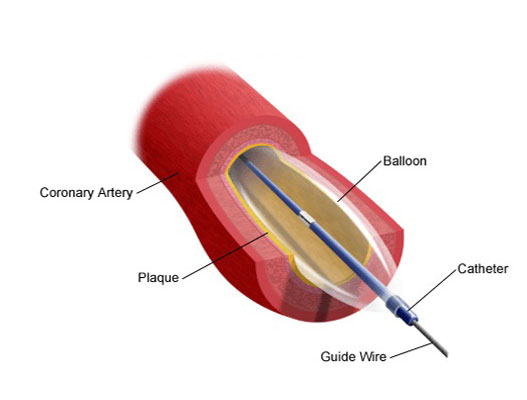
Angioplasty is a minimally invasive surgical procedure that opens narrowed or blocked arteries, restoring blood flow to the heart. Angioplasty commonly involves placing a stent to keep the artery open.