Your Notifications
All done, no notifications

Sacral Neuromodulation Cost in India

Costs starts from USD12000 to USD18000
Filters

How Much Does Sacral Neuromodulation Cost in India?

In India, a sacral neuromodulation procedure generally ranges between USD 12000 - USD 18000. The overall expense can vary depending on the underlying condition being treated, such as overactive bladder, urinary retention, or faecal incontinence, as well as the severity and chronicity of symptoms.

Other important factors influencing the cost include whether the treatment is performed in stages (test stimulation followed by permanent implantation), the type of device used, and the patient’s response during the trial phase. The type of anaesthesia, surgical setting (day care or inpatient), hospital location and reputation, and the surgeon’s expertise also play a significant role.

Additional costs may include device and battery expenses, postoperative care, follow-up visits, device programming, and long-term maintenance or replacement, all of which can affect the total cost.

Factors Affecting the Cost of Sacral Neuromodulation in India

Cost of Sacral Neuromodulation in Major cities of India

CityMinimum Cost (USD)Minimum Cost (INR)Maximum Cost (USD)Maximum Cost (INR)
AhmedabadUSD 108001006776USD 162001510164
BangaloreUSD 120001118640USD 180001677960
ChennaiUSD 120001118640USD 180001677960
DelhiUSD 120001118640USD 180001677960
GhaziabadUSD 120001118640USD 180001677960
GurgaonUSD 120001118640USD 180001677960
HyderabadUSD 120001118640USD 180001677960
KochiUSD 120001118640USD 180001677960
MohaliUSD 108001006776USD 162001510164
MumbaiUSD 120001118640USD 180001677960
NoidaUSD 120001118640USD 180001677960

Sacral Neuromodulation Cost : A Global Comparison

CountryMinimum CostMinimum Local CurrencyMaximum CostMaximum Local Currency
CzechiaUSD 10000CZK 212700USD 18000CZK 382860
IndiaUSD 12000INR 1118640USD 18000INR 1677960
IsraelUSD 22000ILS 69300USD 35000ILS 110250
MalaysiaUSD 12000MYR 48480USD 18000MYR 72720
PolandUSD 12000PLN 44640USD 18000PLN 66960
Saudi ArabiaUSD 22000SAR 82500USD 35000SAR 131250
SingaporeUSD 28000SGD 36120USD 45000SGD 58050
South KoreaUSD 22000KRW 33398200USD 35000KRW 53133500
SpainUSD 20000EUR 17400USD 35000EUR 30450
SwitzerlandUSD 32000CHF 25600USD 55000CHF 44000
ThailandUSD 16000THB 524160USD 26000THB 851760
TurkeyUSD 12000TRY 534000USD 18000TRY 801000
United Arab EmiratesUSD 25000AED 91750USD 38000AED 139460
United KingdomUSD 25000GBP 21750USD 38000GBP 33060

Need Help Planning Your Treatment Abroad?

Your 24/7 AI Health Assistant

Sacral neuromodulation is done to treat chronic bladder or bowel control problems when medications and conservative treatments fail. It helps regulate nerve signals that control the bladder, bowel, and pelvic floor, improving symptoms such as urinary incontinence, overactive bladder, urinary retention, and fecal incontinence.

You should see a doctor if you have persistent bladder or bowel control problems, such as urinary or fecal incontinence, frequent urges to urinate, or difficulty emptying the bladder, especially when symptoms do not improve with medications or lifestyle changes.

Preparation includes reviewing your medical history and medications, stopping certain medicines as advised, undergoing basic tests if required, fasting if instructed, and discussing the test stimulation phase, procedure steps, and expected outcomes with your doctor.

The procedure is usually done in two stages. First, a thin wire (lead) is placed near the sacral nerve to test symptom improvement. If the trial is successful, a small implantable pulse generator is placed under the skin, which sends mild electrical signals to regulate bladder or bowel nerve function.

Depending on whether the surgery is for a permanent implant or a test phase, sacral neuromodulation usually takes one to two hours.

  • Pain or discomfort at the implant site
  • Infection at the surgical site
  • Bleeding or swelling
  • Lead or device movement
  • Temporary numbness or tingling
  • Device malfunction or failure
  • Need for reprogramming or revision surgery

  • Improves bladder and bowel control
  • Reduces urinary urgency and frequency
  • Decreases episodes of incontinence
  • Helps relieve chronic urinary retention
  • Improves quality of life
  • Minimally invasive and reversible procedure

Recovery after sacral neuromodulation is usually quick, with most patients discharged the same day or after a short hospital stay. Mild pain, swelling, or discomfort at the implant site is common and can be managed with prescribed medications. Patients are advised to limit strenuous activities for a few weeks to allow proper healing. Normal daily activities can be resumed gradually, and follow-up visits are scheduled to monitor recovery and adjust device settings for optimal symptom control.

About 70-80% of patients who have sacral neuromodulation report significant and long-lasting improvements in their bowel or urine issues. The majority of patients report improved quality of life overall, less frequency and urgency, and improved control over their bowels or bladder. Strong long-term results are aided by the trial stimulation period, which verifies efficacy prior to permanent implantation.

Would you like some help? We are available.

Get Help
Explore Hospitals ( 25 )
Sacral Neuromodulation in Fortis Hospital: Costs, Top Doctors, and Reviews

Bangalore, India

5.0 ( 1 Reviews )
  • National Accreditation Board for Hospitals & Healthcare Providers (NABH)
  • National Accreditation Board for Testing and Calibration Laboratories (NABL)

Fortis Hospital, Bannerghatta Road, Bangalore, has been a leading multi-speciality healthcare institution, offering advanced medical services with a patient-centric approach. The hospital features 400+ beds, state-of-the-art infrastructure, and experienced specialists across various specialities, providing comprehensive and compassionate care. Trusted by patients from India and abroad, Fortis Bannerghatta Road combines modern technology with high-quality treatment to deliver world-class healthcare.

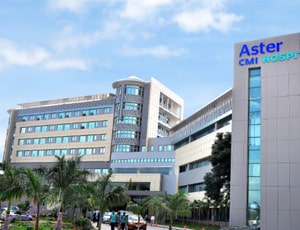
Sacral Neuromodulation in Aster Medcity: Costs, Top Doctors, and Reviews

Kochi, India

  • National Accreditation Board for Hospitals & Healthcare Providers (NABH)
  • Joint Commission International, or JCI
  • 670 bed facility
  • 24 hours Emergency and Trauma Care

Aster Centres of Excellence

    • Cardiac Sciences
    • Orthopaedics & Rheumatology
    • Neurosciences
    • Nephrology & Urology
    • Oncology
    • Gastroenterology
    • Integrated Liver Care
    • Womens Health
    • Child & Adolescent Health
    • Multi Organ Transplant
  • Diagnostic Technology used for increasing the efficiency of diagnostic procedures.
  • Streamlined Application of Therapeutic Technology
  • Minimal Access Robotic Surgery (MARS) which makes use of the da Vinci Surgical System is applied by the specialists in Aster Medcity, Kochi, Kerala.
  • ORI Fusion Digital Integrated Operation Theatres which applies Karlstorz OR1 Fusion system.
  • Completely digital Anesthesia facility
  • Pharmacy which possesses completely Automated Drug Dispensing
Sacral Neuromodulation in Max Super Specialty Hospital, Shalimar Bagh: Costs, Top Doctors, and Reviews

Delhi, India

  • National Accreditation Board for Hospitals & Healthcare Providers (NABH)
  • National Accreditation Board for Testing and Calibration Laboratories (NABL)
  • Max Super Speciality Hospital, Shalimar Bagh, is a 402-bed quaternary-care hospital in New Delhi, offering advanced treatment across 37+ specialities, including Cancer, Cardiac, Neurosciences, Gastroenterology, Orthopaedics, and Renal Transplant.
  • Equipped with state-of-the-art technology and a team of highly skilled doctors and nurses, the hospital provides complex procedures, minimally invasive surgeries, and targeted cancer treatments, making it one of India’s leading healthcare destinations.
Sacral Neuromodulation in Jaypee Hospital: Costs, Top Doctors, and Reviews

Noida, India

  • National Accreditation Board for Hospitals & Healthcare Providers (NABH)
  • Joint Commission International, or JCI

Jaypee Hospital located in Noida, India is accredited by ISO, NABH, NABL. Also listed below are some of the most prominent infrastructural details:

  • 525 beds in the first phase
  • 150 Critical Care beds
  • 325 ward beds with Suite, Deluxe, Twin Sharing, and Economy options
  • 18 Modular OTs
  • 4 Cardiac Catheterization Lab with unqie Hybrid Operating Room
  • 24 bedded Advanced Neonatal ICUs20 bedded Dialysis Units
  • 2 Linear Accelerator (IMRT, VMAT, I
  • GRT), Wide Bore CT Simulator, one Brachytherapy Suite
  • True Beam STx Linear Accelerator
  • 2 MRI (3.0 Tesla) with High-Intensity Focused Ultrasound
  • 64 Slice PET CT, Gamma Camera, Dual Head 6 Slice SPECT CT
  • 256 Slice CT Scan, CT Simulation
  • Amongst the few GOLD LEED-certified hospital buildings in India
  • Appointment Scheduling
  • Flow motion 64 Slice PET CT technology
  • Pick and drop facility from/to the Airport
  • Foreign exchange facility
  • Treatment packages
  • Visa assistance
  • Admission in the hospital
  • Wi-Fi/internet service in the room
  • Travel arrangement for patient & attendant after discharge
  • Tele-consults after discharge
  • Dedicated Guest House for International Patients maintained by Jaypee Hospital
  • In-house translators for patient’s comfort
  • Assistance in getting doctor’s opinion
  • Registration with the Foreigners Regional Registration Office
  • Accommodation arrangements after discharge
  • Accommodation arrangement for the accompanying attendant
  • Customized diet for patient and attendant
  • Laundry services
  • Prayer room
  • Dialysis facility for 60 patients
  • Cadaver organs
  • Blood bank facilities
  • Advanced Laboratory facilities
  • Diagnostic and Radiology facilities
  • High-end Ultrasound facilities
Sacral Neuromodulation in Wockhardt Hospital - A new Age Hospital: Costs, Top Doctors, and Reviews

Mumbai, India

  • National Accreditation Board for Hospitals & Healthcare Providers (NABH)
  • National Accreditation Board for Testing and Calibration Laboratories (NABL)

Wockhardt Hospital - A New Age Hospital located in Mumbai, India is accredited by NABH. Also listed below are some of the most prominent infrastructural details:

  • 20-storeyed building at Mumbai Central (South Mumbai)
  • Capacity of 350-beds
  • Two highly-advanced cath labs with ultra-modern technologies to perform high risk coronary procedures and neurological surgeries
  • 8 Operation Theatres- Cardiac, Joint Replacement, Neurology, Oncology, MAS and Organ Transplantation
  • 100 beds dedicated to Critical Care, which are connected to IntelliSpace Critical Care & Anaesthesia (ICCA) system
  • Largest Paediatric Cardiac Unit
  • It has the largest Intelligent ICCA System
  • Possess Hi-tech GPS-enabled Ambulances and largest state-of-the-art Accident & Emergency unit in South Mumbai
  • As far as accommodation facility is considered, the Hospital makes it easily accessible for the patients in nearby hotels/lodges

Need Some Advice From Our Experts?

Request a Call Back Now!

Our team of healthcare experts would be happy to assist you

trusted Patientstrusted Patients+99
Trusted by 50000+ Patients
Required | alphabets and spaces
Required | A valid, working email address
Required | A valid contact

Process Involved for Sacral Neuromodulation in India

Diagnosis & Pre-Surgical Evaluation

  • Review of medical history, symptoms, and previous treatments
  • Urinary or bowel function tests, imaging if required
  • Assessment of overall health and anesthesia fitness

Pre-Surgery Preparation

  • Fasting and medication review as advised by the doctor
  • Discussion of procedure steps, trial stimulation, and expected outcomes

Procedure

  • Placement of a temporary test lead near the sacral nerve to evaluate response
  • If successful, implantation of a permanent pulse generator under the skin
  • Device programmed to deliver electrical stimulation to regulate bladder or bowel function

Post-Surgical Recovery

  • Short hospital stay or same-day discharge
  • Mild pain or swelling at the implant site
  • Gradual return to normal activities with limited physical exertion

Long-Term Follow-Up

  • Device adjustments and programming during follow-up visits
  • Monitoring symptom improvement and implant function
  • Ongoing support for managing bladder or bowel control and quality of life
  • Overactive bladder
  • Urinary incontinence
  • Urinary retention
  • Fecal incontinence
  • Chronic constipation due to nerve dysfunction
  • Pelvic floor dysfunction affecting bladder or bowel control
  • Persistent urinary or bowel control problems
  • Overactive bladder, urinary retention, or fecal incontinence
  • Symptoms not adequately controlled with medications or behavioral therapy
  • Successful response during the trial stimulation phase
  • No active infection or severe neurological disorder affecting bladder/bowel function
  • Medically fit to undergo a minor surgical procedure
  • Rechargeable neurostimulator: Long-lasting implant that requires periodic charging.
  • Non-rechargeable neurostimulator: Implant with limited battery life, replaced after several years.
  • Temporary test stimulation lead: Used during the trial phase to assess effectiveness.
  • Permanent implanted pulse generator (IPG): Provides ongoing stimulation after a successful trial.
  • Improves bladder and bowel control
  • Reduces urgency and frequency of urination
  • Decreases episodes of incontinence
  • Relieves chronic urinary retention
  • Enhances quality of life
  • Minimally invasive and reversible procedure
  • Improved bladder and bowel control
  • Reduced urinary or fecal incontinence episodes
  • Decreased urgency and frequency of urination or bowel movements
  • Relief from chronic urinary retention
  • Enhanced quality of life and daily functioning
  • Long-term symptom management with device adjustments
  • Fill out the inquiry form: Fill out the form to provide us with the relevant information about your condition.
  • Consult with Our Healthcare Expert:One of our qualified specialists will contact you for a consultation
  • Receive a Detailed Treatment Plan:After examining your situation, we will provide you with a detailed treatment plan that includes expert views and cost breakdowns for various choices.
  • Choose your preferred option: Choose the treatment option that suits you the best.

Instantly Connect with our Sacral Neuromodulation Specialists

Doctor 1
Doctor 2
Doctor 3
Doctor 4
Doctor 5
Doctor 6
Doctor 7
Doctor 8
Our Services to Better your Experience

Opinion & Option

We submit the most accurate opinion and options from one or more countries for your review

Consult Privately

Consult with a certified specialist privately on our telemedicine platform even before you decide to travel

Logistics

We handle flights, visas, transfers, and accommodation—so you can focus on your health.

Recovery

Our In-house rehabilitation service packages to better your recovery and treatment outcome

Other Popular Countries for Sacral Neuromodulation

Our network connects you with the leading medical tourism destinations globally, offering a wide range of cities, top doctors, and flexible pricing options.

Malaysia
Thailand
Turkey
Singapore

Frequently Asked Questions

Recovery usually takes 1 to 2 weeks, with most patients gradually resuming normal activities while avoiding strenuous physical exertion.

In addition to the procedure cost, patients may incur:
  • Pre-treatment tests
  • Medications during recovery
  • Follow-up consultations
  • Hospital stay is generally short, often requiring same-day discharge or a 1-day stay.

    Long-term care includes device programming sessions, regular follow-ups, battery monitoring or replacement, and management of any complications.

    India offers skilled urologists and pelvic health specialists, advanced neuromodulation devices, high safety standards, and cost-effective treatment options.

    Pre-treatment tests typically include physical examination, urodynamic studies, bladder diary evaluation, imaging if needed, and anaesthesia fitness assessment.

    Yes, sacral neuromodulation in India is safe for international patients when performed in accredited hospitals with experienced medical teams.

    The success rate is high, generally above 80-90%, depending on the underlying condition and proper patient selection.

    Author

    Dr. Shagufta Parveen

    Doctor of Pharmacy

    1.5 Years of Experience

    Dr. Shagufta Parveen is a medical and scientific content writer with expertise in clinical pharmacology and pharmacotherapeutics. She holds a B.Pharm and Doctor of Pharmacy (Post-Baccalaureate) degree from Teerthanker Mahaveer University, Moradabad. During her clinical stint at BLK-Max Super Speciality Hospital and Indraprastha Apollo Hospital, she gained hands-on experience in the Clinical Pharmacology Department. Combining scientific knowledge with strong medical writing skills, Dr. Shagufta develops evidence-based healthcare content, treatment guides, and patient education resources. Her work focuses on simplifying complex medical concepts while maintaining scientific accuracy, helping readers better understand healthcare advancements and treatment options. . View More