Your Notifications
All done, no notifications

Heart Transplant Cost in India

USD 55000 - USD 65000

Affordable World-class Treatment - Accredited Hospitals - Free Treatment Plan in 24 Hrs

2
Days in Hospital
43
Post-Hospital
85-90%
Success Rate
Heart Transplant Starting from USD 38000: Cost, Treatments, and Hospitals
JCI/ISO 100,000+ Patients 24X7 Coordinator Visa & Travel handled
Your all-in-one medical travel platform for treatment, recovery & care.

Get Your Personalised Treatment Plan in Just 24 Hours.

Share your details to receive a personalised treatment plan, estimated costs, hospital recommendations, and expert guidance, “completely free.”

Required | alphabets and spaces
Required | A valid, working email address
Required | A valid contact
Connect with an Expert

Your information is protected with HIPAA-compliant security standards. We only share your details with hospitals after your consent.

Estimated Treatment Cost
USD 55000 - USD 65000
All-inclusive • Hospital + Medications + Recovery Assistance + Dedicated Care Coordinator

International Quality. Affordable Care.

How Much Does Heart Transplant Cost in India?

The cost of a Heart Transplant in India typically ranges between USD 55000 - USD 65000.

However, this cost can vary depending on several factors, including the type and severity of the condition, treatment techniques chosen, the healthcare facility's location and reputation, the treating professionals' experience and specialisation, and the patient's overall health status.

Additionally, factors like the duration of treatment, the need for follow-up care, and the use of advanced technologies or specialised treatments can further influence the overall cost.

Factors Influencing the Cost of Heart Transplant:

  • Type of Heart Transplant: A more complicated transplant surgery (such as a combination heart-lung transplant) may have a higher cost than a simple heart transplant.
  • Hospital and Location: Hospitals in urban areas or those with higher operating expenses may charge more than rural hospitals.
  • Pre-Treatment Tests: The total cost is influenced by extensive pre-transplant testing, including blood work, imaging (such as echocardiograms, MRIs, and CT scans), and consultations.
  • Post-Treatment Care: Rehabilitation, medications, and follow-up consultations also impact the expenses.
  • Length of Hospital Stay: Hospital stays may become more expensive due to complicated surgeries or complications.

The process of replacing a failing heart with a healthier donor heart is known as a heart transplant. A heart transplant can be beneficial for patients whose condition has not sufficiently improved with medicine or other surgical procedures.

Heart transplants are risky and challenging procedures, just like other organ transplant procedures. You will require lifelong medical care following a transplant to avoid problems and rejection.

What's included in your Heart Transplant quote?

Heart Transplant
Surgical replacement of a failing heart with a healthy donor heart
Transplant cardiologist consultation
Pre-transplant evaluation, treatment planning, and follow-up consultations
Hospital stay & supportive care
Transplant surgery, ICU care, immunosuppression, and recovery monitoring
Follow-up monitoring
Cardiac biopsies, echocardiography, lab tests, and routine transplant follow-ups
Visa & medical-visa invite letter
Airport pickup & transfers

Cost of Heart Transplant in Major Cities of India

City Cost (USD)
Bangalore $55,000 – $65,000 Explore More
Chennai $55,000 – $65,000 Explore More
Delhi $55,000 – $65,000 Explore More
Ghaziabad $55,000 – $65,000 Explore More
Gurgaon $55,000 – $65,000 Explore More
Hyderabad $55,000 – $65,000 Explore More
Kochi $55,000 – $65,000 Explore More
Mumbai $55,000 – $65,000 Explore More
Rajkot $49,500 – $58,500 Explore More

Heart Transplant - India Vs the World

$28k - $170k
$55k - $65k
$70k - $100k
$75k - $150k
$95k - $170k
$300k - $600k
Dr. Shagufta Parveen
Author

Doctor of Pharmacy

3 Years of Experience

Last Reviewed - June 2026

Dr. Shagufta Parveen is a Clinical researcher and medical writer with expertise in clinical pharmacology and pharmacotherapeutics. She holds a B.Pharm and Doctor of Pharmacy (Post-Baccalaureate) degree from Teerthanker Mahaveer University, Moradabad.

During her clinical stint at BLK-Max Super Speciality Hospital and Indraprastha Apollo Hospital, she gained hands-on experience in the Clinical Pharmacology Department. Combining scientific knowledge with strong medical writing skills, Dr. Shagufta develops evidence-based healthcare content, treatment guides, and patient education resources.

Her work focuses on simplifying complex medical concepts while maintaining scientific accuracy, helping readers better understand healthcare advancements and treatment options.

In addition to her writing expertise, she is actively involved in scientific research and has contributed to peer-reviewed publications.

Her research work is accessible through the following links:

https://scholar.google.com/citations?user=lMVK1eIAAAAJ&hl=en

https://carcinogenesis.com/index.php/JOC/article/view/870

https://carcinogenesis.com/index.php/JOC/article/view/868

https://wjpsronline.com/abstract/0000000760

View More
Dr. Akash Khandelwal
Reviewer

Hematologist

9 Years of Experience

Last Reviewed - June 2026

Dr. Akash Khandelwal is a distinguished Hematologist, Hemato-oncologist, and Bone Marrow Transplant (BMT) Physician with extensive training from the prestigious AIIMS New Delhi. His expertise encompasses a wide range of specialized techniques in bone marrow transplantation, including autologous and allogeneic transplants such as matched sibling donors, matched unrelated donors (MUD), and haploidentical donor transplants. Dr. Khandelwal has personally supervised and conducted over 100 bone marrow transplants.
View More

Need Help Choosing the Right Treatment? Talk to a Medical Advisor

Our dedicated Medical Patient Advisors are here to answer your questions, help you compare treatment options, estimate costs, and guide you through every step of your healthcare journey.

15 min
Average response time

Serving Patients Worldwide in Multiple Languages.

Heart transplantation is necessary for patients with a diseased heart, especially when their heart function fails to improve despite undergoing surgeries and prolonged medication use. During this procedure, the patient's heart failure is replaced with a fully functional one from a brain-dead donor who is being kept alive on life support. Despite its life-saving potential, heart transplant surgeries remain rare due to the scarcity of suitable donors, exacerbated by concerns, such as aesthetic reasons, which deter many families from consenting to organ donation. Although heart transplant surgery is a major procedure, the post-operative survival rate is generally favorable, contingent upon the quality of post-surgical care.

This surgery is typically reserved for patients experiencing heart failure resulting from various conditions, including cardiomyopathy, previously failed heart transplants, coronary artery disease, cardiac valve disease, congenital heart defects, amyloidosis, and abnormal heart rhythms. Furthermore, heart transplant surgeries may involve the transplantation of other organs, such as the kidneys, liver, or lungs, depending on the patient's specific needs. However, not all heart patients qualify for transplantation; those with a history of cancer, a major illness that would significantly reduce life expectancy, active infections, advanced age, or unhealthy lifestyle habits are generally deemed unsuitable candidates for heart transplant surgery.

When alternative therapies are unable to control severe heart failure, heart transplants are performed. Cardiomyopathy, arrhythmias, valve disease, coronary artery disease, and prior transplant failure are among the reasons in adults. The primary reasons in children are cardiomyopathy or congenital cardiac abnormalities.

If you suffer from severe shortness of breath, exhaustion, fluid retention, a fast heartbeat, or chest pain that doesn't go away with medicine or lifestyle modifications, you should see a doctor. Determining whether advanced treatments, such as a heart transplant, are necessary can be aided by early evaluation.

Prior to receiving a heart transplant, you will be sent to a transplant program and go through a comprehensive evaluation. The waiting list will include you if you qualify. A mechanical device may be required in certain situations to support the function of your heart until a donor heart becomes available, and you will continue to receive medical treatment throughout this time.

During a heart transplant, a heart-lung bypass machine is connected, ventilator assistance is provided, and general anesthesia is administered. Your failing heart is removed by the surgeon, who then connects the donor heart to your main blood vessels. The new heart may need help to start beating with an external pacing device.

The average duration of a heart transplant procedure is 4-6 hours. However, the complexity of the procedure and the state of the patient may cause it to take longer.

  • Irregular heart rhythms (arrhythmias)
  • Graft failure
  • Cardiac allograft vasculopathy (CAV)
  • High blood pressure (hypertension)
  • Nerve damage
  • Stroke
  • Pain
  • Depression

When all other choices have been exhausted, heart transplantation can save your life, which is the most significant advantage.

A hospital stay of 1-3 weeks is necessary for post-heart transplant recovery, during which time complications must be closely monitored. Long-term success requires consistent medication, physical therapy, and frequent follow-up appointments. With lifestyle modifications to maintain heart health, a full recovery could take 6-12 months.

Over time, the success rate of cardiac transplants has increased dramatically. 5 year survival rates are at 70-75%, while 1 year survival rates are roughly 85-90%.

Explore Hospitals ( 22 )

Delhi, India

5.0 - 1 review · 650+ Beds · 302+ Procedures
JCI NABH

Gurgaon, India

3.3 - 4 reviews · 750+ Beds · 307+ Procedures
JCI NABH

Ghaziabad, India

4.9 - 1 review · 370+ Beds · 277+ Procedures
NABL NABH

Delhi, India

4.4 - 5 reviews · 710+ Beds · 304+ Procedures
JCI
Starting
USD 100000

Hyderabad, India

JCI

Chennai, India

NABH NABL

Delhi, India

4.6 - 1 review · 400+ Beds · 282+ Procedures
NABH NABL AACI

Delhi, India

4.8 - 2 reviews · 162+ Beds · 204+ Procedures
NABH

Get Your Heart Transplant
Plan in 24 hrs.

Our experienced Medical Patient Advisors have supported 100,000+ patients across 120+ countries with personalised treatment plans, hospital recommendations, cost estimates, and travel assistance, all free.

HIPAA-Compliant Data SecurityShared Only with Your Consent

Free Consultation No Obligation Personalized Treatment Plan Response Within 24 Hours

Required | alphabets and spaces
Required | A valid, working email address
Required | A valid contact

Your medical info has is HIPAA-style confidential. We never share with hospitals without your consent.

Process Involved for Heart Transplant in India

  • End-Stage Heart Failure
  • Severe Coronary Artery Disease
  • Cardiomyopathy (Dilated, Hypertrophic, Restrictive)
  • Valvular Heart Disease
  • Inherited Heart Disorders
  • Failed Previous Heart Transplants
  • Individuals suffering from end-stage heart failure or severe coronary artery disease who are unresponsive to other treatments.
  • Patients with severe valvular heart disease or dilated cardiomyopathy who have not responded to previous treatments.
  • Candidates who are ineligible for mechanical heart pumps or cannot accept other treatments.
  • Coronary Artery Bypass Surgery (CABG)
  • Mechanical Heart Pumps
  • Immunosuppressive Therapy
  • Restores Heart Function: A successful heart transplant restores cardiac function by increasing circulation and oxygen delivery to organs and tissues.
  • Improved Quality of Life: The patient can continue normal activities with more energy, exercise tolerance, and fewer symptoms of heart failure.
  • Longevity: Heart transplants can significantly extend life expectancy, especially in end-stage heart failure patients with no other therapy alternatives.
  • Cardiologist
  • Cardiac Surgeon
  • Fill out the inquiry form: Fill out the form to provide us with the relevant information about your condition.
  • Consult with Our Healthcare Expert: One of our qualified specialists will contact you for a consultation.
  • Receive a Detailed Treatment Plan: After examining your situation, we will provide you with a detailed treatment plan that includes expert views and cost breakdowns for various choices.
  • Choose your preferred option: Choose the treatment option that suits you the best.
Jenny Wilson
Your Dedicated Medical Patient Advisor
Treatment planning • Hospital coordination • Multilingual support • Response within 15 minutes.
Our Services to Better your Experience

Opinion & Option

We submit the most accurate opinion and options from one or more countries for your review

Consult Privately

Consult with a certified specialist privately on our telemedicine platform even before you decide to travel

Logistics

We handle flights, visas, transfers, and accommodation—so you can focus on your health.

Recovery

Our In-house rehabilitation service packages to better your recovery and treatment outcome

Patient Stories

Marsha Akatu, Bone marrow transplant
Marsha Akatu
Marsha Akatu:Bone marrow transplant

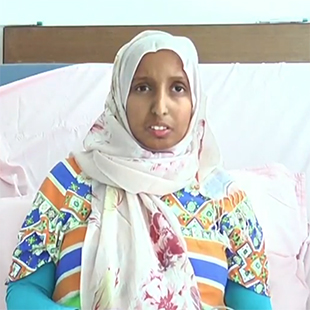
Marsha Akatu from Kenya was suffering from Sickle Cell Anaemia. She got her treatment done at Medanta Hospital, Gurgaon, India.

Bushra Masoud
Bushra Masoud
Bushra Masoud:Brain Tumor Treatment

Patient Testimonial: Bushra Masoud for Brain Marrow Treatment from Apollo Hospitals

Conditions treated by Heart Transplant

Frequently Asked Questions

The cost of Heart Transplant in India starts from USD$ 90000. There are many NABH, JCI certified hospitals in India that offer Heart Transplant.

Heart Transplant package cost in India has different inclusions and exclusions. The Heart Transplant package cost usually includes all the expenses related to pre and post surgery expenses of the patient. The Heart Transplant package in India includes the fees of the surgeon, hospitalization and anesthesia as well. Extended hospital stay, complications after the surgery or new diagnosis may affect the overall cost of Heart Transplant in India.

There are many hospitals that perform Heart Transplant in India. Some of the best hospitals for Heart Transplant in India include the following:

  1. Sri Ramachandra Medical Centre
  2. Fortis Flt. Lt. Rajan Dhall Hospital
  3. Apollo Hospitals Bannerghatta
  4. Max Super Speciality Hospital, Saket
  5. Global Health City
  6. Narayana Institute of Cardiac Sciences
  7. Fortis Escorts Heart Institute, Okhla
  8. Fortis Hospital
  9. Indraprastha Apollo Hospital
  10. Max Super Speciality Hospital, Patparganj

Upon discharge from the hospital after Heart Transplant in India, the patients are advised to stay for about 45 days for recovery. This period is important to conduct all the follow-up tests to ensure that the surgery was successful and the patient can go back to the home country.

One of the topmost destinations for Heart Transplant is India. It has a variety of accredited hospital, affordable cost of treatment and some of the best medical fraternity. Some of the other destinations that are popular for Heart Transplant include the following:

  1. Israel
  2. Turkey
  3. Singapore

There are certain additional cost that the patient has to pay apart from the Heart Transplant cost. These include the cost of accommodation and meals outside hospital. The per day cost in this case may range around USD$ 25.

Heart Transplant in India is offered in almost all metropolitan cities, including the following:

  • New Delhi
  • Bengaluru
  • Hyderabad

After the Heart Transplant takes place, the average duration of stay at the hospital is about 10 days. This time frame is important for the patient to recover properly and feel comfotable after the surgery. With the help of several tests, it is determined that the patient is doing fine after the surgery and is okay to be discharged.

The average rating for Heart Transplant hospitals in India is 5.0. This rating is calculated based on several parameters such as hygiene, politeness of staff, infrastructure and quality of services.

There are about 17 hospitals in India that offer Heart Transplant to international patients. These hospitals have proper infrastructure for the treatment of patients who require Heart Transplant

People generally prefer India for their heart transplantation due to the affordable packages that this country offers with the best medical facilities. India has stupendous medical facilities with well qualified and experienced doctors. The techniques like robotic heart surgery, stenting, coronary heart surgeries are also available in India. Specialized rehabilitation that enables a person to recover quickly after surgery is also present in India.

The average cost of heart transplantation in India is 20 lakhs or above. However, it may vary according to the type of heart surgery. For instance, open heart surgery costs less as compared to this type of surgery. The cost is different for international patients.

The best and the most successful hospitals in India for heart transplantation are:

(1) Apollo Chennai

(2) Fortis Escorts Heart Institute and Research Centre

(3) Indraprastha Apollo Hospital, Delhi

(4) Max Super Speciality Hospital

(5) Aditya Birla Memorial Hospital

(6) Max Super Speciality Hospital

(7) The Wockhardt Hospital in Mumbai

The best Cardiologists in India are as follows:

(1) Dr. Ashok Seth

(2) Dr. Krishna Slyer

(3) Dr. Naresh Trehan

(4) Dr. Ajay Kaul

(5) Dr. Ganesh K. Mani

The heart transplantation in India is successful in 85 to 90% of the cases. However special care of the patient who has undergone surgery is mandatory. There are a lot of precautions that have to be followed after the surgery is completed successfully. Regular check-ups are mandatory for patients who undergo heart surgeries. The doctor prescribes a lot of medicaments for the patients that are to be taken on time. If these medicaments are not taken properly, then the chances of survival after the surgery are minimal and might cause grave threat to the patient.

Heart transplant cost in Hyderabad is less as it is also one of the leading cities in India for a heart transplant. The best cities for heart transplantation in India are the metro cities. These are the places that the top cardiologists and the top heart hospitals are. Delhi, Mumbai, Kolkata, Bangalore, Chennai are some of the best cities in India with hospitals that are able to perform the Heart transplantation surgery in India. Heart transplant cost in Kolkata is at affordable and competitive rates. The overall cost of the heart transplant surgery is also reduced at these cities because they are metropolitan cities and it will not be difficult to find accommodation that is affordable for the patient’s relatives or friends who come with the patient. The hospital stay is a bit long after the heart transplant surgery, but the cost can be reduced by choosing an appropriate ward while residing in the hospital.

The cost of the Left Ventricular Assist Device in India is available for as low as rupees Rs 30 lakh or USD 45000 in India. This special price is only for the made in India brand of Left Ventricular Assist Device in India while in the USA it costs around $726,200 which is much more.

The heart transplant cost in Chennai is reduced because of the usage of the Left Ventricular Assist Device which is made in India. The Left Ventricular Assist Device is a very important device that helps the body receive fresh blood. The Left Ventricular Assist Device is essentially a mechanical heart that does the function of the pumping of the blood that the heart does. This device will reduce the heart transplant cost in Mumbai as well.

The Left Ventricular Assist Device is typically used in a patient who needs a mechanical heart when he or she is waiting for receiving a fresh and viable heart for transplant. As we know that we cannot survive without the heart for even a short time, the mechanical device called the Left Ventricular Assist Device is surgically implanted into the patient. In many cases, the Left Ventricular Assist Device is removed if a new heart is available for transplant.

Not Sure About Your Treatment Plan? Get a Free Second Opinion

Have your reports reviewed by independent oncology experts to help you make a confident treatment decision, all online within 48 hours.

Upload Your Reports
Free second opinion on your CAR-T plan