Your Notifications
All done, no notifications

Cost of Rhizotomy Worldwide

Costs starts from Get a Quote
Filters

Rhizotomy is a minimally invasive procedure used to relieve chronic nerve-related pain by targeting and disrupting specific pain-carrying nerve fibres. It is often recommended for patients with conditions such as trigeminal neuralgia, facet joint pain, sciatica, or spasticity that do not respond well to medications or physical therapy.

The procedure works by interrupting the nerve's ability to send pain signals to the brain, providing lasting relief and reducing dependence on painkillers. Rhizotomy can be performed using various techniques, including radiofrequency ablation, where heat is used to destroy the nerve, or chemical methods involving targeted injections. In some cases, especially for severe muscle stiffness, open surgical rhizotomy may be used.

The procedure is typically done under local or general anaesthesia, depending on the technique and patient condition, and is often completed as a same-day surgery with minimal hospital stay. It aims to improve quality of life by reducing pain and restoring function, although the results may vary based on the underlying condition and the patient’s overall health.

Rhizotomy is a procedure performed to relieve chronic nerve-related pain or muscle spasticity by disrupting pain signals travelling through specific nerve roots. It is commonly used to treat conditions such as trigeminal neuralgia, spasticity from cerebral palsy or multiple sclerosis, and facet joint pain in the spine (radiofrequency rhizotomy). The goal is to reduce or eliminate pain or involuntary muscle movements by selectively targeting the nerves causing the problem, while preserving other functions.

You should consult a specialist if you experience:
  • Severe, chronic nerve pain that doesn’t respond to medication
  • Sharp, stabbing facial pain (in trigeminal neuralgia)
  • Muscle tightness or spasms due to neurological disorders
  • Persistent back or neck pain due to facet joint inflammation
  • Limited quality of life despite physical therapy or injections
Rhizotomy is usually considered when conservative treatments fail and the pain source can be identified.

Preparation depends on the type of rhizotomy, but generally includes:
  • Neurological and physical exam
  • Imaging studies such as MRI, CT scan, or fluoroscopy
  • Diagnostic nerve blocks may be done beforehand to confirm the pain source
  • Review of current medications, particularly blood thinners
  • Fasting for 6–8 hours before the procedure (if under sedation or anaesthesia)
  • Discussion of risks, benefits, and expected outcomes with your doctor
Some types of rhizotomy are done as outpatient procedures with minimal downtime.

There are several types of rhizotomy, depending on the condition:
  • Radiofrequency Rhizotomy: A needle is guided to the nerve using imaging, and heat is applied via radiofrequency waves to destroy the pain fibres.
  • Chemical Rhizotomy: An alcohol or glycerol injection is used to damage the nerve fibres selectively.
  • Surgical Rhizotomy: A neurosurgeon cuts the problematic nerve root through a small incision, often used for spasticity in children or facial nerve pain.
  • Balloon Compression (in trigeminal neuralgia): A balloon compresses the nerve to disrupt pain signals.
The procedure is usually minimally invasive, often performed under local anaesthesia with sedation or general anaesthesia, depending on the type.

Rhizotomy typically takes 30 minutes to 2 hours, depending on the method used. Most patients go home the same day, except in cases of open surgical rhizotomy, which may require a short hospital stay.

While generally safe, potential risks include:
  • Temporary numbness or weakness
  • Pain recurrence over time
  • Infection
  • Bleeding
  • Nerve damage
  • Facial drooping (in facial rhizotomy)
  • Cerebrospinal fluid leak (in open procedures)
Risks vary depending on the location and type of rhizotomy performed.

  • Significant and targeted pain relief
  • Minimally invasive, with quick recovery in most cases
  • May delay or avoid more invasive surgery
  • Improved daily function and quality of life
  • Often reduces or eliminates the need for long-term medications
Many patients experience months to years of pain relief, especially in cases like trigeminal neuralgia or spinal facet joint pain.

Recovery is usually quick, especially with outpatient procedures. Patients may experience temporary soreness, numbness, or mild weakness. Light activities can typically resume in 1–2 days, while full recovery depends on the technique used. Pain relief may be immediate or gradual over a few days. Follow-up is essential to monitor outcomes and determine if repeat treatment is needed in the future.

Rhizotomy has a high success rate, with 70–90% of patients reporting pain relief or reduction in symptoms, depending on the condition treated. In trigeminal neuralgia, radiofrequency rhizotomy can provide effective relief lasting 1–5 years, though retreatment may be needed if symptoms return.

Would you like some help? We are available.

Get Help
Explore Hospitals ( 217 )
Rhizotomy in Rajagiri Hospital: Costs, Top Doctors, and Reviews

Kochi, India

  • Joint Commission International, or JCI
  • Rajagiri Hospital, Kochi, Kerala, is a leading multi-speciality tertiary care hospital known for providing world-class medical services with advanced technology and compassionate care.
  • Accredited by JCI, NABH, and NABL, the hospital offers comprehensive treatment across specialities like Cardiology, Oncology, Neurology, Gastroenterology, Orthopaedics, Nephrology, Urology, and Paediatrics, making it a trusted healthcare destination in South India.
Rhizotomy in Bukit Tinggi Medical Centre: Costs, Top Doctors, and Reviews

Kuala Lumpur, Malaysia

As a tertiary care hospital, Bukit Tinggi Medical Centre (BTMC) is committed to providing high-quality, reasonably priced healthcare.

With a focus on patient care and a team of committed medical professionals and personnel, we want to realize our ambition of becoming Klang's go-to healthcare provider. Orthopedics, neurosurgery, cardiac surgery, obstetrics and gynecology, pediatrics and rehabilitation, aesthetic surgery, and other specialties are all part of our multidisciplinary team approach. Additionally, BTMC has a Health Screening Center that provides a range of health packages to meet the requirements of diverse patient types.

Rhizotomy in Catalunya General University Hospital: Costs, Top Doctors, and Reviews

Barcelona, Spain

  • ISO 9001
  • A 328-bed capacity, offering comfortable rooms with modern facilities for patient recovery.
  • Twenty-two intensive care beds are available for adults, children, and newborns needing close monitoring.
  • Seventeen advanced surgical theatres are used for different operations, from general to highly specialised surgeries.
  • Over 120 medical consultation rooms where patients receive personalised outpatient care.
  • A full suite of diagnostic imaging tools, including MRI, CT, and ultrasound, for accurate medical evaluations.
  • A round-the-clock emergency department equipped to handle urgent and critical health issues.
  • Dedicated units for neurology and neurosurgery, treating conditions such as stroke, epilepsy, and nerve disorders.
  • Neurological testing facilities, including EEG and EMG, are available for detailed assessments of the brain and nerves.
  • A strong focus on rehabilitation, helping patients recover from surgeries, injuries, or neurological events.
  • A maternity area designed for safe deliveries, with neonatal support for newborn care.
  • A day hospital section allows patients to get procedures or therapies without an overnight stay.
  • On-site services, including a pharmacy and laboratory, are available to streamline patient care and testing.
  • Support for international patients, including multilingual staff and travel and care planning assistance.
  • Additional conveniences include a cafeteria, family waiting areas, and ample parking spaces.
Rhizotomy in Jaypee Hospital: Costs, Top Doctors, and Reviews

Noida, India

  • National Accreditation Board for Hospitals & Healthcare Providers (NABH)
  • Joint Commission International, or JCI

Jaypee Hospital located in Noida, India is accredited by ISO, NABH, NABL. Also listed below are some of the most prominent infrastructural details:

  • 525 beds in the first phase
  • 150 Critical Care beds
  • 325 ward beds with Suite, Deluxe, Twin Sharing, and Economy options
  • 18 Modular OTs
  • 4 Cardiac Catheterization Lab with unqie Hybrid Operating Room
  • 24 bedded Advanced Neonatal ICUs20 bedded Dialysis Units
  • 2 Linear Accelerator (IMRT, VMAT, I
  • GRT), Wide Bore CT Simulator, one Brachytherapy Suite
  • True Beam STx Linear Accelerator
  • 2 MRI (3.0 Tesla) with High-Intensity Focused Ultrasound
  • 64 Slice PET CT, Gamma Camera, Dual Head 6 Slice SPECT CT
  • 256 Slice CT Scan, CT Simulation
  • Amongst the few GOLD LEED-certified hospital buildings in India
  • Appointment Scheduling
  • Flow motion 64 Slice PET CT technology
  • Pick and drop facility from/to the Airport
  • Foreign exchange facility
  • Treatment packages
  • Visa assistance
  • Admission in the hospital
  • Wi-Fi/internet service in the room
  • Travel arrangement for patient & attendant after discharge
  • Tele-consults after discharge
  • Dedicated Guest House for International Patients maintained by Jaypee Hospital
  • In-house translators for patient’s comfort
  • Assistance in getting doctor’s opinion
  • Registration with the Foreigners Regional Registration Office
  • Accommodation arrangements after discharge
  • Accommodation arrangement for the accompanying attendant
  • Customized diet for patient and attendant
  • Laundry services
  • Prayer room
  • Dialysis facility for 60 patients
  • Cadaver organs
  • Blood bank facilities
  • Advanced Laboratory facilities
  • Diagnostic and Radiology facilities
  • High-end Ultrasound facilities
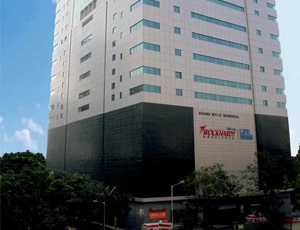
Rhizotomy in Wockhardt Hospital - A new Age Hospital: Costs, Top Doctors, and Reviews

Mumbai, India

  • National Accreditation Board for Hospitals & Healthcare Providers (NABH)
  • National Accreditation Board for Testing and Calibration Laboratories (NABL)

Wockhardt Hospital - A New Age Hospital located in Mumbai, India is accredited by NABH. Also listed below are some of the most prominent infrastructural details:

  • 20-storeyed building at Mumbai Central (South Mumbai)
  • Capacity of 350-beds
  • Two highly-advanced cath labs with ultra-modern technologies to perform high risk coronary procedures and neurological surgeries
  • 8 Operation Theatres- Cardiac, Joint Replacement, Neurology, Oncology, MAS and Organ Transplantation
  • 100 beds dedicated to Critical Care, which are connected to IntelliSpace Critical Care & Anaesthesia (ICCA) system
  • Largest Paediatric Cardiac Unit
  • It has the largest Intelligent ICCA System
  • Possess Hi-tech GPS-enabled Ambulances and largest state-of-the-art Accident & Emergency unit in South Mumbai
  • As far as accommodation facility is considered, the Hospital makes it easily accessible for the patients in nearby hotels/lodges
Rhizotomy in Sri Ramachandra Medical Centre: Costs, Top Doctors, and Reviews

Chennai, India

2.9 ( 1 Reviews )
  • Joint Commission International, or JCI
  • National Accreditation Board for Hospitals & Healthcare Providers (NABH)

Sri Ramachandra Medical Centre located in Chennai, India is accredited by ISO, JCI, NABH, NABL. Also listed below are some of the most prominent infrastructural details:

  • The best minds in healthcare including specialists, and other healthcare professionals work together to treat patients with simple to complex and critical conditions.
  • The number of inpatients and outpatients (annually) are 35,000 and 2,50,000 respectively.
  • A wide range of surgical specialties, sub specialties are available in Sri Ramachandra Medical Centre Chennai.
  • The bed capacity of the hospital is 800 which is inclusive of 200 Intensive Care Unit beds.
  • Blood Bank and Eye Bank are available on a 24/7 basis.
Rhizotomy in Seven Hills Hospital: Costs, Top Doctors, and Reviews

Mumbai, India

  • National Accreditation Board for Hospitals & Healthcare Providers (NABH)
  • National Accreditation Board for Testing and Calibration Laboratories (NABL)

Seven Hills Hospital located in Mumbai, India is accredited by JCI, NABH, NABL. Also listed below are some of the most prominent infrastructural details:

  • It is spread over an area of 17 acres.
  • There is also an academic institute with research facilities.
  • SevenHills Hospital has excellent diagnostic services including a laboratory and a provision for various tests.
  • Given that their are specific departments for various kinds of diagnostsic. Tests like PET Scan, MRI, CT scan and biopsies are completed regularly.
  • Biochemistry, Hematology, Microbiology are some of the important diagnostic departments.
  • Endoscopies as well as non-invasive procedures are done through their respective departments.
  • Day care specialty services are available for those kinds of requirements.
  • Health Check up packages are also present as are the collaborations with many insurance organisations.
  • There are professionally managed in-patient and out-patient facilities.
  • There are more than 30 super specialties in Seven Hills Hospital Mumbai.
  • There are also Centres of Excellence in Cardiac Care, Neurosciences, Bone & Joint Care, Cancer Care, Nephrology and Cosmetic Dermatology.
  • International patient care services are also implemented for the best assistance to overseas patients.

Need Some Advice From Our Experts?

Request a Call Back Now!

Our team of healthcare experts would be happy to assist you

trusted Patientstrusted Patients+99
Trusted by 50000+ Patients
Required | alphabets and spaces
Required | A valid, working email address
Required | A valid contact

Process Involved for Rhizotomy

  • Evaluation Stage: The doctor reviews the patient’s symptoms and medical history and performs physical and neurological examinations.
  • Imaging and Diagnostic Tests: Imaging techniques, such as MRI, CT scans, or X-rays, help locate the irritated nerve and determine the exact origin of the pain.
  • Diagnostic Nerve Block: A temporary nerve block helps verify if the targeted nerve is responsible for the pain.
  • Preoperative Preparation: The patient receives instructions on fasting, medication adjustments, and safety precautions to ensure a smooth surgical experience.
  • Procedure Stage: The nerve is treated using radiofrequency ablation or surgical methods under imaging guidance.
  • Post-Procedure Monitoring: The patient is observed briefly to monitor for side effects and assess the level of pain relief.
  • Recovery and Follow-Up: Regular follow-ups are done to evaluate healing and long-term effectiveness.

  • Trigeminal Neuralgia: Sharp facial pain caused by irritation of the trigeminal nerve.
  • Facet Joint Pain: Chronic back or neck pain originating from spinal facet joints.
  • Sciatica: Radiating leg pain due to pressure or irritation on the sciatic nerve.
  • Spinal Stenosis: Narrowing of the spinal canals causes nerve compression and pain.
  • Herniated Disc: Bulging spinal discs pressing on nerves, leading to back and limb pain.
  • Arthritic Spine: Degenerative changes in spinal joints that cause persistent pain.
  • Sacroiliac Joint Pain: Pain in the lower back and pelvis linked to sacroiliac joint dysfunction.
  • Chronic Neck Pain: Long-term neck pain is often linked to nerve or joint issues.
  • Post-Surgical Pain: Persistent pain following spine or nerve surgeries.
  • Neuropathic Pain: Pain from damaged or irritated nerves unresponsive to medication.

  • Patient Evaluation: The doctor assesses the patient's pain condition, medical history, and suitability for the procedure.
  • Imaging Guidance: MRI, CT, or X-ray scans are used to accurately locate the nerve causing the pain.
  • Anesthesia Administration
    Local or general anaesthesia is given based on the method and site of the procedure.
  • Needle or Electrode Insertion: A thin needle or probe is carefully placed near the target nerve using real-time imaging.
  • Nerve Confirmation: Mild electrical stimulation may be applied to ensure the correct nerve is being treated.
  • Nerve Disruption: The nerve is disabled using radiofrequency, heat, or surgical cutting to block pain signals.
  • Post-Procedure Monitoring: The patient is monitored for a short period to check for complications and assess early pain relief.
  • Discectomy
  • Laminectomy
  • Foraminotomy
  • Neurotomy
  • Ablation
  • NerveBlock
  • Spinal Fusion
  • Facet Rhizotomy
  • Electrocoagulation
  • Radiofrequency
  • Pain Relief: Helps manage long-term nerve-related pain by turning off the affected nerve.
  • Less Invasive: Uses small instruments or needles, leading to fewer complications.
  • Faster Healing: Patients often recover quickly and return to their daily routines sooner.
  • Better Movement: Reduces discomfort, allowing smoother physical activity.
  • Lower Drug Dependence: This may decrease the need for regular pain medications.
  • Precise Action: Specifically targets the problematic nerve without affecting others.
  • Can Be Repeated: The treatment can be safely performed again if the pain returns over time.
  • No Hospital Stay: Typically done as a same-day outpatient treatment.
False
  • Please complete the form to provide us with relevant information about your condition.
  • Consult with Our Healthcare Expert: One of our qualified specialists will contact you for a consultation.
  • Receive a Detailed Treatment Plan: After examining your situation, we will provide you with a detailed treatment plan that includes expert opinions and a cost breakdown for various options.
  • Select your preferred option: Choose the therapy option that best suits your needs.
  • Seamless Organisation: We will manage all the details, including visas, flights, accommodations, and transfers, for a stress-free journey.

Instantly Connect with our Rhizotomy Specialists

Doctor 1
Doctor 2
Doctor 3
Doctor 4
Doctor 5
Doctor 6
Doctor 7
Doctor 8
Our Services to Better your Experience

Opinion & Option

We submit the most accurate opinion and options from one or more countries for your review

Consult Privately

Consult with a certified specialist privately on our telemedicine platform even before you decide to travel

Logistics

We handle flights, visas, transfers, and accommodation—so you can focus on your health.

Recovery

Our In-house rehabilitation service packages to better your recovery and treatment outcome

Author

Dr. Abdullah Rahil

MPT (Neuro)

5 Years of Experience

Dr. Abdullah Rahil, M.P.T. (Neurology), is a dedicated physiotherapy professional specializing in orthopedic, neurological, and musculoskeletal rehabilitation. With strong clinical expertise, he focuses on improving patient mobility, reducing pain, and restoring functional independence through evidence-based rehabilitation techniques. He is skilled in advanced therapeutic approaches that support effective rehabilitation and recovery for a wide range of musculoskeletal and neurological conditions, focusing on improving mobility, reducing pain, and restoring functional independence. Dr. Rahil has extensive experience managing diverse rehabilitation cases. His patient-centered approach emphasizes personalized treatment plans, continuous assessment, and comprehensive rehabilitation to achieve optimal recovery outcomes. . View More

Reviewer

⁠Dr Rakesh Kumar Dua

Spine & Neurosurgeon

25 Years of Experience

Dr. Rakesh Dua has more than 25+ years of clinical experience in spine surgeries. He is currently providing his services as Director, Neuro & Spine Surgery at Fortis Hospital, Shalimar Bagh. Before joining Fortis Hospital, he was associated with Max super-specialist Hospital, Shalimar Bagh as Director Neurosurgery & Head Neuro Spine, and with UCMS & GTB hospital as head of the neurosurgery department. View More