Your Notifications
All done, no notifications

Brain Tumour Treatment Cost in Thailand

Costs starts from USD15000 to USD22000
Filters

How Much Does Brain Tumour Cost in Thailand?

The cost of a Brain Tumour in Thailand typically ranges between USD 15000 - USD 22000. However, this cost can vary depending on several factors, including the type and severity of the condition, treatment techniques chosen, the healthcare facility's location and reputation, the treating professionals' experience and specialization, and the patient's overall health status.

Additionally, factors like the duration of treatment, the need for follow-up care, and the use of advanced technologies or specialized treatments can further influence the overall cost.

Factors Influencing the Cost of Brain Tumour:

A brain tumor refers to the uncontrolled growth of cells in the brain or the brain’s tissues. Depending on their nature, it may be benign or malignant and the outcomes may be determined by several factors including size, location, and growth rate of the tumor. The outcome of a brain tumor depends on the nature, position, and size of the tumor, and whether or not it has metastasized. It is, therefore, important that, brain tumors should be diagnosed at an early stage so that treatment can be instituted early enough to enhance the chances of managing or curing the disease.

Cost of Brain Tumour Treatment in Major Cities of Thailand

CityMinimum Cost (USD)Minimum Cost (THB)Maximum Cost (USD)Maximum Cost (THB)
BangkokUSD 15000490650USD 22000719620

Brain Tumour Treatment Cost : A Global Comparison

CountryMinimum CostMinimum Local CurrencyMaximum CostMaximum Local Currency
IndiaUSD 7500INR 642300USD 10000INR 856400
IsraelUSD 30000ILS 106200USD 40000ILS 141600
LithuaniaUSD 5000LTL 17104USD 20000LTL 68414
Moroccoget request
Saudi ArabiaUSD 10000SAR 37500USD 50000SAR 187500
SingaporeUSD 45000SGD 58050USD 75000SGD 96750
South AfricaUSD 10000ZAR 179700USD 30000ZAR 539100
South KoreaUSD 20000KRW 27519600USD 35000KRW 48159300
SpainUSD 20000ESP 2940798USD 150000ESP 22055985
SwitzerlandUSD 10000CHF 8300USD 100000CHF 83000
ThailandUSD 15000THB 490650USD 22000THB 719620
TunisiaUSD 5000TND 14900USD 15000TND 44700
TurkeyUSD 8650TRY 337869USD 29000TRY 1132740
United Arab EmiratesUSD 30000AED 110100USD 65000AED 238550
United Kingdomget request

Need Help Planning Your Treatment Abroad?

Your 24/7 AI Health Assistant

A brain tumor is an abnormal growth of cells in the brain which can be cancerous or non-cancerous. This growth can occur in any part of the brain or originate elsewhere in the body and spread to the brain.

It is a fairly common condition that affects millions of people worldwide. An undiagnosed brain tumor can be fatal, making it crucial to undergo specific tests and begin treatment promptly once the diagnosis is confirmed.

The two most common symptoms of a brain tumor are increasingly severe headaches and blurred vision. Additionally, individuals with this condition may experience seizures, confusion, nausea, vertigo, impaired speech, and loss of balance.

Treatment for a brain tumor depends on several factors, including the type, size, and location of the tumor, as well as the overall health of the patient and age. These considerations are taken by the doctor while preparing a brain tumor treatment plan.

Different treatment modalities can be used to treat brain tumor patients and surgery, chemotherapy, and radiation therapy are among them. Usually, a combination of treatment modalities is used to conduct brain tumor treatment.

Brain tumors are of various types, determined by the cells they consist of. Tumor cell testing in the lab helps identify the type of Tumor. Some are noncancerous or benign, while others are cancerous or malignant. Benign tumors typically grow slowly, while malignant tumors tend to overgrow.

Following are the different types of Brain Tumor:

  • Gliomas: It can be the most common type of malignant brain tumor.
  • Pineal tumors: The tumors that grow around the brain’s Pineal gland.
  • Meningiomas: The brain tumors that start in the membranes around the brain and spinal cord.
  • Nerve tumors: The Tumors refer to the growth of abnormal cells around the nerves.
  • Pituitary tumors: This type of tumor grows in the pituitary gland.
  • Pineal tumors: Tumor that originates in or around the pineal gland.

A brain tumour is treated to remove or shrink it, relieve symptoms like headaches or seizures, and prevent further neurological damage. Treatment may be curative, life-prolonging, or palliative depending on the type.

Those who suffer from ongoing headaches, visual distortions, seizures, unexplained nausea, mental and personality changes, or weakness in one or more limbs should consider early consultation, especially if these symptoms continue to worsen or prevent them from participating in daily activities.

The preparations included neurological examination and multiple imaging procedures, such as an MRI or CT scan. A biopsy may need to be done to ascertain the tumour type. Then, the patient will receive instructions, such as withholding medications, fasting before the procedure, and consultations with various specialists, such as neurosurgeons, oncologists, and anesthetists.

In many brain tumours, surgical resection is deemed the primary mode of treatment. It involves a craniotomy, whereby the surgeon removes part of the skull to gain access to the area and obtain the excised tumour. Lesser forms of surgical intervention are also applied, e.g., stereotactic radiosurgery and endoscopic surgery. Depending on the nature of the tumour, postoperative treatment commonly consists of radiotherapy and/or chemotherapy.

Brain tumour surgery can last 2 to 6 hours or more, depending on the size and location of the tumour. Hospitalisation generally involves 3 to 10 days, with longer durations for more complicated cases.

  • Bleeding
  • Infection
  • Swelling
  • Stroke
  • Damage to the surrounding brain tissue
  • Cognitive impairments

Treatment relieves symptoms and kills the tumour wherever possible. In malignant situations, it also increases the survival time. Treatment also improves comfort and the ability to execute day-to-day activities in non-curable cases.

Rest, physiotherapy, and gradual resumption of normal activities constitute post-operative rehabilitation. Depending on the case, speech therapy or occupational therapy might be required. In most cases, further management involves repeated imaging and oncological treatments such as chemotherapy and radiation.

Success varies by type, grade, and location of the tumor. After the surgical procedure, benign conditions have high rates of cure. Treating malignant tumors may be more difficult, but the ultimate purpose is lifespan extension and symptom control.

Top Selling Packages for Brain Tumour Treatment

Supratentorial Brain Tumor

Amrita Hospital, Faridabad, India

USD 5900 USD 6100

Would you like some help? We are available.

Get Help
Explore Hospitals ( 3 )
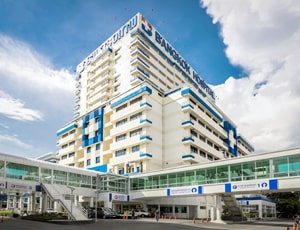
Brain Tumour Treatment in Bangkok Hospital: Costs, Top Doctors, and Reviews

Bangkok, Thailand

  • Joint Commission International, or JCI

Types of Brain Tumour Treatment in Bangkok Hospital and its associated cost

Treatment OptionApproximate Cost Range (USD)Approximate Cost Range (THB)
Brain Tumor Treatment (overall)11269 - 28144408306 - 1019165
Biopsy558 - 137920071 - 48232
Radiation Therapy (External Beam)330 - 79211994 - 28048
Chemotherapy775 - 165828086 - 60799
Surgical Resection (Craniotomy)5682 - 11219200314 - 402449
Stereotactic Radiosurgery4530 - 8021160036 - 281149
Targeted Therapy1720 - 331561293 - 121607
Immunotherapy2803 - 570398724 - 198372
  • Address: Bangkok Dusit Medical Services, Nong Prue, Bang Phli, Samut Prakan, Thailand
  • Facilities related to Bangkok Hospital: SIM, TV inside room, Accommodation, Choice of Meals
Brain Tumour Treatment in Bangpakok 9 International Hospital: Costs, Top Doctors, and Reviews

Bangkok, Thailand

  • Joint Commission International, or JCI

Types of Brain Tumour Treatment in Bangpakok 9 International Hospital and its associated cost

Treatment OptionApproximate Cost Range (USD)Approximate Cost Range (THB)
Brain Tumor Treatment (overall)11204 - 28260402599 - 1009080
Biopsy559 - 138019986 - 48323
Radiation Therapy (External Beam)330 - 77512016 - 28117
Chemotherapy794 - 165827866 - 61289
Surgical Resection (Craniotomy)5748 - 11201199744 - 396271
Stereotactic Radiosurgery4567 - 7831160125 - 276311
Targeted Therapy1705 - 339360150 - 120513
Immunotherapy2866 - 5667100369 - 200047
  • Address: Bangpakok 9 International Hospital, International Hospital, Rama II Road, Bang Mot, Chom Thong, Bangkok, Thailand
  • Facilities related to Bangpakok 9 International Hospital: Choice of Meals, Interpreter, SIM, TV inside room, Accommodation
Brain Tumour Treatment in Phyathai 2 International Hospital: Costs, Top Doctors, and Reviews

Bangkok, Thailand

  • Joint Commission International, or JCI

Types of Brain Tumour Treatment in Phyathai 2 International Hospital and its associated cost

Treatment OptionApproximate Cost Range (USD)Approximate Cost Range (THB)
Brain Tumor Treatment (overall)11003 - 27768395186 - 981420
Biopsy556 - 136320108 - 47939
Radiation Therapy (External Beam)331 - 79511905 - 27469
Chemotherapy776 - 165228455 - 58830
Surgical Resection (Craniotomy)5510 - 11462203285 - 402795
Stereotactic Radiosurgery4482 - 7862159012 - 283335
Targeted Therapy1679 - 336660772 - 120831
Immunotherapy2753 - 558699061 - 203154
  • Address: Phyathai 2 Hospital, Phahonyothin Road, Phaya Thai, Thailand
  • Facilities related to Phyathai 2 International Hospital: Choice of Meals, Interpreter, SIM, TV inside room, Accommodation

Need Some Advice From Our Experts?

Request a Call Back Now!

Our team of healthcare experts would be happy to assist you

trusted Patientstrusted Patients+99
Trusted by 50000+ Patients
Required | alphabets and spaces
Required | A valid, working email address
Required | A valid contact

Process Involved for Brain Tumour Treatment in Thailand

  • Consultation: Discuss the diagnosis, staging, and treatment with a neurologist, neurosurgeon, or oncologist.
  • Preoperative Evaluation: Imaging studies (like MRI or CT scans) and a neurologic examination are performed to define the location, size, and effect on brain function of the tumor.
  • Discussion with Treatment: The treatment possibilities, such as surgery, radiation, chemotherapy, targeted therapy, or a combination, are discussed based on the tumor type and stage.
  • Surgical Planning: When surgery is being recommended, the procedure, including removal of the tumor or biopsy, and the risk involved is disclosed.
  • Post-Surgery, Follow-up: Routine follow-up examinations and imaging are arranged to track progress, identify recurrence, and address possible side effects or complications.
  • Primary brain tumors (gliomas, glioblastomas and meningiomas)
  • Metastatic brain tumors
  • Brain lymphoma
  • Pituitary tumors
  • Individuals with primary brain tumors or metastatic brain cancer are recommended to undergo treatment.
  • The type, site, size, and grade of the tumor, as well as the patient's overall health and medical history, all influence the patient's suitability for treatment.
  • Surgical resection
  • Chemotherapy
  • Radiation therapy
  • Immunotherapy
  • Targeted therapy
  • It can prevent or control tumor growth, particularly with initial-stage detection and proper treatment.
  • Enhances quality of life and alleviates symptoms such as headache, seizures, or neurological deficits.
  • Prevents recurrence or metastasis of tumors using combination therapies.
  • Neurologist
  • Neurosurgeon
  • Medical Oncologist
  • Radiation Oncologist
  • Fill out the inquiry form: Fill out the form to provide us with the relevant information about your condition.
  • Consult with Our Healthcare Expert: One of our qualified specialists will contact you for a consultation.
  • Receive a Detailed Treatment Plan: After examining your situation, we will provide you with a detailed treatment plan that includes expert views and cost breakdowns for various choices.
  • Choose your preferred option: Choose the treatment option that suits you the best.

Instantly Connect with our Brain Tumour Treatment Specialists

Doctor 1
Doctor 2
Doctor 3
Doctor 4
Doctor 5
Doctor 6
Doctor 7
Doctor 8
Our Services to Better your Experience

Opinion & Option

We submit the most accurate opinion and options from one or more countries for your review

Consult Privately

Consult with a certified specialist privately on our telemedicine platform even before you decide to travel

Logistics

We handle flights, visas, transfers, and accommodation—so you can focus on your health.

Recovery

Our In-house rehabilitation service packages to better your recovery and treatment outcome

Other Popular Countries for Brain Tumour Treatment

Our network connects you with the leading medical tourism destinations globally, offering a wide range of cities, top doctors, and flexible pricing options.

Malaysia
Italy
Singapore
Spain

Frequently Asked Questions

A. The cost of a Brain Tumour Treatment procedure starts from USD 25000 in Thailand. In Thailand, Brain Tumour Treatment is conducted across many multispecialty hospitals.

A. Brain Tumour Treatment package cost in Thailand has different inclusions and exclusions. Many hospitals cover the cost of pre-surgical investigations of the patient in the treatment package. The Brain Tumour Treatment cost in Thailand includes the cost of anesthesia, medicines, hospitalization, and the surgeon's fee. Extended hospital stay, complications after the surgery, or new diagnosis may affect the overall cost of Brain Tumour Treatment in Thailand.

The overall cost of brain tumor surgery in Thailand varies from person to person depending on a range of factors. Below are some important factors that determine the cost of bone marrow.

  • Lab tests or examination tests: A person needs to get some vital tests done so that the doctor may know their overall health status.
  • Post-surgical complications: In certain cases, there may be post-surgical complications that require additional treatment and longer hospital stays, which in turn may lead to higher costs.
  • The medical condition of the patient- If a patient suffers from other conditions, the cost of the surgery may be higher as the condition needs to be managed before and during the surgery.
  • Age of the patient.
  • Stay period in the country after surgery as advised by the doctor.
  • Admission fees of the hospital.
  • The expertise and experience of the treating doctor
  • Type of the hospital
  • The complexity of the case
  • Type of the treatment to be availed
  • Experience of the surgeons

Many hospitals perform Brain Tumour Treatment in Thailand. For quick reference, the following are some of the leading hospitals for Brain Tumour Treatment in Thailand:

A. While the recovery speed may vary from patient to patient, they must still stay for about 30 days after discharge. This is important to ensure that the surgery is successful. During this time, control and follow-up tests take place to check for medical fitness.

A. Although frequently required and perhaps life-saving, brain tumor surgery carries several risks and potential complications. The location, size, and type of the tumor, the patient's general health, and the surgical technique employed can all affect the individual risks. The following are some common dangers connected to surgery for brain tumors:

  • An infection could occur inside the brain or at the location of the incision.
  • There is a chance that the brain will bleed during or following the operation. Hemostases, or small collections of blood inside the brain, may result from this.
  • Surgery may impact adjacent brain areas, depending on where the tumor is located. This could result in deficits including weakness, trouble speaking, blurred vision, or changes in sensation.
  • Cerebrospinal fluid leakage from the surgical site may occur, which may result in problems like infections or elevated intracranial pressure.
  • A rise in intracranial pressure may result from brain swelling following surgery.
  • Necrosis (tissue death) or inadequate healing are two possible issues with the surgical wound.
  • Death is a possibility, especially in situations with serious difficulties or pre-existing medical issues.
  • After surgery, the tumor could return, necessitating other procedures or therapies.

A. Following treatment for a brain tumor, which may involve radiation therapy, chemotherapy, surgery, or a combination of these, there are several important steps and things to keep in mind. The type of treatment, the location of the tumor, the general health of the patient, and any complications that may have occurred can all affect the specifics of recovery. This is a basic rundown of the steps involved in healing and what to anticipate:

  • Medications: Your healthcare professional prescribes drugs to control your pain. It's critical to adhere to the recommended pain management strategy to preserve comfort and speed healing.
  • Incision: To stop infection and encourage healing, the surgical wound must be properly cared for. Pay attention to the wound care and cleansing instructions provided by your healthcare provider.
  • Therapies: To treat any deficits or functional impairments, you may require physical therapy, occupational therapy, or speech therapy, depending on the extent of the tumor and surgery.
  • Scheduled Appointments: It is crucial to schedule routine follow-up appointments with your neurosurgeon or neurologist to track your overall recovery and neurological function.
  • Imaging Studies: To evaluate the efficacy of the treatment and look for any indications of recurrence, periodic brain scans (such as MRIs or CT scans) may be carried out.
  • Following Surgery: Medications Medication may be provided to you to treat symptoms including pain, swelling, or convulsions.
  • Radiation Therapy or Chemotherapy: As part of your continuing treatment plan, further therapies such as radiation or chemotherapy will be ordered and closely monitored if necessary.
  • Nutrition & Diet: Eating a balanced diet is crucial for both general health and recuperation. If there are any special dietary requirements or restrictions, a nutritionist can assist.
  • Sleep and Rest: Recuperation depends on getting enough sleep. Observe sleep guidelines and take proper action when fatigued.

A. There are various types of brain tumors:

  • Astrocytomas: The star-shaped glial cells in the brain called astrocytes are the source of these tumors. They can vary in type from low-grade benign to high-grade malignant.
  • The cells known as oligodendrocytes, which generate the myelin coating that envelops nerve cells, give birth to oligodendrogliomas. The grades of these tumors can also differ.
  • Ependymomas: Derived from ependymal cells that line the brain and spinal cord's ventricles, which are areas filled with fluid. Both adults and children may experience them.
  • Meningiomas: Benign originates from the meninges, which are the brain and spinal cord's protective coverings. They frequently grow slowly, and surgery may be a successful treatment in some cases.
  • Malignant: Atypical or anaplastic meningiomas are less prevalent, but they can still occur.
  • Acoustic neuroma, also known as vestibular Schwannoma, is a benign tumor of the vestibulocochlear nerve that causes hearing loss, tinnitus, and problems with balance.
  • Malignant tumors called medulloblastomas, which are common in children, are situated in the cerebellum and have the potential to spread to other areas of the central nervous system.
  • Neuroectodermal tumors of primitive origin (PNETs): These tumors are typically discovered in youngsters and resemble medulloblastomas. They can appear in different areas of the brain and are aggressive.
  • Metastatic Tumors: These are caused by cancer cells that have traveled to the brain from other areas of the body, such as the skin, breast, or lungs. In adults, they are more prevalent than primary brain tumors.
  • Pituitary Adenomas: These tumors can alter the synthesis of hormones and originate from the pituitary gland. They may secrete hormones or not, depending on whether they are functional or non-functional.

A. Should your physician suspect you may have a brain tumor, you will require several tests and procedures to confirm the diagnosis. These could consist of:

  • A neurological examination- It measures the function of several brain regions. Your vision, hearing, balance, coordination, strength, and reflexes may all be tested during this examination. Your healthcare professional can use this information if you are experiencing difficulties in one or more categories. A brain tumor cannot be found by a neurological examination. However, it assists your physician in determining which area of your brain may be problematic.
  • Brain CT scan- X-rays are used in computed tomography scans, or CT scans, to create images. It's widely accessible and yields fast results. Therefore, if you experience headaches or other symptoms that could have a wide range of causes, a CT scan could be the initial imaging test that is performed. You can find issues in and around your brain with a CT scan. Your doctor might use the results to guide his or her decision about the next test to order. You may require a brain MRI if your physician believes that your CT scan indicates a brain tumor.
  • Brain magnetic resonance imaging- Strong magnets are used in magnetic resonance imaging, or MRI, to provide images of the inside of the body. Because MRI displays the brain more clearly than conventional imaging procedures, it is frequently used to find brain cancers.
  • Brain PET scan- Certain brain malignancies can be found with a PET scan, also known as positron emission tomography imaging. A radioactive tracer is injected into a vein during a PET scan. The tracer reaches brain tumor cells via the blood and adheres to them. In the images captured by the PET scanner, the tracer highlights the tumor cells. Rapidly proliferating and dividing cells will absorb more of the tracer.
  • Collecting a tissue sample- The process of taking a sample of brain tumor tissue for laboratory examination is known as a brain biopsy. The sample is frequently obtained by the surgeon during brain tumor excision surgery.

A. There are certain additional costs that the patient has to pay apart from the Brain Tumour Treatment cost. The per day cost in this case may start from USD 50 per person.

A. Some of the popular cities in Thailand that offer Brain Tumour Treatment include the following:

  • Krabi
  • Bangkok

A. After brain tumor surgery, a patient typically stays two to five days in the hospital. The day following surgery, an MRI or CT scan will be carried out to gauge how well the treatment worked. Numerous factors, like the type of surgery done and whether any complications need more care will determine the precise duration of stay.

A. There are more than 3 hospitals that offer Brain Tumour Treatment in Thailand. These hospitals have proper infrastructure for the treatment of patients who require kidney transplants. Also, these hospitals follow the necessary guidelines as required by the medical associations for the treatment of Brain Tumour Treatment patients.

There are four main types of brain tumor treatments available in Thailand: chemotherapy, targeted therapy, neurosurgery, and radiation therapy.

  • Surgery: This is the most common treatment option for brain tumors in Thailand. The surgery aims to remove the tumor from the affected part. During the surgery, some part of the skull is removed, and this procedure is called a craniotomy. It allows the surgeon to locate and remove the tumor.

After the tumor is extracted the skull portion which was removed via craniotomy is placed back to close the incision in the skull. Also, extraction of the tumor can help minimize neurological symptoms and provide a tissue sample to diagnose the type of brain tumor.

Detection of the type of tumor helps find out if radiotherapy and chemotherapy treatments will be useful for the patient. There are different types of surgery to remove the brain tumor, namely Stereotactic Brain Biopsy, Craniotomy Shunt, and Transsphenoidal Surgery.

  • Radiotherapy: This procedure uses low-dose radiation rays to destroy stop or slow the growth of the brain tumor. This therapy might be used on its own or after surgical extraction of the brain tumor. The treatment is provided with a machine called a linear accelerator. Moreover, radiation therapy usually starts nearly two weeks after the surgery.
  • Chemotherapy: This is the use of drugs to destroy the brain tumor cells, usually by preventing the tumor cells from growing and dividing. A chemotherapy regimen consists of a specific number of cycles given during a set period. A patient might receive one drug at a time or a mixture of different drugs at the same time. Chemotherapy aims to destroy tumor cells remaining after surgery or slow a tumor’s growth. Chemotherapy to treat a brain tumor is given after surgery and with or after radiation therapy.

A. The evaluation cost is mostly associated with the screening tests that the patient needs to get done. Doctors evaluate all test reports to find out if the patient is ready for the treatment. This also helps doctors to detect any underlying condition which might need treatment at the start of the procedure.

Also, the cost of each type of brain tumor is different. Refer to the below table for evaluation and types of treatment that are associated with Brain Tumor Surgery in Thailand.

ProceduresEvaluation cost (USD)Treatment cost (USD)
Chemotherapy$400-500$1700 per Session
Radiation Therapy$500-700$2200 per Session
Craniotomy$2500-300Starting from $25000

A. Thailand is considered a global spot for brain tumor treatment, which is supervised by highly trained and skilled doctors given its seriousness and health complications. Thailand annually attracts thousands of patients from around the world due to the hospitals’ dependence on advanced medical technologies and the affordability of the treatment cost. The country is considered a regional medical center for the treatment of complex cases like tumors.

Some other reasons for choosing Thailand as a destination for your Brain Tumor Surgery are:

  • Highly Experienced Neurosurgeons: Thailand has highly experienced neurosurgeons who are adept at removing brain tumors and giving patients the best chance of a complete recovery.
  • Latest Neurosurgical Equipment and Techniques: The hospitals are equipped with the latest technologies that enable computer-assisted neurosurgery. This specific type of surgery uses advanced 3D MRI scanners to create a 3D model of the affected area of the brain. The highly skilled neurosurgery team uses the model to pre-plan the safest way to access the tumor and remove it with the least damage to the surrounding tissue.
  • Most of the neurosurgeons are highly skilled in performing CyberKnife radiosurgery.
  • There is a range of cheap accommodation options.
  • Thailand has some internationally accredited brain tumor treatment centers.
  • The high success rate of the hospitals.
  • Thailand has cultural connections with many geographical regions. The country is easily accessible via several airlines.
  • Visa and accommodation assistance are provided by most hospitals.

Author

Fauzia Zeb Fatima

M.Pharm

4 Years of Experience

Fauzia Zeb is a distinguished medical and scientific content writer with a robust academic foundation in pharmaceutical sciences, holding a B.Pharm and M.Pharm degree from prestigious institutions, including MIT and Jamia Hamdard University. Her comprehensive expertise in pharmacology, clinical sciences, and biomedical research enables her to translate complex medical and scientific concepts into precise, evidence-based content tailored for diverse audiences. Specializing in peer-reviewed articles, clinical blog posts, and research-driven publications, she demonstrates a consistent ability to bridge the gap between advanced medical science and accessible, audience-specific communication. . View More

Reviewer

⁠Dr Rakesh Kumar Dua

Spine & Neurosurgeon

25 Years of Experience

Dr. Rakesh Dua has more than 25+ years of clinical experience in spine surgeries. He is currently providing his services as Director, Neuro & Spine Surgery at Fortis Hospital, Shalimar Bagh. Before joining Fortis Hospital, he was associated with Max super-specialist Hospital, Shalimar Bagh as Director Neurosurgery & Head Neuro Spine, and with UCMS & GTB hospital as head of the neurosurgery department. View More