Affordable World-class Treatment - Accredited Hospitals - Free Treatment Plan in 24 Hrs
Share your details to receive a personalised treatment plan, estimated costs, hospital recommendations, and expert guidance, “completely free.”
Your information is protected with HIPAA-compliant security standards. We only share your details with hospitals after your consent.
The cost of Brain Tumour Treatment in South Africa is USD 10000 - USD 30000
Additionally, factors like the duration of treatment, the need for follow-up care, and the use of advanced technologies or specialized treatments can further influence the overall cost.
A brain tumor refers to the uncontrolled growth of cells in the brain or the brain’s tissues. Depending on their nature, it may be benign or malignant and the outcomes may be determined by several factors including size, location, and growth rate of the tumor. The outcome of a brain tumor depends on the nature, position, and size of the tumor, and whether or not it has metastasized. It is, therefore, important that, brain tumors should be diagnosed at an early stage so that treatment can be instituted early enough to enhance the chances of managing or curing the disease.
| City | Cost (USD) | |
|---|---|---|
| Cape Town | $10,000 – $30,000 | Explore More |
| Johannesburg | $10,000 – $30,000 | Explore More |


Our dedicated Medical Patient Advisors are here to answer your questions, help you compare treatment options, estimate costs, and guide you through every step of your healthcare journey.
A brain tumor is an abnormal growth of cells in the brain which can be cancerous or non-cancerous. This growth can occur in any part of the brain or originate elsewhere in the body and spread to the brain.
It is a fairly common condition that affects millions of people worldwide. An undiagnosed brain tumor can be fatal, making it crucial to undergo specific tests and begin treatment promptly once the diagnosis is confirmed.
The two most common symptoms of a brain tumor are increasingly severe headaches and blurred vision. Additionally, individuals with this condition may experience seizures, confusion, nausea, vertigo, impaired speech, and loss of balance.
Treatment for a brain tumor depends on several factors, including the type, size, and location of the tumor, as well as the overall health of the patient and age. These considerations are taken by the doctor while preparing a brain tumor treatment plan.
Different treatment modalities can be used to treat brain tumor patients and surgery, chemotherapy, and radiation therapy are among them. Usually, a combination of treatment modalities is used to conduct brain tumor treatment.
Brain tumors are of various types, determined by the cells they consist of. Tumor cell testing in the lab helps identify the type of Tumor. Some are noncancerous or benign, while others are cancerous or malignant. Benign tumors typically grow slowly, while malignant tumors tend to overgrow.
A brain tumour is treated to remove or shrink it, relieve symptoms like headaches or seizures, and prevent further neurological damage. Treatment may be curative, life-prolonging, or palliative depending on the type.
Those who suffer from ongoing headaches, visual distortions, seizures, unexplained nausea, mental and personality changes, or weakness in one or more limbs should consider early consultation, especially if these symptoms continue to worsen or prevent them from participating in daily activities.
The preparations included neurological examination and multiple imaging procedures, such as an MRI or CT scan. A biopsy may need to be done to ascertain the tumour type. Then, the patient will receive instructions, such as withholding medications, fasting before the procedure, and consultations with various specialists, such as neurosurgeons, oncologists, and anesthetists.
In many brain tumours, surgical resection is deemed the primary mode of treatment. It involves a craniotomy, whereby the surgeon removes part of the skull to gain access to the area and obtain the excised tumour. Lesser forms of surgical intervention are also applied, e.g., stereotactic radiosurgery and endoscopic surgery. Depending on the nature of the tumour, postoperative treatment commonly consists of radiotherapy and/or chemotherapy.
Brain tumour surgery can last 2 to 6 hours or more, depending on the size and location of the tumour. Hospitalisation generally involves 3 to 10 days, with longer durations for more complicated cases.
Treatment relieves symptoms and kills the tumour wherever possible. In malignant situations, it also increases the survival time. Treatment also improves comfort and the ability to execute day-to-day activities in non-curable cases.
Rest, physiotherapy, and gradual resumption of normal activities constitute post-operative rehabilitation. Depending on the case, speech therapy or occupational therapy might be required. In most cases, further management involves repeated imaging and oncological treatments such as chemotherapy and radiation.
Success varies by type, grade, and location of the tumor. After the surgical procedure, benign conditions have high rates of cure. Treating malignant tumors may be more difficult, but the ultimate purpose is lifespan extension and symptom control.
70–90%
Treatment success rate (depends on tumour type, grade, and stage)5–10 days
Typical hospital stay (for surgery; varies by treatment)4–8 weeks
Return to normal daily activities depending on treatment and recoveryJohannesburg, South Africa
Our experienced Medical Patient Advisors have supported 100,000+ patients across 120+ countries with personalised treatment plans, hospital recommendations, cost estimates, and travel assistance, all free.
✓ Free Consultation ✓ No Obligation ✓ Personalized Treatment Plan ✓ Response Within 24 Hours
Your medical info is kept HIPAA-style confidential. We never share with hospitals without your consent.

Opinion & Option
We submit the most accurate opinion and options from one or more countries for your review
Consult Privately
Consult with a certified specialist privately on our telemedicine platform even before you decide to travel
Logistics
We handle flights, visas, transfers, and accommodation—so you can focus on your health.
Recovery
Our In-house rehabilitation service packages to better your recovery and treatment outcome

This is the journey of Mohammud Rabia from Nigeria who had to undergo Medical Management for his Brain Stroke which…
The cost of Brain Tumour Treatment in South Africa may differ from one medical facility to the other. Some of the best hospitals for Brain Tumour Treatment offer a comprehensive package that covers the end-to-end expenses related to investigations and treatment of the patient. The comprehensive Brain Tumour Treatment package cost includes the cost of investigations, surgery, medicines and consumables. Post-surgical complications, new findings and delayed recovery may have an impact on the total Brain Tumour Treatment cost in South Africa.
There are several best hospitals for Brain Tumour Treatment in South Africa. Some of the most renowned hospitals for Brain Tumour Treatment in South Africa include the following:
After discharge from the hospital, the patient has to stay for another 30 days in the country for complete recovery. During this time, the patient undergoes medical tests and consultations. this is to ensure that the treatment was successful and the patient us safe to return.
South Africa is considered to be one of the best places for Brain Tumour Treatment in the world. This is because of the availability of some of the best doctors, advanced medical technology and good hospital infrastructure. However, some of the other popular destinations for Brain Tumour Treatment include the following:
There are certain additional cost that the patient has to pay apart from the Brain Tumour Treatment cost. These include the cost of accommodation and meals outside hospital. The per day cost in this case may range around USD$ 35.
There are many cities that offer Brain Tumour Treatment in South Africa, including the following:
After the Brain Tumour Treatment takes place, the average duration of stay at the hospital is about 5 days. The doctors team review the patient's recovery during this time with the help of blood tests and imaging scans. Once they feel that everything is on track, the patient is discharged.
There are about 2 Brain Tumour Treatment hospitals in South Africa that are best known for their services. Apart from good services, the hospitals are known to follow all standard and legal guidelines as dictated by the local medical affairs body or organization.
Brain Tumor is a severe disease which happens due to the formation and growth of abnormal mass of cells in the brain. Some of these tumors are benign (noncancerous) and some are malignant (cancerous). Every tumor has its own pace of growth. The location of the tumor and its growth rate defines how it will affect the functioning of the nervous system. The Primary Brain Tumor emerges in the brain or in the tissues surrounding it like meninges (brain-covering membrane), penal glands (pituitary glands) and cranial nerves.
Primary Brain Tumors take place when the normal cells in the brain are disturbed. This particular disturbance involves the cells to grow and divide along with staying alive instead of dying as the normal cells do after a period of time. This process, in the end, allows the mass of abnormal cells to grow and become a tumor. Stating the specific reason behind this abnormal growth of mass of cells is quite tough as there has not been any solid reason supporting the very cause of brain tumors. However, there are many risk factors which are believed to have something to do with the occurrence of brain tumors. Some of the most common risk factors are –
Excessive exposure to radiation
Weak immune system
Genetic disorder such as Li-Fraumeni syndrome, Hippel-Lindau disease, Neurofibromatosis, and Tuberous Sclerosis.
The types of surgeries available in South Africa for Brain Tumor Surgery are –
Biopsy–To confirm the diagnosis, a piece of the tumor is removed with the help of a surgical procedure called ‘biopsy’. Afterward, the sample is examined under the microscope to determine which kind of a tumor it is. A biopsy can either be performed as a part of the tumor surgery or as a totally separate procedure.
Craniotomy –This specific surgery is the most common type of surgery performed for the treatment of the brain tumor. In order to perform the craniotomy, a section of the scalp is shaved in order to make a clear incision through the skin. With the help of specialized equipment, the surgeon removes the bone of the treatment area to expose the part of the brain enclosing the tumor. Next, the outermost layer of the brain tissue (Dura mater) is opened up and the tumor is removed.
The recovery process post-surgery in South Africa for the Brain Tumor Treatment is as same as it is in any other country. The healing from the surgery requires an ample amount of time and patience at the same time. It will take quite a lot of time for the patient to be healthy and resume routine activities. In addition, the total time required for the patient to heal from the surgery varies from person to person and depends on various factors such as –
The procedure used to remove the brain tumor
Location of the brain tumor
Regions of the brain affected due to the surgery
Age and health of the patient
The hospital stay depends on various factors such as the type of surgery performed, if the patient faces any kind of complications post-surgery or requires another treatment, etc.
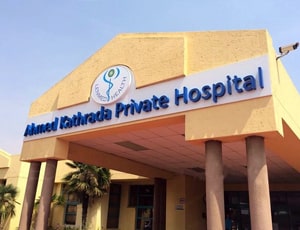
The top hospitals for brain tumor treatment in South Africa are Lenmed La Verna Private hospital, Ahmed Kathrada Private hospital, Zamokuhle Private hospital, Life Kingsbury hospital, UCT Private Academic hospital, Netcare hospital.
Top doctors in South Africa at Zamokuhle Private hospital are Dr. AO Adedipe and the doctors at Ahmed Kathrada Private hospital are Dr. V Goolab and Prof R Gopal. The doctors at Life Kingsbury hospital are Dr. AL Mbatha and Dr. John Hill. The doctors at UCT Private Academic hospital are Le Feuvre David and Prof. Taylor Allan.
Have your reports reviewed by independent oncology experts to help you make a confident treatment decision, all online within 48 hours.
Upload Your Reports