The cost of Brain Tumour Treatment in Malaysia is available on request
Additionally, factors like the duration of treatment, the need for follow-up care, and the use of advanced technologies or specialized treatments can further influence the overall cost.
A brain tumor refers to the uncontrolled growth of cells in the brain or the brain’s tissues. Depending on their nature, it may be benign or malignant and the outcomes may be determined by several factors including size, location, and growth rate of the tumor. The outcome of a brain tumor depends on the nature, position, and size of the tumor, and whether or not it has metastasized. It is, therefore, important that, brain tumors should be diagnosed at an early stage so that treatment can be instituted early enough to enhance the chances of managing or curing the disease.
| Country | Minimum Cost | Minimum Local Currency | Maximum Cost | Maximum Local Currency |
|---|---|---|---|---|
| India | USD 7500 | INR 623625 | USD 10000 | INR 831500 |
| Thailand | USD 15000 | THB 534750 | USD 22000 | THB 784300 |
| Turkey | USD 8650 | TRY 260711 | USD 29000 | TRY 874060 |
| United Arab Emirates | USD 30000 | AED 110100 | USD 65000 | AED 238550 |
Need Help Planning Your Treatment Abroad?
Your 24/7 AI Health Assistant 
A brain tumor is an abnormal growth of cells in the brain which can be cancerous or non-cancerous. This growth can occur in any part of the brain or originate elsewhere in the body and spread to the brain.
It is a fairly common condition that affects millions of people worldwide. An undiagnosed brain tumor can be fatal, making it crucial to undergo specific tests and begin treatment promptly once the diagnosis is confirmed.
The two most common symptoms of a brain tumor are increasingly severe headaches and blurred vision. Additionally, individuals with this condition may experience seizures, confusion, nausea, vertigo, impaired speech, and loss of balance.
Treatment for a brain tumor depends on several factors, including the type, size, and location of the tumor, as well as the overall health of the patient and age. These considerations are taken by the doctor while preparing a brain tumor treatment plan.
Different treatment modalities can be used to treat brain tumor patients and surgery, chemotherapy, and radiation therapy are among them. Usually, a combination of treatment modalities is used to conduct brain tumor treatment.
Brain tumors are of various types, determined by the cells they consist of. Tumor cell testing in the lab helps identify the type of Tumor. Some are noncancerous or benign, while others are cancerous or malignant. Benign tumors typically grow slowly, while malignant tumors tend to overgrow.

Amrita Hospital, Faridabad, India
USD 5900 USD 6100
Would you like some help? We are available.
Get Help
Kuala Lumpur, Malaysia
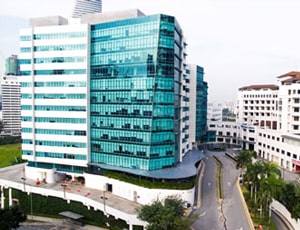
Prince Court is a private medical facility in the center of Kuala Lumpur that has 277 individual beds. Our dedication is to provide you with the best treatment possible from the time you arrive until you depart, healthier and happier. We are well-known for our top-notch facilities, cutting-edge technology, and friendly customer service.

Kuala Lumpur, Malaysia
Parkway Pantai located in Kuala Lumpur, Malaysia is accredited by JCI. Also listed below are some of the most prominent infrastructural details:

Kuala Lumpur, Malaysia
Sunway Medical Centre has initiated a comprehensive expansion plan close to its current hospital facility to enhance its ability to provide services to the global market. The new Cancer Radiosurgery Center and Nuclear Medicine Center, which will also house additional Centers of Excellence like the Digestive Health Center and Dialysis Center, marked the completion of Tower C's first phase in October 2016.

Kuala Lumpur, Malaysia
In Kuala Lumpur, Malaysia, ParkCity Medical Centre is a 300-bed, cutting-edge, interdisciplinary private hospital that provides award-winning private healthcare in an environment of lush vegetation.

Kuala Lumpur, Malaysia
Subang Jaya Medical Center is renowned for pioneering radiation oncology treatments and infrastructure in Malaysia. The hospital also has a state-of-the-art Cancer Radiosurgery Centre (CRC), which is fully furnished with the latest medical technology for cancer detection, monitoring, and treatment.

Kuala Lumpur, Malaysia
Situated at the junction of Petaling Jaya and Shah Alam, close to the Oasis Ara, Ara Damansara Medical Centre boasts a serene, luxurious ambiance.
The Centre has been awarded several prestigious awards such as the Global Health Asia Pacific Awards 2023, Newsweek Best Specialized Hospital APAC 2023, Healthcare Asia Awards 2023, and Malaysian Healthcare Wellness Excellence.

Kuala Lumpur, Malaysia
As a tertiary care hospital, Bukit Tinggi Medical Centre (BTMC) is committed to providing high-quality, reasonably priced healthcare.
With a focus on patient care and a team of committed medical professionals and personnel, we want to realize our ambition of becoming Klang's go-to healthcare provider. Orthopedics, neurosurgery, cardiac surgery, obstetrics and gynecology, pediatrics and rehabilitation, aesthetic surgery, and other specialties are all part of our multidisciplinary team approach. Additionally, BTMC has a Health Screening Center that provides a range of health packages to meet the requirements of diverse patient types.
Need Some Advice From Our Experts?
Our team of healthcare experts would be happy to assist you

+99


Opinion & Option
We submit the most accurate opinion and options from one or more countries for your review
Consult Privately
Consult with a certified specialist privately on our telemedicine platform even before you decide to travel
Logistics
We handle flights, visas, transfers, and accommodation—so you can focus on your health.
Recovery
Our In-house rehabilitation service packages to better your recovery and treatment outcome
Our network connects you with the leading medical tourism destinations globally, offering a wide range of cities, top doctors, and flexible pricing options.


A. In general, some tumor forms are benign (noncancerous), while others are malignant (cancerous). Some might have a 50/50 chance of developing cancer. Based on their location and the types of cells they are composed of, brain tumors, lesions, and cysts can be classified into over 120 different forms.
Some of the tumor forms below may also be referred to as "skull base tumors" since they originate from the bone or other tissues outside the brain. However, they are on this list because of their close affection for the brain, which increases the probability that they will impact brain structures.
A. Some people, particularly those with extremely small brain tumors, have no symptoms at all. Depending on the location, size, and type of the tumor, several signs and symptoms may be present Such as:
A. A neurological examination, brain scans, and, if safe, a biopsy are typically used to diagnose brain tumors.
Many tests used to assess neurological abilities like balance, hearing, vision, and reflexes may be part of a neurological examination.
Several imaging methods, like as CT (or CAT) scans, MRIs, X-rays, and sometimes an angiography, can be performed to detect the tumor, identify it, and evaluate how well your brain is working.
Doctors will identify the brain tumor and determine the course of treatment based on the results of other tests if they are unable to safely perform a biopsy, which involves the collection and examination of tissue samples. Should a biopsy be possible, physicians could utilize it to determine the tumor's grade, or how aggressive it is, and examine the tissue for any biomarkers that might help personalize the course of treatment.
Doctors may also run these tests to help confirm the diagnosis and rule out other illnesses, depending on your symptoms:
A. The course of treatment for a brain tumor is determined by whether the tumor is a brain cancer or a benign tumor. The type, size, grade, and location of the brain tumor all affect the available treatment options. Surgery, radiation treatment, radiosurgery, chemotherapy, and targeted therapy are possible options. Your healthcare staff takes your preferences and general health into account when selecting your treatment options.
Treatment may not be required immediately. If your brain tumor is small, not malignant, and not causing any symptoms, you may not require treatment right away. Small, benign brain tumors may never develop or might grow so slowly that they never pose a threat. To check for the growth of brain tumors, you might undergo brain MRI scans a few times a year. You may require therapy if the brain tumor grows faster than anticipated or if you experience symptoms.
There are some treatments for brain tumor cancer such as:
A. According to the study, for all types of primary brain tumors (tumors that originate in the brain), the overall 5-year survival rate, or the proportion of patients still living five years after diagnosis, is approximately 36%. For patients 40 years of age and under, that number is greater, at 70%.
A. Chemotherapy is the process of killing tumor cells with anti-cancer (cytotoxic) medications. These medications cause tumor cells to die by interfering with their ability to divide and make copies of themselves. Although healthy cells are similarly impacted by chemotherapy, they are more capable of self-healing than tumor cells.
A. In radiation therapy, brain cancer cells are killed by powerful energy beams. It helps in preventing the spread of specific types of brain cancer. When treating brain tumors, it is often combined with chemotherapy or surgery.
A. Newer advances in brain tumor treatment involve increasing specificity, reducing side effects, and improving survival rates. In addition, are the following recent developments:
A. If your surgeon is only performing a biopsy, the operation usually takes two to three hours. If your brain surgeon performs a craniotomy and removes your tumor, the surgery usually lasts four to six hours. If your surgeon decides to use a transsphenoidal method to remove your tumor, the treatment typically takes three to four hours.
A. The prognosis of a patient suffering from a brain tumor essentially depends on such factors as the type, location, size, and grade of the tumor. The age of the affected patient, the overall health of the patient, and his or her response to treatment are also essential prognostic factors. Prognosis may vary widely; each case is different.
A. Many hospitals perform Brain Tumour Treatment in Malaysia. For quick reference, the following are some of the leading hospitals for this Treatment in Malaysia:
A. The recovery of brain tumor cancer depends on the medical condition of the patients. On average, however, a patient is expected to remain in the nation for roughly thirty days after their release. For the procedure to be effective, this is crucial. To determine medical fitness, control, and follow-up tests are carried out during this time.
A. Apart from the Brain Tumor Treatment cost, there are a few other daily charges that the patient may have to pay. These are the charges for daily meals and accommodation outside the hospital. The per day extra expenses in Malaysia per person are about USD 100 per person.
A. Brain Tumour Treatment in Malaysia is offered in almost all metropolitan cities, including the following:
A. The number of days a patient must spend in the hospital depends on various factors such as the type of brain tumor, treatment approach, severity of the case, and patient’s overall health. After the Brain Tumour Treatment takes place, the average duration of stay at the hospital is about five days. During the recovery, the patient is carefully monitored and control tests are performed to see that everything is okay. If required, physiotherapy sessions are also planned during recovery in the hospital

Spine & Neurosurgeon
25 Years of Experience
Dr. Rakesh Dua has more than 25+ years of clinical experience in spine surgeries. He is currently providing his services as Director, Neuro & Spine Surgery at Fortis Hospital, Shalimar Bagh. Before joining Fortis Hospital, he was associated with Max super-specialist Hospital, Shalimar Bagh as Director Neurosurgery & Head Neuro Spine, and with UCMS & GTB hospital as head of the neurosurgery department. View More