Your Notifications
All done, no notifications

Craniotomy Cost in Jordan

USD 10000 - USD 25000

Affordable World-class Treatment - Accredited Hospitals - Free Treatment Plan in 24 Hrs

5
Days in Hospital
23
Post-Hospital
85 - 95%
Success Rate
JCI/ISO 100,000+ Patients 24X7 Coordinator Visa & Travel handled
Your all-in-one medical travel platform for treatment, recovery & care.

Get Your Personalised Treatment Plan in Just 24 Hours.

Share your details to receive a personalised treatment plan, estimated costs, hospital recommendations, and expert guidance, “completely free.”

Required | alphabets and spaces
Required | A valid, working email address
Required | A valid contact
Connect with an Expert

Your information is protected with HIPAA-compliant security standards. We only share your details with hospitals after your consent.

Estimated Treatment Cost
USD 10000 - USD 25000
All-inclusive • Hospital + Medications + Recovery Assistance + Dedicated Care Coordinator

International Quality. Affordable Care.

How Much Does Craniotomy Cost in Jordan?

The estimated cost for a Craniotomy in Jordan ranges between USD 10000 - USD 25000.

The complexity of the brain condition, the type and complexity of the surgery, the expertise of the surgeon, and the technology available in the hospital (e.g., equipment and monitoring) and the need for anesthesia and ICU care, as well as imaging tests, medications and length of stay, all affect costs. In addition, many craniotomy procedures utilise advanced equipment and specialised neurological monitoring that increase costs.

Factors Influencing the Cost of Craniotomy

  • Classification of Craniotomy: Cost varies according to the craniotomy classification (tumor removal, aneurysm repair, trauma, or any other kind of neurological condition).
  • Complexity of the Condition: Conditions such as deep-seated tumors, vascular lesions, and surgeries in critical areas require a speciality in depth and require longer surgery time.
  • Surgeon's Experience: Surgeons with extensive experience in advanced microsurgery or neurovascular techniques typically charge premium fees.
  • Hospital Infrastructure and Technology: Craniotomies utilising specialised neuro-navigation, intraoperative MRI/CT, extensive monitoring, and medical intensive care unit facilities generally incur higher total procedure costs.
  • Surgical Team: Typically, more complex craniotomies involve not only anesthesiologists with extensive experience but also a larger surgical team, which increases costs.
  • Preoperative and Postoperative Care: The cost of pre- and postoperative care, including imaging studies, intensive care unit stays, pharmacological costs, physiotherapy costs, and rehabilitation, will significantly influence total cost.
  • Length of Stay in the Hospital: The longer a person recovers from surgery in the hospital, or the longer a person needs to be monitored intensively after surgery.

What's included in your Craniotomy quote?

Craniotomy Surgery
Surgical opening of the skull to treat brain tumors, trauma, aneurysms, or other neurological conditions
Neurosurgeon consultation
Pre-surgery evaluation, treatment planning, and post-operative follow-ups
Hospital stay & supportive care
Surgery, ICU/ward stay, nursing care, pain management, and monitoring
Follow-up monitoring
Brain imaging, neurological assessment, and routine follow-up visits
Visa & medical-visa invite letter
Airport pickup & transfers

Cost of Craniotomy in Major Cities of Jordan

City Cost (USD)
Amman $10,000 – $25,000 Explore More

All Elective Craniotomies - Jordan Vs the World

$0 - $0
$6k - $8k
$6k - $12k
$10k - $25k
$12k - $20k
$15k - $30k
$15k - $40k
$18k - $35k
$18k - $25k
$25k - $50k
$25k - $45k
$30k - $40k
$30k - $60k
Nimra Haseeb
Author

MSc Biochemistry

4 Years of Experience

Last Reviewed - June 2026

Miss Nimra Haseeb is a medical researcher and a scientific content writer. She holds a Bachelor’s degree in Biotechnology and a Master’s in Biochemistry from Integral University, Lucknow. With strong experience in healthcare research, she specializes in secondary research, clinical data analysis, and evidence-based medical writing. Her work focuses on transforming complex scientific and medical information into clear, accurate, and reliable healthcare content for patients and healthcare audiences. She is also experienced in interpreting medical studies and healthcare trends to deliver well-researched and informative content that supports better health awareness and decision-making.
View More
⁠Dr Rakesh Kumar Dua
Reviewer

Spine & Neurosurgeon

25 Years of Experience

Last Reviewed - June 2026

Dr. Rakesh Dua has more than 25+ years of clinical experience in spine surgeries. He is currently providing his services as Director, Neuro & Spine Surgery at Fortis Hospital, Shalimar Bagh. Before joining Fortis Hospital, he was associated with Max super-specialist Hospital, Shalimar Bagh as Director Neurosurgery & Head Neuro Spine, and with UCMS & GTB hospital as head of the neurosurgery department.
View More

Need Help Choosing the Right Treatment? Talk to a Medical Advisor

Our dedicated Medical Patient Advisors are here to answer your questions, help you compare treatment options, estimate costs, and guide you through every step of your healthcare journey.

15 min
Average response time

Serving Patients Worldwide in Multiple Languages.

A craniotomy involves surgically removing a portion of the skull to access the brain. During this procedure, specialized instruments are used to extract a section of bone, known as the bone flap. This bone flap is temporarily removed and reattached.

Some craniotomy procedures incorporate computer and imaging technologies, such as magnetic resonance imaging (MRI) or computerized tomography (CT) scans, to accurately target the specific brain area needing treatment. This advanced technique may involve the use of a frame fixed to the skull or a frameless system with surface markers or landmarks on the scalp. When these imaging methods are used in conjunction with the craniotomy, the procedure is referred to as a stereotactic craniotomy.

Types of Craniotomy:

  • Extended Bifrontal Craniotomy: It is a traditional skull base approach involving an incision behind the hairline and removal of forehead and orbital bone to safely access front brain tumors, such as meningiomas, esthesioneuroblastomas, and malignant skull base tumors, without unnecessary brain manipulation. This technique is used when minimally invasive methods are unsuitable.
  • Minimally Invasive Supra-Orbital “Eyebrow” Craniotomy: Supra-orbital craniotomy, also known as "eyebrow" craniotomy, is a method to remove brain tumors via a small incision above the eyebrow, particularly for tumors near the pituitary gland or optic nerves, substituting endonasal endoscopic surgery for large or critical cases.
  • Retro-Sigmoid “Keyhole” Craniotomy: It is also known as "keyhole" craniotomy, is a minimally-invasive procedure for removing brain tumors via a small incision behind the ear, facilitating access to the cerebellum and brainstem, particularly useful for tumors like meningiomas, acoustic neuromas, skull base tumors, and metastatic brain tumors, offering benefits such as reduced postoperative pain, minimal scarring, and quicker recovery compared to open craniotomies.
  • Orbitozygomatic Craniotomy: It is a traditional skull base approach, that involves removing bone around the orbit and cheek to access complex brain tumors and aneurysms, minimizing brain manipulation and enabling deeper surgical reach.
Explore Hospitals ( 1 )

Amman, Jordan

JCI

Get Your Craniotomy
Plan in 24 hrs.

Our experienced Medical Patient Advisors have supported 100,000+ patients across 120+ countries with personalised treatment plans, hospital recommendations, cost estimates, and travel assistance, all free.

HIPAA-Compliant Data SecurityShared Only with Your Consent

Free Consultation No Obligation Personalized Treatment Plan Response Within 24 Hours

Required | alphabets and spaces
Required | A valid, working email address
Required | A valid contact

Your medical info has is HIPAA-style confidential. We never share with hospitals without your consent.

Jenny Wilson
Your Dedicated Medical Patient Advisor
Treatment planning • Hospital coordination • Multilingual support • Response within 15 minutes.
Our Services to Better your Experience

Opinion & Option

We submit the most accurate opinion and options from one or more countries for your review

Consult Privately

Consult with a certified specialist privately on our telemedicine platform even before you decide to travel

Logistics

We handle flights, visas, transfers, and accommodation—so you can focus on your health.

Recovery

Our In-house rehabilitation service packages to better your recovery and treatment outcome

Patient Stories

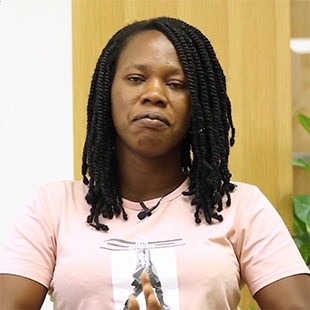
Samuel Uba Udechukwu
Patient from Nigeria underwent Craniotomy in Sharjah, UAE

Samuel Uba Udechukwu, a 35-year-old male, resident of Nigeria underwent Craniotomy surgery in U.A.E after being diagnosed with a brain…

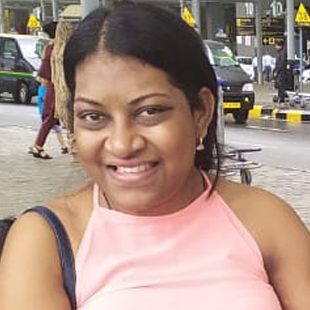
Patient from Mauritius underwent a Craniotomy Surgery in India
Ms. Marie Christelle Sungaren
Patient from Mauritius underwent a Craniotomy Surgery in India

Mauritius patient suffering from Pituitary Gland Tumor underwent successful Craniotomy Surgery in India.

Frequently Asked Questions

The best hospital in Jordan is:
  • Arab Medical Center
  • Complete recovery will vary depending on the underlying brain condition and the complexity of the craniotomy performed. To ensure healing and to promote return to normal functioning, patients are encouraged to have follow-up visits, obtain adequate rest, and participate in rehabilitation.

    Additional expenses may include:
  • Pre-operative tests (X-ray, MRI, blood work)
  • Anaesthesia fees
  • Post-surgery medications
  • Physiotherapy sessions
  • Follow-up consultations
  • If you're an international patient, costs for travel, accommodation, meals, and airport transfers.

    Amman is the primary city in Jordan for complex surgery and medical travel, and it has the largest concentration of JCI-accredited hospitals and surgeons with international training. Other areas offer limited services.

    Reasons why patients choose Jordan:
  • JCI-accredited modern Hospitals, with costs that are competitive with those in other countries
  • Packages that are well organised for international medical travel.
  • High-quality care from fellowship-trained surgeons with extensive experience.
  • Modern hospitals, accredited by JCI, offer a range of advanced arthroscopic and minimally invasive techniques.
  • Short waiting times for consultations with specialists, for imaging studies, and for surgery.
  • Strong rehabilitation service with structured physiotherapy programs.
  • Success rates after a craniotomy can vary widely depending on factors such as the patient's underlying health conditions, the type of procedure performed, and other factors. As a result, providing a single percentage for the success rate is not possible. For example, after surgery for seizures due to epilepsy, the expected rate of seizure-free outcomes may exceed 87%.

    Craniotomy is the procedure in which part of the skull is temporarily removed to allow the surgeon access to the brain to treat conditions.

    Usually, this type of surgery can take anywhere from 3–6 hours, depending on the complexity of your surgery and the primary condition for which you had surgery.

    Although it is considered a major brain surgery and carries inherent risks, it is performed safely and effectively by skilled, trained neurosurgeons with access to the latest technologies in the field.

    Yes, the removed skull bone flap will be replaced and secured in its original place at the end of your procedure.

    Craniotomy has proven effective in many cases; therefore, with respect to neurological conditions or symptoms, there is substantial evidence that demonstrates that patients can and do experience numerous improvements post-operatively based upon the specific condition for which the craniotomy was conducted, such as removal of a tumor or reduction of intracranial pressure.

    Your physician will typically order MRI, CT scans, blood work, and neurological evaluations before your surgery.

    Not Sure About Your Treatment Plan? Get a Free Second Opinion

    Have your reports reviewed by independent oncology experts to help you make a confident treatment decision, all online within 48 hours.

    Upload Your Reports
    Free second opinion on your CAR-T plan