Your Notifications
All done, no notifications

Cost of Ross procedure Worldwide

Costs starts from Get a Quote
Filters

Ross Procedure is a sensitive heart surgery to correct serious aortic valve disease. It substitutes the patient's deformed aortic valve with their normal pulmonary valve. The removed pulmonary valve is substituted with a donor valve taken from a cadaver or other options.

The Ross Procedure treats aortic valve dysfunction, especially in young individuals with regurgitation or aortic stenosis. It involves autografting the patient's pulmonary valve to replace the damaged aortic valve, followed by a homograft of the pulmonary valve. Particularly in children and young adults, it is recommended for patients who wish to avoid lifelong anticoagulation and benefit from a robust, living valve that develops with the patient.

Consult a cardiologist if you experience cardiac murmurs, fatigue, fainting, chest pain, or dyspnea—all of which are common symptoms of aortic valve dysfunction. A cardiac surgeon may suggest that you explore the Ross Procedure if testing reveals severe valve malfunction and you are a good candidate, particularly if you are young and active.

Preparation includes a complete cardiac evaluation: echocardiogram, cardiac MRI or CT, electrocardiogram (ECG), and blood tests. Your doctor will assess your overall health, surgical risk, and valve anatomy. You may be asked to fast before surgery, stop certain medications, and undergo pre-anaesthesia assessment.

  • Anaesthesia: General anaesthesia is administered.
  • Incision: A midline sternotomy (chest opening) is performed.
  • Heart-Lung Machine: The patient is connected to cardiopulmonary bypass.
  • Valve Removal: The diseased aortic valve is removed.
  • Pulmonary Valve Transfer: The patient’s pulmonary valve is excised and implanted in the aortic position.
  • Pulmonary Valve Replacement: A donor (homograft) valve replaces the pulmonary valve.
  • Closure: The heart is restarted, and the chest is closed with sutures and/or staples.

The Ross Procedure usually takes 5 to 7 hours, depending on the patient’s condition and surgical complexity.

Potential risks of the Ross Procedure include
  • Bleeding during or after surgery
  • Infection at the surgical site or within the heart
  • Valve dysfunction of the autograft or homograft over time
  • Heart rhythm problems (arrhythmias)
  • Stroke or other neurological complications
  • Pulmonary valve failure, requiring reoperation
  • General anaesthesia-related risks

Numerous advantages of this technique might greatly enhance one's quality of life. It makes it possible for people to have active lives, which include driving and frequent exercise. Compared to other options, the process offers a safer option for women wanting to get pregnant. It also promotes optimal hemodynamics, or blood circulation, throughout the body. Unlike other treatments, it removes the requirement for lifetime blood thinner use. Rapid symptom reduction is another significant benefit; many patients report observable improvements soon after surgery.

After surgery, patients usually remain in the hospital for 7–10 days, during which time they are monitored in the intensive care unit. Medication is used to control pain, and cardiac rehabilitation, a gradual return to activity, and routine check-ups are all part of the recovery process. With repeated imaging to check valve function, full healing could take six to twelve weeks.

The Ross Procedure offers an outstanding quality of life and cardiac function, with a 10-year survival rate of over 90%. Children and young people have excellent results in specialised centres, where many patients go decades without needing a valve replacement.

Would you like some help? We are available.

Get Help
Explore Hospitals ( 141 )
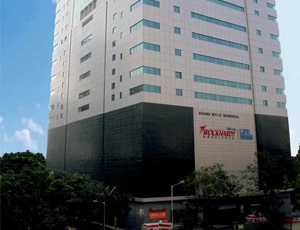
Ross procedure in Marengo Asia Hospitals, Gurugram: Costs, Top Doctors, and Reviews

Gurgaon, India

  • National Accreditation Board for Hospitals & Healthcare Providers (NABH)
  • National Accreditation Board for Testing and Calibration Laboratories (NABL)
  • Marengo Asia Hospitals, Gurugram, is a 250-bed multi-speciality tertiary care hospital, formerly known as W Pratiksha Hospital.
  • A major medical centre for Delhi NCR and North India, it is situated on Golf Course Extension Road, Sector 56, Gurugram.
  • The hospital's NABH and NABL accreditation ensures compliance with international standards for patient care, safety, and quality.
  • Provides extensive medical care in more than 21 specialities, including as women's health, neurology, orthopaedics, cardiology, and cancer.
  • Advanced robotic-assisted spine surgery tools and neuro-monitoring technology are available at the Marengo Asia International Institute of Neuro & Spine (MAIINS), a Centre of Excellence in Neurosciences.
  • Equipped with cutting-edge equipment, such as automated labs, sophisticated imaging, and contemporary operating rooms.
  • Features specialised ICUs, NICUs, and modular OTs built for complex and minimally invasive procedures.

Need Some Advice From Our Experts?

Request a Call Back Now!

Our team of healthcare experts would be happy to assist you

trusted Patientstrusted Patients+99
Trusted by 50000+ Patients
Required | alphabets and spaces
Required | A valid, working email address
Required | A valid contact

Instantly Connect with our Ross procedure Specialists

Doctor 1
Doctor 2
Doctor 3
Doctor 4
Doctor 5
Doctor 6
Doctor 7
Doctor 8
Our Services to Better your Experience

Opinion & Option

We submit the most accurate opinion and options from one or more countries for your review

Consult Privately

Consult with a certified specialist privately on our telemedicine platform even before you decide to travel

Logistics

We handle flights, visas, transfers, and accommodation—so you can focus on your health.

Recovery

Our In-house rehabilitation service packages to better your recovery and treatment outcome

Author

Alvina Hasan

M.Pharm

1 Year of Experience

Alvina Hasan is a dedicated medical researcher and scientific writer with a strong foundation in the pharmaceutical sciences. She holds a B.Pharm from Jamia Hamdard University and an M.Pharm in Quality Assurance from DIPSAR University. With deep medical expertise and a strong interest in healthcare communication, she focuses on transforming complex clinical and scientific information into clear, engaging, and easy-to-understand narratives. She develops insightful healthcare articles and research-driven pieces designed to support both medical professionals and patients, helping bridge the gap between advanced medical knowledge and practical understanding. . View More

Reviewer

Dr. Naresh Kumar Goyal

Cardiologist

21 Years of Experience

Dr. Naresh Kumar Goyal is highly trained as a cardiologist with exposure in virtually all aspects of cardiology. He qualified with an MD in internal medicine in 1999 from SMS Medical College, Jaipur, and served in the Cardiology Department as an honorary resident. From this stage, he also started with training in the temporary pacing of the pacemaker as well as interventional services. View More