Your Notifications
All done, no notifications

Intra-aortic balloon pump (IABP) Cost in Turkey

Costs starts from USD6000 to USD15000
Filters

How Much Does an Intra-Aortic Balloon Pump Cost in Turkey?

The price of an Intra-aortic balloon pump in Turkey generally varies between USD 6000 - USD 15000 based on the device type and technology, the company, and the hospital where the procedure is undertaken. Furthermore, the length of treatment, the requirement for follow-up treatment, and the application of advanced technologies or specialized treatments can also affect the total cost.

Factors Influencing the Cost of Intra-Aortic Balloon Pump in Turkey

Cost of Intra-aortic balloon pump (IABP) in Major Cities of Turkey

CityMinimum Cost (USD)Minimum Cost (TRY)Maximum Cost (USD)Maximum Cost (TRY)
AnkaraUSD 6000234360USD 15000585900
AntalyaUSD 6000234360USD 15000585900
BursaUSD 6000234360USD 15000585900
ElazigUSD 5400210924USD 13500527310
FethiyeUSD 5400210924USD 13500527310
IstanbulUSD 6000234360USD 15000585900
KocaeliUSD 6000234360USD 15000585900
KonyaUSD 6000234360USD 15000585900
OrduUSD 6000234360USD 15000585900
SamsunUSD 6000234360USD 15000585900
TrabzonUSD 5400210924USD 13500527310

Intra-aortic balloon pump (IABP) Cost : A Global Comparison

CountryMinimum CostMinimum Local CurrencyMaximum CostMaximum Local Currency
Czechiaget request
Hungaryget request
IndiaUSD 5500INR 471020USD 8500INR 727940
Israelget request
LithuaniaUSD 10000LTL 34207USD 20000LTL 68414
MalaysiaUSD 10000MYR 42400USD 15000MYR 63600
Polandget request
Saudi Arabiaget request
SingaporeUSD 25000SGD 32250USD 45000SGD 58050
South Africaget request
South KoreaUSD 5000KRW 6879900USD 12000KRW 16511760
SpainUSD 20000ESP 2940798USD 30000ESP 4411197
Switzerlandget request
ThailandUSD 10000THB 327100USD 14000THB 457940
TurkeyUSD 6000TRY 234360USD 15000TRY 585900
United Arab EmiratesUSD 7500AED 27525USD 22500AED 82575
United Kingdomget request

Need Help Planning Your Treatment Abroad?

Your 24/7 AI Health Assistant

An Intra-Aortic Balloon Pump, or IABP, is a machine that assists the heart in pumping blood more effectively. It is made up of a catheter, a thin flexible tube with a balloon on the end. The balloon is inserted into the aorta and attaches to a machine that regulates inflation and deflation of the balloon.

A temporary mechanical device called an intra-aortic balloon pump (IABP) assists the heart when it cannot pump enough blood on its own. It is usually used for high-risk percutaneous coronary procedures (PCI), sudden heart failure, or cardiogenic shock. The IABP lessens the strain on the heart and enhances coronary blood flow. It is frequently used in patients who are waiting for a heart transplant, have had a serious heart attack, or are experiencing problems after heart surgery.

If symptoms like low blood pressure, severe chest pain, dyspnea, or indicators of cardiogenic shock (such as disorientation, cold limbs, or fainting) appear, one should get medical help right away.

Your doctor will perform a comprehensive medical evaluation, including imaging, blood testing, and cardiac function studies like an angiography or echocardiography, prior to placing an IABP. You will also be evaluated for contraindications such as aortic anomalies or vascular disease. After explaining the process and the risks involved, the team will ask for your permission. Before the procedure, you might be requested to stop taking some medications and fast for a few hours.

  • Insertion Site: The balloon catheter is usually placed in the femoral artery in the groin, but the axillary or subclavian arteries may be employed in certain situations.
  • Catheter Navigation: Fluoroscopic or ultrasound guidance is used to advance the catheter to the descending aorta.
  • Placement of the Balloon: The balloon is placed above the renal arteries and somewhat beneath the left subclavian artery.
  • Balloon Inflation: It occurs over time in the cardiac cycle. It inflates during diastole to increase myocardial perfusion and deflates during systole to lessen afterload and aid in blood ejection.
  • Monitoring: Throughout treatment, arterial pressure and ECG are continuously monitored.

The insertion of an IABP usually takes 30 to 60 minutes, depending on the patient's state and vascular access. It is frequently used in an intensive care unit.

IABP treatment can be very beneficial. In certain cases, it can even save lives. However, there are certain risks involved. These consist of:
  • Damage resulting from ischemia, or reduced blood flow
  • Damage to an artery
  • The balloon's rupture
  • The balloon is positioned incorrectly, which could harm the kidneys or cause other issues.
  • Low platelet counts can lead to excessive bleeding because they make it harder for blood to clot.
  • Stroke
  • Infection

IABP can stabilise blood pressure, increase coronary perfusion, and improve cardiac output in individuals with severe heart disease. It offers a means of getting well, getting more help, or getting a transplant. Although it is not a permanent cure, it can save lives in the short term.

Patients are usually maintained in the intensive care unit (ICU) for close observation following IABP implantation. The afflicted leg must be kept straight to stop the catheter from moving. Depending on the therapeutic requirement, the device may stay in place for a few hours to many days. Following removal, pressure stops bleeding, and patients are watched for infection, bleeding, or circulation issues in their limbs. Up until the healing of vascular access, physical activity is limited.

IABP stabilizes critically ill patients and greatly increases survival rates, but it is not a cure. According to studies, it successfully enhances hemodynamic stability in roughly 70–80% of situations. Early administration during cardiogenic shock or as a component of a planned intervention yields the best results.

Would you like some help? We are available.

Get Help
Explore Hospitals ( 43 )
Intra-aortic balloon pump (IABP) in Acibadem Kadikoy Hospital: Costs, Top Doctors, and Reviews

Istanbul, Turkey

  • Joint Commission International, or JCI

Acibadem Kadikoy Hospital located in Istanbul, Turkey is accredited by JCI. Also listed below are some of the most prominent infrastructural details:

  • The number of beds in the hospital are 138 and Intensive Care beds are 23.
  • There are as many as 6.500 access points for a building control system.
  • There are 10 Operating theatres and more than 500 employees.
  • There are specific healthcare facilities in Acibadem Kadikoy Hospital, Istanbul, Turkey which have been established per integrated healthcare outreach such as Breast Health Center, Check-up Center, and Diabetes Clinic etc.
  • The hospital has the very best of Medical Technologies such as Flast CT, da Vinci robot, Magnetom Area MRI, Greenlight, Ortophos XG 3D and Full Body MRI, 4-Dimensional Breast Ultrasound, 3-Dimensional Tomosynthesis Digital Mammography.
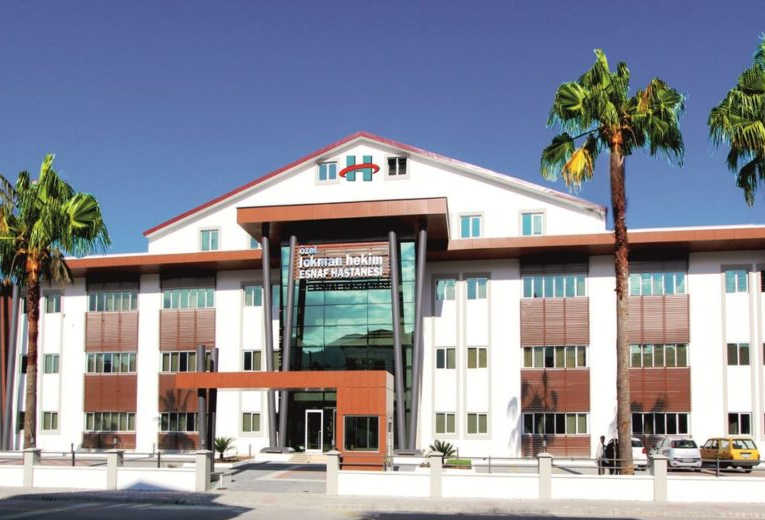
Intra-aortic balloon pump (IABP) in Lokman Hekim Esnaf Hospital: Costs, Top Doctors, and Reviews

Fethiye, Turkey

  • Joint Commission International, or JCI

Lokman Hekim Esnaf Hospital located in Fethiye, Turkey is accredited by ISO. Also listed below are some of the most prominent infrastructural details:

  • The patients rooms have been designed to simulate hotel comfort; homely private rooms equipped with spacious en suite bathrooms, television and Wi-fi
  • Rehabilitation Center
  • Emergency Department
  • ICU
  • International Patient Department comprises of a Medical Doctor, a tourism doctor, a manager, an assistant manager and 7 officers
Intra-aortic balloon pump (IABP) in Medical Park Karadeniz Hospital: Costs, Top Doctors, and Reviews

Trabzon, Turkey

  • Joint Commission International, or JCI

Apart from in-detail treatment procedures available, Medical Park Karadeniz Hospital located in Trabzon, Turkey has a wide variety of facilities available for International Patients. Some of the facilities which are provided by them are Accommodation, Airport Transfer, Choice of Meals, Interpreter, TV inside room. Also listed below are some of the most prominent infrastructural details:

  • Situated in an area of 12.000 square meter
  • Capacity of 107 beds
  • Intensive Care Unit (17 beds)
  • Neonatal ICU (NICU- 12 beds)
  • 6 Operating Rooms
  • Cafeteria

Need Some Advice From Our Experts?

Request a Call Back Now!

Our team of healthcare experts would be happy to assist you

trusted Patientstrusted Patients+99
Trusted by 50000+ Patients
Required | alphabets and spaces
Required | A valid, working email address
Required | A valid contact

Process Involved for Intra-aortic balloon pump (IABP) in Turkey

  • Assessment and Preparation by Cardio Surgeon: The patient's condition is thoroughly assessed to determine the need for IABP. Pre-procedure tests, such as blood work and imaging, are completed, and the femoral artery (or another suitable site) is prepared for insertion.
  • Insertion: A balloon catheter is inserted through the prepared site and guided to the aorta with the help of imaging technologies like X-rays.
  • Operation: The balloon is connected to a control machine that inflates and deflates it in sync with the heart's rhythm, improving blood flow and reducing the heart's workload.
  • Monitoring: During the procedure, the patient's vital signs, heart function, and blood flow are closely observed to ensure the safety and optimal performance of the IABP.
  • Removal: When the heart has stabilised and the IABP is no longer required, the device is carefully removed, and the insertion site is closed and monitored to ensure proper healing.
  • Acute Heart Failure
  • Unstable Angina
  • Support During High-Risk Cardiac Procedures
  • Post-Surgical Cardiac Support
  • Severe Ischemic Conditions

Patients who are likely candidates for Intra-aortic balloon pump (IABP) therapy are typically those who have severe heart disease and require supportive assistance to increase blood supply while reducing the heart's workload. Some of these cases are:

  • Cardiogenic Shock: As a result of a heart attack, the heart fails to pump sufficient blood..
  • High-Risk Cardiac Procedures: Those undergoing complex surgeries, such as coronary artery bypass grafting (CABG) or percutaneous coronary intervention (PCI).
  • Severe Heart Failure: Patients for whom medications or other treatments are inadequate to stabilise the heart.
  • Ischemic Conditions: Cases of unstable angina or significant coronary artery disease that compromise blood flow to the heart.
  • Post-Surgical Support: Patients needing temporary cardiac assistance after specific heart surgeries during recovery.
  • CABG
  • Percutaneous Coronary Intervention
  • Treatment of Cardiogenic Shock
  • Management of Severe Heart Failure
  • Improved Blood Flow: The IABP enhances blood supply to vital organs, particularly the heart, by increasing coronary artery perfusion during diastole.
  • Reduced Cardiac Workload: By deflating during systole (heart contraction), the IABP lowers the heart's resistance, decreasing its workload.
  • Critical Support: It offers essential, short-term assistance to patients facing severe conditions like cardiogenic shock or acute heart failure, stabilising them until further treatments are available.
  • Boosted Oxygen Delivery: The device ensures better oxygenation of tissues by enhancing blood circulation, which is crucial for recovery.
  • Bridge to Advanced Treatments: IABP serves as a bridge to more fixed interventions like cardiac surgery, ventricular assist devices (VADs), or heart transplantations.
  • Less Invasive Alternative: As compared to open-heart procedures, the IABP procedure is less invasive and, therefore, safer for critically ill patients.
  • Cardiologist
  • Cardiothoracic surgeon
  • Fill out the inquiry form: Fill out the form to provide us with the relevant information about your condition.
  • Consult with Our Healthcare Expert: One of our qualified specialists will contact you for a consultation.
  • Receive a Detailed Treatment Plan: After examining your situation, we will provide you with a detailed treatment plan that includes expert views and cost breakdowns for various choices.
  • Choose your preferred option: Choose the therapy option that best suits you.
  • Seamless Organization: We will manage all the details, including visas, flights, accommodations, and transfers, for a stress-free journey.

Instantly Connect with our Intra-aortic balloon pump (IABP) Specialists

Doctor 1
Doctor 2
Doctor 3
Doctor 4
Doctor 5
Doctor 6
Doctor 7
Doctor 8
Our Services to Better your Experience

Opinion & Option

We submit the most accurate opinion and options from one or more countries for your review

Consult Privately

Consult with a certified specialist privately on our telemedicine platform even before you decide to travel

Logistics

We handle flights, visas, transfers, and accommodation—so you can focus on your health.

Recovery

Our In-house rehabilitation service packages to better your recovery and treatment outcome

Other Popular Countries for Intra-aortic balloon pump (IABP)

Our network connects you with the leading medical tourism destinations globally, offering a wide range of cities, top doctors, and flexible pricing options.

India
Vietnam
United Arab Emirates
Malaysia

Author

Dr. Abdullah Rahil

MPT (Neuro)

5 Years of Experience

Dr. Abdullah Rahil, M.P.T. (Neurology), is a dedicated physiotherapy professional specializing in orthopedic, neurological, and musculoskeletal rehabilitation. With strong clinical expertise, he focuses on improving patient mobility, reducing pain, and restoring functional independence through evidence-based rehabilitation techniques. He is skilled in advanced therapeutic approaches that support effective rehabilitation and recovery for a wide range of musculoskeletal and neurological conditions, focusing on improving mobility, reducing pain, and restoring functional independence. Dr. Rahil has extensive experience managing diverse rehabilitation cases. His patient-centered approach emphasizes personalized treatment plans, continuous assessment, and comprehensive rehabilitation to achieve optimal recovery outcomes. . View More

Reviewer

Dr. Naresh Kumar Goyal

Cardiologist

21 Years of Experience

Dr. Naresh Kumar Goyal is highly trained as a cardiologist with exposure in virtually all aspects of cardiology. He qualified with an MD in internal medicine in 1999 from SMS Medical College, Jaipur, and served in the Cardiology Department as an honorary resident. From this stage, he also started with training in the temporary pacing of the pacemaker as well as interventional services. View More