Your Notifications
All done, no notifications

Cost of CRT - D Worldwide

Costs starts from Get a Quote
Filters

Certain heart failure patients are managed through cardiac resynchronisation therapy. It enables an improved and organised contraction of the heart's chambers. The heart pumps more effectively into the body due to CRT. To insert a device in the chest for cardiac resynchronisation therapy (CRT), a minimal procedure is required. CRT devices include:

Pacemaker-supported cardiac resynchronisation treatment (CRT-P): This device is designed for patients with abnormal cardiac signals and certain phases of heart failure. It sends signals that make the bottom chambers of the heart beat together. It allows the heart to fill with blood.

Cardiac resynchronisation therapy with a defibrillator (CRT-D).: An implanted cardioverter-defibrillator (ICD) and a pacemaker are employed in this combination device. For patients with heart failure who also are at risk of sudden death, it may be recommended. It can detect and correct life-threatening cardiac rhythms. It can pace the heart or shock the heart out of a life-threatening rhythm.

Cardiac Resynchronisation Therapy with a Defibrillator (CRT-D) treats certain forms of heart failure, particularly in patients with reduced ejection fraction and abnormal electrical conduction (e.g., left bundle branch block). It combines two treatments: defibrillation, which guards against sudden cardiac death brought on by potentially fatal arrhythmias, and cardiac resynchronisation, which helps the heart's chambers beat in unison. When there is a high risk of deadly arrhythmias or when medication alone is not enough to control symptoms, CRT-D is advised.

If you experience signs of heart failure, such as exhaustion, dyspnea, edema in your legs, or fainting spells, you should consult a cardiologist. CRT-D may be taken into consideration if you have been diagnosed with heart failure with reduced ejection fraction (HFrEF), particularly if your ECG shows a large QRS complex. It’s also appropriate for patients with a history of cardiac arrest or prolonged ventricular arrhythmias. The ideal time for device therapy is determined in part by early consultation.

An ECG, echocardiography, chest X-ray, and occasionally a cardiac MRI or Holter monitor will be performed to evaluate heart function and rhythm before CRT-D installation. Medication evaluations and blood tests are performed, particularly if you are taking blood thinners. Before the surgery, you will need to fast for a few hours. Your physician will outline the surgery procedures and give you preoperative instructions.

  • Implantation: Implantation involves inserting three leads into the heart and placing the device beneath the skin close to the left collarbone.
  • Programming: The device is configured to detect and prevent harmful arrhythmias and synchronise heartbeats.
  • Monitoring: After closing the incision, the patient is watched to ensure proper function.

The CRT-D implantation usually takes two to four hours. The majority of patients spend one to two days in the hospital. Physical activity, particularly arm motions on the implantation side, should be minimised during the typical one to two-week recovery period.

  • Infection or bleeding at the implant site
  • Lead displacement
  • Pneumothorax (collapsed lung)
  • Inappropriate shocks
  • Device malfunction (rare)

CRT-D dramatically lowers the risk of sudden cardiac death, improves heart function, and lessens the symptoms of heart failure. It also reduces hospitalisations and allows patients to return to regular activities with less weariness.

Recovery includes wound care, arm movement restrictions, and careful device performance monitoring. Checking battery life and modifying device settings require follow-up visits. Regular imaging, ECG monitoring, and cardiac rehabilitation are all part of long-term care.

About 70–80% of patients carefully chosen for CRT-D implantation have better cardiac function, higher quality of life, and lower mortality rates.

Would you like some help? We are available.

Get Help
Explore Hospitals ( 191 )
CRT - D in Vinmec Times City: Costs, Top Doctors, and Reviews

Ha noi, Vietnam

  • Joint Commission International, or JCI
  • Vinmec Times City International Hospital is the first hospital to be launched within the Vinmec Healthcare System.
  • It is located in the Times City urban complex in Hanoi, offering a central and convenient location for patients.
  • The hospital spans 24,670 square meters with a modern infrastructure of seven floors above ground and two basement levels.
  • It is the first general hospital in Vietnam to receive JCI accreditation, a globally recognised certification for healthcare quality and safety.
  • The medical team comprises highly qualified Vietnamese and international doctors with extensive clinical expertise.
  • Vinmec Times City provides comprehensive healthcare services, including outpatient care, inpatient treatment, and emergency services.
  • The hospital features specialised departments, including Internal Medicine, Paediatrics, Obstetrics and Gynaecology, Orthopaedics, and Neurology.
  • It is equipped to perform advanced medical procedures, including robotic-assisted surgery and organ transplants.
  • The facility features a world-class IVF centre and offers dedicated services in endocrinology, dermatology, and traditional medicine.
  • On-site imaging, radiology, and laboratory departments ensure fast and accurate diagnostic support.
  • With a strong focus on patient-centred care, the hospital offers a safe, comfortable, and internationally standardised medical experience.
CRT - D in Vinmec Phu Quoc Hospital: Costs, Top Doctors, and Reviews

Phu Quoc, Vietnam

  • Joint Commission International, or JCI
  • Phu Quoc Island lacked access to modern, high-quality healthcare infrastructure suitable for both its residents and the growing number of tourists.
  • The local healthcare system faced challenges in meeting international standards for emergency, diagnostic, and speciality care.
  • There was a strong demand for a facility that could offer comprehensive and reliable medical services across a wide range of specialities.
  • Vinmec Phu Quoc General Hospital was launched in June 2015 as part of the Vinmec Healthcare System to close this healthcare gap.
  • Spanning over 10,000 square meters, the hospital comprises six stories and features nearly 150 patient beds to cater to a diverse range of medical needs.
  • Operates in line with internationally recognised standards, such as those outlined by the Joint Commission International (JCI), to ensure patient safety and service excellence.
  • Outfitted with advanced diagnostic and treatment technologies, including MRI, CT scanners, digital X-rays, and more to support high-precision care.
  • Maintains 24/7 emergency response capabilities to address critical cases at any time.
  • Engages highly qualified healthcare providers, including doctors and specialists who have trained and worked at prestigious hospitals both within Vietnam and internationally.
  • The hospital’s design emphasises eco-friendliness and natural lighting, fostering a therapeutic environment for patients.
  • To offer premium healthcare services on Phu Quoc Island, aligned with international benchmarks and suitable for both domestic and global patients.
  • To contribute to Vinmec’s vision of becoming a leader in academic medicine through research, education, and clinical excellence.
  • To ensure that every patient receives compassionate, ethical, and highly skilled care tailored to their unique health needs.
  • To position Vinmec Phu Quoc as a trusted medical destination that combines advanced technology, modern infrastructure, and exceptional patient service.
CRT - D in Casa di Cura La Madonnina: Costs, Top Doctors, and Reviews

milan, Italy

  • Italian National Healthcare System
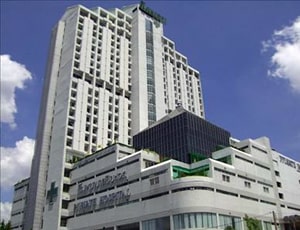
  • Casa di Cura La Madonnina is a renowned multidisciplinary private clinic in Milan, Italy. It provides premium healthcare services with a focus on advanced diagnostics, personalised care, and surgical excellence. The clinic offers state-of-the-art operating rooms, luxury patient rooms, and an exclusive patient experience for both Italian and international patients. It is recognised for its expertise in fields such as fertility and IVF, cardiology, plastic surgery, and digestive endoscopy.
  • It integrates clinical excellence with a high standard of comfort and privacy, making it one of the most prestigious private healthcare institutions in Italy.
CRT - D in Apollo Hospitals Bannerghatta: Costs, Top Doctors, and Reviews

Bangalore, India

  • Joint Commission International, or JCI

Apollo Hospitals Bannerghatta located in Bengaluru, India is accredited by JCI, NABH. Also listed below are some of the most prominent infrastructural details:

  • Bed Capacity is 250
  • Largest and most sophisticated sleep laboratory in the world
  • Technological powerhouse with latest equipments
  • 120 slice CT angiogram
  • 3 Tesla MRI
  • Low energy & High energy Linear Accelerators
  • Navigation System in surgical procedures
  • 4-D Ultrasound for 4 dimensional sonography
  • Digital Fluoroscopy
  • Gamma Camera
  • Stereotactic Robotic Radio- surgery
  • Autologous Bone Marrow Transplantation
  • Robotic assisted surgeries
  • Thallium Laser-First in India
  • Holmium Laser-First in South India
  • Digital X-Ray-First in Karnataka
  • 100 plus consultants
  • Uses Y shaped stent for tracheoesophageal fistula
  • Four autologous chondrocyte implantations procedure is performed and several more like Spinal angiolipoma excision, Tibial tuberosity shift with MPSL reconstruction
  • Biggest series of airway stents in India
  • The Minimal Access Surgery Centre (MASC) centre of excellence
CRT - D in Sarvodaya Hospital and Research Centre: Costs, Top Doctors, and Reviews

Faridabad, India

4.9 ( 4 Reviews )
  • National Accreditation Board for Hospitals & Healthcare Providers (NABH)
  • National Accreditation Board for Testing and Calibration Laboratories (NABL)

Sarvodaya Hospital and Research Centre located in Faridabad, India is accredited by NABH, NABL. Also listed below are some of the most prominent infrastructural details:

  • Sarvodaya Hospital has a 500 bed capacity which is inclusive of 65 ICU beds.
  • A dedicated dialysis unit for people with kidney conditions.
  • The hospital has a cancer center which makes cancer treatment a seamless process.
  • There is an upcoming oncology center in Sarvodaya Hospital Faridabad.
  • Technologies such as 128 Slice CT scan, 500 MA X-Ray, 1.5 Tesla MRI and Mammography facility.
CRT - D in Fortis Hospital: Costs, Top Doctors, and Reviews

Bangalore, India

5.0 ( 1 Reviews )
  • National Accreditation Board for Hospitals & Healthcare Providers (NABH)
  • National Accreditation Board for Testing and Calibration Laboratories (NABL)

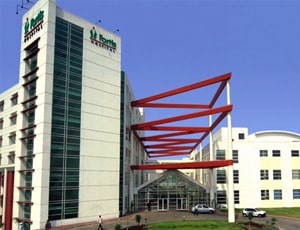
Fortis Hospital, Bannerghatta Road, Bangalore, has been a leading multi-speciality healthcare institution, offering advanced medical services with a patient-centric approach. The hospital features 400+ beds, state-of-the-art infrastructure, and experienced specialists across various specialities, providing comprehensive and compassionate care. Trusted by patients from India and abroad, Fortis Bannerghatta Road combines modern technology with high-quality treatment to deliver world-class healthcare.

CRT - D in Fortis Hospital: Costs, Top Doctors, and Reviews

Kolkata, India

  • National Accreditation Board for Hospitals & Healthcare Providers (NABH)
  • National Accreditation Board for Testing and Calibration Laboratories (NABL)

Fortis Hospital & Kidney Institute, Kolkata, is a 60-bed specialised centre for Urology and Nephrology, serving patients across Eastern India. Since its inauguration in 1999, the institute has pioneered advanced treatments like lithotripsy, laparoscopic donor nephrectomy, PCNL, and Holmium Laser prostate surgery, and has performed over 570 kidney transplants. Spread over 6 floors, it offers 4 operating theatres, a 12-bed dialysis unit, 24-hour renal emergencies, and a fully equipped laboratory, providing comprehensive, patient-focused care in renal and urological health.

CRT - D in Medipol Mega University Hospital: Costs, Top Doctors, and Reviews

Istanbul, Turkey

  • Joint Commission International, or JCI

Medipol Mega University Hospital located in Istanbul, Turkey is accredited by JCI. Also listed below are some of the most prominent infrastructural details:

  • The Hospital includes 4 centers i.e. general surgery, cardiovascular surgery, oncology, and dentistry
  • Medipol patients have access to over 60,000 m2 of the gardens, 26,000 m2 of the five-storied underground parking, 100,000 m2 covered premises and 1,500 members of the stuff
  • Capacity of 470 patient beds
  • Oncology Center
  • Emergency department that can admit up to 134 patients (including general, coronary, KVC and neonatal emergency department)
  • 25 Operating rooms
  • Medipol Mega University Hospital uses the following innovative technologies- Biplane digital flat-panel angiographic system, Digital flat-panel tomosynthetic mammography, Surgical O-ARM PEROP CT Imaging system, etc.
  • Helicopters enabling the transfer of the patient at the most emergency cases
  • The Hospital creates a friendly & comfortable ambience for the patients and their relatives with terrace garden suites, normal rooms. Each room is equipped with multimedia services like TV, DVD, Internet, online access from patients bedside, Unlimited Digital Archive pacs and high-quality meal service
  • Prayer Room
  • 5-starred cafeteria/restaurant
CRT - D in Zulekha Hospital, Sharjah: Costs, Top Doctors, and Reviews

Sharjah, United Arab Emirates

0.5 ( 1 Reviews )
  • Joint Commission International, or JCI
  • A highly skilled multidisciplinary medical staff supports patients through the hospital's advanced diagnostic capabilities, joint replacement surgeries, cardiac catheterisation, neonatal intensive care, and specialised cancer care and rehabilitation services. The hospital uses the latest technology and is internationally accredited for providing quality healthcare based on scientific evidence, delivering safe, high-quality care to patients, offering individualised treatment plans, and serving international patients.
CRT - D in Kalra Hospital: Costs, Top Doctors, and Reviews

Delhi, India

  • National Accreditation Board for Hospitals & Healthcare Providers (NABH)

Kalra Hospitals, regarded as one of Delhi's best hospitals, is dedicated to providing high-quality healthcare to people in need and has four locations: Dwarka, Kirti Nagar, Najafgarh, and Palam. The skilled physicians, who specialize in critical care and cardiovascular conditions, are committed to giving our patients comprehensive medical care. In addition to its emphasis on heart health, Kalra Hospitals offers services in the following areas: dentistry, endocrinology, gastroenterology, rheumatology, burns and plastic surgery, cancer therapy, and vascular medicine.

Need Some Advice From Our Experts?

Request a Call Back Now!

Our team of healthcare experts would be happy to assist you

trusted Patientstrusted Patients+99
Trusted by 50000+ Patients
Required | alphabets and spaces
Required | A valid, working email address
Required | A valid contact

Instantly Connect with our CRT - D Specialists

Doctor 1
Doctor 2
Doctor 3
Doctor 4
Doctor 5
Doctor 6
Doctor 7
Doctor 8
Our Services to Better your Experience

Opinion & Option

We submit the most accurate opinion and options from one or more countries for your review

Consult Privately

Consult with a certified specialist privately on our telemedicine platform even before you decide to travel

Logistics

We handle flights, visas, transfers, and accommodation—so you can focus on your health.

Recovery

Our In-house rehabilitation service packages to better your recovery and treatment outcome

Get Insight with our Blogs

What is the Difference Between a CRT Pacemaker and a CRT-Defibrillator?
Cardiology

What is the Difference Between a CRT Pacemaker and a CRT-Defibrillator?

Cardiac resynchronization therapy (CRT) has revolutionized the management of heart failure, particularly in patients with conduction delays and dysynchrony of ventricular contraction.

Published: 21 Mar, 2024
Updated: 25 Feb, 2026

Author

Nimra Haseeb
Nimra Haseeb

MSc Biochemistry

4 Years of Experience

Miss Nimra Haseeb is a medical researcher and a scientific content writer. She holds a Bachelor’s degree in Biotechnology and a Master’s in Biochemistry from Integral University, Lucknow. With strong experience in healthcare research, she specializes in secondary research, clinical data analysis, and evidence-based medical writing. Her work focuses on transforming complex scientific and medical information into clear, accurate, and reliable healthcare content for patients and healthcare audiences. She is also experienced in interpreting medical studies and healthcare trends to deliver well-researched and informative content that supports better health awareness and decision-making.. View More

Reviewer

Dr. Naresh Kumar Goyal

Cardiologist

21 Years of Experience

Dr. Naresh Kumar Goyal is highly trained as a cardiologist with exposure in virtually all aspects of cardiology. He qualified with an MD in internal medicine in 1999 from SMS Medical College, Jaipur, and served in the Cardiology Department as an honorary resident. From this stage, he also started with training in the temporary pacing of the pacemaker as well as interventional services. View More

Last Reviewed - January 2026