The cost of Angiography in Thailand typically ranges between USD 6000 - USD 8000. However, this cost can vary depending on several factors, including the type and severity of the condition, treatment techniques chosen, the healthcare facility's location and reputation, the treating professionals' experience and specialization, and the patient's overall health status.
Additionally, factors like the duration of treatment, the need for follow-up care, and the use of advanced technologies or specialized treatments can further influence the overall cost.
Angiography is an image generated through advanced medical practice where blood vessels, as well as organs, are seen to determine proper functioning. It also aids in identifying the condition of blood vessels which involves blockage, narrowing, bulging, or even tumor. Contrast medium is used in most cases and may be given by way of X-ray, CT (computerized tomography), or MRI (magnetic resonance imaging). It provides precise and real-time images of the vascular system which helps in proper planning and carrying out the procedures like angioplasty or stent. Types of Angiography: These include coronary angiography cerebral, peripheral, pulmonary, and renal angiography.
| City | Minimum Cost (USD) | Minimum Cost (THB) | Maximum Cost (USD) | Maximum Cost (THB) |
|---|---|---|---|---|
| Bangkok | USD 6000 | 196260 | USD 8000 | 261680 |
| Country | Minimum Cost | Minimum Local Currency | Maximum Cost | Maximum Local Currency |
|---|---|---|---|---|
| Czechia | USD 2500 | CZK 55050 | USD 5000 | CZK 110100 |
| Hungary | USD 5000 | HUF 1785400 | USD 10000 | HUF 3570800 |
| India | USD 3000 | INR 256920 | USD 4500 | INR 385380 |
| Israel | USD 7500 | ILS 26550 | USD 14218 | ILS 50332 |
| Lithuania | USD 3500 | LTL 11972 | USD 5500 | LTL 18814 |
| Malaysia | USD 10000 | MYR 42400 | USD 15000 | MYR 63600 |
| Morocco | USD 3500 | MAD 32305 | USD 8000 | MAD 73840 |
| Poland | USD 1737 | PLN 6531 | USD 5831 | PLN 21925 |
| Saudi Arabia | USD 2753 | SAR 10324 | USD 6745 | SAR 25294 |
| Singapore | USD 25000 | SGD 32250 | USD 45000 | SGD 58050 |
| South Africa | USD 5000 | ZAR 89850 | USD 15000 | ZAR 269550 |
| South Korea | USD 10000 | KRW 13759800 | USD 20000 | KRW 27519600 |
| Spain | USD 13470 | ESP 1980627 | USD 20000 | ESP 2940798 |
| Switzerland | USD 8500 | CHF 7055 | USD 10500 | CHF 8715 |
| Thailand | USD 6000 | THB 196260 | USD 8000 | THB 261680 |
| Tunisia | USD 5000 | TND 14900 | USD 10000 | TND 29800 |
| Turkey | USD 4050 | TRY 158193 | USD 5500 | TRY 214830 |
| United Arab Emirates | USD 4500 | AED 16515 | USD 10000 | AED 36700 |
| United Kingdom | get request | |||
Need Help Planning Your Treatment Abroad?
Your 24/7 AI Health Assistant 
A minimally invasive medical technique called an “angioplasty” is done to open up clogged or restricted arteries.
Peripheral angioplasty is often used to enhance blood flow to the legs, and carotid angioplasty, and coronary angioplasty, are conducted to improve blood flow to the brain. A catheter is placed into the constricted artery during the surgery, and at the tip of the catheter is a deflated balloon. Once in place, the balloon is inflated to expand the artery and start blood flow again by pressing the plaque up against the walls of the artery. To help keep the artery open, a stent—a tiny mesh tube—may occasionally be inserted. Conditions like carotid artery stenosis, peripheral artery disease, and coronary artery disease are frequently treated using angioplasty.
Conditions like carotid artery stenosis, peripheral artery disease, and coronary artery disease are frequently treated using angioplasty. Vascular surgeons or interventional cardiologists usually carry it out in a specialized catheterization laboratory (cath lab). Compared to open surgery, angioplasty is less invasive and linked to quicker recovery periods and fewer problems.

Aakash Healthcare Super Speciality Hospital, Delhi, India
USD 3900 USD 4680

Amrita Hospital, Faridabad, India
USD 4250 USD 4500
Would you like some help? We are available.
Get Help
Bangkok, Thailand
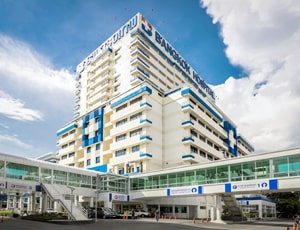
Bangkok Hospital located in Bangkok, Thailand is accredited by JCI. Also listed below are some of the most prominent infrastructural details:

Bangkok, Thailand

Bangpakok 9 International Hospital located in Bangkok, Thailand is accredited by JCI. Also listed below are some of the most prominent infrastructural details:

Bangkok, Thailand
Phyathai 2 International Hospital located in Bangkok, Thailand is accredited by JCI. Also listed below are some of the most prominent infrastructural details:

Bangkok, Thailand
Yanhee International Hospital located in Bangkok, Thailand is accredited by JCI. Also listed below are some of the most prominent infrastructural details:

Bangkok, Thailand
Apart from in-detail treatment procedures available, Sikarin Hospital located in Bangkok, Thailand has a wide variety of facilities available for International Patients. Some of the facilities which are provided by them are Airport Transfer, Choice of Meals, Interpreter, SIM, TV inside room. Also listed below are some of the most prominent infrastructural details:
It has also received many awards and certifications and some of them are:
The various clinics and centers of Sikarin Hospital are as follows:
The medical technology present in Sikarin Hospital is outlined here:

Bangkok, Thailand
Piyavate Hospital located in Bangkok, Thailand is accredited by JCI. Also listed below are some of the most prominent infrastructural details:
Medicine Centre: Piyavate Hospital provides advanced holistic treatment for their patients. They offer a complete range of services and physicians that specialize in various fields like the endocrine system, the nervous system, kidney function, cardiovascular care, respiratory and digestive system. They pride themselves for the familial care that they provide to their patients.
Fertility and In-Vitro Fertilization Centre: Helping the couples who walk into the Piyavate Hospital to achieve their dream of having a family. They have a medical team that specializes in male and female fertility. They offer consultation services, fertility check-up for both men and women and complete IVF services. They have advanced IVF cycle treatment facilities that offer a high rate of success.
Bone and Joint Institute: Piyavate Hospital houses one of the frontrunners in Orthopaedic health care in all of SouthEast Asia. They offer a wide range of services and surgeries in their bone and joint institute that include hand surgery, hip and knee replacement surgery, spinal cord surgery, upper extremity surgery, arthroscopic surgery and sports medicine.
Eye and Lasik Centre: Piyavate Hospital is fully equipped with the latest and most advanced technology for eye care and houses highly skilled ophthalmologists, sub-specialists and qualified nurses.
Physical Therapy and Rehabilitation Centre: One of the first hospitals to be equipped with the Hybrid Assistive Limb technology that will help a neurologically challenged patient to control the rehabilitation robot limb with a signal from their brain. The Physical Therapy and Rehabilitation Centre at Piyavate Hospital uses this system encourage patients to regain muscle memory to walk and function normally.
Amenities for Patient’s Family:
Piyavate Hospital also offers additional apartment facilities to house the kin of the patients who come to visit them from distant places. A restaurant, a flower shop and a café are a few of the other amenities provided by the hospital.
These are the most popular services offered by the Piyavate Hospital in Bangkok, Thailand. They also provide a plethora of other medical services that are listed below:
Diabetic Foot Centre
Check-up centre
Urology Centre
Heart Institute
Paediatric Centre
Obstetrics and Gynaecology Centre
Surgery Centre
Ear Nose Throat Centre
Haemodialysis Centre
Dental Centre
X-Ray Centre
Gastroenterology Centre
Cancer Centre
Neonatal Intensive Care Unit (NICU)
Emergency Services and Centre
Tele-medicine

Bangkok, Thailand
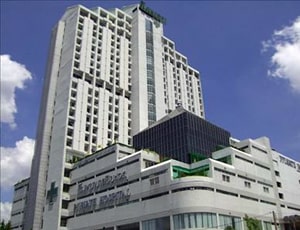
MALI Interdisciplinary Hospital located in Bangkok, Thailand is accredited by JCI. Also listed below are some of the most prominent infrastructural details:
Need Some Advice From Our Experts?
Our team of healthcare experts would be happy to assist you

+99


Opinion & Option
We submit the most accurate opinion and options from one or more countries for your review
Consult Privately
Consult with a certified specialist privately on our telemedicine platform even before you decide to travel
Logistics
We handle flights, visas, transfers, and accommodation—so you can focus on your health.
Recovery
Our In-house rehabilitation service packages to better your recovery and treatment outcome
Our network connects you with the leading medical tourism destinations globally, offering a wide range of cities, top doctors, and flexible pricing options.


A. The average cost of Angioplasty in Thailand starts from USD 6000 Angioplasty in Thailand is available across many hospitals in different states.
A. The cost of Angioplasty in Thailand may differ from one medical facility to the other. The Angioplasty package cost usually includes all the expenses related to pre and post-surgery expenses of the patient. The comprehensive Angioplasty package cost includes the cost of investigations, surgery, medicines, and consumables. Stay outside the package duration, post-operative complications and diagnosis of a new condition may further increase the Angioplasty cost in Thailand.
Which are some of the best hospitals in Thailand for Angioplasty?
Many hospitals in Thailand perform Angioplasty. For quick reference, the following are some of the leading hospitals for Angioplasty in Thailand:
A. Upon discharge from the hospital after Angioplasty in Thailand, the patients are advised to stay for about 18 days for recovery. This period is important to conduct all the follow-up tests to ensure that the surgery was successful and the patient can go back to the home country.
A. Apart from the Angioplasty cost, the patient may have to pay for additional daily expenses such as for a guest house after discharge and meals. The per day extra expenses in Thailand per person are about USD 50 per person.
A. The following are some of the best cities for Angioplasty in Thailand:
A. Many Angioplasty surgeons offer video telemedicine consultation to patients who need this treatment. Some of them include the following:
| Doctor | Cost | Schedule Your Appointment |
|---|---|---|
| Dr. Vichai Benjacholamas | USD 81 | Schedule Now |
A. After the Angioplasty takes place, the average duration of stay at the hospital is about 2 days. During the recovery, the patient is carefully monitored and control tests are performed to see that everything is okay. If required, physiotherapy sessions are also planned during recovery in the hospital.
A. There are more than 6 hospitals that offer Angioplasty in Thailand. The above-mentioned hospitals have the required infrastructure and a dedicated unit where patients can be treated. These hospitals comply with all the rules and regulations as dictated by the regulatory bodies and medical associations in Thailand
A. Some of the top medical specialists for Angioplasty in Thailand are:
A. Most patients who undergo angioplasty are usually discharged after a few hours. Based on the severity and the overall health of the patient, the patient may take one to three days to be discharged. The extent of recovery will also depend on the type of operation, the health of the patient, and if they develop complications. However, here is a general timeline of recovery:
A. Yes, angioplasty is safe in Thailand and the country boasts of a good standard healthcare delivery system that is rapidly expanding its services to the international level. Thailand is considered a prime medical tourist country; many hospitals and clinics including Bangkok Hospital Angioplasty and Coronary Intervention are comparatively cheaper than in Western countries.
Coronary angioplasty is less invasive and usually takes 1-2 hours if not more. Patients are kept under observation after the procedure and in many cases are discharged within one or two days after the procedure. Aftercare is in terms of medication, lifestyle changes, and cardio rehab is required. Patients expecting to have a coronary angioplasty can be assured that Thailand has international standard hospitals, excellent nurses, and healthcare priority that focuses on patient’s needs and wants.
A. It should be noted that angioplasty is very safe but there are certain general and specific risks associated with it, like other medical procedures. Here's an overview:
A. Percutaneous transluminal coronary angioplasty is a standard method of treating atherosclerosis of arteries, including the coronary arteries. But this is seen as not being a long-term solution for all diseases of the arteries anyhow if done in Thailand or otherwise. The aim is to enhance the blood supply and even to ease some of the signs, like, angina or even shortness of breath attributed to the reduced circulation of blood.
Atherosclerosis is characterized by the accumulation of atherosclerotic plaques on the inner walls of arteries with subsequent stenosis of vessels. The blockage can be restored by angioplasty but the condition might worsen. This implies that no matter how effective a given angioplasty was in clearing the artery, other segments of the arteries would develop plaques in the arteries over time and therefore new blockages.
A. As is the case in many other countries, the treatment of heart disease in Thailand includes not only medications, but comprehensive programs of lifestyle management, drug therapy, and surgery when necessary. Here’s an overview of alternatives to angioplasty that might be considered for heart conditions:
A. Thus, angioplasty does not protect against recurrent heart attacks in the long run. Some of them include, it unblocks arteries and reduces symptoms such as chest pain but does not eradicate the core cause of heart disease which is atherosclerosis.
Angioplasty only opens up the blockages for a while and the process of plaque buildup continues in other parts of the arteries making for chances of clots which lead to heart attacks. Avoiding recurrent heart attacks needs correction of the original heart disease through stress reduction, diet, and different medications in the long run, including statins, blood thinners, and high blood pressure.
A. In Thailand, local anesthesia or sedation is used to perform angioplasty. However, the usage of anesthesia may vary according to the severity of the condition and the preference of the patients. The following types are available in Thailand:
A. Eating a healthy diet, getting regular physical activity, and avoiding certain activities or substances are important after angioplasty to manage CAD and lower the risk of future heart problems like narrowing or blockage of the treated coronary artery or a heart attack.

Cardiologist
21 Years of Experience
Dr. Naresh Kumar Goyal is highly trained as a cardiologist with exposure in virtually all aspects of cardiology. He qualified with an MD in internal medicine in 1999 from SMS Medical College, Jaipur, and served in the Cardiology Department as an honorary resident. From this stage, he also started with training in the temporary pacing of the pacemaker as well as interventional services. View More