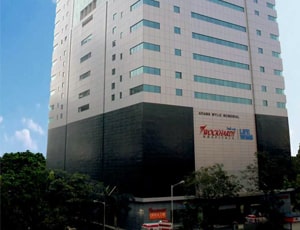
Explore trusted hospitals and care options, or get personalised support to find a suitable option based on your treatment needs, preferences, and budget.

Abu Dhabi, United Arab Emirates
With advanced orthopaedic infrastructure, NMC Specialty Hospital offers ORIF to patients with fractures that require surgical realignment and stabilisation. Established in 1975, the JCI, NABH accredited hospital is located in Abu Dhabi, United Arab Emirates, and has 104 beds.
ORIF involves making an incision to access the fracture, restoring the normal position of the bone, and securing the fragments with plates, screws, rods, or other implants. It may be used for severely displaced, open, or unstable fractures, as well as selected joint fractures. Detailed imaging and assessment of the patient's overall health are performed before surgery.
Ajman, United Arab Emirates
Thumbay University Hospital, Ajman offers advanced ORIF (Open Reduction and Internal Fixation) using modern orthopaedic surgical techniques and internationally accepted treatment protocols. Established in 2002, the JCI accredited hospital is located in Ajman, United Arab Emirates, with 350 beds, providing comprehensive fracture care for local and international patients.
ORIF is a surgical procedure used to realign and stabilise broken bones when they cannot be adequately treated with casting or other non-surgical methods. During surgery, the bone fragments are repositioned and secured using plates, screws, rods, or other fixation devices. The orthopaedic specialist evaluates imaging and fracture characteristics before selecting the appropriate fixation method.
Kaunas, Lithuania
At Meliva Kardiolita Hospital, Kaunas, patients can access ORIF supported by advanced imaging facilities and experienced orthopaedic surgeons. Established in 1998, the JCI accredited hospital is located in Kaunas, Lithuania, and has 8 beds.
Open reduction and internal fixation may be recommended for displaced, unstable, or complex fractures. The surgeon exposes the fracture, restores the bone's alignment, and stabilises it using specialised implants such as plates, screws, nails, or rods. Pre-operative X-rays or CT scans help assess the fracture and guide surgical planning.
Kuala Lumpur, Malaysia
With advanced orthopaedic infrastructure, Bukit Tinggi Medical Centre offers ORIF to patients with fractures that require surgical realignment and stabilisation. Established in 2016, the MSQH accredited hospital is located in Kuala Lumpur, Malaysia, and has 171 beds.
ORIF involves making an incision to access the fracture, restoring the normal position of the bone, and securing the fragments with plates, screws, rods, or other implants. It may be used for severely displaced, open, or unstable fractures, as well as selected joint fractures. Detailed imaging and assessment of the patient's overall health are performed before surgery.
At Rajagiri Hospital, patients can access ORIF supported by advanced imaging facilities and experienced orthopaedic surgeons. Established in 2014, the JCI accredited hospital is located in Kochi, India, and it has adequate bed capacity.
Open reduction and internal fixation may be recommended for displaced, unstable, or complex fractures. The surgeon exposes the fracture, restores the bone's alignment, and stabilises it using specialised implants such as plates, screws, nails, or rods. Pre-operative X-rays or CT scans help assess the fracture and guide surgical planning.
Fortis Hiranandani Hospital offers specialised ORIF (Open Reduction and Internal Fixation) using modern surgical technology and established orthopaedic treatment protocols. Established in 2007, the NABH accredited hospital is situated in Mumbai, India, with 149 beds, serving local and international patients.
ORIF is designed to restore bone alignment, stability, and function following complex or displaced fractures. During the procedure, the surgeon repositions the fractured bone and secures it with appropriate internal fixation hardware. The specific technique depends on the fracture's location, pattern, severity, and involvement of nearby joints or soft tissues.
At Jaypee Hospital, patients can access ORIF supported by advanced imaging facilities and experienced orthopaedic surgeons. Established in 2014, the NABH, JCI accredited hospital is located in Noida, India, and has 1200 beds.
Open reduction and internal fixation may be recommended for displaced, unstable, or complex fractures. The surgeon exposes the fracture, restores the bone's alignment, and stabilises it using specialised implants such as plates, screws, nails, or rods. Pre-operative X-rays or CT scans help assess the fracture and guide surgical planning.
At Fortis Hospital, Shalimar Bagh, patients can access ORIF supported by advanced imaging facilities and experienced orthopaedic surgeons. Established in 2010, the NABH accredited hospital is located in Delhi, India, and has 262 beds.
Open reduction and internal fixation may be recommended for displaced, unstable, or complex fractures. The surgeon exposes the fracture, restores the bone's alignment, and stabilises it using specialised implants such as plates, screws, nails, or rods. Pre-operative X-rays or CT scans help assess the fracture and guide surgical planning.
Mumbai, India
Wockhardt Hospital - A new Age Hospital offers specialised ORIF (Open Reduction and Internal Fixation) using modern surgical technology and established orthopaedic treatment protocols. Established in 2014, the NABH, NABL, JCI accredited hospital is situated in Mumbai, India, with 350 beds, serving local and international patients.
ORIF is designed to restore bone alignment, stability, and function following complex or displaced fractures. During the procedure, the surgeon repositions the fractured bone and secures it with appropriate internal fixation hardware. The specific technique depends on the fracture's location, pattern, severity, and involvement of nearby joints or soft tissues.
With advanced orthopaedic infrastructure, Seven Hills Hospital offers ORIF to patients with fractures that require surgical realignment and stabilisation. Established in 1986, the NABH, NABL, JCI accredited hospital is located in Mumbai, India, and has 1500 beds.
ORIF involves making an incision to access the fracture, restoring the normal position of the bone, and securing the fragments with plates, screws, rods, or other implants. It may be used for severely displaced, open, or unstable fractures, as well as selected joint fractures. Detailed imaging and assessment of the patient's overall health are performed before surgery.
With advanced orthopaedic infrastructure, Sri Ramachandra Medical Centre offers ORIF to patients with fractures that require surgical realignment and stabilisation. Established in 1985, the JCI, NABH accredited hospital is located in Chennai, India, and has 1800 beds.
ORIF involves making an incision to access the fracture, restoring the normal position of the bone, and securing the fragments with plates, screws, rods, or other implants. It may be used for severely displaced, open, or unstable fractures, as well as selected joint fractures. Detailed imaging and assessment of the patient's overall health are performed before surgery.
Delhi, India
At Max Smart Super Speciality Hospital, patients can access ORIF supported by advanced imaging facilities and experienced orthopaedic surgeons. Established in 2012, the JCI, NABH accredited hospital is located in Delhi, India, and has 250 beds.
Open reduction and internal fixation may be recommended for displaced, unstable, or complex fractures. The surgeon exposes the fracture, restores the bone's alignment, and stabilises it using specialised implants such as plates, screws, nails, or rods. Pre-operative X-rays or CT scans help assess the fracture and guide surgical planning.
Acibadem Kadikoy Hospital offers advanced ORIF (Open Reduction and Internal Fixation) using modern orthopaedic surgical techniques and internationally accepted treatment protocols. Established in 1991, the JCI accredited hospital is located in Istanbul, Turkey, with 138 beds, providing comprehensive fracture care for local and international patients.
ORIF is a surgical procedure used to realign and stabilise broken bones when they cannot be adequately treated with casting or other non-surgical methods. During surgery, the bone fragments are repositioned and secured using plates, screws, rods, or other fixation devices. The orthopaedic specialist evaluates imaging and fracture characteristics before selecting the appropriate fixation method.
Tel Aviv, Israel
Tel Aviv Sourasky Medical Center -Ichilov Hospital offers specialised ORIF (Open Reduction and Internal Fixation) using modern surgical technology and established orthopaedic treatment protocols. Established in 1963, the JCI accredited hospital is situated in Tel Aviv, Israel, with 1500 beds, serving local and international patients.
ORIF is designed to restore bone alignment, stability, and function following complex or displaced fractures. During the procedure, the surgeon repositions the fractured bone and secures it with appropriate internal fixation hardware. The specific technique depends on the fracture's location, pattern, severity, and involvement of nearby joints or soft tissues.
Abu Dhabi, United Arab Emirates
With advanced orthopaedic infrastructure, Lifecare Hospital, Musaffah offers ORIF to patients with fractures that require surgical realignment and stabilisation. Established in 2007, the JCI accredited hospital is located in Abu Dhabi, United Arab Emirates, and has 200 beds.
ORIF involves making an incision to access the fracture, restoring the normal position of the bone, and securing the fragments with plates, screws, rods, or other implants. It may be used for severely displaced, open, or unstable fractures, as well as selected joint fractures. Detailed imaging and assessment of the patient's overall health are performed before surgery.
| Speciality | Orthopedics |
| Procedure | ORIF |
| Success Rate | 85-95% |
| Recovery Time | 3-6 months |
| Treatment Time | 1-3 hours |
| Chances of Recurrence | Low |
ORIF is short for Open Reduction and Internal Fixation. It is a surgical procedure used to treat fractures, particularly complex or displaced fractures that cannot be adequately treated with nonsurgical methods. During ORIF, the surgeon makes an incision to realign the fractured bones back into their proper position. This is called open reduction. The surgeon then uses internal fixation devices, such as plates, screws, or rods, to hold the bones together and promote healing. This is called internal fixation.
Medical conditions that can be treated through ORIF include fractures of long bones like the femur, tibia, and humerus, as well as fractures of the pelvis, wrist, ankle, and other bones.
The recovery process after an ORIF procedure varies depending on the location and severity of the fracture. Patients typically need to limit weight-bearing and use assistive devices to reduce pressure on the effected part of the body. Physical therapy is often recommended to help regain strength, mobility, and function. The length of the recovery period can range from a few weeks to several months, and it's important for patients to follow their surgeon's post-operative instructions to ensure a successful recovery.