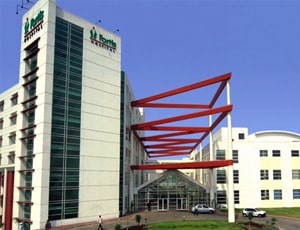
Medicana Konya Hospital is renowned in the medical community for its cutting-edge oncology division, offering advanced technologies and achieving high success rates in cancer treatment. People from around the world are drawn to Medicana Konya for its modern oncology techniques. Diagnostic tools such as Multi-Slice CT, PET-CT, MRI, biopsy, and ultrasound are available. Treatment approaches may include chemotherapy, radiation therapy, surgery, and immunotherapy, tailored to each patient's needs.
The doctors thoroughly examine patient reports to create customized treatment plans. Patients have the option to choose between minimally invasive and laparoscopic procedures. Minimally invasive surgery is ideal for small tumors, while longer segment tumors require the removal of some healthy tissue along with the tumor. The International Patient Center offers diagnostic and treatment services to patients from diverse countries. Fluent in English, Arabic, and Russian, the center prioritizes effective communication and personalized care for international patients.


The oncology unit at Acibadem Fulya Hospital is equipped to give patients with colorectal cancer excellent and precise care. With 124 inpatient treatment units, 7 operating rooms, and 16 intensive care units spread across a 22,000 m2 indoor area, the hospital offers a comprehensive healthcare environment. The oncology unit at the hospital utilizes advanced infrastructure and a skilled team of specialists to find a detailed approach to diagnosing and treating colorectal cancer.
Acibadem Fulya Hospital has many diagnostic tests available to identify the stage of colorectal cancer. Once the doctors identify the stage, they create a personalized treatment plan considering other factors too like the patient’s age, medical history, etc. The diagnostic tests include Multi-Slice CT, PET-CT, MRI, biopsy, ultrasound imaging tests, colonoscopy, fecal occult test, and barium enema examination. The treatment plans offered by the hospital include chemotherapy, targeted therapy, radiotherapy, and surgery. For smaller tumors such as polyps, minimally invasive surgery is the preferred method, whereas, for tumors that affect longer sections of the colon, surgical removal of the tumor along with a small portion of healthy tissue is performed. Dr. Gülhan İpek Deni̇z is a known oncologist affiliated with Acibadem Fulya Hospital.


The large intestine is made up of different parts namely the ascending colon, transverse colon, descending colon, sigmoid colon, and rectum that ends in the anal canal. The colon and rectum are the last part of the large intestine. The main role of the large intestine is to help in digestion by converting the liquid stools into solid feces along with other important functions like reabsorption. Colorectal cancers are when there is an abnormal growth of cells or a collection of cell mass in the organ. These cancers have unique behavior and response to different kinds of cancer treatments, especially if it begins in the rectum.
Different treatment modalities (surgery, chemotherapy, radiation, or others) must be used in various combinations, either concurrently or sequentially, depending on the stage of the disease and the individual patient factors to arrive at an appropriate treatment plan for each patient's colorectal cancer. Diagnostic specialists (radiologists, pathologists, molecular biologists, nuclear medicine specialists) and surgical, medical, and radiation oncologists engage in detailed discussions to figure out the best treatment plan for the patients. The team of oncologists at Apollo Hospital uses this Multi-disciplinary team approach to ensure that the patient's treatment is following the best practices in the world, is evidence-based, but most importantly, is tailored to each patient and his condition. Furthermore, the Multi-Disciplinary team at Apollo Hospital continuously monitors the response to treatment and often helps in the effective management of cancer in the recovery phase.
Best doctors for Colorectal Cancer ( Colon Cancer ) Treatment at Apollo Hospital:

The ascending colon, transverse colon, descending colon, sigmoid colon, and rectum, which terminates in the anal canal, are the several sections that make up the large intestine. The large intestine ends with the colon and rectum and its primary job is to aid in digesting by turning liquid stools into solid feces in addition to performing other critical tasks like reabsorption. When there is an abnormal cell growth or mass of cells in the organ, it is called colorectal cancer. These malignancies behave differently than other cancers and react uniquely to various cancer treatments, especially if they start in the rectum.
Different treatment modalities (surgery, chemotherapy, radiation, or others) are used by the doctors at Apollo Multispeciality Hospital in various combinations, either concurrently or sequentially, depending on the stage of the disease and the unique patient factors. The surgical, medical, and radiation oncologists consult with diagnostic professionals (radiologists, pathologists, molecular biologists, and nuclear medicine specialists) and then come up with an appropriate treatment plan for the patient's colorectal cancer. The team of oncologists at Apollo Gleneagles Hospital uses this Multi-disciplinary team approach to ensure that the patient's treatment is following the best practices in the world, is evidence-based, but most importantly, is tailored to each patient and his condition. Furthermore, the Multi-Disciplinary team at Apollo Hospital continuously monitors the response to treatment and often helps in the effective management of cancer in the recovery phase.
Best doctors for Colorectal Cancer ( Colon Cancer ) Treatment at Apollo Multispecialty Hospitals:
Ask your healthcare adviser for the best multiple options and choose the one that meets your expectations

| Speciality | Oncology |
| Procedure | Colorectal Cancer ( Colon Cancer ) Treatment |
| Success Rate | Varies as per stage, grade, type and location of cancer |
| Recovery Time | Few weeks to several months |
| Treatment Time | several hours |
| Chances of Recurrence | Varies as per stage, grade, type and location of cancer |
Colorectal cancer treatment includes a combination of surgery, radiation therapy, chemotherapy, targeted therapy, and immunotherapy to eliminate cancerous growths in the colon or rectum. The specific approach depends on factors such as the stage of cancer, tumor location, and individual patient factors.
Colorectal cancer treatment is primarily aimed at addressing colorectal tumors, including adenocarcinoma, which is the most common type. Other conditions that can be treated through colorectal cancer treatment include rectal cancer, colon polyps, and certain types of hereditary colorectal cancer syndromes.
The recovery process after colorectal cancer treatment varies depending on the individual and the treatment received. Following surgery, there is a healing period, and patients may need to make temporary or permanent lifestyle modifications related to diet and bowel function. Chemotherapy and radiation therapy may have side effects that require supportive care. Regular follow-up visits are important for long-term recovery and to detect any potential recurrence or new developments in the colorectal area.
| Doctor Name | Cost | Book Appointment |
|---|---|---|
| Dr. Ali Al Ghrebawi | 173 USD | Book Now |
| Dr. Gilbert Ayoub | 173 USD | Book Now |
| Dr. Arun Goel | 20 USD | Book Now |
| Dr. Shivam Vatsal Agarwal | 23 USD | Book Now |
| Dr. Anil Thakwani | 23 USD | Book Now |

Colon cancer, or colorectal cancer, typically begins silently, with symptoms that can be easily overlooked or diagnosed as something less serious. However, being present with your body and noting early warning signs can give you time to get diagnosed and treated.