Browse verified doctors or let our care team help you find the doctor best suited to your condition, treatment goals, and budget.
The Acibadem International Hospital's oncology center is well-equipped to treat colorectal cancer. A multidisciplinary team of surgeons, radiologists, and gastroenterologists collaborate to develop the best treatment plan for the patients. Acibadem International Hospital has 112 beds spread over a 19, 000 m2 area, with 16 observation beds and 26 intensive care beds. The Oncology Unit is supported by cutting-edge infrastructure and staffed by highly skilled specialists.
Expert surgeons perform surgeries using robotic and minimally invasive laparoscopic techniques, ensuring that patients receive effective care with less invasive procedures and faster recovery times. Radiation oncology, chemotherapy, and surgical oncology are used in combination or separately to help patients recover. Colorectal cancer diagnostic tests available at the hospital include colonoscopy, biopsy, tumor biomarker testing, blood tests, computed tomography (CT or CAT) scan, magnetic resonance imaging (MRI), ultrasound, and chest x-ray. Prof. Güngör Boztaş, and Assoc. Prof. Emi̇ne ŞATIR are the gastroenterologists at the hospital.
Delhi, India
Vejthani Hospital is one of the best private hospitals in Thailand accredited by JCI, offering care of international standards. The hospital is known for excellent scores in Global Healthcare Accreditation (GHA). Medical travelers prefer Vejthani for their treatment as it offers cutting-edge medical technologies, internationally trained and certified doctors, world-class standards of care, and translators who are fluent in over 20 languages. The hospital serves over 300,000 patients from over 100 countries annually. There are 200 inpatient beds in the hospital.
The diagnostic techniques available for the detection of colorectal cancer include colonoscopy, blood tests, kidney function tests, and liver function tests. The experts may also order a Carcinoembryonic antigen (CEA) test to detect colon cancers. For staging and accurate diagnosis, imaging tests are ordered including CT of the abdomen, pelvis, and chest, ultrasound, etc. After identifying the location and stage of cancer, doctors create a treatment plan for the patients. Various surgical methods available include removing polyps (polypectomy) during a colonoscopy, endoscopic mucosal resection, and minimally invasive surgery. For advanced cancers, surgeries like partial colectomy, ostomy, and lymph node removal might be suggested. Dr. Nitikun Booning, Dr. Narain Santikulanont, and Dr. Waranyu Jiramarit are some of the colorectal cancer experts at the hospital.
Best doctors for Colorectal Cancer ( Colon Cancer ) Treatment at Vejthani Hospital:
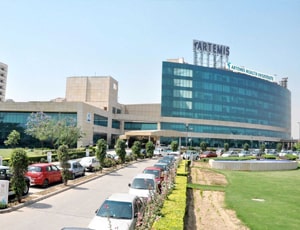
The cancer care center at Artemis Hospital in Gurugram has a staff of skilled specialists, board-certified oncologists, and onco surgeons as well as colorectal experts. Artemis Hospital has a high success rate in treating colorectal cancer with a special team to look after complicated cases. State-of-the-art technologies and modern medical equipment help in delivering highly successful treatments. The specialist takes special interest in the personal history, medical records, and comorbidities of the patients to come up with the approach of treatment that will yield the best results.
The doors of Artemis Hospital are open for both national and international patients looking for colorectal cancer treatment. The institute offers various treatment modalities including up-to-date technologies like CT Digital X-Ray/Fluoroscopy, Interventional Radiology, MRI-3T, and 3D-4D Ultrasound/Doppler. In order to conduct clinical research trials, the center is also affiliated with international and national research organizations. Dr. Hari Goyal, Dr. Subodh Chandra Pande, and Dr. Parveen Yadav are part of the oncology care team at Artemis Health Institute.
Best doctors for Colorectal Cancer ( Colon Cancer ) Treatment at Artemis Health Institute :
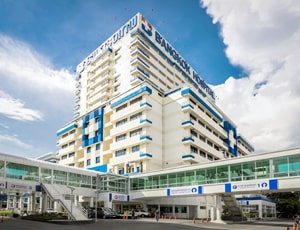
Bangpakok 9 International Hospital, a distinguished member of the BPK Hospital Group, is renowned as one of Thailand's premier private healthcare facilities. With its commitment to delivering exceptional medical services, the hospital caters to the needs of both local Bangpakok residents and international patients. It upholds the highest standards of care, boasting a team of highly skilled medical professionals, cutting-edge technology, and prestigious certifications from JCI (Joint Commission International) and HA (Hospital Accreditation).
For the detection and diagnosis of colorectal cancer, Bangpakok 9 International Hospital offers a range of advanced diagnostic techniques. These include colonoscopies, blood tests, kidney function tests, and liver function tests. To accurately determine the stage and location of cancer, imaging tests such as abdominal, pelvic, and chest CT scans, as well as ultrasounds, are ordered. Based on the comprehensive evaluation, the medical team formulates a personalized treatment plan for each patient. The hospital has various surgical approaches to address colorectal cancer. These options include procedures like polypectomy (removal of polyps) during colonoscopy, endoscopic mucosal resection, and minimally invasive surgeries. In cases of advanced cancer, more extensive surgeries like partial colectomy, ostomy, and lymph node removal may be recommended. Dr. Theeratus Jongboonyanuparp, a distinguished gastroenterologist, is associated with the hospital, offering expertise and specialized care in the field.
Best doctors for Colorectal Cancer ( Colon Cancer ) Treatment at Bangpakok 9 International Hospital:
| Speciality | Oncology |
| Procedure | Colorectal Cancer ( Colon Cancer ) Treatment |
| Success Rate | Varies as per stage, grade, type and location of cancer |
| Recovery Time | Few weeks to several months |
| Treatment Time | several hours |
| Chances of Recurrence | Varies as per stage, grade, type and location of cancer |
Colorectal cancer treatment includes a combination of surgery, radiation therapy, chemotherapy, targeted therapy, and immunotherapy to eliminate cancerous growths in the colon or rectum. The specific approach depends on factors such as the stage of cancer, tumor location, and individual patient factors.
Colorectal cancer treatment is primarily aimed at addressing colorectal tumors, including adenocarcinoma, which is the most common type. Other conditions that can be treated through colorectal cancer treatment include rectal cancer, colon polyps, and certain types of hereditary colorectal cancer syndromes.
The recovery process after colorectal cancer treatment varies depending on the individual and the treatment received. Following surgery, there is a healing period, and patients may need to make temporary or permanent lifestyle modifications related to diet and bowel function. Chemotherapy and radiation therapy may have side effects that require supportive care. Regular follow-up visits are important for long-term recovery and to detect any potential recurrence or new developments in the colorectal area.

Colon cancer, or colorectal cancer, typically begins silently, with symptoms that can be easily overlooked or diagnosed as something less serious. However, being present with your body and noting early warning signs can give you time to get diagnosed and treated.