Your Notifications
All done, no notifications

Nephrectomy Cost in Delhi

Starts from USD 5500

Disclaimer: Cost range is subject to change based on clinical evaluation.

Affordable World-class Treatment - Accredited Hospitals - Free Treatment Plan in 24 Hrs

3
Days in Hospital
2-4 hrs
Procedure Time
90 - 98%
Success Rate
Nephrectomy
JCI/ISO 100,000+ Patients 24X7 Coordinator Visa & Travel handled
Your all-in-one medical travel platform for treatment, recovery & care.

Get Your Personalised Treatment Plan in Just 24 Hours.

Share your details to receive a personalised treatment plan, estimated costs, hospital recommendations, and expert guidance, “completely free.”

Required | alphabets and spaces
Required | A valid, working email address
Required | A valid contact

Your information is protected with HIPAA-compliant security standards. We only share your details with hospitals after your consent.

Estimated Treatment Cost
Starts from USD 5500
All-inclusive • Hospital + Medications + Recovery Assistance + Dedicated Care Coordinator

International Quality. Affordable Care.
The average cost of Nephrectomy in Delhi starts from USD 5500.

Cost of Nephrectomy in Major Cities of India

CityCost (USD)
Bangalore Starting $6k Explore More
Chennai Starting $5k Explore More
Delhi Starting $5.5k Explore More
Faridabad Starting $5k Explore More
Ghaziabad Starting $6k Explore More
Gurgaon Starting $5.5k Explore More
Gurugram Starting $5k Explore More
Kochi Starting $5k Explore More
Mumbai Starting $6k Explore More
Noida Starting $6k Explore More
Panjim Starting $6k Explore More
Dr. Vihan Gautam
Author

BPT, MS in Healthcare Mgmt

4 Years of Experience

Dr. Vihan Gautam is a distinguished Rehabilitation Specialist and Healthcare Management Professional, holding a Bachelor of Physiotherapy (BPT) from Rajiv Gandhi University of Health Sciences and a Master of Science in Healthcare Management (MSc) from the prestigious University of London, United Kingdom. With specialized clinical experience and his advanced medical knowledge in neuro-rehabilitation, musculoskeletal disorders, and evidence-based physiotherapy practices, enables him to develop patient-centered rehabilitation protocols and AI-driven care models that deliver measurable functional recovery outcomes. His diverse contributions across international rehabilitation programs, multidisciplinary care, and AI-driven healthcare initiatives uniquely position him as an emerging leader in neuro-rehabilitative care globally.
View More
Dr. Ashish George
Reviewer

Gastroenterologist

18 Years of Experience

Last Reviewed - June 2026

Dr. Ashish George is one of the leading names in HPB surgery & liver transplantation and has about 18+ years of experience.He is a principal consultant & unit head of liver transplant at Fortis Shalimar Bagh.
View More

Need Help Choosing the Right Treatment? Talk to a Medical Advisor

Our dedicated Medical Patient Advisors are here to answer your questions, help you compare treatment options, estimate costs, and guide you through every step of your healthcare journey.

15 min
Average response time

Serving Patients Worldwide in Multiple Languages.

A nephrectomy is a surgical procedure to remove all or part of a kidney, typically performed to treat kidney cancer or to remove a benign tumor. A urologic surgeon performs this surgery.

There are different approaches to accessing the kidney. One method involves making a single large incision in the abdomen or side, known as an open nephrectomy. More commonly, the surgery is done through several small incisions in the abdomen, referred to as a laparoscopic nephrectomy. Sometimes, a robotic system is used for laparoscopic procedures. In robotic surgery, the surgeon operates surgical tools and a camera attached to robotic arms from a computer console near the operating table.

Types

There are two main types of Nephrectomy.

1)Radical nephrectomy: It removes the entire kidney.

2)Partial nephrectomy: It removes only a part of a kidney and leaves healthy tissue in place.

Why It's Done

A nephrectomy is most commonly performed to remove a tumor from the kidney, whether cancerous or benign. It can also be used to treat a diseased or damaged kidney. In addition, a nephrectomy is performed to remove a healthy kidney from a donor for transplantation into someone who needs a functioning kidney.

The most frequent cause of a nephrectomy is the removal of a kidney tumor. These tumors are often cancerous, but sometimes they're not. In other cases, nephrectomy can help treat a diseased or damaged kidney. Additionally, it is used to take a healthy kidney from an organ donor so that it can be transplanted into a recipient who needs a functional kidney.

Consult a physician if you get persistent headaches, particularly when standing, or if you experience infection symptoms like fever or redness at the puncture site. Watch for numbness, tingling, or weakness in your legs. After the procedure, get help if you have problems controlling your bowels or urinating.

To prevent surgical complications, your physician will evaluate your health, review your medications, and look for allergies before a nephrectomy. To lower the chance of aspiration and associated complications, you will be asked to fast the night before surgery. Your doctor will talk about the best surgical strategy for your situation and clarify which kidney will be removed.

Nephrectomy can be done with robotic assistance, open surgery, or laparoscopic surgery. While laparoscopic and robotic procedures use smaller incisions and specialized instruments for a less invasive approach, open surgery requires a wider incision. The patient's condition and the case's intricacy determine the approach that is used.

Your surgeon will give you a better idea of what to expect, but a nephrectomy typically takes 2-4 hours to complete, though it may take longer depending on the condition of your body.

  • Infection
  • Injury to nearby organs
  • Pneumonia after surgery
  • Bleeding
  • In very rare case kidney failure

  • Treating kidney cancer by removing a damaged or cancerous kidney.
  • Relieve symptoms such as pain, bleeding, or high blood pressure caused by a diseased kidney.

You will need to stay in the hospital for a few days following a nephrectomy in order to receive monitoring and pain relief. Physical activity is limited for several weeks to allow healing. Follow-up treatment guarantees a full recovery and evaluates the remaining kidney's function.

Nephrectomy has a high success rate, usually between 90 and 95 percent, depending on the patient's general health and the cause for the procedure.

90–95%

Successful kidney removal and recovery

3–5 days

Typical hospital stay

4–6 weeks

Return to normal activities
Explore Hospitals ( 12 )

Delhi, India

4.6 - 18954 reviews · 650+ Beds · 301+ Procedures
JCI NABH
Starting
USD 6000
Chat with a Medical Advisor

Delhi, India

4.7 - 15291 reviews · 710+ Beds · 304+ Procedures
JCI
Chat with a Medical Advisor

Delhi, India

4.6 - 26166 reviews · 325+ Beds · 242+ Procedures
NABL NABH
Starting
USD 5500
Chat with a Medical Advisor

Delhi, India

4.7 - 11849 reviews · 250+ Beds · 215+ Procedures
NABH
Chat with a Medical Advisor

Delhi, India

4.2 - 9190 reviews · 539+ Beds · 304+ Procedures
JCI NABH
Starting
USD 6000
Chat with a Medical Advisor

Delhi, India

4.4 - 3551 reviews · 200+ Beds · 180+ Procedures
NABH NABL
Chat with a Medical Advisor

Delhi, India

4.6 - 18361 reviews · 380+ Beds · 302+ Procedures
NABH
Starting
USD 6000
Chat with a Medical Advisor

Delhi, India

3.7 - 1819 reviews · 495+ Beds · 244+ Procedures
NABH
Chat with a Medical Advisor

Delhi, India

4.7 - 28685 reviews · 230+ Beds · 248+ Procedures
NABH ISO
Starting
USD 5500
Chat with a Medical Advisor

Delhi, India

4.2 - 2465 reviews · 201+ Beds · 166+ Procedures
NABH NABL
Chat with a Medical Advisor

Get Your Nephrectomy
Plan in 24 hrs.

Our experienced Medical Patient Advisors have supported 100,000+ patients across 120+ countries with personalised treatment plans, hospital recommendations, cost estimates, and travel assistance, all free.

HIPAA-Compliant Data SecurityShared Only with Your Consent

✓ Free Consultation ✓ No Obligation ✓ Personalized Treatment Plan ✓ Response Within 24 Hours

Required | alphabets and spaces
Required | A valid, working email address
Required | A valid contact

Your medical info is kept HIPAA-style confidential. We never share with hospitals without your consent.

Process Involved for Nephrectomy in Delhi

  • Consult: See a urologist or nephrologist to evaluate kidney function and decide if a nephrectomy is warranted.
  • Pre-surgical evaluation: Review medical history, take blood tests, and do imaging studies to assess kidney function and the degree of damage or disease.
  • Discussion of Treatment: Assess the surgical considerations (partial or radical nephrectomy), associated risks, and benefits, and decide whether it is possible to preserve the kidney.
  • Surgical Planning: Explain the surgical technique (laparoscopic, robotic, or open procedure), anesthesia regimen, and postoperative care.
  • Post-surgical follow-up: Periodic clinic visits to check kidney function, address any complications, and evaluate recovery.
  • Kidney Cancer.
  • Chronic Kidney Disease.
  • Kidney Trauma or Injury.
  • Polycystic Kidney Disease.
  • Kidney Transplant Donation.
  • Severe renal disease or illness for which conservative therapy is not effective.
  • Diseases such as renal injury, chronic kidney disease, or kidney cancer.
  • Kidney that is severely impaired or not functioning and poses health risks.
  • Evidence of the necessity of a nephrectomy is seen through an MRI, CT scan, or other imaging study.
  • Surgical removal of the injured or cancerous kidney enhances overall well-being.
  • Enhanced kidney function in instances of trauma or kidney cancer.
  • Living donors offer the possibility of transplanting a needy recipient.
  • Minimally invasive technique in laparoscopic or robotic nephrectomy provides quicker recovery.
  • Urologist
  • Nephrologist
  • Medical Oncologist
  • Fill out the inquiry form: Fill out the form to provide us with the relevant information about your condition.
  • Consult with Our Healthcare Expert: One of our qualified specialists will contact you for a consultation.
  • Receive a Detailed Treatment Plan: After examining your situation, we will provide you with a detailed treatment plan that includes expert views and cost breakdowns for various choices.
  • Choose your preferred option: Choose the treatment option that suits you the best.
Jenny Wilson
Your Dedicated Medical Patient Advisor
Treatment planning • Hospital coordination • Multilingual support • Response within 15 minutes.
Our Services to Better your Experience

Opinion & Option

We submit the most accurate opinion and options from one or more countries for your review

Consult Privately

Consult with a certified specialist privately on our telemedicine platform even before you decide to travel

Logistics

We handle flights, visas, transfers, and accommodation—so you can focus on your health.

Recovery

Our In-house rehabilitation service packages to better your recovery and treatment outcome

Patient Stories

Mrs. Saadatu Muhammad
Nigerian Patient Underwent Hernia Repair Surgery in Dubai

Nigerian national Mrs. Saadatu Muhammad, 48, suffered from severe abdominal pain that affected her quality of life.

Abdullah's
Abdullah
Abdullah’s Journey to Renewed Confidence with Advanced Cell Therapy in Thailand

Abdullah's story highlights how modern regenerative treatments can offer new hope for men dealing with erectile dysfunction. With expert medical…

Conditions treated by Nephrectomy

Frequently Asked Questions

The cost of Nephrectomy in Delhi typically ranges between starts from USD 5500. The final cost depends on the type of nephrectomy (partial, radical, or laparoscopic/robotic), the patient's condition, the hospital, the surgeon's expertise, and whether diagnostic tests, hospitalization, medications, and follow-up care are included. A personalized cost estimate is provided after reviewing the patient's medical records.

Choose an experienced urologist or urologic surgeon specializing in kidney surgery and minimally invasive techniques. Reviewing the surgeon's qualifications, experience, patient outcomes, and success rates can help you make an informed decision. Seeking a second opinion is also recommended.

Nephrectomy has an overall success rate of approximately 90 - 98%, depending on the underlying condition, surgical approach, the patient's overall health, and the experience of the surgical team.

Hospitals in Delhi use advanced diagnostic imaging, laparoscopic surgery, robot-assisted surgery, high-definition surgical systems, and enhanced recovery protocols to improve surgical precision and patient outcomes.

Nephrectomy is generally a safe procedure, but potential risks include bleeding, infection, blood clots, injury to nearby organs, anesthesia-related complications, urine leakage, reduced kidney function, and, rarely, the need for additional surgery.

Before travelling, gather your medical records, imaging scans (CT, MRI, or ultrasound), laboratory reports, passport, and complete an online consultation if available. Confirm your treatment schedule, accommodation, and visa requirements, and follow your surgeon's preoperative instructions.

Yes, MediGence provides online consultations for international patients before travel. Specialists review your medical history and imaging reports to determine the most appropriate surgical approach. This also helps you receive an estimated cost and travel guidance.

Patients should bring a valid passport, visa, medical records, imaging scans, laboratory reports, pathology reports (if available), previous treatment records, and a list of current medications.

Most international patients stay in Delhi for about 2 to 3 weeks, depending on the type of surgery, hospital stay, recovery progress, and follow-up evaluations.

Recovery after Nephrectomy generally takes 4 to 8 weeks, depending on whether the procedure was performed laparoscopically, robotically, or through open surgery. Most patients gradually return to normal activities as advised by their surgeon.

  • Submit your medical records through the MediGence platform.
  • Receive a personalized treatment plan and estimated cost.
  • Compare leading hospitals and urologists.
  • Get assistance with appointments, medical visas, travel, and accommodation.
  • Receive post-treatment follow-up support after returning home.
  • Delhi offers experienced urologic surgeons, advanced minimally invasive surgical techniques, internationally accredited hospitals, and comprehensive kidney care. Patients also benefit from high-quality treatment at competitive costs.

    FAQ's Related to India

    Delhi, the capital city of India is one of the top places for providing cost-effective yet quality treatments to patients. The city boasts a pool of highly skilled medical experts who have received training abroad. The hospitals in Delhi have received international accreditation and are well-equipped. They have several state-of-the-art equipments that enables doctors to provide the best patient care. With more than 500 hospitals, Delhi is at the forefront of catering to the healthcare needs of patients from not only India but from other parts of the world as well. The availability of doctors who are fluent in English enables patients traveling from abroad to avail treatment conveniently in Delhi. The hospitals in Delhi have the necessary infrastructure to enable doctors to perform robotic surgeries, minimally invasive surgery, cyberknife surgery, and advanced treatments for various health problems.

    Hospitals in Delhi hold several accreditations such as JCI, NABH, and NABL. Some of the top hospitals in Delhi are:

    • Indraprastha Apollo Hospital: The hospital has served patients from more than 120 countries and is accredited by JCI and NABH.
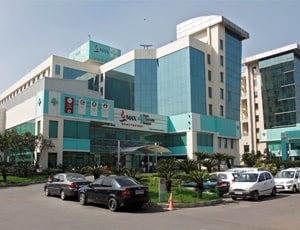
    • Max SuperSpecialty Hospital, Shalimar Bagh: Equipped with 280 beds, the hospital provides medical services in various disciplines including cardiology, neurology, orthopedics, and cancer. It is a NABH and NABL-accredited hospital.
    • Fortis Hospital, Greater Kailash: The hospital has performed more than 12,000 gynecological procedures and has treated over 7000 neonates in the NICU.

    Delhi has many skilled doctors who have completed their medical education and training at some of the best hospitals in India and overseas. Some of the top doctors in Delhi are

    1. Dr. Sanjay Gupta: With more than 33 years of experience, Dr. Sanjay is an acclaimed cardiac surgeon practicing at Fortis Flt Lt Rajan Dhall Hospital, New Delhi
    2. Dr. Pankaj Kumar Pande: He has more than 23 years of experience as a surgical oncologist and currently works at the Fortis Hospital, Shalimar Bagh.
    3. Dr. Meena Lanjiwar: She is currently a neurologist working at the Neuraxis care and research center and has more than 8 years of experience in her field of expertise.
    4. Dr. Dhananjay Gupta: He is an acclaimed orthopedic surgeon with more than 20 years of experience. Currently, he practices at Fortis Flt Lt Rajan Dhall Hospital, New Delhi.

    Delhi is connected to almost all the major cities around the world through international flights. MediGence can assist in planning your travel to Delhi for your treatment. We can help you with accommodation, visa, airport transfers, and priority appointments.

    Not Sure About Your Treatment Plan? Get a Second Opinion

    Get your medical reports reviewed by experienced doctors to help you make a confident treatment decision, all online within 48 hours.

    Upload Your Reports
    Free second opinion on your CAR-T plan