Affordable World-class Treatment - Accredited Hospitals - Free Treatment Plan in 24 Hrs

Share your details to receive a personalised treatment plan, estimated costs, hospital recommendations, and expert guidance, “completely free.”
Your information is protected with HIPAA-compliant security standards. We only share your details with hospitals after your consent.
The average cost of Nephrectomy in Mumbai approximately ranges between USD 2200 - USD 4250
| City | Minimum Cost (USD) | Minimum Cost (INR) | Maximum Cost (USD) | Maximum Cost (INR) |
|---|---|---|---|---|
| Bangalore | USD 2200 | 188408 | USD 4250 | 363970 |
| Chennai | USD 2200 | 188408 | USD 4250 | 363970 |
| Delhi | USD 2200 | 188408 | USD 4250 | 363970 |
| Faridabad | USD 2200 | 188408 | USD 4250 | 363970 |
| Ghaziabad | USD 2200 | 188408 | USD 4250 | 363970 |
| Gurgaon | USD 2200 | 188408 | USD 4250 | 363970 |
| Gurugram | USD 2200 | 188408 | USD 4250 | 363970 |
| Hyderabad | USD 2200 | 188408 | USD 4250 | 363970 |
| Kochi | USD 2200 | 188408 | USD 4250 | 363970 |
| Kolkata | USD 2200 | 188408 | USD 4250 | 363970 |
| Mumbai | USD 2200 | 188408 | USD 4250 | 363970 |
| Noida | USD 2200 | 188408 | USD 4250 | 363970 |
| Panjim | USD 1980 | 169567 | USD 3825 | 327573 |
| City | Cost (USD) | |
|---|---|---|
| Bangalore | $2,200 – $4,250 | Explore More |
| Chennai | $2,200 – $4,250 | Explore More |
| Delhi | $2,200 – $4,250 | Explore More |
| Faridabad | $2,200 – $4,250 | Explore More |
| Ghaziabad | $2,200 – $4,250 | Explore More |
| Gurgaon | $2,200 – $4,250 | Explore More |
| Gurugram | $2,200 – $4,250 | Explore More |
| Hyderabad | $2,200 – $4,250 | Explore More |
| Kochi | $2,200 – $4,250 | Explore More |
| Kolkata | $2,200 – $4,250 | Explore More |
| Mumbai | $2,200 – $4,250 | Explore More |
| Noida | $2,200 – $4,250 | Explore More |
| Panjim | $1,980 – $3,825 | Explore More |

Alvina Hasan is a dedicated medical researcher and scientific writer with a strong foundation in pharmaceutical sciences. She holds a B.Pharm from Jamia Hamdard University and an M.Pharm in Quality Assurance from DIPSAR University.
With deep medical expertise and a strong interest in healthcare communication, she focuses on transforming complex clinical and scientific information into clear, engaging, and easy-to-understand narratives. She develops insightful healthcare articles and research-driven content designed to support both medical professionals and patients, helping bridge the gap between advanced medical knowledge and practical understanding.
Readers can explore her published research and articles here:

Our dedicated Medical Patient Advisors are here to answer your questions, help you compare treatment options, estimate costs, and guide you through every step of your healthcare journey.
A nephrectomy is a surgical procedure to remove all or part of a kidney, typically performed to treat kidney cancer or to remove a benign tumor. A urologic surgeon performs this surgery.
There are different approaches to accessing the kidney. One method involves making a single large incision in the abdomen or side, known as an open nephrectomy. More commonly, the surgery is done through several small incisions in the abdomen, referred to as a laparoscopic nephrectomy. Sometimes, a robotic system is used for laparoscopic procedures. In robotic surgery, the surgeon operates surgical tools and a camera attached to robotic arms from a computer console near the operating table.
There are two main types of Nephrectomy.
1)Radical nephrectomy: It removes the entire kidney.
2)Partial nephrectomy: It removes only a part of a kidney and leaves healthy tissue in place.
Why It's Done
A nephrectomy is most commonly performed to remove a tumor from the kidney, whether cancerous or benign. It can also be used to treat a diseased or damaged kidney. In addition, a nephrectomy is performed to remove a healthy kidney from a donor for transplantation into someone who needs a functioning kidney.
The most frequent cause of a nephrectomy is the removal of a kidney tumor. These tumors are often cancerous, but sometimes they're not. In other cases, nephrectomy can help treat a diseased or damaged kidney. Additionally, it is used to take a healthy kidney from an organ donor so that it can be transplanted into a recipient who needs a functional kidney.
Consult a physician if you get persistent headaches, particularly when standing, or if you experience infection symptoms like fever or redness at the puncture site. Watch for numbness, tingling, or weakness in your legs. After the procedure, get help if you have problems controlling your bowels or urinating.
To prevent surgical complications, your physician will evaluate your health, review your medications, and look for allergies before a nephrectomy. To lower the chance of aspiration and associated complications, you will be asked to fast the night before surgery. Your doctor will talk about the best surgical strategy for your situation and clarify which kidney will be removed.
Nephrectomy can be done with robotic assistance, open surgery, or laparoscopic surgery. While laparoscopic and robotic procedures use smaller incisions and specialized instruments for a less invasive approach, open surgery requires a wider incision. The patient's condition and the case's intricacy determine the approach that is used.
Your surgeon will give you a better idea of what to expect, but a nephrectomy typically takes 2-4 hours to complete, though it may take longer depending on the condition of your body.
You will need to stay in the hospital for a few days following a nephrectomy in order to receive monitoring and pain relief. Physical activity is limited for several weeks to allow healing. Follow-up treatment guarantees a full recovery and evaluates the remaining kidney's function.
Nephrectomy has a high success rate, usually between 90 and 95 percent, depending on the patient's general health and the cause for the procedure.
90–95%
Successful kidney removal and recovery3–5 days
Typical hospital stay4–6 weeks
Return to normal activitiesOur experienced Medical Patient Advisors have supported 100,000+ patients across 120+ countries with personalised treatment plans, hospital recommendations, cost estimates, and travel assistance, all free.
✓ Free Consultation ✓ No Obligation ✓ Personalized Treatment Plan ✓ Response Within 24 Hours
Your medical info is kept HIPAA-style confidential. We never share with hospitals without your consent.

Opinion & Option
We submit the most accurate opinion and options from one or more countries for your review
Consult Privately
Consult with a certified specialist privately on our telemedicine platform even before you decide to travel
Logistics
We handle flights, visas, transfers, and accommodation—so you can focus on your health.
Recovery
Our In-house rehabilitation service packages to better your recovery and treatment outcome

Nigerian national Mrs. Saadatu Muhammad, 48, suffered from severe abdominal pain that affected her quality of life.

Abdullah's story highlights how modern regenerative treatments can offer new hope for men dealing with erectile dysfunction. With expert medical…
The minimum cost of Nephrectomy in Mumbai is about $5500. There many NABH, JCI certified hospitals in Mumbai that offer Nephrectomy.
The cost of Nephrectomy in Mumbai may differ from one medical facility to the other. The cost quoted by some of the best hospitals for Nephrectomy in Mumbai generally covers the pre-surgery investigations of the patient. The Nephrectomy package in Mumbai includes the fees of the surgeon, hospitalization and anesthesia as well. There are many things that may increase the cost of Nephrectomy in Mumbai, including prolonged hospital stay and complications after the procedure.
There are many hospitals that perform Nephrectomy in Mumbai. The following are some of the most renowned hospitals for Nephrectomy in Mumbai:
After Nephrectomy in Mumbai, the patient is supposed to stay in guest house for another 18 days. This is important to ensure that the surgery was successful. During this time, control and follow-up tests take place to check for medical fitness.
Mumbai is undoubtedly one of the best cities for Nephrectomy in the world. It offers the best medical expertise and good patient experience at an affordable cost. However, some of the other popular destinations for Nephrectomy include the following:
Apart from the Nephrectomy cost, there are a few other daily charges that the patient may have to pay. These are the charges for daily meals and accommodation outside the hospital. The per day cost in this case may range from 25 USD.
The patient is supposed to stay at the hospital for about 3 Days after Nephrectomy surgery for monitoring and care. During the recovery, the patient is carefully monitored and control tests are performed to see that everything is okay. If required, physiotherapy sessions are also planned during recovery in hospital.
There are around 4 Hospitals hospitals in Mumbai that offer Nephrectomy to international patients. These hospitals have the required expertise as well as infrastructure available to handly patients who need Nephrectomy. Also, these hospitals follow the necessary guidelines as required by the medical associations for the treatment of Nephrectomy patients.
Some of the most sought after doctors for Nephrectomy in Mumbai are:
Some of the top hospitals in Mumbai for Nephrectomy and their associated prices:
| Hospital | Minimum Cost | Maximum Cost |
|---|---|---|
| Nanavati Super Speciality Hospital, Mumbai | USD 6040 | USD 6070 |
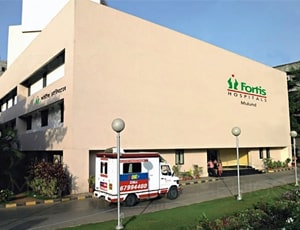
| Fortis Hiranandani Hospital, Mumbai | USD 5920 | USD 6100 |
Mumbai has one of the best healthcare infrastructures in India. Annually, more than 15 million people receive quality treatment from the dispensaries and hospitals located in Mumbai. The total capacity of beds in these hospitals is over 12,000. Many patients from around the world travel to Mumbai every year to receive top-notch care for various illnesses. Due to the availability of skilled doctors in Mumbai, one can avail the latest yet economical treatments without any compromise on the quaity of care delivered. Hospitals in the city provide various services in different specialties ranging from orthopedics to oncosurgery. Some of the other specialties include bariatric and metabolic surgery, hematology, cardiology, neurology, ophthalmology and cosmetic surgery. The hospitals are well-furnished with the most advanced medical technologies such as sigmoidoscopy, 3 Tesla MRI, Sensation 10 CT scanner and EEG, The medical staff in these hospitals are also well-versed in languages like English so that international patients can get treatments without any inconvenience.
Hospitals in Mumbai have set high standards for delivering patient care in the country. Due to their outstanding efforts, most hospitals have received accreditations from JCI, NABH and NABL. Some of the top hospitals in Mumbai are:
Doctors in Mumbai are associtaed with the Maharashtra Medical Council and are also members of reputed international associations.Some of the top doctors in Mumbai are:
She has more than 24 years of experience as an infertility specialist. At present, she is associated with the Nova Fertility Center.
Mumbai being an important commercial and healthcare hub of the world has excellent connectivity with some of the major cities across the globe. Thus, you can travel to Mumbai via international flights. Traveling to Mumbai for your treatment can be made easier with us as we can help you with accommodation, visa and other aspects of your medical travel.
Mumbai has one of the best healthcare infrastructures in India. Annually, more than 15 million people receive quality treatment from the dispensaries and hospitals located in Mumbai. The total capacity of beds in these hospitals is over 12,000. Many patients from around the world travel to Mumbai every year to receive top-notch care for various illnesses. Due to the availability of skilled doctors in Mumbai, one can avail the latest yet economical treatments without any compromise on the quaity of care delivered. Hospitals in the city provide various services in different specialties ranging from orthopedics to oncosurgery. Some of the other specialties include bariatric and metabolic surgery, hematology, cardiology, neurology, ophthalmology and cosmetic surgery. The hospitals are well-furnished with the most advanced medical technologies such as sigmoidoscopy, 3 Tesla MRI, Sensation 10 CT scanner and EEG, The medical staff in these hospitals are also well-versed in languages like English so that international patients can get treatments without any inconvenience.
Hospitals in Mumbai have set high standards for delivering patient care in the country. Due to their outstanding efforts, most hospitals have received accreditations from JCI, NABH and NABL. Some of the top hospitals in Mumbai are:
Doctors in Mumbai are associtaed with the Maharashtra Medical Council and are also members of reputed international associations.Some of the top doctors in Mumbai are:
She has more than 24 years of experience as an infertility specialist. At present, she is associated with the Nova Fertility Center.
Mumbai being an important commercial and healthcare hub of the world has excellent connectivity with some of the major cities across the globe. Thus, you can travel to Mumbai via international flights. Traveling to Mumbai for your treatment can be made easier with us as we can help you with accommodation, visa and other aspects of your medical travel.
Have your reports reviewed by independent oncology experts to help you make a confident treatment decision, all online within 48 hours.
Upload Your Reports