Your Notifications
All done, no notifications

Brain Cancer Treatment Cost in Thailand

Costs starts from USD22000 to USD25000
Filters

How Much Does Brain Cancer Treatment Cost in Thailand?

The cost of Brain Cancer Treatment in Thailand typically ranges between USD 22000 - USD 25000. However, this cost can vary depending on several factors, including the type and severity of the condition, treatment techniques chosen, the healthcare facility's location and reputation, the treating professionals' experience and specialization, and the patient's overall health status.

Additionally, factors like the duration of treatment, the need for follow-up care, and the use of advanced technologies or specialized treatments can further influence the overall cost.

Factors Influencing the Cost of Brain Cancer Treatment:

Treatment of brain cancer depends on the type, location, extent of the tumor, and the general health of the patient. Other therapy may involve surgery, radiotherapy, chemotherapy, targeted therapy, and/or immunotherapy which may be used singly or together.

The therapeutic management is very much tailored to the tumor type and stage, as well as the specific situation of the individual client. Such a treatment plan requires cooperation with a neurosurgeon, oncologist, radiologist, and other specialists, and a great amount of time.

Cost of Brain Cancer Treatment in Major Cities of Thailand

CityMinimum Cost (USD)Minimum Cost (THB)Maximum Cost (USD)Maximum Cost (THB)
BangkokUSD 22000719620USD 25000817750

Brain Cancer Treatment Cost : A Global Comparison

CountryMinimum CostMinimum Local CurrencyMaximum CostMaximum Local Currency
IndiaUSD 7500INR 642300USD 12000INR 1027680
IsraelUSD 20000ILS 70800USD 34000ILS 120360
MalaysiaUSD 20000MYR 84800USD 60000MYR 254400
Saudi ArabiaUSD 20000SAR 75000USD 100000SAR 375000
SingaporeUSD 20000SGD 25800USD 100000SGD 129000
South AfricaUSD 10000ZAR 179700USD 50000ZAR 898500
South KoreaUSD 20000KRW 27519600USD 35000KRW 48159300
SpainUSD 30000ESP 4411197USD 100000ESP 14703990
SwitzerlandUSD 50000CHF 41500USD 200000CHF 166000
ThailandUSD 22000THB 719620USD 25000THB 817750
TunisiaUSD 10000TND 29800USD 30000TND 89400
TurkeyUSD 8650TRY 337869USD 29000TRY 1132740
United Arab EmiratesUSD 13000AED 47710USD 28000AED 102760
United KingdomUSD 50000GBP 37000USD 150000GBP 111000

Need Help Planning Your Treatment Abroad?

Your 24/7 AI Health Assistant

The term "brain cancer" describes the abnormal development of brain cells that result in a mass or tumor. It can interfere with normal brain functions such as speech, movement, thoughts, feelings, memory, vision, and hearing. It is a disease of the brain in which abnormal, cancerous cells grow in the brain tissues. Typically, brain cancer is a developed form of a brain tumor. Primary brain cancer or a brain tumor develops from cells within the brain.

However, all brain tumors are not brain cancer. But one thing to note is that even benign tumors can cause serious problems by increasing intracranial pressure or obstructing vascular structures or cerebrospinal fluid flow in the brain.

Different types of cells in the brain such as gliomas, meningiomas, pituitary adenomas, vestibular schwannomas, and primitive neuroectodermal (medulloblastomas) can become cancerous. Gliomas have several subtypes, which include astrocytomas, oligodendrogliomas, ependymomas, and choroid plexus papillomas.

Brain Cancer Causes

The exact brain cancer cause is still unknown. However, its occurrence has been linked to several risk factors, including the following:

  • Exposure to radiation
  • HIV infection
  • Inherited abnormality
  • Smoking
  • Exposure to environmental toxins
  • Exposure to chemical toxins, especially those used in the rubber industry and oil refinery

There are two types of brain cancer, including:

  • Primary brain cancers: Primary brain cancers result when cancer cells develop in the tissues of the brain itself. Primary brain cancer cells may travel short distances within the brain but generally would not travel outside of the brain itself.
  • Secondary brain cancers: Secondary brain cancer is called metastatic brain cancer. It occurs when cancer develops elsewhere in the body and spreads to the brain. Primary cancer tissues can spread via direct extension, or through the lymphatic system or the bloodstream.

Metastatic cancer in the brain is more common than primary brain cancer. They are usually named after the tissue or organ where cancer first develops. Metastatic lung or breast cancer in the brain is the most commonly found brain cancer.

Brain Cancer: Grades

Tumors of the brain are assigned under a grade, depending on how normal or abnormal the cells appear microscopically. Grade measurements will help your doctor plan the most suitable treatment for you.

  • Grade 1: The cells look nearly normal and grow slowly. Long-term survival is likely.
  • Grade 2: In this, the cell looks slightly abnormal and grows slowly. However, the tumor may spread to nearby tissue and can recur later.
  • Grade 3: The malignant tissue has cells that look different from normal cells and these cells are actively growing and have a distinctly abnormal appearance.
  • Grade 4: In this, the cell looks most abnormal and grows and spreads quickly.

Brain cancer treatment involves removing or reducing the tumor burden, easing pressure on the brain, prolonging survival, and improving the quality of life. Depending on the type of cancer, e.g., glioblastoma, meningioma, grade, and location, treatments are meant either to cure the cancer, slow down its progression, or relieve symptoms.

If headaches lasting longer than usual, seizures, changes in vision or hearing, balance problems, changes in personality, or cognitive impairments are experienced, see the doctor immediately. This could be an early manifestation of the occurrence of a brain tumor. Early diagnosis is crucial for appropriate treatment.

Preparation includes neuroimaging (MRI/CT), biopsy if required, baseline neurological assessments, blood tests, and assessments concerning the patient's heart, kidney, and liver functions. Patients may also be asked to discontinue certain pre-operatively while initiating corticosteroids or anti-seizure medications.

The surgical treatment involves craniotomy for the complete removal of the tumor as safely as possible. This may then be followed by additional radiation therapy with or without chemotherapy (the former is stereotactic radiosurgery). Some contemporary approaches include targeted therapies and immunotherapy; patient treatment depends on tumor biology.

The operating room time varies from 3 to 6 hours. The patient stays in the hospital for a few days to a week. Radiation or chemotherapy treatment lasts for several weeks. Recovery and further treatments may extend for months according to the aggressive nature of the tumor and treatment approach.

  • Infection
  • Bleeding
  • Brain swelling
  • Seizures
  • Neurological deficits
  • Cognitive changes
  • Fatigue
  • Hair loss

  • Treatment decreases tumor size, prolongs life, and alleviates symptoms such as pain, seizure, and neurological dysfunction.
  • Surgery is curative for some low-grade tumors. High-level treatments give a chance of a longer survival in aggressive cancer.

After surgery, the patient will require pain control and physical and occupational therapy. Close image monitoring will be needed for some time. Rehabilitation helps compensate for neurological deficits. Follow-up entails routine MRIs, neurological examinations, medication evaluation, and any necessary side effects; emotional support might also be crucial during this time.

The success of the surgery depends on tumor types, locations, and grades. Low-grade tumors have a much higher survival rate, whereas high-grade tumors, such as glioblastoma, have a lower one.

Would you like some help? We are available.

Get Help
Explore Hospitals ( 4 )
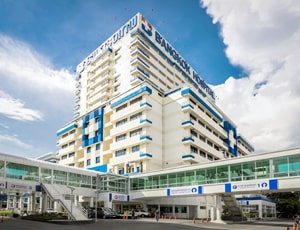
Brain Cancer Treatment in Bangkok Hospital: Costs, Top Doctors, and Reviews

Bangkok, Thailand

  • Joint Commission International, or JCI

Types of Brain Cancer Treatment in Bangkok Hospital and its associated cost

Treatment OptionApproximate Cost Range (USD)Approximate Cost Range (THB)
Brain Cancer Treatment (Overall)13793 - 24560476428 - 879491
Surgery7871 - 16845284981 - 609901
Radiation Therapy6879 - 13753235534 - 479433
Chemotherapy5592 - 11084201448 - 405027
Targeted Therapy6835 - 13665239976 - 472146
Immunotherapy7958 - 17059279241 - 605509
Palliative Care3409 - 7723121551 - 286299
  • Address: Bangkok Dusit Medical Services, Nong Prue, Bang Phli, Samut Prakan, Thailand
  • Facilities related to Bangkok Hospital: SIM, TV inside room, Accommodation, Choice of Meals
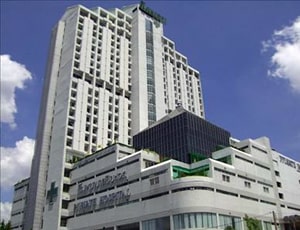
Brain Cancer Treatment in Bangpakok 9 International Hospital: Costs, Top Doctors, and Reviews

Bangkok, Thailand

  • Joint Commission International, or JCI

Types of Brain Cancer Treatment in Bangpakok 9 International Hospital and its associated cost

Treatment OptionApproximate Cost Range (USD)Approximate Cost Range (THB)
Brain Cancer Treatment (Overall)13578 - 24738485868 - 864691
Surgery7758 - 16526286665 - 593980
Radiation Therapy6665 - 13313240622 - 477184
Chemotherapy5607 - 11301203764 - 405716
Targeted Therapy6662 - 13796244217 - 480554
Immunotherapy7928 - 16889279392 - 596619
Palliative Care3339 - 8040118408 - 282034
  • Address: Bangpakok 9 International Hospital, International Hospital, Rama II Road, Bang Mot, Chom Thong, Bangkok, Thailand
  • Facilities related to Bangpakok 9 International Hospital: Choice of Meals, Interpreter, SIM, TV inside room, Accommodation
Brain Cancer Treatment in Phyathai 2 International Hospital: Costs, Top Doctors, and Reviews

Bangkok, Thailand

  • Joint Commission International, or JCI

Types of Brain Cancer Treatment in Phyathai 2 International Hospital and its associated cost

Treatment OptionApproximate Cost Range (USD)Approximate Cost Range (THB)
Brain Cancer Treatment (Overall)13512 - 24223489635 - 884176
Surgery7874 - 16735283599 - 604000
Radiation Therapy6809 - 13699240704 - 479173
Chemotherapy5718 - 11150202785 - 409922
Targeted Therapy6758 - 13312237436 - 473776
Immunotherapy7821 - 17143278807 - 614159
Palliative Care3331 - 7860119322 - 286243
  • Address: Phyathai 2 Hospital, Phahonyothin Road, Phaya Thai, Thailand
  • Facilities related to Phyathai 2 International Hospital: Choice of Meals, Interpreter, SIM, TV inside room, Accommodation
Brain Cancer Treatment in Piyavate Hospital: Costs, Top Doctors, and Reviews

Bangkok, Thailand

  • Joint Commission International, or JCI
  • ISO 9001

Types of Brain Cancer Treatment in Piyavate Hospital and its associated cost

Treatment OptionApproximate Cost Range (USD)Approximate Cost Range (THB)
Brain Cancer Treatment (Overall)13260 - 24217472739 - 882237
Surgery7912 - 16837286297 - 600001
Radiation Therapy6798 - 13200242865 - 488855
Chemotherapy5681 - 11307198932 - 394639
Targeted Therapy6688 - 13586243856 - 487944
Immunotherapy7822 - 16528278281 - 589161
Palliative Care3417 - 7766119349 - 284834
  • Address: Piyavate Hospital, Khlong Samsen Road, Bang Kapi, Huai Khwang, Bangkok, Thailand
  • Facilities related to Piyavate Hospital: Choice of Meals, Interpreter, TV inside room, Accommodation, Airport Transfer

Need Some Advice From Our Experts?

Request a Call Back Now!

Our team of healthcare experts would be happy to assist you

trusted Patientstrusted Patients+99
Trusted by 50000+ Patients
Required | alphabets and spaces
Required | A valid, working email address
Required | A valid contact

Process Involved for Brain Cancer Treatment in Thailand

  • Consultation: Discuss the diagnosis, staging, and treatment with a neurologist, neurosurgeon, or oncologist.
  • Preoperative Evaluation: Imaging studies (like MRI or CT scans) and a neurologic examination are performed to define the location, size, and effect on brain function of the tumor.
  • Discussion with Treatment: The treatment possibilities, such as surgery, radiation, chemotherapy, targeted therapy, or a combination, are discussed based on the tumor type and stage.
  • Surgical Planning: When surgery is being recommended, the procedure, including removal of the tumor or biopsy, and the risk involved is disclosed.
  • Post-Surgery, Follow-up: Routine follow-up examinations and imaging are arranged to track progress, identify recurrence, and address possible side effects or complications.
  • Primary brain tumors (gliomas, glioblastomas and meningiomas)
  • Metastatic brain tumors
  • Brain lymphoma
  • Pituitary tumors
  • Individuals with primary brain tumors or metastatic brain cancer are recommended to undergo treatment.
  • The type, site, size, and grade of the tumor, as well as the patient's overall health and medical history, all influence the patient's suitability for treatment.
  • Surgical resection
  • Chemotherapy
  • Radiation therapy
  • Immunotherapy
  • Targeted therapy
  • It can prevent or control tumor growth, particularly with initial-stage detection and proper treatment.
  • Enhances quality of life and alleviates symptoms such as headache, seizures, or neurological deficits.
  • Prevents recurrence or metastasis of tumors using combination therapies.
  • Neurologist
  • Neurosurgeon
  • Medical Oncologist
  • Radiation Oncologist
  • Fill out the inquiry form: Fill out the form to provide us with the relevant information about your condition.
  • Consult with Our Healthcare Expert:One of our qualified specialists will contact you for a consultation
  • Receive a Detailed Treatment Plan:After examining your situation, we will provide you with a detailed treatment plan that includes expert views and cost breakdowns for various choices.
  • Choose your preferred option: Choose the treatment option that suits you the best.

Instantly Connect with our Brain Cancer Treatment Specialists

Doctor 1
Doctor 2
Doctor 3
Doctor 4
Doctor 5
Doctor 6
Doctor 7
Doctor 8
Our Services to Better your Experience

Opinion & Option

We submit the most accurate opinion and options from one or more countries for your review

Consult Privately

Consult with a certified specialist privately on our telemedicine platform even before you decide to travel

Logistics

We handle flights, visas, transfers, and accommodation—so you can focus on your health.

Recovery

Our In-house rehabilitation service packages to better your recovery and treatment outcome

Other Popular Countries for Brain Cancer Treatment

Our network connects you with the leading medical tourism destinations globally, offering a wide range of cities, top doctors, and flexible pricing options.

United Arab Emirates
United Kingdom
Malaysia
Turkey

Conditions treated by Brain Cancer Treatment

Frequently Asked Questions

A. The cost of a Brain Cancer Treatment procedure starts from USD 22000 in Thailand. Many multispeciality hospitals in Thailand that are Healthcare Accreditation Institute, JCI certified are approved and most sought after for treating international patients with Brain Cancer Treatment

A. Different hospitals have different pricing policies when it comes to the cost of Brain Cancer Treatment in Thailand. The top hospitals for this type of Treatment in Thailand cover all the expenses related to the pre-surgery investigations of the candidate.

Generally, for brain cancer treatment's total cost in Thailand includes the cost of anesthesia (local or general), food, nursing personnel care, hospitals, and intensive care unit stay along with the neurosurgeon's cost. A prolonged hospital stay due to delayed recovery, diagnosis, and treatment problems after surgery might increase the cost of Brain Cancer Treatment in Thailand.

A. Many hospitals perform Brain Cancer Treatment in Thailand. Some of the best hospitals for Brain Cancer Treatment in Thailand include the following:

  1. Vejthani Hospital
  2. Bangpakok 9 International Hospital (BPK 9)
  3. Phyathai 2 International Hospital
  4. Bangkok Dusit Medical Services

A. The recovery of the patient may vary, depending on several factors. However, on average, a patient is supposed to stay for about 30 days in the country after discharge. The patient gets medical examinations and consultations during this period. this to ensure that the treatment was successful and the patient is safe to return.

A. The patient may be responsible for additional daily costs, such as accommodation and food after discharge, in addition to the cost of brain cancer treatment. In this case, costs per person per day might start at USD 50.

A. Some of the best cities in Thailand which offer Brain Cancer Treatment are:

  • Bangkok
  • Krabi

A. Patient is supposed to stay at the hospital for about 5 days after Brain Cancer Treatment for monitoring and care. The patient is subjected to several biochemical and radiological tests to see that everything is okay and the recovery is on track. Discharge is planned once clinical stability has been confirmed.

A. More than four hospitals in Thailand provide treatment for brain cancer. These hospitals have proper infrastructure for the treatment plan of patients who require kidney transplants. In addition to offering excellent healthcare, the hospitals are recognized for following all legal and accepted procedures as set out by the local medical affairs power or organization.

A. Some of the best medical specialists for Brain Cancer Treatment in Thailand are:

  1. Dr. Adisorn Boonyapiban
  2. Dr. Benjawan Limpwanaspong
  3. Dr. Wichit Arpornwirat

A. Surgery is a common type of treatment for most kinds of brain tumors. To remove a brain tumor, a neurosurgeon performs an incision in the skull. The name of this technique is craniotomy. While the surgeon tries his or her hardest to remove the entire tumor, non-surgical treatments like radiation therapy, chemotherapy, and targeted therapy are also used to treat brain cancer.

A. several risk factors related to treated brain cancer there are: including feelings of sickness, headaches, vomiting, dizziness, hearing, eye-related issues like cataracts, and heart-related issues like stroke.

A. While targeted therapy, chemotherapy, and radiation are among the treatments that can be utilized for brain cancer patients, no alternative treatments have been proven to be effective in treating the disease.

A. There are many symptoms of brain cancer are mentioned below:

  • Nausea
  • Vomiting
  • Headache
  • Seizure
  • Vision changes
  • Cognitive impairment
  • Balance problem

A. With the help of many diagnostic tests like MRI, CT scan, PET, lumber puncture, Blood markers, and some Neurological Exam scans that can provide the details of brain condition, we can diagnose brain cancer.

  1. A neurological examination: A neurological Test examines the function of multiple places of the brain. Your vision, hearing, balance, coordination, strength, and reflexes may all be examined during this test.
  2. Brain CT scan: X-rays are analyzed in computed tomography scans test, or CT scans, to produce images. It's widely available and provides fast results. Therefore, if you experience headaches or other symptoms that may have a wide range of causes, a CT scan might be the first imaging test that is performed.
  3. Magnetic resonance imaging(MRI): Strong magnets are used in magnetic resonance imaging, or MRI, to give images of the inside of the body. Because MRI provides better visualization of the brain than other imaging techniques, it is frequently used to identify brain cancers.

A. In Thailand, there are four main procedures for treating brain tumors: targeted therapy, radiation therapy, chemotherapy, and neurosurgery. Depending on the area of the tumor and how severe the patient's symptoms are, a combination of one or more of these may be used as part of the patient's personalized treatment.

Palliative care is an important part of a comprehensive therapy plan. It includes the management of the entire patient along with all the associated costs, and social, emotional, and mental implications of receiving a brain cancer diagnosis.

Radiation Therapy: Powerful energy beams are used in radiation treatment for brain cancers to destroy tumor cells. Protons and other radiation sources are likely sources of energy.

A. Long-term care considerations for brain cancer patients are mentioned below:

  • Psychological treatment: Patients with brain cancer may have psychological or emotional problems, which can be managed with encouragement and support.
  • Nutrition diets: Avoid sugar food and drinks which can lead to infection and inflammation.
  • End-of-life care: To respect patients' rights, it's important to talk clearly about the prognosis and treatment goals.
  • Rehabilitation: This is the key for Brain cancer patients
  • Sleep disturbances: This is common for Brain cancer patients, in this condition, hypnotic medications are used.

Author

Alvina Hasan

M.Pharm

1 Year of Experience

Alvina Hasan is a dedicated medical researcher and scientific writer with a strong foundation in the pharmaceutical sciences. She holds a B.Pharm from Jamia Hamdard University and an M.Pharm in Quality Assurance from DIPSAR University. With deep medical expertise and a strong interest in healthcare communication, she focuses on transforming complex clinical and scientific information into clear, engaging, and easy-to-understand narratives. She develops insightful healthcare articles and research-driven pieces designed to support both medical professionals and patients, helping bridge the gap between advanced medical knowledge and practical understanding. . View More

Reviewer

Dr Prateek Varshney

Surgical Oncologist

15 Years of Experience

Dr. Prateek Varshney is a renowned Surgical Oncologist. He has experience of more than 15+ years in surgical Oncology. He is currently practicing as a consultant at Metro Mass Hospital and Cancer Institute. He was also previously associated as a consultant with Sir Ganga Ram Hospital and as a professor at Gujarat Cancer Research Institute. View More