Your Notifications
All done, no notifications

Brachytherapy Cost in Dubai

Starts from USD 13000

Disclaimer: Cost range is subject to change based on clinical evaluation.

Affordable World-class Treatment - Accredited Hospitals - Free Treatment Plan in 24 Hrs

30-90 min/session
Procedure Time
85 - 95%
Success Rate
Brachytherapy starting from starting from USD 600 | Cost, Procedure, Hospitals, and Clinics from all around the world with MediGence
JCI/ISO 100,000+ Patients 24X7 Coordinator Visa & Travel handled
Your all-in-one medical travel platform for treatment, recovery & care.

Get Your Personalised Treatment Plan in Just 24 Hours.

Share your details to receive a personalised treatment plan, estimated costs, hospital recommendations, and expert guidance, “completely free.”

Required | alphabets and spaces
Required | A valid, working email address
Required | A valid contact

Your information is protected with HIPAA-compliant security standards. We only share your details with hospitals after your consent.

Estimated Treatment Cost
Starts from USD 13000
All-inclusive • Hospital + Medications + Recovery Assistance + Dedicated Care Coordinator

International Quality. Affordable Care.
The average cost of Brachytherapy in Dubai starts from USD 13000.

Cost of Brachytherapy in Major Cities of United Arab Emirates

CityCost (USD)
Abu Dhabi Starting $12.5k Explore More
Ajman Starting $12k Explore More
Dubai Starting $13k Explore More
Sharjah Starting $12k Explore More
Alvina Hasan
Author

M.Pharm

2 Year of Experience

Alvina Hasan is a dedicated medical researcher and scientific writer with a strong foundation in pharmaceutical sciences. She holds a B.Pharm from Jamia Hamdard University and an M.Pharm in Quality Assurance from DIPSAR University.

With deep medical expertise and a strong interest in healthcare communication, she focuses on transforming complex clinical and scientific information into clear, engaging, and easy-to-understand narratives. She develops insightful healthcare articles and research-driven content designed to support both medical professionals and patients, helping bridge the gap between advanced medical knowledge and practical understanding.

Readers can explore her published research and articles here:

https://carcinogenesis.com/index.php/JOC/article/view/868

https://carcinogenesis.com/index.php/JOC/article/view/870

View More
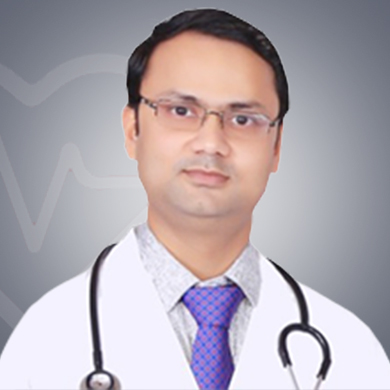
Dr Prateek Varshney
Reviewer

Surgical Oncologist

15 Years of Experience

Last Reviewed - June 2026

Dr. Prateek Varshney is a renowned Surgical Oncologist. He has experience of more than 15+ years in surgical Oncology. He is currently practicing as a consultant at Metro Mass Hospital and Cancer Institute. He was also previously associated as a consultant with Sir Ganga Ram Hospital and as a professor at Gujarat Cancer Research Institute.
View More

Need Help Choosing the Right Treatment? Talk to a Medical Advisor

Our dedicated Medical Patient Advisors are here to answer your questions, help you compare treatment options, estimate costs, and guide you through every step of your healthcare journey.

15 min
Average response time

Serving Patients Worldwide in Multiple Languages.

“Brachytherapy”, also called “Internal radiation therapy”, represents an advanced approach within the realm of radiation therapy, a cornerstone of cancer treatment. Unlike conventional external beam radiation therapy, which emanates radiation from a machine outside the body, brachytherapy involves placing radioactive particles or sources directly inside or adjacent to the tumor site.

By doing so, brachytherapy delivers a targeted, high dose of radiation precisely to the tumor, while minimizing exposure to surrounding healthy tissues. This focused delivery allows for the administration of high radiation doses to specific areas of the body, enhancing treatment efficacy.

This therapy finds application in the treatment of various cancers, including cervical, prostate, breast, skin, lung, head and neck, and gum cancer, among others. Particularly, it is a widely utilized procedure for prostate cancer treatment, offering an alternative to surgery for gum cancer patients who may be unfit or do not require surgical intervention. One of the notable advantages of brachytherapy lies in its efficiency, as treatment completion often requires fewer sessions compared to conventional radiotherapy techniques. Moreover, many patients undergo brachytherapy on an outpatient basis, further enhancing its accessibility and convenience. Overall, brachytherapy is well-tolerated by patients, with fewer side effects reported, making it a valuable therapeutic option in the fight against cancer.

Types of Brachytherapy

There are two types of brachytherapy treatment:

Temporary brachytherapy: In this method, highly radioactive particles are placed in a catheter or slender tube for a specific amount of time and then withdrawn. Temporary brachytherapy can be administered at either a low-dose rate (LDR) or a high-dose rate (HDR).

Permanent brachytherapy: In this method, a radioactive seed or pellet is implanted in or near the tumor and left there permanently. After several months, the radioactivity level of the implanted seed eventually diminishes to nothing.

A type of internal radiation therapy called brachytherapy is used to treat cancers of the skin, breast, prostate, and cervical areas. In order to deliver targeted radiation and efficiently kill cancer cells while limiting exposure to nearby healthy tissue, radioactive material is placed inside or close to the tumor.

Get in touch with your doctor right away if you have severe nausea, vomiting, diarrhoea, or difficulty breathing or swallowing. You should also seek help for symptoms like faecal or urine incontinence. These symptoms may indicate serious adverse effects that require immediate medical attention.

Preparation may involve blood testing, imaging tests (CT, MRI, or ultrasound), and at times an assessment of anesthetic. Depending on the location of the cancer, you might need to stop taking some medications, fast before the surgery, and follow specific hygiene or bladder-emptying instructions.

Brachytherapy involves positioning Radioactive material inside or close to the tumour. Small radioactive seeds, wires, or pellets may be inserted using applicators, catheters, or needles; the technique may be temporary or permanent, depending on the nature and location of the tumours. The treatment may be guided by imaging (like ultrasound or CT) and is usually done in an outpatient setting or with a short hospital stay.

HDR brachytherapy is often performed as an outpatient procedure and lasts 10 to 30 minutes. After 1-2 hours of LDR brachytherapy, radioactive seeds are permanently left in the body.

  • Difficulty peeing
  • Urinary incontinence
  • Erectile dysfunction
  • Fatigue
  • Vaginal scarring
  • Faecal (bowel) incontinence, constipation or diarrhoea
  • Nausea and vomiting

High radiation doses are sent directly to the tumor with this treatment, protecting healthy tissue in the process. For localized malignancies, it has a high efficacy rate, fewer side effects, and a shorter treatment duration.

Post-operative recovery from brachytherapy is typically faster than that from external radiation, depending on the type and site of treatment. Although insignificant side effects like tiredness, bowel or urine abnormalities, and local discomfort may occur, most patients are able to return to their regular activities in a matter of days. Rest, proper hydration, and follow-up care promote a speedy recovery and help detect any delayed side effects.

The success rate of brachytherapy for localised tumours, such as breast, cervical, and prostate cancer, is high and frequently ranges from 85% to over 95%.

80–95%

Local tumor control rate (depends on cancer type, stage, and treatment plan)

Same day to 2 days

Typical hospital stay depending on the brachytherapy type

1–7 days

Return to normal daily activities depending on recovery and treatment intensity
Explore Hospitals ( 4 )

Dubai, United Arab Emirates

4.4 - 9049 reviews · 100+ Beds · 161+ Procedures
JCI
Starting
USD 13000
Chat with a Medical Advisor

Dubai, United Arab Emirates

4.1 - 9484 reviews · 300+ Beds · 212+ Procedures
JCI
Starting
USD 13000
Chat with a Medical Advisor

Dubai, United Arab Emirates

4.5 - 8498 reviews · 179+ Beds · 452+ Procedures
JCI
Starting
USD 13000
Chat with a Medical Advisor

Dubai, United Arab Emirates

4.5 - 16080 reviews · 187+ Beds · 214+ Procedures
JCI
Starting
USD 13000
Chat with a Medical Advisor

Get Your Brachytherapy
Plan in 24 hrs.

Our experienced Medical Patient Advisors have supported 100,000+ patients across 120+ countries with personalised treatment plans, hospital recommendations, cost estimates, and travel assistance, all free.

HIPAA-Compliant Data SecurityShared Only with Your Consent

✓ Free Consultation ✓ No Obligation ✓ Personalized Treatment Plan ✓ Response Within 24 Hours

Required | alphabets and spaces
Required | A valid, working email address
Required | A valid contact

Your medical info is kept HIPAA-style confidential. We never share with hospitals without your consent.

Process Involved for Brachytherapy in Dubai

  • Consultation: Discuss the diagnosis, treatment options, and appropriateness of brachytherapy with an oncologist or radiation oncologist.
  • Pre-Treatment Assessment: Imaging tests are used to determine the tumour's exact size and location.
  • Treatment Planning: Precise positioning of radioactive sources within or near the tumor is planned with precise imaging. The treatment is personalised for every patient to decrease exposure to radiation of surrounding healthy tissue.
  • Delivery of Treatment: To provide large doses of radiation to the tumor and spare nearby tissues, small radioactive sources are placed inside or near the cancer for a limited period.
  • Follow-Up: Regular follow-up visits are scheduled after treatment to monitor the response of the tumor, manage side effects, and search for recurrence.
  • Prostate cancer
  • Cervical cancer
  • Uterine cancer
  • Breast cancer
  • Lung cancer
  • Skin cancer
  • Patients with locally confined malignancies, particularly prostate, cervical, uterine, breast, and lung malignancies, are recommended to receive brachytherapy.
  • Those patients who cannot undergo surgery or have cancers in their initial stages are helped by it.
  • The patient's overall health determines the eligibility for such treatment in addition to the tumour type, stage, and site.
  • Radiation therapy
  • Surgical procedures for tumor access
  • For a more extensive course of treatment, it can be combined with other therapies such as surgery or external beam radiation.
  • Most useful in the case of localised malignancies when surgery cannot be performed.
  • Radiation Oncologist
  • Medical Oncologist
  • Fill out the inquiry form: Fill out the form to provide us with the relevant information about your condition.
  • Consult with Our Healthcare Expert:One of our qualified specialists will contact you for a consultation
  • Receive a Detailed Treatment Plan:After examining your situation, we will provide you with a detailed treatment plan that includes expert views and cost breakdowns for various choices.
  • Choose your preferred option: Choose the treatment option that suits you the best.
Jenny Wilson
Your Dedicated Medical Patient Advisor
Treatment planning • Hospital coordination • Multilingual support • Response within 15 minutes.
Our Services to Better your Experience

Opinion & Option

We submit the most accurate opinion and options from one or more countries for your review

Consult Privately

Consult with a certified specialist privately on our telemedicine platform even before you decide to travel

Logistics

We handle flights, visas, transfers, and accommodation—so you can focus on your health.

Recovery

Our In-house rehabilitation service packages to better your recovery and treatment outcome

Patient Stories

Ms. Monica
Ms. Monica
Monica from Ghana for AV Malformation Treatment in India

Monica from Ghana suffered from AV malformation. She decided to look for options for medical treatment when she started experiencing…

Silim Shabani
Silim Shabani
Patient Testimonial: Silim Shabani for Ovarian Cancer Treatment in Turkey

Nasrin (Sister of the patient ) explains the journey of how MediGence helped for the treatment of Silim Shabani for…

Conditions treated by Brachytherapy

Frequently Asked Questions

The cost of Brachytherapy in Dubai is starts from USD 13000, depending on the type of cancer being treated, the brachytherapy technique, the number of treatment sessions, the radioactive source used, treatment planning, imaging, the hospital, the radiation oncologist's expertise, and supportive care. The final cost is usually determined after reviewing the patient's diagnosis, cancer stage, and treatment plan.

Choose a radiation oncologist with specific experience in brachytherapy and the treatment of your particular type of cancer. Consider the specialist's qualifications, experience with the required brachytherapy technique, the treatment centre's radiation facilities, the multidisciplinary cancer team, and the availability of advanced treatment-planning and imaging technologies.

Brachytherapy can be used for several cancers, including selected prostate, cervical, uterine, breast, vaginal, skin, and other cancers. Its suitability depends on the tumour's location, size, stage, and relationship to surrounding tissues. The radiation oncologist determines whether brachytherapy is appropriate for each patient.

HDR brachytherapy delivers a high dose of radiation over a short period, often during one or more treatment sessions. LDR brachytherapy delivers radiation at a lower dose rate over a longer period and may involve temporary or permanent radioactive implants, depending on the cancer being treated.

The level of discomfort depends on the treatment site and technique. Anaesthesia or sedation may be used for procedures involving applicator or implant placement. Patients may experience temporary discomfort, soreness, or irritation after treatment. The medical team can provide appropriate pain relief and supportive care when required.

Brachytherapy can be used alone for certain cancers and stages, but it is also frequently combined with other treatments. Depending on the diagnosis, it may be given alongside external-beam radiation therapy, chemotherapy, surgery, or hormone therapy to improve local tumour control or address disease elsewhere.

Whether a patient emits radiation after treatment depends on the type of brachytherapy used. Temporary HDR treatments generally involve removing the radioactive source after each session, whereas certain LDR treatments may involve radioactive sources remaining in the body for a period of time or permanently. The treatment team provides specific radiation-safety instructions when necessary.

The success rate for Brachytherapy is 85 - 95%, varies according to the type and stage of cancer, tumour location, treatment technique, and whether it is combined with surgery, chemotherapy, external-beam radiation therapy, or other treatments. It can provide effective local tumour control in appropriately selected patients. Your radiation oncologist can provide a more personalised prognosis.

Modern centres may offer high-dose-rate (HDR), low-dose-rate (LDR), or other specialised brachytherapy techniques. Treatment planning may use CT, MRI, ultrasound, or other image-guided technologies to accurately position the radioactive source and deliver radiation to the tumour while limiting exposure to surrounding healthy tissues.

Side effects depend on the treated body area, radiation dose, treatment technique, and individual health. Possible complications include local irritation, pain, bleeding, swelling, urinary or bowel symptoms, skin changes, fatigue, sexual or reproductive effects, and tissue damage. The radiation oncology team will explain the expected short- and long-term effects before treatment.

Before travelling, provide your biopsy and pathology reports, imaging scans, cancer staging reports, previous treatment records, medication list, and relevant laboratory results. The radiation oncologist may request additional imaging or tests to determine whether brachytherapy is appropriate and to develop an individualised treatment plan.

Yes. International patients can often arrange an online consultation with a radiation oncologist before travelling. The specialist can review pathology, imaging, cancer stage, previous treatments, and overall health to determine whether brachytherapy may be suitable and whether additional investigations are required.

Patients should bring their passport, biopsy and pathology reports, histopathology slides or blocks when available, CT/MRI/PET scans and reports, cancer staging records, previous treatment summaries, blood-test results, medication list, allergy information, and relevant insurance or referral documents.

The required stay depends on the type of brachytherapy and whether treatment is delivered in a single session or multiple sessions. Some HDR treatments may be completed over a relatively short period, while other treatment schedules require several visits. International patients may also need additional time for consultation, planning, and follow-up.

Recovery varies according to the treatment site and whether brachytherapy is combined with other cancer treatments in Dubai. Some patients can resume normal activities relatively quickly, while others may experience treatment-related fatigue or local symptoms for several days or weeks. The treating team will provide specific activity and follow-up instructions.

If complications occur, the treating oncology team can assess the symptoms and provide appropriate management. Depending on the problem, treatment may include medication, supportive care, monitoring, or additional intervention. International patients should obtain clear follow-up instructions and emergency contact information before returning home.

International patients can submit their medical records, pathology reports, imaging, and previous treatment history for specialist review. After evaluation, a radiation oncologist can recommend an appropriate treatment approach. The hospital or medical travel provider can then coordinate consultation, treatment scheduling, cost estimation, hospital admission, travel arrangements, and follow-up.

Dubai may provide access to experienced radiation oncologists, specialised cancer centres, advanced radiation equipment, image-guided treatment planning, and multidisciplinary oncology teams. International patients should consider the centre's expertise in their specific cancer, treatment technology, radiation safety standards, expected outcomes, aftercare, and overall treatment costs.

Brachytherapy options include HDR and LDR techniques, depending on the type and location of cancer. It may be used as the primary treatment in selected cancers or combined with external-beam radiation therapy, surgery, chemotherapy, hormone therapy, or other cancer treatments in Dubai. The choice depends on tumour characteristics and the patient's overall treatment plan.

FAQ's Related to United Arab Emirates

Dubai is one of the leading destinations for medical tourism in the world. As per the Medical Tourism Index, Dubai ranks 13th amongst 46 countries. The city is well known for its ultra-modern healthcare infrastructure comprising around 38 hospitals. On average, UAE attracts around 10 million tourists annually, out of which Dubai retains the maximum number of tourists. Around 90% of the hospitals in the city have received international accreditations. The healthcare sector of the city has people belonging to more than 110 nationalities. The hospitals have an advanced infrastructure and provide comprehensive care in a broad range of specialties such as cosmetic surgery, dermatology, orthopedics, sports medicine, ophthalmology, and ophthalmology. These are also equipped with cutting-edge technology such as robotic surgery, artificial intelligence, and stem cell technology. Most hospitals have expert interpreters and language assistance services to ensure that patients receive the best healthcare with ease.

The hospitals in Dubai provide integrated, high-quality, and comprehensive care to patients. Some of the top hospitals in Dubai are:

  • Zulekha Hospital: An ISO and JCI- accredited hospital, it has over 150 beds and provides a range of healthcare services to patients from around the world. Some of the advanced procedures performed at the Zulekha hospital include minimally invasive surgery, neonatal surgery, bariatric surgery, and joint replacement surgery. The hospital also has interpreters on board to provide translation services to International patients.
  • Kings College Hospital: This is a 100-bed medical facility in which most of the doctors have been trained and educated in Britain. Many of them have worked for years in the UK’s National Health Service(NHS). The hospital offers impeccable healthcare services in various specialties such as cardiology, dermatology, and gynecology. It also has a dedicated center for liver transplantation.
  • Fakih IVF fertility center: This is one of the leading IVF centers in the GCC region. Besides IVF, the doctors here are also trained in other assisted reproductive technologies such as ICSI and IUI. The center also performs genetic testing and has a high success rate of infertility treatments.
  • Burjeel Hospital for advanced surgery: This is one of the most prominent orthopedic hospitals providing advanced surgical procedures. It is a JCI-accredited facility that has set benchmarks for delivering high-quality healthcare to patients. the different types of surgeries performed here include joint replacement, scoliosis surgery, hand surgery, and knee surgery.

Dubai has a pool of highly-skilled and competent licensed doctors who have received training from some of the best hospitals and universities in the world. The top doctors in Dubai are:

  • Dr. Rahul Bhatt: He is an experienced urologist who has been working diligently for the past 15 years to treat various urological conditions such as kidney stones, glomerulonephritis, erectile dysfunction, and polycystic kidneys.
  • Dr. Shadi Sharifi: She has 15 years of experience and is an expert neurologist. Dr. Sharifi is fluent in English and can treat conditions such as neurosyphilis, encephalitis, and epilepsy.
  • Dr. Abdul Hafeez Siddiqui: He has 15 years of experience as a hematologist.

Dubai is well-connected to different countries around the world by air. We can also help you plan your medical travel to Dubai by assisting you with visas, accommodation, and priority appointments.

Not Sure About Your Treatment Plan? Get a Second Opinion

Get your medical reports reviewed by experienced doctors to help you make a confident treatment decision, all online within 48 hours.

Upload Your Reports
Free second opinion on your CAR-T plan