The cost of Epilepsy in India typically ranges between USD 3500 - USD 6000. However, this cost can vary depending on several factors, including the type and severity of the condition, treatment techniques chosen, the healthcare facility's location and reputation, the treating professionals' experience and specialization, and the patient's overall health status.
Additionally, factors like the duration of treatment, the need for follow-up care, and the use of advanced technologies or specialized treatments can further influence the overall cost.
The goal of epilepsy treatment is to simply manage and control epilepsy and its symptoms with the main form of treatment being through the administration of antiepileptic drugs. These medications assist in changing the electrical activity in the brain to avoid seizures which type of medicine to be administered depends on the sort of epilepsy and kind of seizures. If medications fail, treatments including lobectomy, laser ablation, or VNS may be the appropriate treatment solution. Moreover, dietary interventions such as the ketogenic or Modified Atkins diets that help to decrease seizure intensity, can be applied to patients who have no adequate response to other medications or are children.
For some patients, an implant is a favorable intervention such as Responsive Neurostimulation (RNS) or VNS, aimed to control seizures by electrically stimulating the brain or the vagus nerve. These treatments are effective but not without their dangers: the side effects of medications, possible surgery complications, or complications arising from diet. Seizures in epilepsy are managed based on each person’s features to achieve optimal seizure freedom and maximal quality of life.
| City | Minimum Cost (USD) | Minimum Cost (INR) | Maximum Cost (USD) | Maximum Cost (INR) |
|---|---|---|---|---|
| Bangalore | USD 3500 | 299740 | USD 6000 | 513840 |
| Chennai | USD 3500 | 299740 | USD 6000 | 513840 |
| Delhi | USD 3500 | 299740 | USD 6000 | 513840 |
| Faridabad | USD 3500 | 299740 | USD 6000 | 513840 |
| Ghaziabad | USD 3500 | 299740 | USD 6000 | 513840 |
| Gurgaon | USD 3500 | 299740 | USD 6000 | 513840 |
| Gurugram | USD 3500 | 299740 | USD 6000 | 513840 |
| Hyderabad | USD 3500 | 299740 | USD 6000 | 513840 |
| Kochi | USD 3500 | 299740 | USD 6000 | 513840 |
| Kolkata | USD 3500 | 299740 | USD 6000 | 513840 |
| Mohali | USD 3150 | 269766 | USD 5400 | 462456 |
| Mumbai | USD 3500 | 299740 | USD 6000 | 513840 |
| Noida | USD 3500 | 299740 | USD 6000 | 513840 |
| Panjim | USD 3150 | 269766 | USD 5400 | 462456 |
| Country | Minimum Cost | Minimum Local Currency | Maximum Cost | Maximum Local Currency |
|---|---|---|---|---|
| India | USD 3500 | INR 299740 | USD 6000 | INR 513840 |
| Israel | USD 14330 | ILS 50728 | USD 38330 | ILS 135688 |
| Lithuania | USD 14330 | LTL 49019 | USD 38330 | LTL 131115 |
| Malaysia | USD 5000 | MYR 21200 | USD 20000 | MYR 84800 |
| Morocco | get request | |||
| Poland | USD 500 | PLN 1880 | USD 15000 | PLN 56400 |
| Saudi Arabia | USD 1000 | SAR 3750 | USD 10000 | SAR 37500 |
| Singapore | USD 30000 | SGD 38700 | USD 60000 | SGD 77400 |
| Spain | USD 20000 | ESP 2940798 | USD 60000 | ESP 8822394 |
| Switzerland | USD 5000 | CHF 4150 | USD 50000 | CHF 41500 |
| Thailand | USD 12000 | THB 392520 | USD 22000 | THB 719620 |
| Tunisia | USD 500 | TND 1490 | USD 3000 | TND 8940 |
| Turkey | USD 2000 | TRY 78120 | USD 36000 | TRY 1406160 |
| United Arab Emirates | USD 11500 | AED 42205 | USD 23000 | AED 84410 |
| United Kingdom | get request | |||
Need Help Planning Your Treatment Abroad?
Your 24/7 AI Health Assistant 
Epilepsy is a neurological problem characterized by repeated seizures. There are numerous varieties of epilepsy, some of which have been linked to causes and others that remain unknown.
According to the Centers for Disease Control and Prevention, epilepsy is a prevalent disorder that affects roughly 1.2% of the US population. It affects people of all sexes, races, ethnicities, and ages.
Seizure symptoms differ greatly across people. Some people may lose consciousness during a seizure, while others may not. Some people may experience brief periods of blank staring, while others may have convulsions that involve recurrent shaking of the limbs or legs.
It is crucial to realize that having one seizure doesn't mean you have epilepsy. Epilepsy is diagnosed when a person experiences at least two unprovoked seizures occurring at least 24 hours apart. Unprovoked seizures are those that do not have a clear immediate cause.
There are four main types of Epilepsy according to the revised classification:
Approximately half of individuals with epilepsy have no identifiable cause for their condition. For the other half, epilepsy can be related to many factors, such as:
Would you like some help? We are available.
Get Help
Faridabad, India
Founded in 1998 by Mata Amritanandamayi (Amma), the Amrita Institute of Medical Sciences and Research Centre is one of India’s leading healthcare institutions, accredited by ISO, NABH, and NABL. With 2 branches, 7 medical colleges, and a network of 800+ doctors and 2,600+ beds, it offers comprehensive care across 81 specialties and 12 super-specialty departments, supported by 60+ modern operating theatres and 534 critical care beds. The Faridabad campus, a world-class multispeciality facility, houses advanced centers for oncology, neurosciences, cardiac sciences, gastro-sciences, mother and child care, and trauma care, along with India’s most comprehensive infectious disease unit. Guided by a mission of compassion and innovation, Amrita Hospitals combine cutting-edge medicine with humanitarian service to empower communities and promote holistic well-being.

Kochi, India

Faridabad, India
Marengo Asia Hospitals, located in Faridabad, is a multispecialty, state-of-the-art, and patient-friendly facility that combines the greatest services available in the healthcare segment. With 325 beds now, the hospital can accommodate up to 550 beds. It has first-rate medical facilities including a Critical Care Medicine department for patients with life-threatening conditions. Furthermore, our highly skilled medical staff and cutting-edge software system make us the perfect facility for patients from various backgrounds. We always aim to exceed expectations and are always looking for ways to boost our performance.
Calicut, India

Gurgaon, India

Mumbai, India

Chennai, India
Need Some Advice From Our Experts?
Our team of healthcare experts would be happy to assist you

+99


Opinion & Option
We submit the most accurate opinion and options from one or more countries for your review
Consult Privately
Consult with a certified specialist privately on our telemedicine platform even before you decide to travel
Logistics
We handle flights, visas, transfers, and accommodation—so you can focus on your health.
Recovery
Our In-house rehabilitation service packages to better your recovery and treatment outcome
Our network connects you with the leading medical tourism destinations globally, offering a wide range of cities, top doctors, and flexible pricing options.


The cost of Epilepsy Treatment in India starts from $2000. NABH, JCI are just some of the accreditations which top hospitals in India hold where a Epilepsy Treatment is conducted.
The cost of Epilepsy Treatment in India may differ from one medical facility to the other. The cost quoted by some of the best hospitals for Epilepsy Treatment in India generally covers the pre-surgery investigations of the patient. Typically, the package cost of Epilepsy Treatment in India includes the expenses related to the surgeon's fee, anesthesia, hospital, meals, nursing and ICU stay. A prolonged hospital stay due to delayed recovery, new diagnosis and complications after surgery may increase the cost of Epilepsy Treatment in India.
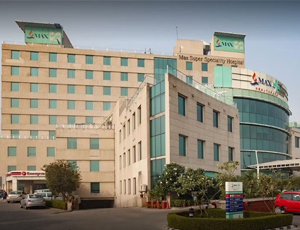
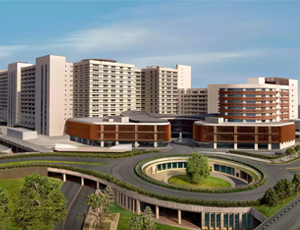
Epilepsy Treatment in India is offered by multiple hospitals across the country. The following are some of the most renowned hospitals for Epilepsy Treatment in India:
The recovery of the patient many vary, depending on several factors. However, on an average, patient is supposed to stay for about 21 days in the country after discharge. This duration of stay is recommended to complete all the necessary follow-ups and control tests to ensure that the surgery was successful.
There are certain additional cost that the patient has to pay apart from the Epilepsy Treatment cost. The extra charges may start from USD 50 per person.
There are many cities that offer Epilepsy Treatment in India, including the following:
There are several doctors who are available for telemedicine consultation for patients requiring Epilepsy Treatment in India. The following are some of the best doctors for Epilepsy Treatment in India who are available for video consultation:
| Doctor | Cost | Schedule Your Appointment |
|---|---|---|
| Dr. P K Sachdeva | USD 35 | Schedule Now |
| Dr. Pawan Garg | USD 18 | Schedule Now |
| Dr. Mukesh Pandey | USD 14 | Schedule Now |
| Dr. Sanjay Kumar Choudhary | USD 35 | Schedule Now |
| Dr. Ritu Jha | USD 14 | Schedule Now |
The patient has to spend about 3 days in the hospital after Epilepsy Treatment for proper recovery and to get clearance for discharge. The doctors team review the patient's recovery during this time with the help of blood tests and imaging scans. Once they feel that everything is on track, the patient is discharged.
The average rating for Epilepsy Treatment hospitals in India is 3.9. This rating is automatically calculated on the basis of several parameters such as the infrastructure of the hospital, quality of services, nursing support and other services.
There are more than 6 hospitals that offer Epilepsy Treatment in India. These hospitals have proper infrastructure for the treatment of patients who require kidney transplant. Apart from good services, the hospitals are known to follow all standard and legal guidelines as dictated by the local medical affairs body or organization.
Some of the top doctors for Epilepsy Treatment in India are:
Epilepsy surgery is a brain surgery in which a part of the brain is removed to stop or limit the number of seizures or their severity. The electrical activity between the nerve cells in your brain can suddenly spike during seizures, which can change:
In about half of those who have epilepsy, there is no known cause. The condition can be linked to a number of things in the other half, such as:
Epilepsy occurs due to abnormal brain activity. When seizures take place they can affect brain processes and coordination. The signs and symptoms of epilepsy include:
There are several tests available to diagnose and determine if you have epilepsy. Initially, the doctor will take down your medical history and review your signs and symptoms. The diagnostic tests may include:
The success rate i.e. the chances of eliminating epilepsy permanently in India are estimated to be 70%. The outcomes of the treatment vary depending on the approach and type of treatment performed. The first step used to control seizures is medications. If it doesn’t work, then only the doctor may recommend a surgical procedure. Resection of tissues in the temporal lobe is the most effective way of achieving seizure-free outcomes in about two-thirds of the population. According to various reports, when a patient is on anti-seizure medications and shows no signs of seizures in the first year after a temporal lobe surgery, they have a high chance (87% -90%)of being seizure free for up to 2 years. If the patient shows no seizures in two years, the chances of being seizure-free are 95% after 5 years and 82% after 10 years.
The medications given for epilepsy may have certain side effects. They include:
Some rare and severe side effects may include:
There are many treatment options available for epilepsy. The most common and preferred treatment option for epilepsy is anti-seizure medications also known as anti-epileptic medications. It proves to be effective in most cases and helps people recover from epilepsy. In other cases, it is successfully able to reduce the frequency of seizures with help of combination medicines. Surgery may be an option when medications fail to provide adequate control over seizures. During an epilepsy surgery, your surgeon will remove an area of your brain that's responsible for seizures.
In some cases, minimally invasive approaches such as MRI-guided stereotactic laser ablation may work, in other cases, open surgery or other alternatives may be suggested. Some of the alternative treatments to medications and surgery include:
Yes, you can drive with epilepsy, however, you have to follow the state driving regulations and guidelines and visit your doctor for regular follow-ups. For people who have been free of seizure for about a year, driving is allowed.
Children who have epilepsy are more likely to experience issues being attentive in the classroom, learning disabilities, and other cognitive deficiencies, such as memory or problem-solving difficulties. The same underlying brain issue is frequently what causes both seizures and cognitive issues. In some cases, the seizures themselves can have an effect on how the brain develops, especially in children who experience seizures frequently. Although anti-seizure medications are crucial, occasionally they can have negative effects on attention or thinking speed. For some kids, having seizures can also interfere with their ability to sleep, go to school, and concentrate during the school day.

Spine & Neurosurgeon
25 Years of Experience
Dr. Rakesh Dua has more than 25+ years of clinical experience in spine surgeries. He is currently providing his services as Director, Neuro & Spine Surgery at Fortis Hospital, Shalimar Bagh. Before joining Fortis Hospital, he was associated with Max super-specialist Hospital, Shalimar Bagh as Director Neurosurgery & Head Neuro Spine, and with UCMS & GTB hospital as head of the neurosurgery department. View More