Your Notifications
All done, no notifications

Cost of Lesionectomy Worldwide

Costs starts from Get a Quote
Filters

Lesionectomy is a specialised brain surgery designed to remove abnormal tissue causing seizures or other neurological issues, especially in patients who do not respond well to medications. It targets specific brain lesions identified through detailed imaging and diagnostic evaluations.

The procedure involves opening a small part of the skull (craniotomy) to access and carefully remove the lesion, with the help of advanced tools like brain mapping and surgical navigation to avoid damage to healthy brain areas.

Lesionectomy can significantly reduce or stop seizures and may also improve cognitive and functional abilities. Recovery depends on the lesion’s location and complexity, and patients are often supported with short-term rehabilitation and ongoing medical follow-up.

A lesionectomy is a type of brain surgery performed to remove abnormal brain tissue (lesions) that are causing seizures or other neurological problems. These lesions may include tumours, vascular malformations, cortical dysplasia, scarring, or other abnormal brain structures. Lesionectomy is often used to treat drug-resistant epilepsy when seizures originate from a well-defined lesion identifiable on brain imaging. By removing the lesion, the surgery aims to reduce or eliminate seizures and preserve surrounding healthy brain tissue.

You should see a neurologist or neurosurgeon if you experience:
  • Frequent or uncontrolled seizures, especially if medications are ineffective
  • Neurological symptoms such as weakness, vision changes, speech difficulties, or memory problems
  • Changes in personality or cognition
  • Brain imaging (MRI, CT) that shows a lesion with unclear or suspicious features
Persistent neurological issues or structural brain abnormalities may indicate the need for further evaluation, possibly leading to surgical treatment like lesionectomy.

Preparation involves a comprehensive evaluation by a multidisciplinary epilepsy or neurology team:
  • Neuroimaging: MRI, PET, or CT scans to locate the lesion
  • EEG monitoring: To map seizure activity and confirm the lesion as the source
  • Neuropsychological testing: To assess memory, language, and cognitive functions
  • Functional MRI or brain mapping: To identify areas responsible for vital functions like speech or movement
  • Medication review: Some drugs may be paused or adjusted before surgery
  • Fasting: Usually required 6–8 hours before the procedure
Patients will meet with an anesthesiologist and surgeon to review risks, benefits, and expected outcomes.

  • Anaesthesia: The patient is placed under general anaesthesia.
  • Craniotomy: A portion of the skull is carefully opened to access the brain.
  • Navigation and Mapping: Advanced imaging and intraoperative brain mapping guide the surgeon to locate the lesion precisely.
  • Lesion Removal: The abnormal tissue is removed, taking care to avoid surrounding healthy or functional areas.
  • Closure: The bone flap is replaced, and the scalp is sutured.
Depending on the lesion's location and the patient's condition, surgery may last 2 to 6 hours.

A lesionectomy usually takes 2 to 6 hours, depending on lesion size, location, and complexity. Patients typically stay in the hospital for 3 to 7 days for observation and early recovery.

Although lesionectomy is generally safe, potential risks include:
  • Infection
  • Bleeding
  • Brain swelling
  • Neurological deficits (speech, memory, or motor issues, depending on location)
  • Seizures after surgery
  • Cerebrospinal fluid leakage
  • Anesthesia-related complications
These risks vary depending on the type, size, and location of the lesion in the brain.

  • Seizure reduction or elimination, especially in drug-resistant epilepsy
  • Improved quality of life, cognitive function, and independence
  • Minimal disruption to the surrounding brain tissue when precisely targeted
  • Increased effectiveness of medications post-surgery, if still required
  • It can sometimes eliminate the need for lifelong anti-seizure medication
Lesionectomy is a valuable option when the abnormal area can be safely removed.

After surgery:
  • Patients are initially monitored in the ICU and then transferred to a regular neurology unit.
  • Headaches, fatigue, or confusion are common during early recovery.
  • Physical, occupational, or speech therapy may be needed depending on outcomes.
  • Most patients resume light activities in 2 to 4 weeks and return to work or school within 6 to 8 weeks.
  • Follow-up includes neuroimaging, EEGs, and ongoing neurology consultations.
Patients must attend all post-operative visits and continue taking prescribed medications as advised.

Lesionectomy has a high success rate, especially in patients with focal epilepsy and identifiable lesions. Studies show that 60–80% of patients become seizure-free after surgery, and many experience improved cognitive and psychological function.

Would you like some help? We are available.

Get Help
Explore Hospitals ( 219 )
Lesionectomy in Indraprastha Apollo Hospital: Costs, Top Doctors, and Reviews

Delhi, India

4.4 ( 5 Reviews )
  • Joint Commission International, or JCI

Indraprastha Apollo Hospital is known for delivering treatment to over 200,000 patients every year; 10,000 of which are generally medical tourists. The efficient team of doctors has the record of 99.6 percent success rate. Indraprastha Apollo Hospital deals in treatment of over 50 specialities.  

Let’s see some of the features of the infrastructure:

  • Spread over 15 acres, the hospital has 710 beds.
  • 6 beds dedicated to bone marrow transplant units with very strict infection control practices.
  • 64-Slice Scan coupled with data acquisition which provides highest temporal resolution
  • One of the hospitals to be using Da Vinci Robotics Surgery System
  • In South Asia, the Spect-CT and Pet-CT got their first installation at Indraprastha Apollo Hospital in India
  • Technologies such as PET- MR, BrainLab Navigation System, PET-CT, Portable CT Scanner, Tilting MRI, NovalisTx, Cobalt based HDR Brachytherapy, Hyperbaric Chamber, DSA Lab, Fibroscan, 3 Tesla MRI, Endosonography, 128 Slice CT scanner are all installed at the hospital.
  • The Cancer Institute at Indraprastha Apollo is equipped with a highly advanced Radiation Oncology Center with ClinaciX, NovalisTx, and HDR-Brachytherapy.
  • It is equipped with the largest Sleep Lab in Asia, & has one of the largest Dialysis Units in India.
  • A large number of ICU beds than any other Private Hospitals in India.
  • WIFI is accessible across the whole campus.
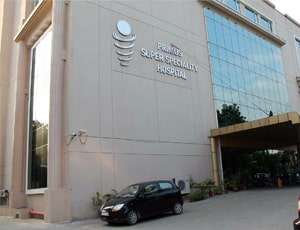
Lesionectomy in Prime Hospital: Costs, Top Doctors, and Reviews

Dubai, United Arab Emirates

  • Joint Commission International, or JCI
  • The Australian Council on Healthcare Standards (ACHS)

Prime Hospital located in Dubai, United Arab Emirates is accredited by ISO, JCI. Also listed below are some of the most prominent infrastructural details:

  • Capacity for 100 beds
  • 24-hour Emergency Service
  • Advanced Cardiac Cath Lab
  • Adult Intensive Care Unit
  • Paediatric Intensive Care Unit
  • Coronary Care Unit
  • Neonatal Intensive Care Unit
  • Maternity & Child floor
  • Day Surgery Unit
  • Family Clinic
  • Deluxe rooms and Spacious Lounge
Lesionectomy in Global Health City: Costs, Top Doctors, and Reviews

Chennai, India

  • National Accreditation Board for Hospitals & Healthcare Providers (NABH)
  • National Accreditation Board for Testing and Calibration Laboratories (NABL)

The Hospital has world-class infrastructure with a capacity of over 1000 beds and much more-

  • 265 Licensed beds
  • 13 Operation Theatres
  • 24*7 Cath Lab
  • 24*7 available Blood Bank
  • 24*7 Emergency Department
  • 24*7 Open Pharmacy
Lesionectomy in Sterling Wockhardt Hospital: Costs, Top Doctors, and Reviews

Mumbai, India

  • National Accreditation Board for Testing and Calibration Laboratories (NABL)

Sterling Wockhardt Hospital located in Mumbai, India is accredited by NABH. Also listed below are some of the most prominent infrastructural details:

  • The bed capacity of Sterling Wockhardt Hospital is 50.
  • Critical care and complex cases resolution is done with excellent results.
  • Emergency departments with 3 beds capacity and Intensive Care Unit with 10 beds capacity.
  • The healthcare delivery focus of the hospital is both on prevention as well curing the conditions.
  • Diagnostics are well developed with the latest technological developments.
  • Pharmacy, operating rooms, lab services are at par with the best in the country.
  • 24/7 ambulance services to cover healthcare requirements in Panvel and Vashi.
  • Accommodation, airport transfers, flight bookings and translation services are all available for international patients.
Lesionectomy in Star Hospitals: Costs, Top Doctors, and Reviews

Hyderabad, India

  • National Accreditation Board for Hospitals & Healthcare Providers (NABH)
  • National Accreditation Board for Testing and Calibration Laboratories (NABL)

Star Hospitals located in Hyderabad, India is accredited by NABH, NABL. Also listed below are some of the most prominent infrastructural details:

  • The bed capacity of Star Hospitals, Hyderabad, India is 130.
  • The hospital has Intensive Care Units which are upgraded with the latest technologies.
  • International patient care services are applied to make the process of medical travel easier for international patients.
  • Centres of Excellence across disciplines such as Cardiac Sciences, Renal Sciences, Critical Care, ENT, Spine Surgery etc.
  • A radiology centre which has been digitised.
  • There are Centers of Excellence for prominent specialties such as cardiac care and neurosciences, there are a total of six.
Lesionectomy in Fortis Malar Hospital: Costs, Top Doctors, and Reviews

Chennai, India

  • National Accreditation Board for Hospitals & Healthcare Providers (NABH)

Fortis Healthcare Chennai, part of India’s leading Fortis network with 33 hospitals and 5,700+ beds, is a 180-bed multispecialty facility featuring 60 ICU beds, 4 advanced OTs, and a digital cath lab. Staffed by 160 consultants, it delivers world-class, patient-centric care across cardiology, neurology, orthopaedics, and critical care. It has 4 JCI & 26 NABH accredited Hospitals.

Lesionectomy in Venkateshwar Hospital: Costs, Top Doctors, and Reviews

Delhi, India

2.6 ( 2 Reviews )
  • National Accreditation Board for Testing and Calibration Laboratories (NABL)
  • National Accreditation Board for Hospitals & Healthcare Providers (NABH)

Venkateshwar Hospital located in New Delhi, India is accredited by NABH. Also listed below are some of the most prominent infrastructural details:

  • The hospital has the latest healthcare facilities and world class infrastructure.
  • It has a 325 bed capacity and 100 beds for critical care.
  • There are as many as 10 operation theatres.
  • The Intensive Care Unit and blood bank is also present within the hospital.
  • There is complete support for international patients with facilities such as transfers, assistance for visa and accommodation, translators and insurance related assistance.
  • Some of the departments in which medical services are available are Plastic and Reconstructive Surgery, Orthopedics, Gynecology, Cardiology, Neurology and Oncology.
  • The hospital also provides treatment for infertility, weight loss and has physiotherapy and pain management services.
Lesionectomy in Medicana International Istanbul: Costs, Top Doctors, and Reviews

Istanbul, Turkey

  • Joint Commission International, or JCI

Medicana International Istanbul located in Istanbul, Turkey is accredited by ISO, JCI. Also listed below are some of the most prominent infrastructural details:

  • Covers an indoor area of 30.000 m
  • Capacity of 191 beds
  • 34 ICUs
  • 8 NICUs
  • 8 Operation Theatres
  • Inpatient Floors
  • Outpatient Floors
  • Internal and Surgical Intensive Unit Care
  • Cardiovascular Surgery Intensive Care Unit
  • Coronary Intensive Care Unit
  • Neonatal Intensive Care Unit
  • Patient comfort CIP, VIP and Standard Patient Rooms
  • Intensive care patient rooms
  • Technology Advancement- PET-CT, ERCP, BT/MR 1.5 Tesla
Lesionectomy in Memorial Antalya Hospital: Costs, Top Doctors, and Reviews

Antalya, Turkey

  • Joint Commission International, or JCI

Memorial Antalya Hospital located in Antalya, Turkey is accredited by JCI. Also listed below are some of the most prominent infrastructural details:

  • 114 patients and 28 intensive care beds
  • 5 Operating theatres
  • Radiology Department with advanced technology
  • Intensive care units
  • Interventional Radiology Unit
  • Chemotherapy and Art Center
  • The Hospital uses advanced technologies like Hydra Facial, Cardiac MR, Heart Tomography-Coronary CT Angiography and many more
  • Patient rooms and living spaces with all the 5-star hotel features
Lesionectomy in Medicana International Samsun Hospital: Costs, Top Doctors, and Reviews

Samsun, Turkey

  • Joint Commission International, or JCI

Medicana International Samsun Hospital located in Samsun, Turkey is accredited by ISO, JCI. Also listed below are some of the most prominent infrastructural details:

  • International Samsun Hospital provides services in a closed area of 30.000 m2
  • 9 elevators with pressure control have been designed for you in the hospital with 3 blocks, two of which are 11 floors and the other 10 floors
  • Capacity of 249 beds
  • 7 Operating Theatres
  • 109 Intensive Care beds (19 Newborn, 7 Paediatric, 20 Coronary, 8 CVS, and 54 General)
  • Laboratories - Biochemistry, Pathology, Hormone, Microbiology, Sleep Lab
  • IVF Center
  • Oncology Center
  • The Hospital serves patients with a team of about 99 specialists and academicians in 40 branches and 631 employees
  • Medicana International Samsun uses advanced technology & modern equipment such as BT/MR 1.5 Tesla, 3d Conformal, Thermal Welding, Holmium Laser, 4D Ultrasonography, Color Doppler Ultrasonography, Mammography, and Radiotherapy; in order to perform safe, authentic and quick treatment
  • All kinds of rooms are available for the patients- Single, Suite and VIP Rooms. Patient rooms are equipped with the latest technology and comfort
  • Amenities provided in the room for patients and their relatives- TV and Minibar in each room, 24-hour interrupted Cafeteria service, central air-conditioning ventilation system in each room, Internet access, phones in rooms, and much more
  • Cafeteria/Restaurant
  • Pharmacies on Duty
  • Parking lot with a capacity for 50 vehicles

Need Some Advice From Our Experts?

Request a Call Back Now!

Our team of healthcare experts would be happy to assist you

trusted Patientstrusted Patients+99
Trusted by 50000+ Patients
Required | alphabets and spaces
Required | A valid, working email address
Required | A valid contact

Process Involved for Lesionectomy

  • Preoperative Evaluation: This includes a neurological exam, EEG, MRI, and sometimes intracranial monitoring to localise the lesion.
  • Surgical Planning: Advanced imaging and brain mapping are used to plan a safe and precise lesion removal.
  • Surgery (Lesionectomy): The identified brain lesion is surgically removed through a craniotomy.
  • Intraoperative Monitoring: Brain function is continuously monitored to protect vital areas of the brain.
  • Postoperative Care: Includes observation in the ICU, pain management, and neurological assessments.
  • Rehabilitation: This may involve physical, occupational, or speech therapy, depending on the specific brain area affected.
  • Follow-up and Monitoring: Conduct long-term follow-up, including imaging and seizure monitoring, to assess outcomes and evaluate the effectiveness of treatment.
  • Drug-resistant epilepsy: Lesionectomy is performed when seizures persist despite optimal medication.
  • Low-grade gliomas: The surgery removes slow-growing brain tumours that contribute to seizure activity.
  • Cortical dysplasia: Abnormal brain tissue responsible for seizures is surgically eliminated.
  • Cavernous malformations: These vascular lesions, which cause recurrent seizures, are safely excised.
  • Gangliogliomas: Rare tumours made up of nerve and glial cells are removed to help manage epilepsy.
  • Dysembryoplastic neuroepithelial tumours (DNETs): Benign brain growths that trigger seizures are taken out.
  • Arteriovenous malformations (selected cases): Certain vascular abnormalities linked with seizures are treated surgically.
  • Benign brain lesions causing seizures: Non-cancerous brain abnormalities that generate seizures are targeted and removed.
  • Hamartomas: These non-cancerous tissue overgrowths are excised when they cause epilepsy.
  • Epileptogenic brain tumours: Tumours acting as a source of seizures are surgically treated.
  • Neurological evaluation to confirm seizure origin or lesion-related symptoms.
  • Imaging tests, such as MRI, CT scans, and PET scans, are used to locate the lesion accurately.
  • EEG or intracranial monitoring to identify abnormal electrical activity.
  • Surgical planning using neuronavigation and functional mapping.
  • Craniotomy to access the lesion in the brain.
  • Precise removal of the abnormal tissue causing seizures or symptoms.
  • Intraoperative monitoring is used to ensure the safety of the surrounding brain areas.
  • Closure of the surgical site and transfer to recovery or ICU for observation.
  • Postoperative imaging to confirm complete lesion removal.
  • Ongoing follow-up for seizure control and neurological function evaluation.
  • Craniotomy
  • Electrocorticography (ECoG)
  • Stereoelectroencephalography (SEEG)
  • Neuronavigation
  • Intraoperative MRI
  • Cortical mapping
  • Functional MRI (fMRI)
  • Brain biopsy
  • Intracranial EEG monitoring
  • Awake craniotomy
  • Seizure control in patients with drug-resistant epilepsy
  • Improved quality of life due to reduced or complete seizure freedom
  • Preservation of brain function by targeting only the lesion
  • Minimally invasive options are available in selected cases
  • Faster recovery time compared to extensive brain surgeries
  • Reduced medication dependence, often leading to dose reduction or discontinuation
  • Accurate diagnosis and treatment, when combined with advanced imaging and monitoring techniques
False
  • Please complete the form to provide us with relevant information about your condition.
  • Consult with Our Healthcare Expert: One of our qualified specialists will contact you for a consultation.
  • Receive a Detailed Treatment Plan: After examining your situation, we will provide you with a detailed treatment plan that includes expert opinions and a cost breakdown for various options.
  • Select your preferred option: Choose the therapy option that best suits your needs.
  • Seamless Organisation: We will manage all the details, including visas, flights, accommodations, and transfers, for a stress-free journey.

Instantly Connect with our Lesionectomy Specialists

Doctor 1
Doctor 2
Doctor 3
Doctor 4
Doctor 5
Doctor 6
Doctor 7
Doctor 8
Our Services to Better your Experience

Opinion & Option

We submit the most accurate opinion and options from one or more countries for your review

Consult Privately

Consult with a certified specialist privately on our telemedicine platform even before you decide to travel

Logistics

We handle flights, visas, transfers, and accommodation—so you can focus on your health.

Recovery

Our In-house rehabilitation service packages to better your recovery and treatment outcome

Author

Fauzia Zeb Fatima
Fauzia Zeb Fatima

M.Pharm

4 Years of Experience

Fauzia Zeb is a distinguished medical and scientific content writer with a robust academic foundation in pharmaceutical sciences, holding a B.Pharm and M.Pharm degree from prestigious institutions, including MIT and Jamia Hamdard University. Her comprehensive expertise in pharmacology, clinical sciences, and biomedical research enables her to translate complex medical and scientific concepts into precise, evidence-based content tailored for diverse audiences. Specializing in peer-reviewed articles, clinical blog posts, and research-driven publications, she demonstrates a consistent ability to bridge the gap between advanced medical science and accessible, audience-specific communication.. View More

Reviewer

⁠Dr Rakesh Kumar Dua

Spine & Neurosurgeon

25 Years of Experience

Dr. Rakesh Dua has more than 25+ years of clinical experience in spine surgeries. He is currently providing his services as Director, Neuro & Spine Surgery at Fortis Hospital, Shalimar Bagh. Before joining Fortis Hospital, he was associated with Max super-specialist Hospital, Shalimar Bagh as Director Neurosurgery & Head Neuro Spine, and with UCMS & GTB hospital as head of the neurosurgery department. View More

Last Reviewed - January 2026