Your Notifications
All done, no notifications

Cost of Cranioplasty Worldwide

Costs starts from Get a Quote
Filters

Cranioplasty is a surgery where doctors repair a missing or damaged part of the skull. This may happen after an injury, brain swelling, or a previous brain surgery. The hole or weak spot in the skull is covered using the patient’s bone (if it was saved) or special materials, such as titanium, ceramic, or 3D-printed parts, made to fit perfectly.

The surgery is usually planned a few weeks or months after the first brain operation, once the swelling has gone down. Fixing the skull helps protect the brain, restores the head's normal appearance, and can even improve brain functions such as thinking, speaking, or moving more effectively.

During the surgery, doctors gently lift the scalp, carefully place the implant, and then close the skin with stitches. Recovery takes time. The person may need to rest frequently, attend therapy sessions, and visit the doctor regularly to ensure everything is healing correctly.

Cranioplasty is performed to repair a defect or deformity in the skull following trauma, brain surgery (e.g., decompressive craniectomy), congenital malformations, or tumor removal.It restores the protective barrier of the brain, improves cosmetic appearance, and can enhance neurological function.In some patients, it also alleviates symptoms like headaches, dizziness, or motor deficits linked to “syndrome of the trephined.”

See a neurosurgeon if you have a visible skull defect or have undergone a previous craniectomy. Consultation is advised if you experience neurological symptoms, localized pain, or psychological distress related to the skull deformity. Timely cranioplasty (usually 3–6 months post-craniectomy) is essential for optimal brain protection and functional recovery.

Preparation includes CT scans of the skull to assess the size and shape of the cranial defect. Blood tests and anesthetic risk evaluations are performed. If a synthetic implant is planned (e.g., PEEK, titanium), a custom 3D model may be created. Patients must stop anticoagulants and fast before surgery.

Under general anaesthesia, the scalp is opened, and the defect is exposed. A bone flap (preserved or artificial) is placed and fixed using plates and screws. Implants can be autologous (patient’s own bone), alloplastic (custom-made), or pre-fabricated biomaterials like titanium or PMMA. Wound is closed, and a drain may be placed to reduce fluid accumulation.

Cranioplasty usually takes 1.5 to 3 hours, depending on the size and complexity of the skull defect. Hospital stay ranges from 3 to 7 days, with monitoring for infection, swelling, or neurological changes. Recovery starts shortly after surgery, especially in cases with functional improvement.

  • Infection at surgical site or implant
  • Hematoma or fluid buildup
  • Seizures or neurological worsening
  • Implant rejection or fracture
  • Cosmetic asymmetry or wound healing problems
Proper surgical technique and sterile precautions significantly lower complication rates.

  • Protects the brain and prevents further injury
  • Improves cognitive, motor, or psychological symptoms (in some cases)
  • Restores skull shape and cosmetic appearance
  • May reduce symptoms of “sinking flap syndrome”
  • Enhances overall quality of life and self-esteem

Patients rest with head elevation, and incision care is critical. Stitches or staples are removed in 7–14 days. Gradual return to daily activities is expected within 2–4 weeks. Neurological rehab may continue based on underlying condition. CT imaging is often repeated to verify implant position.

Cranioplasty has a high success rate of 90–95%, particularly for cosmetic and protective goals. Functional improvement varies by patient, but many report better mental clarity, motor control, and symptom relief. Customized materials and advances in neurosurgical technique have improved both safety and outcomes.

Would you like some help? We are available.

Get Help
Explore Hospitals ( 217 )
Cranioplasty in Vinmec Nha Trang: Costs, Top Doctors, and Reviews

Nha Trang, Vietnam

  • Joint Commission International, or JCI
  • Located on Tran Phu Street in Vinh Nguyen Ward, Nha Trang City, is a prime area easily accessible to residents and tourists.
  • Built on a total area of over 19,000 ?, with eight above-ground floors and one basement, designed to support modern healthcare delivery.
  • Provides private inpatient rooms, each with one bed, ensuring comfort and personalised care for every patient.
  • Holds international accreditation from a globally recognised body (JCI), reflecting a strong commitment to safety, quality, and patient-centred care.
  • Equipped with advanced imaging systems and diagnostic tools to support accurate and timely treatment.
  • Offers services across primary specialities, including cardiology, paediatrics, obstetrics, surgery, and diagnostics.
  • Utilises digital healthcare systems to streamline operations and enhance treatment precision.
  • Staffed by a team of experts who are regularly trained through partnerships with global medical institutions in countries like France, Japan, the U.S., and Singapore.
  • Welcomes both Vietnamese and international patients, promoting high-quality care and regional medical tourism.
  • Operates as part of a nationwide private hospital network developed by Vingroup, focused on delivering premium healthcare across Vietnam.
  • Built with strict sterilisation and infection control standards to protect patient health.
  • Continuously updates its technology and practices to align with global medical advancements.
Cranioplasty in Vinmec Can Tho Hospital: Costs, Top Doctors, and Reviews

Can Tho, Vietnam

  • Joint Commission International, or JCI
  • Located in the heart of Can Tho city, it addresses the growing healthcare needs of the Mekong Delta region.
  • Regional access to international-standard medical services was limited, especially in southern Vietnam.
  • Rising demand for modern infrastructure and specialised healthcare due to population growth and urbanisation.
  • Established as the 9th hospital in the Vinmec Healthcare System, covering 41,000+ ? with six floors and 155 beds.
  • Launched with 21 medical specialities and centres, supported by advanced medical equipment and highly qualified personnel.
  • Implemented cutting-edge technology (e.g., 3.0 Tesla MRI, 512-slice CT scanner, digital mammography, AI-integrated mobile X-ray).
  • Rolled out incentive programs for community engagement (e.g., free health screenings, discounted cancer checkups).
  • Built an expert-led service model focused on early screening, precise diagnosis, and modern treatment protocols.
  • To deliver world-class healthcare locally and reduce the need for patients to travel to major cities for treatment.
  • To improve public health outcomes in the Mekong Delta by combining advanced technology with expert care.
  • To align with Vinmec's mission of providing high-quality, patient-centred care and promoting innovation in Vietnamese healthcare
Cranioplasty in Apollo Hospitals Bannerghatta: Costs, Top Doctors, and Reviews

Bangalore, India

  • Joint Commission International, or JCI

Apollo Hospitals Bannerghatta located in Bengaluru, India is accredited by JCI, NABH. Also listed below are some of the most prominent infrastructural details:

  • Bed Capacity is 250
  • Largest and most sophisticated sleep laboratory in the world
  • Technological powerhouse with latest equipments
  • 120 slice CT angiogram
  • 3 Tesla MRI
  • Low energy & High energy Linear Accelerators
  • Navigation System in surgical procedures
  • 4-D Ultrasound for 4 dimensional sonography
  • Digital Fluoroscopy
  • Gamma Camera
  • Stereotactic Robotic Radio- surgery
  • Autologous Bone Marrow Transplantation
  • Robotic assisted surgeries
  • Thallium Laser-First in India
  • Holmium Laser-First in South India
  • Digital X-Ray-First in Karnataka
  • 100 plus consultants
  • Uses Y shaped stent for tracheoesophageal fistula
  • Four autologous chondrocyte implantations procedure is performed and several more like Spinal angiolipoma excision, Tibial tuberosity shift with MPSL reconstruction
  • Biggest series of airway stents in India
  • The Minimal Access Surgery Centre (MASC) centre of excellence
Cranioplasty in Sarvodaya Hospital and Research Centre: Costs, Top Doctors, and Reviews

Faridabad, India

4.9 ( 4 Reviews )
  • National Accreditation Board for Hospitals & Healthcare Providers (NABH)
  • National Accreditation Board for Testing and Calibration Laboratories (NABL)

Sarvodaya Hospital and Research Centre located in Faridabad, India is accredited by NABH, NABL. Also listed below are some of the most prominent infrastructural details:

  • Sarvodaya Hospital has a 500 bed capacity which is inclusive of 65 ICU beds.
  • A dedicated dialysis unit for people with kidney conditions.
  • The hospital has a cancer center which makes cancer treatment a seamless process.
  • There is an upcoming oncology center in Sarvodaya Hospital Faridabad.
  • Technologies such as 128 Slice CT scan, 500 MA X-Ray, 1.5 Tesla MRI and Mammography facility.
Cranioplasty in Fortis Hospital: Costs, Top Doctors, and Reviews

Bangalore, India

5.0 ( 1 Reviews )
  • National Accreditation Board for Hospitals & Healthcare Providers (NABH)
  • National Accreditation Board for Testing and Calibration Laboratories (NABL)

Fortis Hospital, Bannerghatta Road, Bangalore, has been a leading multi-speciality healthcare institution, offering advanced medical services with a patient-centric approach. The hospital features 400+ beds, state-of-the-art infrastructure, and experienced specialists across various specialities, providing comprehensive and compassionate care. Trusted by patients from India and abroad, Fortis Bannerghatta Road combines modern technology with high-quality treatment to deliver world-class healthcare.

Cranioplasty in Fortis Hiranandani Hospital: Costs, Top Doctors, and Reviews

Mumbai, India

  • National Accreditation Board for Hospitals & Healthcare Providers (NABH)
  • Fortis Hiranandani Hospital, Vashi, Navi Mumbai, is a leading NABH-accredited multi-super speciality hospital offering advanced tertiary care with over 150 beds.
  • The hospital is known for clinical excellence in Cardiac Sciences, Oncology, Neurology, Orthopaedics, Organ Transplants, Urology, Gastroenterology, and Critical Care.
  • With a strong team of experienced doctors, modern medical technology, and international patient services, the hospital provides comprehensive and patient-focused treatment.
  • It maintains high standards of safety, hygiene, and quality care, making it a trusted healthcare destination in the Mumbai Metropolitan Region.
Cranioplasty in Aakash Healthcare Super Speciality Hospital: Costs, Top Doctors, and Reviews

Delhi, India

  • National Accreditation Board for Hospitals & Healthcare Providers (NABH)
  • ISO 9001

Aakash Healthcare Super Speciality Hospital located in New Delhi, India is accredited by NABH. Also listed below are some of the most prominent infrastructural details:

  • One of the biggest tertiary care hospitals in India
  • Facility is fusion of state of the art technology, competent clinicians, and world-class infrastructure
  • 230 beds
  • 70 bedded medical and surgical and Critical Care Unit
  • Ward Bed Options- Twin, Deluxe, Sharing and Economy
  • Pneumatic Tube System
  • Ambulance Services 24x7
  • 15 Bedded dialysis unit
  • Advanced Neonatal ICU
  • Advanced imaging services, including magnetic resonance imaging, computed tomography scanning, digital mammography, ultrasound
  • 8 modular OTs
  • Flat Panel Cath Labs
  • LASIK - SMILE Suite
  • Wellness Lounge
  • State-of-the-art diagnostic equipment
  • 15 Dialysis beds
  • 24x7 ‘Trauma & Emergency Center
  • Dedicated blood bank
  • 24x7 comprehensive patient care.
  • Deployed high-end technologies & smart digital system
  • Robust Hospital Information Systems to meet complex medical needs of patients
  • Robotic assisted surgeries
  • International Patients Lounge
  • Airport Pick-up and Drop
  • Accommodation and Food for Attendant
  • Language Interpreter Services
  • 4 triage beds, a dedicated sample collection room, 6 observation beds, and highly skilled emergency staff
  • Robotic knee replacement surgery
  • ATM
  • Lounge for visitors
  • Internet Access: The whole facility is Wi-Fi enabled
  • Travel Desk: Provides an all-round patient care.
  • 24x7 pharmacy
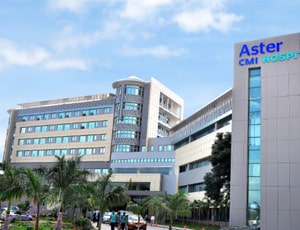
Cranioplasty in Aster Medcity: Costs, Top Doctors, and Reviews

Kochi, India

  • National Accreditation Board for Hospitals & Healthcare Providers (NABH)
  • Joint Commission International, or JCI
  • 670 bed facility
  • 24 hours Emergency and Trauma Care

Aster Centres of Excellence

    • Cardiac Sciences
    • Orthopaedics & Rheumatology
    • Neurosciences
    • Nephrology & Urology
    • Oncology
    • Gastroenterology
    • Integrated Liver Care
    • Womens Health
    • Child & Adolescent Health
    • Multi Organ Transplant
  • Diagnostic Technology used for increasing the efficiency of diagnostic procedures.
  • Streamlined Application of Therapeutic Technology
  • Minimal Access Robotic Surgery (MARS) which makes use of the da Vinci Surgical System is applied by the specialists in Aster Medcity, Kochi, Kerala.
  • ORI Fusion Digital Integrated Operation Theatres which applies Karlstorz OR1 Fusion system.
  • Completely digital Anesthesia facility
  • Pharmacy which possesses completely Automated Drug Dispensing
Cranioplasty in Medicana Camlica Hospital: Costs, Top Doctors, and Reviews

Istanbul, Turkey

4.2 ( 2 Reviews )
  • ISO 9001
  • Joint Commission International, or JCI

Medicana Camlica Hospital located in Istanbul, Turkey is accredited by JCI. Also listed below are some of the most prominent infrastructural details:

  • 150 bedded Hospital
  • Specialty-based clinics
  • Fully-equipped patient rooms
Cranioplasty in Memorial Sisli Hospital: Costs, Top Doctors, and Reviews

Istanbul, Turkey

  • Joint Commission International, or JCI
  • National Accreditation Board for Hospitals & Healthcare Providers (NABH)

Memorial Sisli Hospital located in Istanbul, Turkey is accredited by JCI. Also listed below are some of the most prominent infrastructural details:

  • Operates in a closed area of 53,000 sqm
  • Capacity of 252 beds
  • 13 Operating rooms
  • 4 Intensive Care Units (KVC, General, Coronary, Neonatal)
  • 3 Laboratories
  • Organ Transplantation Center
  • IVF Center
  • Genetic Center
  • Stroke Center
  • Breast Health and Disease Center
  • Oncology Center
  • Da Vinci Robotic Surgery Center
  • Bone Marrow Transplantation Center

Need Some Advice From Our Experts?

Request a Call Back Now!

Our team of healthcare experts would be happy to assist you

trusted Patientstrusted Patients+99
Trusted by 50000+ Patients
Required | alphabets and spaces
Required | A valid, working email address
Required | A valid contact

Process Involved for Cranioplasty

  • First Doctor Visit: The doctor will review your health history and take special images (such as CT or MRI scans) of your skull to determine what needs to be addressed.
  • Preparing for Surgery: Before surgery, you will undergo various tests. The doctor who will administer the anaesthesia (sleep-inducing medication) during the surgery will explain what will happen.
  • The Surgery: You will be asleep during the surgery. The doctor will remove the damaged part of your skull and fix it using your bone or a special material like metal.
  • Recovering in the Hospital: After surgery, you will stay in the hospital for a few days. Doctors and nurses will help you feel comfortable and check for any pain or problems.
  • Healing at Home: After you leave the hospital, it is essential to rest and follow your doctor’s instructions. You might need to take it easy for a while. It could take weeks or months to feel fully better.
  • Follow-up Visits: You will return to the doctor to ensure everything is healing correctly. The doctor may take additional scans to assess the progress of your skull's recovery.
  • Skull Defects: Cranioplasty is used to close holes or gaps in the skull that result from injuries, previous surgeries, or certain health conditions.
  • Traumatic Brain Injury: After a serious head injury, parts of the skull may need to be removed to relieve pressure on the brain. Cranioplasty helps reconstruct the skull once the brain has healed.
  • Cranial Deformities: This procedure corrects abnormal skull shapes caused by congenital disabilities or injuries.
  • Brain Tumours: If part of the skull is removed during surgery to treat a brain tumour, cranioplasty is performed afterwards to restore the skull’s structure.
  • Infections: Severe infections, such as osteomyelitis, can cause damage to the skull, and cranioplasty helps repair this damage and protect the brain.
  • Congenital Malformations: Cranioplasty can correct skull abnormalities present from birth.
  • Aneurysms: After surgery to treat a brain aneurysm, cranioplasty is used to repair the skull and ensure it remains protective of the brain.
  • Pre-Surgical Planning: Doctors review CT or MRI scans to assess the skull defect and design a custom implant if needed.
  • Anaesthesia Administration: The patient is given general anaesthesia to stay asleep and pain-free during the surgery.
  • Scalp Incision: The surgeon carefully opens the scalp over the area where the skull is missing or damaged.
  • Implant Insertion: The missing skull part is replaced using a preserved bone flap or a synthetic implant (such as titanium or ceramic), which is securely fixed in place.
  • Securing the Implant: The implant is held in place using medical plates, screws, or other surgical materials.
  • Closure: The scalp is gently repositioned and closed with stitches or staples.
  • Post-surgery monitoring: The patient is closely monitored in a recovery room, with vital signs and brain activity continuously assessed.
  • Craniectomy
  • Decompression
  • Neurorehabilitation
  • Skull Reconstruction
  • Imaging
  • Improved Appearance: Helps restore the shape and symmetry of the skull.
  • Protection: Offers enhanced protection for the brain following a traumatic injury or surgery.
  • Enhanced Function: Can improve neurological function by reducing pressure on the brain.
  • Pain Relief: Reduces discomfort caused by the skull defect.
  • Psychological Improvement: Enhances self-esteem and mental well-being through improved physical appearance.
  • Prevention of Complications: Helps prevent further brain injury and complications related to the exposed brain.
False
  • Please complete the form to provide us with relevant information about your condition.
  • Consult with Our Healthcare Expert: One of our qualified specialists will contact you for a consultation.
  • Receive a Detailed Treatment Plan: After examining your situation, we will provide you with a detailed treatment plan that includes expert opinions and a cost breakdown for various options.
  • Select your preferred option: Choose the therapy option that best suits your needs.
  • Seamless Organisation: We will manage all the details, including visas, flights, accommodations, and transfers, for a stress-free journey.

Instantly Connect with our Cranioplasty Specialists

Doctor 1
Doctor 2
Doctor 3
Doctor 4
Doctor 5
Doctor 6
Doctor 7
Doctor 8
Our Services to Better your Experience

Opinion & Option

We submit the most accurate opinion and options from one or more countries for your review

Consult Privately

Consult with a certified specialist privately on our telemedicine platform even before you decide to travel

Logistics

We handle flights, visas, transfers, and accommodation—so you can focus on your health.

Recovery

Our In-house rehabilitation service packages to better your recovery and treatment outcome

Author

Dr. Abdullah Rahil

MPT (Neuro)

5 Years of Experience

Dr. Abdullah Rahil, M.P.T. (Neurology), is a dedicated physiotherapy professional specializing in orthopedic, neurological, and musculoskeletal rehabilitation. With strong clinical expertise, he focuses on improving patient mobility, reducing pain, and restoring functional independence through evidence-based rehabilitation techniques. He is skilled in advanced therapeutic approaches that support effective rehabilitation and recovery for a wide range of musculoskeletal and neurological conditions, focusing on improving mobility, reducing pain, and restoring functional independence. Dr. Rahil has extensive experience managing diverse rehabilitation cases. His patient-centered approach emphasizes personalized treatment plans, continuous assessment, and comprehensive rehabilitation to achieve optimal recovery outcomes. . View More

Reviewer

⁠Dr Rakesh Kumar Dua

Spine & Neurosurgeon

25 Years of Experience

Dr. Rakesh Dua has more than 25+ years of clinical experience in spine surgeries. He is currently providing his services as Director, Neuro & Spine Surgery at Fortis Hospital, Shalimar Bagh. Before joining Fortis Hospital, he was associated with Max super-specialist Hospital, Shalimar Bagh as Director Neurosurgery & Head Neuro Spine, and with UCMS & GTB hospital as head of the neurosurgery department. View More