Your Notifications
All done, no notifications

Low Anterior Resection Cost in India

Costs starts from USD3500 to USD8000
Filters

How Much Does Low Anterior Resection Cost in India?

The cost of Low Anterior Resection in India typically ranges between USD 3500 - USD 8000. The costs depend on a variety of factors, including how surgery is performed (surgical approach), what infrastructure supports surgery (hospital), how experienced the surgeon performing the surgery is, diagnostic testing, types of anesthesia used, how long you are hospitalized after the surgical procedure, and what type of postoperative care you receive.

Any additional procedures required due to surgical complications and/or rehabilitation services will also affect the total cost of a person's course of treatment.

Factors Affecting the Cost of Low Anterior Resection in India

Cost of Low Anterior Resection in Major cities of India

CityMinimum Cost (USD)Minimum Cost (INR)Maximum Cost (USD)Maximum Cost (INR)
AhmedabadUSD 3150293643USD 7200671184
BangaloreUSD 3500326270USD 8000745760
ChennaiUSD 3500326270USD 8000745760
DelhiUSD 3500326270USD 8000745760
FaridabadUSD 3500326270USD 8000745760
GhaziabadUSD 3500326270USD 8000745760
GurgaonUSD 3500326270USD 8000745760
GurugramUSD 3500326270USD 8000745760
HyderabadUSD 3500326270USD 8000745760
KochiUSD 3500326270USD 8000745760
KolkataUSD 3500326270USD 8000745760
MohaliUSD 3150293643USD 7200671184
MumbaiUSD 3500326270USD 8000745760
NoidaUSD 3500326270USD 8000745760
PuneUSD 3150293643USD 7200671184

Low Anterior Resection Cost : A Global Comparison

CountryMinimum CostMinimum Local CurrencyMaximum CostMaximum Local Currency
CzechiaUSD 13000CZK 276510USD 21700CZK 461559
HungaryUSD 11000HUF 3672020USD 19000HUF 6342580
IndiaUSD 3500INR 326270USD 8000INR 745760
IsraelUSD 20000ILS 63000USD 35000ILS 110250
LithuaniaUSD 12000LTL 35880USD 20000LTL 59800
MalaysiaUSD 9000MYR 36360USD 18000MYR 72720
PolandUSD 11000PLN 40920USD 19000PLN 70680
Saudi ArabiaUSD 16000SAR 60000USD 28000SAR 105000
SingaporeUSD 22000SGD 28380USD 40000SGD 51600
South AfricaUSD 13000ZAR 221000USD 22000ZAR 374000
South KoreaUSD 16000KRW 24289600USD 28000KRW 42506800
SpainUSD 16000EUR 13920USD 30000EUR 26100
SwitzerlandUSD 30000CHF 24000USD 55000CHF 44000
ThailandUSD 14000THB 458640USD 24000THB 786240
TunisiaUSD 9500TND 27930USD 18000TND 52920
TurkeyUSD 11000TRY 489500USD 19000TRY 845500
United Arab EmiratesUSD 18000AED 66060USD 32000AED 117440
United KingdomUSD 18000GBP 15660USD 35000GBP 30450
VietnamUSD 32000VND 842976000USD 75000VND 1975725000

Need Help Planning Your Treatment Abroad?

Your 24/7 AI Health Assistant

The advantages of low anterior resection include the removal of abnormal or cancerous tissue from the distal rectum, as well as the ability to preserve bowel continuity after surgery and maintain normal bowel function.

If you notice blood in your stool, have ongoing changes in your bowel habits, if you unexpectedly lose weight, if your stomach hurts, or if you’re diagnosed with rectal cancer, you should talk with your doctor.

In preparing for low anterior resection surgery, you’ll need to have a medical evaluation; have laboratory tests completed (blood work); have an imaging scan performed (X-ray/MRI); have a colonoscopy; be on a bowel prep diet prior to surgery; and have an assessment of your anesthesia needs.

During the operation, the surgeon removes the diseased part of the rectum and reconnects the remaining healthy part of the colon. This will enable the patient to have a functioning colon after surgery. Low anterior resection surgery can be done through open surgery, laparoscopic surgery, or robotic-assisted surgery with the patient under general anesthesia.

  • Surgery duration: 3 to 5 hours
  • Hospital stay: 5 to 8 days
  • Full recovery: 6 to 8 weeks

  • Infection and bleeding
  • Anastomotic leakage
  • Bowel or bladder dysfunction
  • Blood clots
  • Temporary or permanent stoma
  • Sexual dysfunction

It includes complete removal of rectal cancer or diseased tissue, preservation of bowel continuity, avoidance of permanent colostomy in many patients, improved survival and disease control, and better quality of life

After surgery, patients are typically instructed to begin walking within 24 hours. The patient's diet will be gradually transitioned from liquid to solid foods. Controlling the patient's pain level, caring for the surgical site, and monitoring bowel function will be essential areas of follow-up. Most patients can return to their normal activities after approximately 6-8 weeks of regular postoperative follow-up and care.

LAR has a high overall success rate for treating rectal cancer, with five-year survival rates typically above 80% for local and early-stage cancers, and local recurrence rates of less than 10%-15%, particularly with the application of advanced surgical techniques such as TME.

Would you like some help? We are available.

Get Help
Explore Hospitals ( 44 )
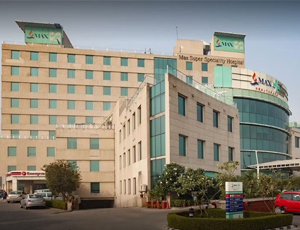
Low Anterior Resection in Max Super Specialty Hospital, Shalimar Bagh: Costs, Top Doctors, and Reviews

Delhi, India

  • National Accreditation Board for Hospitals & Healthcare Providers (NABH)
  • National Accreditation Board for Testing and Calibration Laboratories (NABL)
  • Max Super Speciality Hospital, Shalimar Bagh, is a 402-bed quaternary-care hospital in New Delhi, offering advanced treatment across 37+ specialities, including Cancer, Cardiac, Neurosciences, Gastroenterology, Orthopaedics, and Renal Transplant.
  • Equipped with state-of-the-art technology and a team of highly skilled doctors and nurses, the hospital provides complex procedures, minimally invasive surgeries, and targeted cancer treatments, making it one of India’s leading healthcare destinations.
Low Anterior Resection in Amrita Hospital: Costs, Top Doctors, and Reviews

Faridabad, India

  • National Accreditation Board for Hospitals & Healthcare Providers (NABH)

Founded in 1998 by Mata Amritanandamayi (Amma), the Amrita Institute of Medical Sciences and Research Centre is one of India’s leading healthcare institutions, accredited by ISO, NABH, and NABL. With 2 branches, 7 medical colleges, and a network of 800+ doctors and 2,600+ beds, it offers comprehensive care across 81 specialties and 12 super-specialty departments, supported by 60+ modern operating theatres and 534 critical care beds. The Faridabad campus, a world-class multispeciality facility, houses advanced centers for oncology, neurosciences, cardiac sciences, gastro-sciences, mother and child care, and trauma care, along with India’s most comprehensive infectious disease unit. Guided by a mission of compassion and innovation, Amrita Hospitals combine cutting-edge medicine with humanitarian service to empower communities and promote holistic well-being.

Low Anterior Resection in Rajagiri Hospital: Costs, Top Doctors, and Reviews

Kochi, India

  • Joint Commission International, or JCI
  • Rajagiri Hospital, Kochi, Kerala, is a leading multi-speciality tertiary care hospital known for providing world-class medical services with advanced technology and compassionate care.
  • Accredited by JCI, NABH, and NABL, the hospital offers comprehensive treatment across specialities like Cardiology, Oncology, Neurology, Gastroenterology, Orthopaedics, Nephrology, Urology, and Paediatrics, making it a trusted healthcare destination in South India.
Low Anterior Resection in Jaypee Hospital: Costs, Top Doctors, and Reviews

Noida, India

  • National Accreditation Board for Hospitals & Healthcare Providers (NABH)
  • Joint Commission International, or JCI

Jaypee Hospital located in Noida, India is accredited by ISO, NABH, NABL. Also listed below are some of the most prominent infrastructural details:

  • 525 beds in the first phase
  • 150 Critical Care beds
  • 325 ward beds with Suite, Deluxe, Twin Sharing, and Economy options
  • 18 Modular OTs
  • 4 Cardiac Catheterization Lab with unqie Hybrid Operating Room
  • 24 bedded Advanced Neonatal ICUs20 bedded Dialysis Units
  • 2 Linear Accelerator (IMRT, VMAT, I
  • GRT), Wide Bore CT Simulator, one Brachytherapy Suite
  • True Beam STx Linear Accelerator
  • 2 MRI (3.0 Tesla) with High-Intensity Focused Ultrasound
  • 64 Slice PET CT, Gamma Camera, Dual Head 6 Slice SPECT CT
  • 256 Slice CT Scan, CT Simulation
  • Amongst the few GOLD LEED-certified hospital buildings in India
  • Appointment Scheduling
  • Flow motion 64 Slice PET CT technology
  • Pick and drop facility from/to the Airport
  • Foreign exchange facility
  • Treatment packages
  • Visa assistance
  • Admission in the hospital
  • Wi-Fi/internet service in the room
  • Travel arrangement for patient & attendant after discharge
  • Tele-consults after discharge
  • Dedicated Guest House for International Patients maintained by Jaypee Hospital
  • In-house translators for patient’s comfort
  • Assistance in getting doctor’s opinion
  • Registration with the Foreigners Regional Registration Office
  • Accommodation arrangements after discharge
  • Accommodation arrangement for the accompanying attendant
  • Customized diet for patient and attendant
  • Laundry services
  • Prayer room
  • Dialysis facility for 60 patients
  • Cadaver organs
  • Blood bank facilities
  • Advanced Laboratory facilities
  • Diagnostic and Radiology facilities
  • High-end Ultrasound facilities

Need Some Advice From Our Experts?

Request a Call Back Now!

Our team of healthcare experts would be happy to assist you

trusted Patientstrusted Patients+99
Trusted by 50000+ Patients
Required | alphabets and spaces
Required | A valid, working email address
Required | A valid contact

Process Involved for Low Anterior Resection in India

  • Preoperative evaluation and imaging: The individual has blood tests, colonoscopy, CT or MRI scans to measure the dimension, location and axial spread of the tumour. This information will assist the surgical team in preparing the safest and highest probability of success surgical technique.
  • Bowel Preparation and anaesthesia assessment: The bowel is cleaned with prescribed laxatives, and the patient must fast before surgery. The anaesthetist assesses the patient to ensure safety for general anaesthesia.
  • Surgical Excision of Rectal Segment Containing Disease/Tumour: The surgeon removes the section of rectum that contains the disease/tumour via open, laparoscopic or robotic methods while the patient is under general anaesthesia.
  • Rejoining of Healthy Portions of the Bowel: After the surgical procedure, the surgeon rejoins the healthy ends of the colon and rectum. In some instances, a temporary stoma will be created to protect the perineum and maintain bowel continuity.
  • Postoperative Recovery and Monitoring: During the recovery period, healthcare providers will closely monitor the individual for pain management, bowel function, and infection/leakage, and will gradually increase the amount of food consumed and allow physical activity.
  • Follow-Up and Rehabilitation: Patients will return to the facility for scheduled follow-up appointments to ensure the healing process is going well, that bowel function is normal, and that the patient is on track for a full recovery.
  • Rectal cancer
  • Large rectal polyps
  • Severe inflammatory bowel disease
  • Rectal strictures or obstruction
  • Non-healing rectal ulcers
  • Open Low Anterior Resection
  • Laparoscopic Low Anterior Resection
  • Robotic-Assisted Low Anterior Resection
  • Condition: Diagnosed with Severe Rectal Cancer (Rectum) or Rectal Disease, which requires Surgical Removal
  • Tumor location: Lower or Middle Rectum (candidate for preserving Sphincter Surgery)
  • Candidate for Total Abdominal Surgery (healthy enough to have a history of Major Abdominal Surgery)
  • Lung Function, Heart Function, and Kidney Function are Adequate (medical clearance assessment)
  • Surgical staples for bowel reconnection
  • Absorbable sutures for internal tissue closure
  • Temporary drainage tubes for fluid removal
  • Temporary ileostomy or colostomy
  • Lymph node dissection
  • Tumor biopsy
  • Stoma closure surgery (if required)
  • Complete removal of rectal cancer or diseased tissue
  • Preservation of bowel continuity
  • Avoidance of permanent colostomy in many patients
  • Improved survival and disease control
  • Better quality of life
  • Complete removal of diseased rectal tissue
  • Preservation of normal bowel function
  • Reduced cancer recurrence risk
  • Improved digestion and quality of life
  • Long-term disease control
  • Fill out the inquiry form: Fill out the form to provide us with the relevant information about your condition.
  • Consult with Our Healthcare Expert:One of our qualified specialists will contact you for a consultation
  • Receive a Detailed Treatment Plan:After examining your situation, we will provide you with a detailed treatment plan that includes expert views and cost breakdowns for various choices.
  • Choose your preferred option: Choose the treatment option that suits you the best.

Instantly Connect with our Low Anterior Resection Specialists

Doctor 1
Doctor 2
Doctor 3
Doctor 4
Doctor 5
Doctor 6
Doctor 7
Doctor 8
Our Services to Better your Experience

Opinion & Option

We submit the most accurate opinion and options from one or more countries for your review

Consult Privately

Consult with a certified specialist privately on our telemedicine platform even before you decide to travel

Logistics

We handle flights, visas, transfers, and accommodation—so you can focus on your health.

Recovery

Our In-house rehabilitation service packages to better your recovery and treatment outcome

Other Popular Countries for Low Anterior Resection

Our network connects you with the leading medical tourism destinations globally, offering a wide range of cities, top doctors, and flexible pricing options.

Thailand
United Arab Emirates
Singapore
United Kingdom

Frequently Asked Questions

Most patients will require approximately 4-6 weeks to fully recover and resume their normal activities prior to the operation. Complete internal healing can take an additional few weeks, depending on your overall health, the surgical methods used, and other factors.

In addition to the procedure cost, patients may incur:
  • Pre-treatment tests
  • Medications during recovery
  • Follow-up consultations
  • Most patients are hospitalised for 5-8 days on average after the procedure, but this duration can vary significantly depending on individual healing rates, surgical technique, and complications.

    Long-term care after having this procedure usually consists of continued follow-up appointments, regular monitoring of bowel functions, dietary recommendations, advice on physical activity, and potential surveillance for cancer if diagnosed with rectal cancer

    Advanced Surgical procedures are available in India at internationally recognised levels, supported by highly skilled colorectal surgeons and the latest surgical technologies, and delivered in modern hospitals that provide high-quality post-operative care.

    A pre-treatment evaluation for a low anterior resection includes blood tests, colonoscopy, CT or MRI scan, EKG, chest X-ray, and risk assessment for anesthesia.

    Yes. Low anterior resection surgery is safe when performed at accredited hospitals by experienced surgeons with extensive experience in these procedures, and at hospitals that provide excellent service to international patients.

    LAR has a high overall success rate for treating rectal cancer, with five-year survival rates typically above 80% for local and early-stage cancers

    Author

    Tanya Bose

    MSc Biotechnology

    2.5 Years of Experience

    Tanya Bose is a medical content specialist with a strong medical background. She has completed her Bachelor's and Master’s in Biotechnology from Amity University. With a deep understanding of biomedical sciences and research, she develops authoritative and patient-focused medical content covering treatments, surgical procedures, and healthcare innovations. Her writing emphasizes accuracy, clarity, and evidence-based information to help readers better understand complex medical topics. She is dedicated to improving patient awareness and supporting informed healthcare decisions by delivering trustworthy medical insights in a clear and accessible format. . View More