Your Notifications
All done, no notifications

Hepatectomy (Liver Resection) Cost in Delhi

Costs starts from USD4000 to USD10000
Filters

Cost of Hepatectomy (Liver Resection) in Major cities of India

CityMinimum Cost (USD)Minimum Cost (INR)Maximum Cost (USD)Maximum Cost (INR)
AhmedabadUSD 3600335592USD 9000838980
BangaloreUSD 4000372880USD 10000932200
ChennaiUSD 4000372880USD 10000932200
DelhiUSD 4000372880USD 10000932200
FaridabadUSD 4000372880USD 10000932200
GhaziabadUSD 4000372880USD 10000932200
GurgaonUSD 4000372880USD 10000932200
HyderabadUSD 4000372880USD 10000932200
KochiUSD 4000372880USD 10000932200
KolkataUSD 4000372880USD 10000932200
MohaliUSD 3600335592USD 9000838980
MumbaiUSD 4000372880USD 10000932200
NoidaUSD 4000372880USD 10000932200
PuneUSD 3600335592USD 9000838980

Need Help Planning Your Treatment Abroad?

Your 24/7 AI Health Assistant

Hepatectomy involves removing the diseased or damaged part of the liver. Hepatectomy is used to treat different types of liver cancer, as well as benign neoplasms, metastatic hepatic disease, trauma or extensive hepatic infections.

  • Persistent abdominal pain or swelling
  • Jaundice (yellowing of skin or eyes)
  • Unexplained weight loss or fatigue
  • Liver tumors detected on imaging
  • Chronic liver disease with worsening symptoms

  • General anesthesia is administered
  • The surgeon accesses the liver using open, laparoscopic, or robotic methods
  • The diseased liver portion is carefully removed
  • Blood vessels and bile ducts are sealed
  • The remaining healthy liver is preserved for regeneration

The procedure is performed while patients are unconscious and through an incision (open), using cameras and instruments placed through small incisions on the abdomen (laparoscopic), or by robots (robotic). The surgeon removes the part of the liver that has a disease. Blood vessels and ducts that carry bile from the liver are sealed to prevent further bleeding or leakage.

  • Surgery duration: 3–6 hours, depending on complexity
  • Hospital stay: 5–10 days on average
  • Full recovery: 6–8 weeks for routine activities

  • Bleeding and infection
  • Bile leakage
  • Liver failure (rare)
  • Blood clots
  • Breathing complications
  • Delayed liver regeneration

It includes the complete removal of liver tumors or diseased tissue, prevents cancer spread, improves liver function in selected cases, relieves abdominal pain and pressure, and enhances long-term survival and quality of life

  • Postoperatively, most patients will initially be cared for in the Intensive Care Unit (ICU), followed by a gradual resumption of normal activities and dietary modifications.
  • Monitoring for complications and managing pain related to the surgical procedure, monitoring liver function postoperatively, caring for the surgical wound, and performing imaging studies after the patient has returned home will be important for most individuals.
  • After 6–8 weeks, most patients will return to their normal daily lives as the liver continues to regenerate.

There is a wide variation in the success of hepatotoxicity for liver tumors based on the type of cancer and the size of the tumor or its location, as well as the health of the patient. Liver Tumors (HCC) typically have a 5-year survival rate of approximately 50-70%. However, the survival rates for selected, early-stage liver tumors can be as high as 90% for a 5-year period after treatment.

Would you like some help? We are available.

Get Help
Explore Hospitals ( 14 )
Hepatectomy (Liver Resection) in Aakash Healthcare Super Speciality Hospital: Costs, Top Doctors, and Reviews

Delhi, India

  • National Accreditation Board for Hospitals & Healthcare Providers (NABH)
  • ISO 9001

Aakash Healthcare Super Speciality Hospital located in New Delhi, India is accredited by NABH. Also listed below are some of the most prominent infrastructural details:

  • One of the biggest tertiary care hospitals in India
  • Facility is fusion of state of the art technology, competent clinicians, and world-class infrastructure
  • 230 beds
  • 70 bedded medical and surgical and Critical Care Unit
  • Ward Bed Options- Twin, Deluxe, Sharing and Economy
  • Pneumatic Tube System
  • Ambulance Services 24x7
  • 15 Bedded dialysis unit
  • Advanced Neonatal ICU
  • Advanced imaging services, including magnetic resonance imaging, computed tomography scanning, digital mammography, ultrasound
  • 8 modular OTs
  • Flat Panel Cath Labs
  • LASIK - SMILE Suite
  • Wellness Lounge
  • State-of-the-art diagnostic equipment
  • 15 Dialysis beds
  • 24x7 ‘Trauma & Emergency Center
  • Dedicated blood bank
  • 24x7 comprehensive patient care.
  • Deployed high-end technologies & smart digital system
  • Robust Hospital Information Systems to meet complex medical needs of patients
  • Robotic assisted surgeries
  • International Patients Lounge
  • Airport Pick-up and Drop
  • Accommodation and Food for Attendant
  • Language Interpreter Services
  • 4 triage beds, a dedicated sample collection room, 6 observation beds, and highly skilled emergency staff
  • Robotic knee replacement surgery
  • ATM
  • Lounge for visitors
  • Internet Access: The whole facility is Wi-Fi enabled
  • Travel Desk: Provides an all-round patient care.
  • 24x7 pharmacy
Hepatectomy (Liver Resection) in Pushpawati Singhania Research Institute: Costs, Top Doctors, and Reviews

Delhi, India

  • National Accreditation Board for Hospitals & Healthcare Providers (NABH)
  • National Accreditation Board for Testing and Calibration Laboratories (NABL)

Pushpawati Singhania Research Institute located in New Delhi, India is accredited by NABH, NABL. Also listed below are some of the most prominent infrastructural details:

  • Multi-bed hospital with state-of-art infrastructure
  • Advanced medical equipment
  • High-tech labs
  • Modular operation theaters
  • Cath labs with Clarity Platform, 128 channel CARTO 3 version 4 with ICE mapping facility, FD 10 Prucka 2D EP system
  • High-end Intensive Coronary Care Unit
  • Dedicated Pre-Post Cath Unit
  • Multislice CT Scan, 1.5 Tesla MRI
  • 24 *7*365 functional cardiac Cath lab & operation theatre
  • Fifteen bedded Coronary Care Unit
  • 3D, 4D Echo & Trans-oesophageal Echo, Non Invasive cardiology (Holter, TMT, Echo, 24hrs ambulatory BP Monitoring
  • Radio Frequency Ablation like Complex Arrhythmia such as ischemic VT, AF with 3 D Mapping imaging
  • RFA using ICE Intra-cardiac Echo
  • Well-equipped inpatient and intensive care services
  • Ultra-modern Blood Bank Facility
  • Advanced Physiotherapy center, 24/7 Emergency &Trauma services
  • Gastroenterology department equipped with Capsule endoscopy, Endoscopic retrograde cholangiopancreatography, Single balloon enteroscopy, High resolution esophageal and anorectal manometry, Endoscopic ultrasound, and hydrogen breath test
    Sustained low-efficiency daily dialysis and Continuous Renal Replacement Therapy
  • Exhaled Nitric oxide (FeNO) and allergy testing for the management of asthma
  • Conventional PAP/ Liquid PAP/ HPV-DNA test for the patients with the High risk of cervical cancer
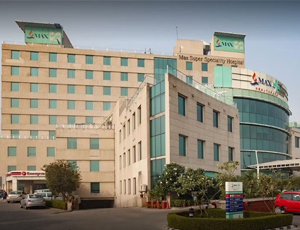
Hepatectomy (Liver Resection) in Max Smart Super Speciality Hospital: Costs, Top Doctors, and Reviews

Delhi, India

3.9 ( 2 Reviews )
  • National Accreditation Board for Hospitals & Healthcare Providers (NABH)
  • Joint Commission International, or JCI
  • Max Smart Super Speciality Hospital, Saket, New Delhi, is a 250-bed tertiary care hospital known for advanced medical technology and patient-centred care.
  • The hospital offers services across 22+ specialities, including Cardiac Sciences, Orthopaedics, Urology, Neurology, Neurosurgery, Paediatrics, Obstetrics, and Gynaecology.
  • It is a regional hub for complex procedures such as neurovascular interventions, targeted cancer treatments, heart surgeries, kidney and liver transplants, and bariatric care.
  • Equipped with a 3.0 Tesla MRI, 256 Slice CT Angio, Cath Labs, Digital Orthopaedic Suite, and advanced diagnostic tools, and supported by 275+ doctors and 606+ trained staff, Max Smart Saket provides high-quality, multidisciplinary care for domestic and international patients.
Hepatectomy (Liver Resection) in Max Super Specialty Hospital, Shalimar Bagh: Costs, Top Doctors, and Reviews

Delhi, India

  • National Accreditation Board for Hospitals & Healthcare Providers (NABH)
  • National Accreditation Board for Testing and Calibration Laboratories (NABL)
  • Max Super Speciality Hospital, Shalimar Bagh, is a 402-bed quaternary-care hospital in New Delhi, offering advanced treatment across 37+ specialities, including Cancer, Cardiac, Neurosciences, Gastroenterology, Orthopaedics, and Renal Transplant.
  • Equipped with state-of-the-art technology and a team of highly skilled doctors and nurses, the hospital provides complex procedures, minimally invasive surgeries, and targeted cancer treatments, making it one of India’s leading healthcare destinations.

Need Some Advice From Our Experts?

Request a Call Back Now!

Our team of healthcare experts would be happy to assist you

trusted Patientstrusted Patients+99
Trusted by 50000+ Patients
Required | alphabets and spaces
Required | A valid, working email address
Required | A valid contact

Process Involved for Hepatectomy (Liver Resection) in Delhi

  • General Anaesthesia: The entire procedure is performed under general anaesthesia to ensure maximum patient comfort (i.e., the patient is free from sensation and awareness) throughout all stages of the surgical operation.
  • Accessing the Liver Surgically: The liver is accessed through an open surgical approach (traditional "cut-and-sew"), laparoscopically (minimally invasive surgery), or robotically.
  • Extraction of Diseased Liver Tissue: The diseased portion of the liver is meticulously identified and excised (i.e., surgically taken out) while preserving normal (healthy) surrounding liver tissue.
  • Closure of Blood Vessels & Bile Ducts: All blood vessels and bile ducts are tightly clamped and/or sealed (e.g., ligated) to prevent any potential bleeding or bile leakage, both during and after the surgical procedure.
  • Protecting the Remaining Healthy Liver: The remaining healthy portions of the liver are preserved to enable natural regeneration and return to normal function postoperatively.
  • Primary liver cancer (hepatocellular carcinoma)
  • Liver metastases
  • Benign liver tumors
  • Liver abscess and infections
  • Liver trauma
  • Congenital liver disorders
  • Partial hepatectomy
  • Left hepatectomy
  • Right hepatectomy
  • Extended hepatectomy
  • Laparoscopic hepatectomy
  • Robotic-assisted hepatectomy
  • Patients diagnosed with liver tumors, liver cancer, or metastatic liver disease
  • Individuals with benign liver growths causing symptoms or complications
  • Patients with liver trauma or severe liver infections
  • Individuals with sufficient healthy liver reserve for safe surgery
  • Patients cleared through pre-operative medical evaluation
  • Surgical sutures
  • Surgical clips
  • Vascular staplers
  • Bile duct stents (if required)
  • Liver biopsy
  • Portal vein embolization
  • Radiofrequency ablation
  • Chemoembolization (TACE)
  • Biliary drainage procedures
  • Complete removal of liver tumors
  • Prevention of cancer progression
  • Relief from abdominal pain and pressure
  • Improved liver function in selected patients
  • Enhanced long-term survival
  • Improved quality of life
  • Successful removal of diseased liver tissue
  • Preservation of healthy liver function
  • Natural regeneration of the remaining liver
  • Reduced risk of disease recurrence
  • Improved overall health and longevity
  • Fill out the inquiry form: Fill out the form to provide us with the relevant information about your condition.
  • Consult with Our Healthcare Expert:One of our qualified specialists will contact you for a consultation
  • Receive a Detailed Treatment Plan:After examining your situation, we will provide you with a detailed treatment plan that includes expert views and cost breakdowns for various choices.
  • Choose your preferred option: Choose the treatment option that suits you the best.

Instantly Connect with our Hepatectomy (Liver Resection) Specialists

Doctor 1
Doctor 2
Doctor 3
Doctor 4
Doctor 5
Doctor 6
Doctor 7
Doctor 8
Our Services to Better your Experience

Opinion & Option

We submit the most accurate opinion and options from one or more countries for your review

Consult Privately

Consult with a certified specialist privately on our telemedicine platform even before you decide to travel

Logistics

We handle flights, visas, transfers, and accommodation—so you can focus on your health.

Recovery

Our In-house rehabilitation service packages to better your recovery and treatment outcome

Other Popular Countries for Hepatectomy (Liver Resection)

Our network connects you with the leading medical tourism destinations globally, offering a wide range of cities, top doctors, and flexible pricing options.

Malaysia
Turkey
Vietnam
Thailand

Frequently Asked Questions

Typically, patients recover within 2-3 weeks after surgery; however, full recovery can take 6-8 weeks. After surgery, the rate of complete recovery depends on the extent of liver resection and the patient's health status.

In addition to the procedure cost, patients may incur:
  • Pre-treatment tests
  • Medications during recovery
  • Follow-up consultations
  • Most patients will have an average length of stay of about 5-10 days in a hospital after having a hepatectomy, depending on how fast a patient recovers and if they require intensive care.

    In the long term, a patient will continue to undergo regular tests to monitor liver function, will continue follow-up imaging, will maintain a healthy diet, will take medications as directed, and will gradually return to normal activities.

    Many countries have advanced liver surgery facilities, experienced hepatobiliary surgeons, state-of-the-art hospital facilities, and comprehensive support services for international patients.

    For the purpose of testing the status of an individual’s liver function before they have a hepatectomy, each patient will usually have to complete the following tests: blood testing, liver function testing, a CT scan or an MRI, an ECG, an evaluation for anesthesia, and, in some cases will require an assessment of the volume of the liver.

    Hepatectomy (surgical removal of part of the liver) is generally regarded as safe when performed by well-trained and experienced hepatobiliary surgeons and in accordance with specified guidelines for international patients.

    The survival rates for selected, early-stage liver tumors can be as high as 90% for a 5-year period after treatment.

    Author

    Dr. Shagufta Parveen

    Doctor of Pharmacy

    1.5 Years of Experience

    Dr. Shagufta Parveen is a medical and scientific content writer with expertise in clinical pharmacology and pharmacotherapeutics. She holds a B.Pharm and Doctor of Pharmacy (Post-Baccalaureate) degree from Teerthanker Mahaveer University, Moradabad. During her clinical stint at BLK-Max Super Speciality Hospital and Indraprastha Apollo Hospital, she gained hands-on experience in the Clinical Pharmacology Department. Combining scientific knowledge with strong medical writing skills, Dr. Shagufta develops evidence-based healthcare content, treatment guides, and patient education resources. Her work focuses on simplifying complex medical concepts while maintaining scientific accuracy, helping readers better understand healthcare advancements and treatment options. . View More