Your Notifications
All done, no notifications

Cost of Left ventricular assist device (LVAD) Worldwide

Get a Quote

Affordable World-class Treatment - Accredited Hospitals - Free Treatment Plan in 24 Hrs

10
Days in Hospital
4-8 hrs
Procedure Time
80 - 90%
Success Rate
JCI/ISO 100,000+ Patients 24X7 Coordinator Visa & Travel handled
Your all-in-one medical travel platform for treatment, recovery & care.

Get Your Personalised Treatment Plan in Just 24 Hours.

Share your details to receive a personalised treatment plan, estimated costs, hospital recommendations, and expert guidance, “completely free.”

Required | alphabets and spaces
Required | A valid, working email address
Required | A valid contact
Connect with an Expert

Your information is protected with HIPAA-compliant security standards. We only share your details with hospitals after your consent.

Estimated Treatment Cost
All-inclusive • Hospital + Medications + Recovery Assistance + Dedicated Care Coordinator

International Quality. Affordable Care.
Dr. Vijita Jayan
Author

BPT, MPT (Neuro)

18 Years of Experience

Last Reviewed - June 2026

With over 18 years of distinguished clinical experience, Dr. Vijita Jayan is a highly accomplished Clinical Director and Rehabilitation Specialist, renowned for her expertise in neuro-rehabilitation, functional recovery, and mobility-dependent case management. Her extensive practical knowledge enables her to design and implement individualized, evidence-based rehabilitation protocols that consistently yield measurable patient outcomes. A prolific researcher and academic writer, she has authored numerous peer-reviewed articles and research papers, significantly advancing the field of rehabilitative medicine. The recipient of multiple prestigious accolades, Dr. Jayan is widely regarded as one of the foremost authorities in Physical Medicine and Rehabilitation, continually shaping neuro-rehabilitative care through research, innovation, and clinical excellence.
View More
Dr. Naresh Kumar Goyal
Reviewer

Cardiologist

21 Years of Experience

Last Reviewed - June 2026

Dr. Naresh Kumar Goyal is highly trained as a cardiologist with exposure in virtually all aspects of cardiology. He qualified with an MD in internal medicine in 1999 from SMS Medical College, Jaipur, and served in the Cardiology Department as an honorary resident. From this stage, he also started with training in the temporary pacing of the pacemaker as well as interventional services.
View More

Need Help Choosing the Right Treatment? Talk to a Medical Advisor

Our dedicated Medical Patient Advisors are here to answer your questions, help you compare treatment options, estimate costs, and guide you through every step of your healthcare journey.

15 min
Average response time

Serving Patients Worldwide in Multiple Languages.

Ventricular assist devices (VADs) are pumps that help pump blood from the lower chambers of the heart to the rest of the body's organs. It's a therapy for heart failure or a failing heart. While further therapies, like such a heart transplant, are not yet a reality, a VAD can be used to sustain the heart. A VAD can be used to help the heart pump forever.

A long-term mechanical circulatory support device (VAD) is another term for all of these devices.

A VAD is most commonly placed in the left ventricle, which is the lower chamber of the heart. A left ventricular assist device (LVAD) is its name when it is placed inside the left ventricle. LVADs are what this article discusses.

An LVAD is used to support patients with severe left-sided heart failure when the heart can't pump enough blood. It can be used as a destination therapy for non-transplant candidates, a bridge to recovery in reversible disorders, or a bridge to transplant.

See a cardiologist if your heart failure symptoms—such as shortness of breath, edema, excessive exhaustion, or repeated hospitalisations despite the best medical treatment- get worse. If you are waiting for a heart transplant or if traditional treatments don't work, you can be recommended for an LVAD examination. Seek immediate medical attention if you experience fever, device alerts, bleeding, or infection symptoms after implantation.

Comprehensive medical assessments, device care education, and collaboration with a multidisciplinary care team are all part of being ready for an LVAD. In addition to receiving social and emotional support, patients might need to modify their lifestyle prior to surgery.

  • Anaesthesia: The patient is put under general anaesthesia.
  • Incision: Usually, a median sternotomy (chest opening) is carried out.
  • Pump Location: After the LVAD is surgically installed, the outflow cannula is attached to the aorta and the inflow cannula is inserted into the left ventricle.
  • Controller & Power Source: The patient's external controller and battery pack are coupled to a driveline cable inserted through the abdomen.
  • Heart-Lung Machine: During surgery, the patient can be hooked up to a heart-lung bypass machine.
  • Closure: Sutures and staples close the chest after the device is in position and operating.

LVAD implantation typically takes 4 to 6 hours, depending on the patient's condition and the complexity of the case.

Potential risks of LVAD implantation include:

  • Infection
  • Strokes and thrombosis
  • Bleeding
  • Failure of the right heart
  • Kidney damage
  • Failure of the left ventricular assist device

Vital organs, including the kidneys, liver, and brain, work better when blood flow is increased throughout the body by a left ventricular assist device (LVAD). It improves strength and the capacity to engage in previously challenging tasks, including cardiac rehabilitation, by reducing symptoms like exhaustion, dyspnea, and edema. Furthermore, patients can frequently leave the hospital and continue their recovery at home with the help of an LVAD.

Recovery following LVAD surgery requires a hospital stay of two to four weeks, including intensive care unit time. Patients and caregivers are trained on how to use devices, charge batteries, and change dressings. Regular follow-ups and cardiac rehabilitation are important. It could take several months to recover fully, requiring constant medication and lifestyle changes.

LVADS have a 1-year survival rate of over 80% and a 2-year survival rate of 70%. Usually, both functional status and quality of life improve. Because of their superior results and increased longevity, continuous-flow LVADS are in the lead.

Explore Hospitals ( 185 )

Tel Aviv, Israel

1500+ Beds · 214+ Procedures
JCI

Delhi, India

3.9 - 2 reviews · 250+ Beds · 246+ Procedures
JCI NABH
Starting
USD 95000

Ajman, United Arab Emirates

4.1 - 1 review · 350+ Beds · 253+ Procedures
JCI
Starting
USD 90000

Bangkok, Thailand

24+ Procedures
NABH

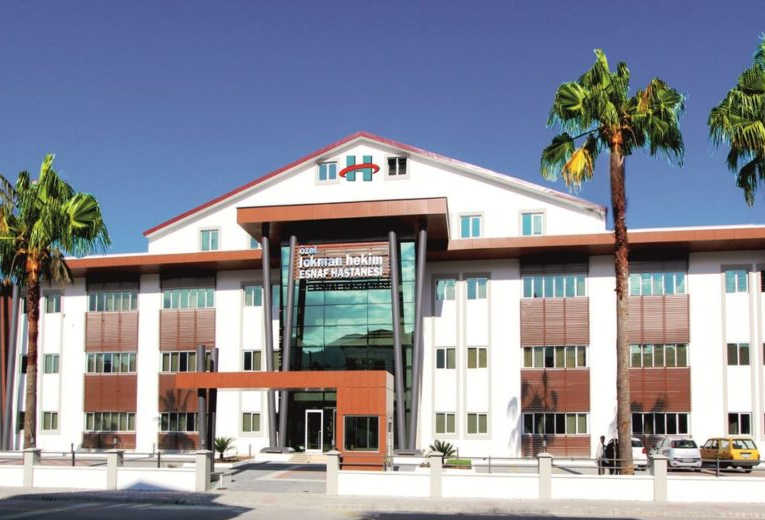
Fethiye, Turkey

75+ Beds · 151+ Procedures
JCI
Starting
USD 85000

Cheadle, United Kingdom

183+ Procedures
NABH
Starting
USD 120000

Delhi, India

402+ Beds · 268+ Procedures
NABH NABL
Starting
USD 95000

Faridabad, India

2600+ Beds · 276+ Procedures
NABH
Starting
USD 75000

Kochi, India

273+ Procedures
JCI
Starting
USD 80000

Kuala Lumpur, Malaysia

171+ Beds · 264+ Procedures
MSQH
Starting
USD 80000

Get Your Left ventricular assist device (LVAD)
Plan in 24 hrs.

Our experienced Medical Patient Advisors have supported 100,000+ patients across 120+ countries with personalised treatment plans, hospital recommendations, cost estimates, and travel assistance, all free.

HIPAA-Compliant Data SecurityShared Only with Your Consent

Free Consultation No Obligation Personalized Treatment Plan Response Within 24 Hours

Required | alphabets and spaces
Required | A valid, working email address
Required | A valid contact

Your medical info is kept HIPAA-style confidential. We never share with hospitals without your consent.

Jenny Wilson
Your Dedicated Medical Patient Advisor
Treatment planning • Hospital coordination • Multilingual support • Response within 15 minutes.
Our Services to Better your Experience

Opinion & Option

We submit the most accurate opinion and options from one or more countries for your review

Consult Privately

Consult with a certified specialist privately on our telemedicine platform even before you decide to travel

Logistics

We handle flights, visas, transfers, and accommodation—so you can focus on your health.

Recovery

Our In-house rehabilitation service packages to better your recovery and treatment outcome

Not Sure About Your Treatment Plan? Get a Free Second Opinion

Have your reports reviewed by independent oncology experts to help you make a confident treatment decision, all online within 48 hours.

Upload Your Reports
Free second opinion on your CAR-T plan

Get Insight with our Blogs

A Guide to Daily Life and Care for LVAD Patients
Cardiology

A Guide to Daily Life and Care for LVAD Patients

The journey of life with a Left Ventricular Assist Device (LVAD) presents a unique journey filled with challenges and achievements. An LVAD is a mechanical pump implanted in the chest to help a weakened heart pump blood effectively throughout the body.

Published: 15 May, 2024
Updated: 24 Feb, 2026