Browse verified doctors or let our care team help you find the doctor best suited to your condition, treatment goals, and budget.

Choosing NMC As Salama Hospital for ESWL gives patients access to experienced urologists, advanced stone-localization imaging, modern lithotripsy systems, and structured post-treatment follow-up. Established in 2001, the CBAHI accredited hospital in Al Khobar, Saudi Arabia has 120 beds and provides specialized urinary stone management services.
ESWL is generally performed as a minimally invasive or non-incisional procedure, with pain control or sedation provided according to the patient's needs and the treatment protocol. The patient is positioned so that the stone can be accurately targeted, and shock waves are delivered to fragment it. After treatment, patients may be advised to maintain appropriate fluid intake and follow instructions for monitoring or passing stone fragments. Follow-up imaging may be used to determine whether residual stones remain.
Hannibal International Clinic is a trusted healthcare provider for ESWL, offering advanced urinary stone treatment supported by experienced urologists, radiologists, anesthesiologists, and minimally invasive surgery teams. Established in 2007, the - accredited hospital is situated in Tunis, Tunisia and has 120 beds.
ESWL works by delivering repeated high-energy shock waves through the skin to the targeted urinary stone. The mechanical energy causes the stone to break into smaller fragments without requiring an incision into the urinary tract. Treatment suitability depends on factors such as stone size, location, composition, urinary anatomy, and the presence of obstruction or infection.
Clinique Internationale Marrakech is a trusted healthcare provider for ESWL, offering advanced urinary stone treatment supported by experienced urologists, radiologists, anesthesiologists, and minimally invasive surgery teams. Established in 2016, the - accredited hospital is situated in Marrakesh, Morocco and has 160 beds.
ESWL works by delivering repeated high-energy shock waves through the skin to the targeted urinary stone. The mechanical energy causes the stone to break into smaller fragments without requiring an incision into the urinary tract. Treatment suitability depends on factors such as stone size, location, composition, urinary anatomy, and the presence of obstruction or infection.
Choosing Manipal Hospital, Dwarka for ESWL gives patients access to experienced urologists, advanced stone-localization imaging, modern lithotripsy systems, and structured post-treatment follow-up. Established in 2018, the NABH accredited hospital in Delhi, India has 380 beds and provides specialized urinary stone management services.
ESWL is generally performed as a minimally invasive or non-incisional procedure, with pain control or sedation provided according to the patient's needs and the treatment protocol. The patient is positioned so that the stone can be accurately targeted, and shock waves are delivered to fragment it. After treatment, patients may be advised to maintain appropriate fluid intake and follow instructions for monitoring or passing stone fragments. Follow-up imaging may be used to determine whether residual stones remain.
Guven Hospital is a trusted healthcare provider for ESWL, offering advanced urinary stone treatment supported by experienced urologists, radiologists, anesthesiologists, and minimally invasive surgery teams. Established in 1975, the GHA- accredited hospital is situated in Ankara, Turkey and has 254 beds.
ESWL works by delivering repeated high-energy shock waves through the skin to the targeted urinary stone. The mechanical energy causes the stone to break into smaller fragments without requiring an incision into the urinary tract. Treatment suitability depends on factors such as stone size, location, composition, urinary anatomy, and the presence of obstruction or infection.
At Dr. Rela Institute and Medical Centre, ESWL is performed using specialized shock wave lithotripsy techniques and comprehensive urological and imaging assessment. Established in 2018, this NABH, NABL accredited hospital in Chennai, India has 450 beds and offers advanced stone management and minimally invasive urology services.
ESWL may be considered for selected patients with kidney or ureteral stones that are suitable for fragmentation using external shock waves. Before treatment, imaging such as ultrasound, X-ray, or CT may be used to determine the stone's size and location and assess the urinary tract. During the procedure, focused shock waves are directed at the stone to fragment it into smaller pieces, which can subsequently pass through the urine.
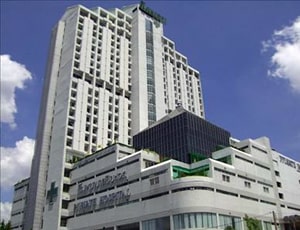
Piyavate Hospital is a trusted healthcare provider for ESWL, offering advanced urinary stone treatment supported by experienced urologists, radiologists, anesthesiologists, and minimally invasive surgery teams. Established in 1993, the JCI, ISO- accredited hospital is situated in Bangkok, Thailand and has 150 beds.
ESWL works by delivering repeated high-energy shock waves through the skin to the targeted urinary stone. The mechanical energy causes the stone to break into smaller fragments without requiring an incision into the urinary tract. Treatment suitability depends on factors such as stone size, location, composition, urinary anatomy, and the presence of obstruction or infection.
Quironsalud Marbella Hospital provides specialised ESWL with a focus on accurate stone targeting, controlled shock wave delivery, and individualized urological care. Established in 1979, the ISO accredited hospital is located in Marbella, Spain and operates 120 beds, with modern urology, imaging, lithotripsy, and postoperative monitoring infrastructure.
ESWL can provide a non-invasive treatment option for appropriately selected kidney and ureteral stones. Treatment planning considers stone size, number, location, density, urinary tract anatomy, kidney function, and the presence of obstruction or infection. Detailed imaging helps the urologist determine whether ESWL is suitable and select the appropriate treatment approach. Temporary effects such as blood in the urine, discomfort, bruising, or passage of stone fragments may occur after treatment, while additional procedures may be required if the stone is not adequately fragmented or cleared.
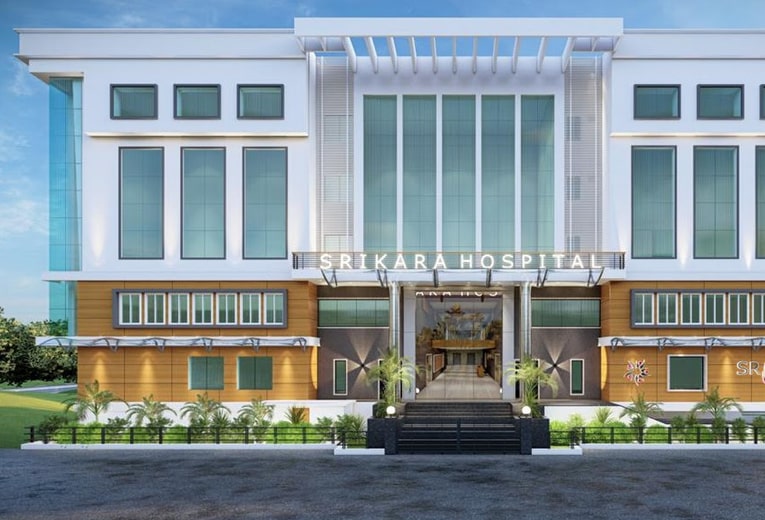
Srikara Hospital, RTC Cross Roads is a trusted healthcare provider for ESWL, offering advanced urinary stone treatment supported by experienced urologists, radiologists, anesthesiologists, and minimally invasive surgery teams. Established in 2013, the NABH- accredited hospital is situated in Hyderabad, India and has 120 beds.
ESWL works by delivering repeated high-energy shock waves through the skin to the targeted urinary stone. The mechanical energy causes the stone to break into smaller fragments without requiring an incision into the urinary tract. Treatment suitability depends on factors such as stone size, location, composition, urinary anatomy, and the presence of obstruction or infection.
At Vinmec Phu Quoc Hospital, ESWL is performed using specialized shock wave lithotripsy techniques and comprehensive urological and imaging assessment. Established in 2015, this JCI accredited hospital in Phu Quoc, Vietnam has 150 beds and offers advanced stone management and minimally invasive urology services.
ESWL may be considered for selected patients with kidney or ureteral stones that are suitable for fragmentation using external shock waves. Before treatment, imaging such as ultrasound, X-ray, or CT may be used to determine the stone's size and location and assess the urinary tract. During the procedure, focused shock waves are directed at the stone to fragment it into smaller pieces, which can subsequently pass through the urine.
At Vinmec Times City, ESWL is performed using specialized shock wave lithotripsy techniques and comprehensive urological and imaging assessment. Established in 2012, this JCI accredited hospital in Ha noi, Vietnam has 500 beds and offers advanced stone management and minimally invasive urology services.
ESWL may be considered for selected patients with kidney or ureteral stones that are suitable for fragmentation using external shock waves. Before treatment, imaging such as ultrasound, X-ray, or CT may be used to determine the stone's size and location and assess the urinary tract. During the procedure, focused shock waves are directed at the stone to fragment it into smaller pieces, which can subsequently pass through the urine.
Casa di Cura La Madonnina provides specialised ESWL with a focus on accurate stone targeting, controlled shock wave delivery, and individualized urological care. Established in 1958, the SSN accredited hospital is located in milan, Italy and operates 560 beds, with modern urology, imaging, lithotripsy, and postoperative monitoring infrastructure.
ESWL can provide a non-invasive treatment option for appropriately selected kidney and ureteral stones. Treatment planning considers stone size, number, location, density, urinary tract anatomy, kidney function, and the presence of obstruction or infection. Detailed imaging helps the urologist determine whether ESWL is suitable and select the appropriate treatment approach. Temporary effects such as blood in the urine, discomfort, bruising, or passage of stone fragments may occur after treatment, while additional procedures may be required if the stone is not adequately fragmented or cleared.
Choosing I.A.U VM Medical Park Florya Hospital for ESWL gives patients access to experienced urologists, advanced stone-localization imaging, modern lithotripsy systems, and structured post-treatment follow-up. Established in 2017, the JCI accredited hospital in Istanbul, Turkey has 300 beds and provides specialized urinary stone management services.
ESWL is generally performed as a minimally invasive or non-incisional procedure, with pain control or sedation provided according to the patient's needs and the treatment protocol. The patient is positioned so that the stone can be accurately targeted, and shock waves are delivered to fragment it. After treatment, patients may be advised to maintain appropriate fluid intake and follow instructions for monitoring or passing stone fragments. Follow-up imaging may be used to determine whether residual stones remain.
At Biruni University Hospital, ESWL is performed using specialized shock wave lithotripsy techniques and comprehensive urological and imaging assessment. Established in 2016, this JCI accredited hospital in Istanbul, Turkey has 617 beds and offers advanced stone management and minimally invasive urology services.
ESWL may be considered for selected patients with kidney or ureteral stones that are suitable for fragmentation using external shock waves. Before treatment, imaging such as ultrasound, X-ray, or CT may be used to determine the stone's size and location and assess the urinary tract. During the procedure, focused shock waves are directed at the stone to fragment it into smaller pieces, which can subsequently pass through the urine.
Burjeel Medical City provides specialised ESWL with a focus on accurate stone targeting, controlled shock wave delivery, and individualized urological care. Established in 2017, the ISO accredited hospital is located in Abu Dhabi, United Arab Emirates and operates 350 beds, with modern urology, imaging, lithotripsy, and postoperative monitoring infrastructure.
ESWL can provide a non-invasive treatment option for appropriately selected kidney and ureteral stones. Treatment planning considers stone size, number, location, density, urinary tract anatomy, kidney function, and the presence of obstruction or infection. Detailed imaging helps the urologist determine whether ESWL is suitable and select the appropriate treatment approach. Temporary effects such as blood in the urine, discomfort, bruising, or passage of stone fragments may occur after treatment, while additional procedures may be required if the stone is not adequately fragmented or cleared.
| Speciality | Urology |
| Procedure | ESWL |
| Success Rate | 85-95% |
| Recovery Time | 2-3 weeks |
| Treatment Time | 30-45 minutes |
| Chances of Recurrence | Moderate |