Your Notifications
All done, no notifications

Cost of Femoroacetabular Impingement (FAI) Surgery Worldwide

Costs starts from Get a Quote
Filters

Femoroacetabular Impingement (FAI) surgery is a specialised procedure designed to address hip joint pain and improve hip function, particularly for individuals suffering from abnormal bone growth in the hip, which can lead to impingement and pain. The goal of the surgery is to relieve symptoms, prevent further joint damage, and restore normal function to the hip.

During the procedure, the surgeon removes or reshapes the bone spurs or abnormal bone formations that cause the impingement. Depending on the extent of the damage, this is typically done through either an arthroscopic or open surgery approach. In an arthroscopic procedure, small incisions are made, and a camera is inserted to guide the surgery, while open surgery may be required in more complex cases.

Once the abnormal bone is removed, the surgeon may also repair any soft tissue damage to the cartilage or labrum, which is often associated with FAI. In some cases, the femoral head or acetabulum may be reshaped to improve the joint’s range of motion and prevent future impingement.

Patients typically need to rest the hip joint post-surgery and may use crutches for several weeks. A rehabilitation program, including physical therapy, is essential to regain strength, flexibility, and mobility in the hip. With consistent recovery and follow-up care, many individuals experience significant pain relief and enhanced movement, leading to an improved quality of life.

FAI surgery is performed to correct abnormal contact between the femoral head (thigh bone) and the acetabulum (hip socket), which leads to cartilage damage, labral tears, and progressive hip arthritis. Femoroacetabular impingement occurs when extra bone (a cam or pincer lesion) causes the bones to rub together abnormally during movement.Surgery aims to reshape the hip joint, relieve pain, improve hip function, and prevent long-term joint degeneration. It's typically recommended when conservative treatments such as physical therapy, rest, and medications fail to relieve symptoms.

You should consult an orthopaedic surgeon if you experience:
  • Deep or sharp groin pain, especially during hip flexion (bending)
  • Stiffness or limited range of motion in the hip
  • Pain during sitting, squatting, or prolonged walking
  • Clicking or catching sensations in the hip joint
  • Symptoms that interfere with daily activities or athletic performance
FAI is often diagnosed in young and middle-aged adults, especially athletes or highly active individuals.

Pre-surgical preparation involves:
  • Clinical evaluation and detailed history of hip symptoms
  • Imaging tests such as X-rays, MRI, and sometimes CT scans to evaluate bone shape and cartilage damage
  • Blood tests, anaesthesia clearance, and assessment of overall fitness for surgery
  • Instructions on discontinuing certain medications, especially blood thinners
  • Fasting for 6–8 hours before surgery
  • Education about the surgical procedure, hospital stay, and rehabilitation plan

Hip Arthroscopy (Minimally Invasive Approach):
  • Small incisions are made, and a camera (arthroscope) and surgical tools are inserted.
  • The surgeon removes excess bone from the femoral head (cam lesion) or the acetabulum rim (pincer lesion).
  • Any labral tears or cartilage damage are repaired or debrided.
  • This is the preferred technique due to faster recovery and minimal tissue disruption.
Open Surgical Dislocation (Less Common):
  • A larger incision is made, and the hip joint is surgically dislocated for full access.
  • This approach is used for complex deformities or revision surgeries.

  • Most arthroscopic patients go home the same day or after one overnight stay
  • Recovery time varies, but full recovery often takes 3 to 6 months

  • Bleeding
  • Infection
  • Nerve or blood vessel injury
  • Blood clots (DVT)
  • Persistent pain or stiffness
  • Hip instability (rare)
  • Failure to relieve symptoms or recurrence

  • Significant reduction in hip and groin pain
  • Restoration of normal joint mechanics
  • Improved range of motion and athletic performance
  • Delay or prevention of hip arthritis and the need for future joint replacement
  • Minimal scarring and faster recovery with the arthroscopic technique

  • Immediate: Use of crutches for 2–4 weeks, depending on the extent of repair
  • First few weeks: Pain control, icing, and gradual range of motion exercises
  • Weeks 4–12: Guided physiotherapy to restore strength and flexibility
  • 3–6 months: Return to full activity and sports (individualised based on healing and rehab progress)
Regular follow-up visits and imaging may be required to monitor joint recovery

FAI surgery has a success rate of 85–95%, primarily when performed before significant joint damage develops. Most patients experience substantial relief from pain, improved function, and return to daily activities or sports. Early diagnosis and timely surgical intervention are key to long-term success and joint preservation.

Would you like some help? We are available.

Get Help
Explore Hospitals ( 176 )
Femoroacetabular Impingement (FAI) Surgery in Prince Court Medical Centre: Costs, Top Doctors, and Reviews

Kuala Lumpur, Malaysia

Prince Court is a private medical facility in the center of Kuala Lumpur that has 277 individual beds. Our dedication is to provide you with the best treatment possible from the time you arrive until you depart, healthier and happier. We are well-known for our top-notch facilities, cutting-edge technology, and friendly customer service.

Femoroacetabular Impingement (FAI) Surgery in Acibadem International Hospital: Costs, Top Doctors, and Reviews

Istanbul, Turkey

  • Joint Commission International, or JCI

Acibadem International Hospital located in Istanbul, Turkey is accredited by JCI. Also listed below are some of the most prominent infrastructural details:

  • The Acibadem International Hospital is spread over an indoor area of atleast 19,000 square meters.
  • It comprises as many as 122 beds which also means there are intensive care beds (26) with observation beds (16).
  • Medical technologies are present such as Whole Body MR, DSA Digital Angiography, EUS (Endoultrasonography), and Ultrasonography.
  • Additional services like Heliport, Prayer Room, Cafeteria, ATM within premises etc. can also be availed.
  • Patients can choose from either a standard room or a suite during their hospital stay.
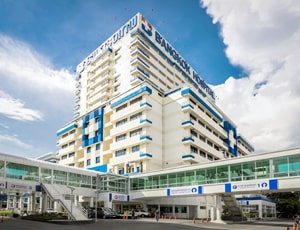
Femoroacetabular Impingement (FAI) Surgery in Bangkok Hospital: Costs, Top Doctors, and Reviews

Bangkok, Thailand

  • Joint Commission International, or JCI

Bangkok Hospital located in Bangkok, Thailand is accredited by JCI. Also listed below are some of the most prominent infrastructural details:

  • It is recognised for the application of the newest healthcare technology.
  • Blood analysis center that is not just the best in Thailand but in Asia Pacific as well.
  • Biomolecule center that is the seed of healthcare equipment for Thailand and overseas.
  • International affiliations and collaborations with universities and hospitals in Japan and the United States of America.
  • 11 hospitals are recognised as Centers of Excellence.
  • Known excellence in Trauma, Orthopedics, Cardiovascular, Neurology as well as Cancer Care.
  • There is a proper streamlined patient services process followed in Bangkok Dusit Medical Services, Bangkok, Thailand.
  • A well developed research center showcases the intent of the organisation to provide research based treatment opportunities to the patients.
  • The group has several Medical industry partnerships as well to ensure healthcare solutions.
Femoroacetabular Impingement (FAI) Surgery in Asan Medical Centre: Costs, Top Doctors, and Reviews

Seoul, South Korea

  • ISO 9001

Asan Medical Centre located in Seoul, South Korea is accredited by ISO. Also listed below are some of the most prominent infrastructural details:

  • 524,700 square meters is the floor area of Asan Medical Centre
  • Number of beds is 2,715
  • 67 operating rooms
  • 11,680 outpatients
  • Everday 2,427 inpatients come to the Centre
  • 66,838 Sophisticated surgeries (per year)
  • 1,600 physicians and surgeons
  • 3,100 nurses
  • Five various types of rooms ranging from suites to multi-bed rooms
Femoroacetabular Impingement (FAI) Surgery in Mount Elizabeth Novena Hospital: Costs, Top Doctors, and Reviews

Novena, Singapore

  • Joint Commission International, or JCI

Mount Elizabeth Novena Hospital located in Novena, Singapore is accredited by JCI. Also listed below are some of the most prominent infrastructural details:

  • Capacity of 333 beds
  • Intensive Care Unit beds
  • Endoscopy beds
  • Day ward with 20 beds
  • 13 Operating Theatres, which includes 1 Neurological operating room, 2 Cardiac operating rooms, 4 Orthopaedic operating rooms, etc.
  • High Dependency Unit (HDU)
  • Neonatal Intensive Care Unit (NICU)
  • 24/7 Accident & Emergency Department
  • Maternity ward
  • 1 major operating unit with 13 operating rooms inclusive of 1 hybrid theatre
  • In-house Pharmacy
  • Rooms are categorized as Single Signature Rooms, Junior Suite and Regal Suite
  • All patient rooms are equipped with electric safe, LCD, sofa cum bed, wardrobe, radio channels, and much more
Femoroacetabular Impingement (FAI) Surgery in Mount Elizabeth Hospital: Costs, Top Doctors, and Reviews

Singapore, Singapore

  • Joint Commission International, or JCI

Mount Elizabeth Hospital located in Singapore, Singapore is accredited by JCI. Also listed below are some of the most prominent infrastructural details:

  • 345 bedded Hospital
  • Maternity wards
  • The Mount Elizabeth Patient Assistance Centre (MPAC)
  • 1 major operating unit with 12 operating rooms and 1 operating theatre dedicated to in vitro fertilisation (IVF)
  • Intensive Care Unit
  • High Dependency Unit (HDU)
  • Neonatal Intensive Care Unit (NICU)
  • Accident & Emergency Department
  • Rooms are categorized as Single rooms, 2-bedded rooms, 4-bedded rooms, Executive deluxe suite, Daffodil/Magnolia suite, VIP Room, and Royal Suite
  • All patient rooms are equipped with electric safe, LCD, sofa cum bed, wardrobe, radio channels, and much more
  • Parking lot
Femoroacetabular Impingement (FAI) Surgery in BLK-Max Super Speciality Hospital: Costs, Top Doctors, and Reviews

Delhi, India

5.0 ( 1 Reviews )
  • Joint Commission International, or JCI
  • National Accreditation Board for Hospitals & Healthcare Providers (NABH)

BLK-Max Super Speciality Hospital, located in New Delhi, is the leading best-in-class healthcare institution in India, providing tertiary and quaternary care. 650 + beds including 162 critical care beds, 22 OTs with 1,500+ clinical professionals allied to health are at the hospital's disposal. JCI, NABH, and NABL accredited. The hospitals are a leader in transplants, cancer care, and robotic surgery education and implementation. Established in1959 by Dr. B.L. Kapur, the hospital combines state-of-the-art technology with patient-centric values including compassion, efficiency, and consistency.

Femoroacetabular Impingement (FAI) Surgery in Kings College Hospital Dubai: Costs, Top Doctors, and Reviews

Dubai, United Arab Emirates

  • Joint Commission International, or JCI

Apart from in-detail treatment procedures available, Kings College Hospital Dubai located in Dubai, United Arab Emirates has a wide variety of facilities available for International Patients. Some of the facilities which are provided by them are Accommodation, Airport Transfer, Choice of Meals, Interpreter, SIM, TV inside room. Also listed below are some of the most prominent infrastructural details:

  • 100 beds in the Hospital
  • Operation Theatres
  • Special Intensive Care Units
  • 24*7 Emergency Department
  • Covid-19 Treatment Clinic
  • Wound & Stoma care center
  • Doctor on call (Telemedicine) is also available
Femoroacetabular Impingement (FAI) Surgery in Memorial Ankara Hospital: Costs, Top Doctors, and Reviews

Ankara, Turkey

  • Joint Commission International, or JCI

Memorial Ankara Hospital located in Ankara, Turkey is accredited by JCI. Also listed below are some of the most prominent infrastructural details:

  • Covers an area of 42,000 sqm of closed area
  • Capacity of 230 beds (60 intensive care units
  • 11 Operating rooms
  • 63 Polyclinics
  • Technologies used by the Hospital are PET/CT, Endosonography-EUS, Elekta Versa HD Signature, etc.
  • Besides the patient rooms and suites where any needs and luxuries of the patients and their relatives are considered, Memorial also has rooms for dissable patients, where all details are designed specially
Femoroacetabular Impingement (FAI) Surgery in Artemis Health Institute: Costs, Top Doctors, and Reviews

Gurgaon, India

3.3 ( 4 Reviews )
  • Joint Commission International, or JCI
  • National Accreditation Board for Hospitals & Healthcare Providers (NABH)

Artemis Hospital, established in 2007 in Gurgaon, India, is a 750+ bed, state-of-the-art multi-speciality hospital and the first in Gurgaon accredited by JCI and NABH. A flagship of the Apollo Tyres Group, it offers advanced care across cardiology, oncology, orthopaedics, neurology, and transplant medicine, supported by modern infrastructure and 60+ world-class operating theatres. Its Centres of Excellence span critical areas like heart, cancer, neurosciences, orthopaedics, and women & child care. Guided by values of Service, Compassion, and Integrity, Artemis combines innovation, technology, and affordability, making it a trusted international healthcare destination for comprehensive and compassionate patient care.

Need Some Advice From Our Experts?

Request a Call Back Now!

Our team of healthcare experts would be happy to assist you

trusted Patientstrusted Patients+99
Trusted by 50000+ Patients
Required | alphabets and spaces
Required | A valid, working email address
Required | A valid contact

Process Involved for Femoroacetabular Impingement (FAI) Surgery

Treatment Stages for Femoroacetabular Impingement (FAI) Surgery are:-

  • Initial Evaluation: Diagnosis is confirmed using physical examination and imaging tests like X-rays or MRI. This helps identify the type of impingement and plan the surgery accordingly.
  • Surgery: A minimally invasive approach, usually hip arthroscopy, uses small incisions to reshape the bone or repair damaged tissues.
  • Post-Surgery Care: Pain relief is provided after surgery, and the patient is advised to limit weight-bearing using crutches or a walker to protect the joint.
  • Rehabilitation: Physical therapy begins shortly after the procedure to improve flexibility, strength, and mobility over the following weeks.
  • Follow-Up: Ongoing checkups are scheduled to monitor progress, manage complications, and guide the patient to daily activities and sports.

The following conditions are treated in Femoroacetabular Impingement (FAI) Surgery:

  • Labral Tears: Damage to the cartilage that forms the labrum, which helps stabilise the hip joint, is often caused by abnormal bone contact during movement.
  • Osteoarthritis is the degeneration of the cartilage in the hip joint, leading to pain, stiffness, and limited mobility. It often results from impingement over time.
  • Bone Spurs (Osteophytes): Abnormal bone growths that develop in the hip joint due to repeated friction, contributing to pain and restricted movement.
  • Hip Impingement: Abnormal bone contact between the femur and acetabulum, leading to joint damage, pain, and limited range of motion.
  • Cartilage Damage: Wear and tear or injury to the articular cartilage inside the hip joint, which can be aggravated by the abnormal movement of bones during hip impingement.
  • Snapping Hip Syndrome: A snapping or clicking sensation occurs in the hip during movement, often linked to the structural changes caused by FAI.
  • Eligibility Assessment: FAI surgery is typically recommended for individuals experiencing hip pain due to abnormal contact between the femur and acetabulum. This is often seen in cases where a labral tear or bone spurs affect hip mobility and cause discomfort.
  • Pre-Surgery Planning: Before surgery, imaging tests like X-rays or MRIS are conducted to assess the extent of the damage. The healthcare team will also evaluate your overall health and provide instructions on preparing for the procedure and ensuring proper post-surgery care.
  • Surgical Procedure: During the surgery, small incisions allow the surgeon to access the hip joint. Using an arthroscope (a tiny camera), the surgeon will remove or reshape any bone spurs or excess bone growth causing the impingement. In some cases, the labrum may also be repaired or reattached.
  • Additional Corrections: If necessary, the surgeon may perform additional procedures, such as smoothing the cartilage or adjusting the bone structure to improve the hip joint's function and prevent further damage.
  • Closure and Immobilisation: Once the surgery is complete, the incisions are closed, and a bandage or dressing is applied. Depending on the case, patients may be given crutches to avoid putting weight on the affected hip as it heals.
  • Post-Surgery Rehabilitation: Physical therapy plays a crucial role in recovery. Rehab begins soon after surgery to help restore strength, flexibility, and range of motion in the hip joint. Patients are typically encouraged to gradually resume their normal activities, following a structured rehabilitation plan to ensure optimal healing.
  • Arthroscopy
  • Osteoplasty
  • Labral Repair
  • Chondroplasty
  • Hip Arthroplasty

Benefits of Femoroacetabular Impingement (FAI) Surgery include:

  • Alleviates Hip Pain: By removing the bony impingement, FAI surgery reduces pressure on the hip joint, leading to significant pain relief, particularly for those with labral tears or cartilage damage.
  • Restores Joint Function: The surgery improves hip stability and motion, making it easier for patients to carry out everyday activities like walking, bending, and sitting without discomfort.
  • Enhances Mobility: Correcting the abnormal bone growth enhances the hip's range of motion, allowing for smoother and more comfortable movement.
  • Delays or Prevents Hip Replacement: FAI surgery can postpone or eliminate the need for a hip replacement by preserving the joint's structure and improving its function.
  • Reduces Inflammation: By correcting the impingement, the surgery helps reduce the inflammation and swelling caused by joint friction, leading to long-term relief.
  • Supports Active Lifestyles: Ideal for younger, more active individuals, FAI surgery enables them to return to sports and physical activities without the limitations imposed by hip pain.
  • Promotes Joint Preservation: FAI surgery is a joint-preserving procedure, focusing on maintaining the hip's natural anatomy and reducing the risk of long-term joint degeneration.

The following are the treating team members for Femoroacetabular Impingement (FAI) Surgery:

  • Orthopaedist
  • Surgeon
  • Rheumatologist
  • Sports Medicine Specialist
  • Physiatrist
  • Fill out the inquiry form: Please complete the form to provide us with relevant information about your condition.
  • Consult with Our Healthcare Expert: One of our qualified specialists will contact you for a consultation.
  • Receive a Detailed Treatment Plan: After examining your situation, we will provide you with a detailed treatment plan that includes expert views and cost breakdowns for various choices.
  • Choose your preferred option: Choose the therapy option that best suits you.
  • Seamless Organisation: We will manage all the details, including visas, flights, accommodations, and transfers, for a stress-free journey.

Instantly Connect with our Femoroacetabular Impingement (FAI) Surgery Specialists

Doctor 1
Doctor 2
Doctor 3
Doctor 4
Doctor 5
Doctor 6
Doctor 7
Doctor 8
Our Services to Better your Experience

Opinion & Option

We submit the most accurate opinion and options from one or more countries for your review

Consult Privately

Consult with a certified specialist privately on our telemedicine platform even before you decide to travel

Logistics

We handle flights, visas, transfers, and accommodation—so you can focus on your health.

Recovery

Our In-house rehabilitation service packages to better your recovery and treatment outcome

Author

Tanya Bose

MSc Biotechnology

2.5 Years of Experience

Tanya Bose is a medical content specialist with a strong medical background. She has completed her Bachelor's and Master’s in Biotechnology from Amity University. With a deep understanding of biomedical sciences and research, she develops authoritative and patient-focused medical content covering treatments, surgical procedures, and healthcare innovations. Her writing emphasizes accuracy, clarity, and evidence-based information to help readers better understand complex medical topics. She is dedicated to improving patient awareness and supporting informed healthcare decisions by delivering trustworthy medical insights in a clear and accessible format. . View More

Reviewer

Dr. Manoj Miglani

Orthopedic Surgeon

22 Years of Experience

Known for his soft-spoken nature, Dr. Manon Miglani had completed his MBBS from Maulana Azad Medical College and MS (Ortho) for All India Institute of Medical Sciences. Dr. Miglani was awarded AO spine fellowship from Queen’s Medical Center, Nottingham and he also received Stryker fellowship in Arthroplasty from Indraprastha Apollo Hospital. Dr. Manon Miglani has provided his expert services to various hospitals of Delhi and NCR including AIIMS, Indraprastha Apollo, Jaipur Golden hospital, and Artemis hospital Presently, Dr. Manon is the additional director of Fortis, Vasant Kunj and senior consultant at Fortis, Shalimar Bagh. View More