Your Notifications
All done, no notifications

Thoracic Interbody Fusion Cost in Saudi Arabia

Costs starts from USD20000 to USD36000
Filters

How Much Should a Thoracic Interbody Fusion Cost in Saudi Arabia?

The average cost of Thoracic Interbody Fusion in Saudi Arabia usually ranges between USD 20000 - USD 36000. This estimate typically includes a consultation with a neurosurgeon, brain imaging such as an MRI or CT scan, necessary pre-surgical tests, the Thoracic Interbody Fusion procedure itself, the hospital stay, and routine post-surgery care.

However, the exact price can vary depending on several factors, including the type and location of the nerve being treated, whether advanced surgical techniques such as neuronavigation or intraoperative monitoring are used, and the hospital’s overall reputation.

The surgeon’s level of experience also plays a role, and if any complications arise that require ICU admission or a more extended hospital stay, the total cost may increase accordingly.

Factors Influencing the Cost of a Thoracic Interbody Fusion in Saudi Arabia

Factors Influencing the Cost of a Thoracic Interbody Fusion in Saudi Arabia

Cost of Thoracic Interbody Fusion in Major cities of Saudi Arabia

CityMinimum Cost (USD)Minimum Cost (SAR)Maximum Cost (USD)Maximum Cost (SAR)
Al KhobarUSD 2000075000USD 36000135000
NajranUSD 2000075000USD 36000135000
RiyadhUSD 2000075000USD 36000135000

Thoracic Interbody Fusion Cost : A Global Comparison

CountryMinimum CostMinimum Local CurrencyMaximum CostMaximum Local Currency
HungaryUSD 20000HUF 7141600USD 32000HUF 11426560
IndiaUSD 10000INR 856400USD 16000INR 1370240
IsraelUSD 28000ILS 99120USD 42000ILS 148680
JordanUSD 15000JOD 10650USD 23000JOD 16330
LithuaniaUSD 18000LTL 61573USD 28000LTL 95780
MalaysiaUSD 15000MYR 63600USD 25000MYR 106000
PolandUSD 13000PLN 48880USD 22000PLN 82720
Saudi ArabiaUSD 20000SAR 75000USD 36000SAR 135000
SingaporeUSD 30000SGD 38700USD 55000SGD 70950
South AfricaUSD 17000ZAR 305490USD 30000ZAR 539100
South KoreaUSD 22000KRW 30271560USD 40000KRW 55039200
SpainUSD 20000ESP 2940798USD 35000ESP 5146396
SwitzerlandUSD 40000CHF 33200USD 70000CHF 58100
ThailandUSD 16000THB 523360USD 30000THB 981300
TunisiaUSD 13000TND 38740USD 24000TND 71520
TurkeyUSD 12000TRY 468720USD 22000TRY 859320
United Arab EmiratesUSD 22000AED 80740USD 40000AED 146800
United KingdomUSD 25000GBP 18500USD 45000GBP 33300
VietnamUSD 11000VND 287413390USD 20000VND 522569800

Need Help Planning Your Treatment Abroad?

Your 24/7 AI Health Assistant

Thoracic Interbody Fusion is a surgical procedure used to treat spine-related issues in the mid-back area. It is mainly done to reduce nerve or spinal cord pressure and improve spinal stability. The surgeon removes the damaged or degenerated disc between two vertebrae and inserts a bone graft or implant in its place.

This helps the bones gradually join together, forming a solid and stable spinal segment. The surgery not only relieves pain but also improves spine alignment and overall function.

The surgical route can be chosen based on the patient’s condition, with access taken from the front, back, or side of the spine. It is generally recommended when other non-surgical treatments have not been effective, especially for conditions such as disc herniation, spinal instability, fractures, or deformities in the thoracic spine.

Thoracic interbody fusion is a surgical procedure performed to stabilise the thoracic spine (mid-back) and relieve pain or neurological symptoms caused by spinal instability, disc degeneration, herniation, trauma, infection, or deformity (such as scoliosis or kyphosis). It involves removing a damaged intervertebral disc and fusing the adjacent vertebrae using bone grafts and, often, implants such as cages, rods, or screws. The goal is to create a solid bridge of bone between the vertebrae to prevent painful motion and correct structural problems.

You should consider seeing a spine specialist if you have:
  • Persistent mid-back pain that doesn’t improve with medication or therapy
  • Neurological symptoms such as numbness, weakness, or difficulty walking
  • Signs of spinal instability or deformity (visible curve, posture changes)
  • Progressive spinal cord compression is seen on imaging
  • Pain or disability significantly affecting daily activities or quality of life
Thoracic interbody fusion is typically considered after conservative treatments—like physical therapy, injections, or bracing—fail to provide relief.

Preparation includes a comprehensive evaluation to ensure you’re a good candidate for surgery:
  • Detailed medical and neurological exam
  • Imaging studies: MRI, CT scan, and X-rays to assess the spine
  • Blood work and anaesthesia clearance
  • Review of current medications, including blood thinners and supplements
  • Smoking cessation, as it affects bone healing
  • Fasting for 8 hours before surgery (if under general anaesthesia)
  • A preoperative discussion about the risks, benefits, and recovery expectations

Thoracic interbody fusion can be performed through several surgical approaches:Posterior Approach: Accessing the spine through the backAnterior or Lateral Approach: Accessing the spine through the chest or side of the body (often using minimally invasive techniques)The procedure involves:
  • Removal of the damaged disc (discectomy)
  • Preparation of the intervertebral space
  • Insertion of a bone graft or cage to maintain disc height and promote fusion
  • Stabilisation with screws, rods, or plates if needed
  • Closure of the incision and placement of drains (if necessary)
It is performed under general anaesthesia and can take several hours depending on complexity.

The procedure typically lasts 3–6 hours, depending on the surgical approach and the number of levels being fused. Hospital stay is usually 2–5 days, with more time needed for more extensive fusions or open approaches.

As with any spine surgery, thoracic interbody fusion carries potential risks, including:
  • Infection
  • Blood loss
  • Nerve injury or spinal cord damage
  • Non-union (failure of bone to fuse)
  • Hardware complications (loosening or breakage)
  • Pulmonary complications (especially with the anterior approach)
  • Chronic pain or adjacent segment disease
  • Deep vein thrombosis (DVT) or pulmonary embolism
Your surgeon will assess and minimise these risks based on your health and the procedure type.

  • Stabilises and strengthens the spine
  • Reduces or eliminates chronic pain
  • Prevents progression of deformity or instability
  • Protects the spinal cord and nerve roots from further damage
  • Improves posture, mobility, and function
  • It can significantly enhance the quality of life when other treatments fail

Recovery after thoracic interbody fusion depends on the surgical approach and individual health:
  • Hospital stay: 2–5 days
  • Use of a brace may be recommended for several weeks
  • Pain management with medications and gradual weaning
  • Light activities resume in 2–4 weeks
  • Physical therapy typically begins within 4–6 weeks
  • Complete fusion and recovery may take 6–12 months
Avoid heavy lifting, twisting, or strenuous activity during the healing phase. Follow-up imaging is used to monitor the progress of fusion.

Thoracic interbody fusion has a success rate of 70–90%, primarily when performed for well-defined causes like spinal deformity, trauma, or degenerative disc disease. Pain relief, improved function, and spinal stability are commonly achieved. Long-term outcomes depend on patient health, adherence to post-op care, and whether adjacent spinal levels are affected over time.

Would you like some help? We are available.

Get Help
Explore Hospitals ( 5 )
Thoracic Interbody Fusion in Riyadh Care Hospital: Costs, Top Doctors, and Reviews

Riyadh, Saudi Arabia

  • Joint Commission International, or JCI

Apart from in-detail treatment procedures available, Riyadh Care Hospital located in Riyadh, Saudi Arabia has a wide variety of facilities available for International Patients. Some of the facilities which are provided by them are Accommodation, Airport Transfer, Choice of Meals, Interpreter, SIM, TV inside room. Also listed below are some of the most prominent infrastructural details:

  • This healthcare organisation is equipped with modern and advanced healthcare instruments.
  • Riyadh Care Hospital has a 325 bed capacity.
  • The Department of Emergency and Department of Children Emergency work round the clock to provide the best of emergency care services.
  • Respiratory Therapy and Dialysis Center takes care of the respiratory and renal conditions of the patients.
  • Medical Rehabilitation Center provides the best in class rehabilitation and recovery services to the patients.
  • Laboratory, Blood Bank, Physical Therapy and Radiology departments are also present.
  • Intensive & Medium Care Unit for Children and Newborns and Intensive Care Unit for Cardiac conditions are also worth a mention for the outstanding work they are doing.
  • Pharmacies for inpatients, outpatients and emergencies.
  • The Intensive Care Unit is working to provide care for advanced and critical care.
Thoracic Interbody Fusion in Care national Hospital: Costs, Top Doctors, and Reviews

Riyadh, Saudi Arabia

  • Joint Commission International, or JCI

Apart from in-detail treatment procedures available, Care National Hospital located in Riyadh, Saudi Arabia has a wide variety of facilities available for International Patients. Some of the facilities which are provided by them are Accommodation, Airport Transfer, Choice of Meals. Also listed below are some of the most prominent infrastructural details:

  • International patient care services of Care National Hospital is also at par with global standards. They provide all kinds of assistance to the patients coming from different nationalities to get required treatment.
  • Innovative healthcare practices are employed in the hospital and the healthcare providers routinely go over and above to provide the best treatment that any patient could get.
  • The hospital specialises in providing patients with customised healthcare options.
  • A multispecialty hospital with integrated departments, it has a bed capacity of 459.
  • Homecare services are also routinely provided to the patients of Care National Hospital, Riyadh, Saudi Arabia.
  • Outpatient Clinics include the following:
  • Department of Binoculars
  • Emergency Department
  • Radiology Department
  • Laboratory
  • Blood Bank
  • Department of Physical Therapy
  • Pharmacy
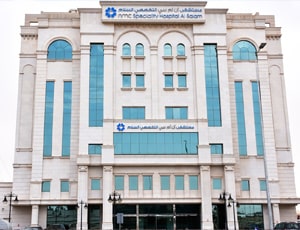
Thoracic Interbody Fusion in NMC As Salama Hospital: Costs, Top Doctors, and Reviews

Al Khobar, Saudi Arabia

Apart from in-detail treatment procedures available, NMC As Salama Hospital located in Al Khobar, Saudi Arabia has a wide variety of facilities available for International Patients. Some of the facilities which are provided by them are Accommodation, Airport Transfer, Choice of Meals, Interpreter, SIM, TV inside room. Also listed below are some of the most prominent infrastructural details:

  • Technology Advancement- Hospital has an ultrasound unit, a mammogram, a CT scan unit, and an X-ray imaging unit
  • Laboratory
  • 60 Private bedrooms
  • Operating rooms
  • Labor and Delivery Units
  • Isolation rooms
  • 2 Dental clinics
  • Special Care Units
  • 24*7 Emergency Services
  • Intensive Care Unit
  • Pharmacy
  • Cafeteria
Thoracic Interbody Fusion in NMC Al Qadi Specialty Hospital: Costs, Top Doctors, and Reviews

Najran, Saudi Arabia

  • Joint Commission International, or JCI

Apart from in-detail treatment procedures available, NMC Al Qadi Specialty Hospital located in Najran, Saudi Arabia has a wide variety of facilities available for International Patients. Some of the facilities which are provided by them are Accommodation, Airport Transfer, Choice of Meals, Interpreter, SIM, TV inside room. Also listed below are some of the most prominent infrastructural details:

  • 24*7 Emergency Services
  • Intensive Care Unit
  • Pharmacy
  • Cafeteria
  • Hospital can assist you with many lodging or suitable hotel facility
Thoracic Interbody Fusion in NMC Specialty Hospital Al Salam: Costs, Top Doctors, and Reviews

Riyadh, Saudi Arabia

Apart from in-detail treatment procedures available, NMC Specialty Hospital Al Salam located in Riyadh, Saudi Arabia has a wide variety of facilities available for International Patients. Some of the facilities which are provided by them are Accommodation, Airport Transfer, Choice of Meals, Interpreter, SIM, TV inside room. Also listed below are some of the most prominent infrastructural details:

  • The hospital is situated at a prime location with easy access from Mecca-Khurais Road and Al-Imam Shafi road
  • 100 Hospital Rooms
  • 25 Intensive Care Units with modern equipment
  • 24-hour Pharmacy
  • 24-hour Emergency Services
  • Laboratory

Need Some Advice From Our Experts?

Request a Call Back Now!

Our team of healthcare experts would be happy to assist you

trusted Patientstrusted Patients+99
Trusted by 50000+ Patients
Required | alphabets and spaces
Required | A valid, working email address
Required | A valid contact

Process Involved for Thoracic Interbody Fusion in Saudi Arabia

  • Initial Consultation: A spine specialist evaluates symptoms, medical history, and imaging reports to confirm the need for surgery.
  • Diagnostic Testing: MRI, CT scans, and X-rays are performed to locate disc damage and assess spinal alignment.
  • Preoperative Preparation: Includes blood tests, anaesthesia evaluation, and patient education about the procedure and recovery.
  • Surgical Procedure: The damaged disc is removed, and a bone graft or implant is inserted to promote fusion between vertebrae.
  • Hospital Recovery: The patient stays in the hospital for monitoring, pain control, and early mobilisation (typically 3–5 days).
  • Rehabilitation Phase: Physical therapy begins to strengthen the back, improve mobility, and support long-term healing.
  • Follow-up Appointments: Routine check-ups and imaging tests ensure that the bones are fusing correctly and there are no complications.
  • Disc Degeneration: Gradual wearing of the spinal discs in the mid-back, which can cause discomfort and limit normal movement.
  • Herniated Disc: A bulging or ruptured disc in the mid-back that puts pressure on nearby nerves or the spinal cord.
  • Spine Instability: Unusual or excessive movement between thoracic vertebrae that can cause discomfort or nerve-related symptoms.
  • Spinal Fractures: Breaks or cracks in the thoracic vertebrae, often due to trauma or bone-weakening conditions like osteoporosis.
  • Scoliosis: A sideways curve of the spine that may require fusion to improve posture and reduce discomfort.
  • Kyphosis: An abnormal forward bend in the upper spine that may lead to pain or breathing difficulties if not corrected.
  • Spinal Tumours: Growths or masses within or near the thoracic spine that need surgical removal, followed by stabilisation.
  • Failed Previous Surgery: Used when earlier spinal surgeries haven’t achieved the desired results or led to complications.

Process Involved in Thoracic Interbody Fusion

  • Preoperative Evaluation: Detailed physical exams and imaging tests (MRI, CT, X-ray) are conducted to confirm the affected thoracic segment and plan the surgical approach.
  • Anaesthesia: General anaesthesia is given to ensure the patient is asleep and pain-free during the procedure.
  • Surgical Incision: A cut is made depending on the approach (anterior, posterior, or lateral) to access the thoracic spine safely.
  • Disc Removal: The damaged or diseased intervertebral disc is carefully extracted to relieve pressure on the spinal cord or nerves.
  • Bone Graft/Implant Placement: A bone graft or artificial spacer is placed in the disc space to help maintain alignment and support bone fusion.
  • Stabilization Hardware: Metal screws, rods, or plates are inserted to hold the spine in proper alignment while the bones heal and fuse.
  • Closure: The incision is closed using sutures or staples, and a sterile dressing is applied to protect the area.
  • Postoperative Monitoring: The patient is monitored in recovery for pain control, nerve function, and early signs of healing. Follow-up imaging may be scheduled.
  • Laminectomy
  • Discectomy
  • Corpectomy
  • Osteotomy
  • Foraminotomy
  • Instrumentation
  • Fusion
  • Decompression
  • Kyphoplasty
  • Biopsy
  • Pain relief – Helps reduce or eliminate chronic mid-back pain caused by disc or nerve problems.
  • Stability – Restores strength and support to the spine, especially in cases of instability or fractures.
  • Improved posture – Helps correct spinal deformities, such as scoliosis or kyphosis, leading to better alignment.Better mobility – Eases movement and daily activity by removing pressure from compressed nerves.
  • Nerveprotection – Prevents further nerve damage by relieving spinal cord or nerve root compression.
  • Long-term results – Promotes bone fusion, reducing the risk of future spine issues in the treated area.
  • Functionality – Enables patients to return to work or their daily routines after a successful recovery.
  • Custom approach – Can be tailored to the patient’s condition using different surgical methods (anterior, posterior, or lateral).
False
  • Please complete the form to provide us with relevant information about your condition.
  • Consult with Our Healthcare Expert: One of our qualified specialists will contact you for a consultation.
  • Receive a Detailed Treatment Plan: After examining your situation, we will provide you with a detailed treatment plan that includes expert opinions and a cost breakdown for various options.
  • Select your preferred option: Choose the therapy option that best suits your needs.
  • Seamless Organisation: We will manage all the details, including visas, flights, accommodations, and transfers, for a stress-free journey.

Instantly Connect with our Thoracic Interbody Fusion Specialists

Doctor 1
Doctor 2
Doctor 3
Doctor 4
Doctor 5
Doctor 6
Doctor 7
Doctor 8
Our Services to Better your Experience

Opinion & Option

We submit the most accurate opinion and options from one or more countries for your review

Consult Privately

Consult with a certified specialist privately on our telemedicine platform even before you decide to travel

Logistics

We handle flights, visas, transfers, and accommodation—so you can focus on your health.

Recovery

Our In-house rehabilitation service packages to better your recovery and treatment outcome

Other Popular Countries for Thoracic Interbody Fusion

Our network connects you with the leading medical tourism destinations globally, offering a wide range of cities, top doctors, and flexible pricing options.

Thailand
Vietnam
United Arab Emirates
Turkey

Author

Dr. Vijita Jayan

BPT, MPT (Neuro)

18 Years of Experience

With over 18 years of distinguished clinical experience, Dr. Vijita Jayan is a highly accomplished Clinical Director and Rehabilitation Specialist, renowned for her expertise in neuro-rehabilitation, functional recovery, and mobility-dependent case management. Her extensive practical knowledge enables her to design and implement individualized, evidence-based rehabilitation protocols that consistently yield measurable patient outcomes. A prolific researcher and academic writer, she has authored numerous peer-reviewed articles and research papers, significantly advancing the field of rehabilitative medicine. The recipient of multiple prestigious accolades, Dr. Jayan is widely regarded as one of the foremost authorities in Physical Medicine and Rehabilitation, continually shaping neuro-rehabilitative care through research, innovation, and clinical excellence.. View More

Reviewer

⁠Dr Rakesh Kumar Dua

Spine & Neurosurgeon

25 Years of Experience

Dr. Rakesh Dua has more than 25+ years of clinical experience in spine surgeries. He is currently providing his services as Director, Neuro & Spine Surgery at Fortis Hospital, Shalimar Bagh. Before joining Fortis Hospital, he was associated with Max super-specialist Hospital, Shalimar Bagh as Director Neurosurgery & Head Neuro Spine, and with UCMS & GTB hospital as head of the neurosurgery department. View More