Your Notifications
All done, no notifications

External Ventricular Drainage Cost in Saudi Arabia

Costs starts from USD3000 to USD10000
Filters

How Much Does External Ventricular Drainage Cost in Saudi Arabia?

The cost of External Ventricular Drainage in Saudi Arabia is USD 3000 - USD 10000

Additionally, factors like the duration of treatment, the need for follow-up care, and the use of advanced technologies or specialized treatments can further influence the overall cost.

Factors Influencing the Cost of External Ventricular Drainage:

EVD is a procedure that thus is used to manage raised intracranial pressure from conditions such as hydrocephalus, brain hemorrhage, or injury. A dedicated catheter is provided inside the cerebral cavity through a burr hole created in the skull to externalize CSF. This in turn lessens the stress on the brain part that has been affected and therefore minimizes further harm. The procedure is normally applied when natural CSF drainage is obstructed, and this is normally in emergency cases.

The drainage is monitored after the procedure to prevent the onset of side effects. Despite its effectiveness, there is always a probability of EVD-associated complications such as infection, hemorrhage, and catheter effecting. It is most often used as a transient therapy before more long-term measures, such as VP shunt surgery, or other surgeries, can be accomplished.

Cost of External Ventricular Drainage in Major Cities of Saudi Arabia

CityMinimum Cost (USD)Minimum Cost (SAR)Maximum Cost (USD)Maximum Cost (SAR)
RiyadhUSD 300011250USD 1000037500

External Ventricular Drainage Cost : A Global Comparison

CountryMinimum CostMinimum Local CurrencyMaximum CostMaximum Local Currency
IndiaUSD 3000INR 256920USD 4200INR 359688
LithuaniaUSD 2000LTL 6841USD 5000LTL 17104
MalaysiaUSD 2500MYR 10600USD 8000MYR 33920
Moroccoget request
Saudi ArabiaUSD 3000SAR 11250USD 10000SAR 37500
SingaporeUSD 10000SGD 12900USD 25000SGD 32250
SpainUSD 2500ESP 367600USD 5000ESP 735200
ThailandUSD 2000THB 65420USD 5000THB 163550
TunisiaUSD 170TND 507USD 380TND 1132
TurkeyUSD 1500TRY 58590USD 2600TRY 101556
United Arab EmiratesUSD 3000AED 11010USD 8000AED 29360
United KingdomUSD 3000GBP 2220USD 4200GBP 3108

Need Help Planning Your Treatment Abroad?

Your 24/7 AI Health Assistant

An external ventricular drain (EVD), also referred to as ventriculostomy or extra ventricular drain, is a neurosurgical device used to manage hydrocephalus and reduce elevated intracranial pressure caused by blockages in the normal flow of cerebrospinal fluid (CSF) within the brain.

The temporary drainage of cerebrospinal fluid (CSF) from the lateral ventricles of the brain or the lumbar area of the spine into an external collection bag is known as external drainage and monitoring. Using a mix of gravity and intracerebral pressure, an external ventricular drainage (EVD) system drains CSF. The rate of drainage is determined by the height of the EVD system in relation to the patient's anatomy.

In neurocritical care, EVDs are used to:

  • Reduce high intracranial pressure (ICP)
  • CSF (cerebrospinal fluid) that has become infectious should be drained
  • After surgery or a hemorrhage, drain any crimson CSF or blood
  • Keep an eye on the CSF flow rate
  • Patients undergoing open TAA/TAAA repair surgery or who become symptomatic after surgery should have their CSF removed

Types of drainage used in EVD:

  • Continuous drainage
  • Intermittent drainage

External ventricular drainage (EVD) decreases increased intracranial pressure (ICP) caused by trauma, disease, haemorrhage, or excess cerebrospinal fluid (CSF). While the underlying brain pathology is being treated, EVD drains CSF, monitors ICP, and stabilises the patient. In subarachnoid haemorrhage, traumatic brain injury, or hydrocephalus, EVD can be life-saving.

You should seek medical attention immediately if you experience any of the following symptoms of increased intracranial pressure: a sudden headache, nausea, vomiting, drowsiness, visual changes, confusion, seizures, or loss of consciousness. These may indicate the need for brain imaging immediately and the possible placement of an EVD.

There is limited planning since EVD is often done in an emergency. Blood test, coagulation studies, and imaging (CT or MRI) are conducted in a planned scenario. The scalp is cleaned and sterilised after consent is obtained. Depending on their well-being, patients can be sedated or under general anaesthesia.

  • A neurosurgeon places a catheter in the ventricular system of the brain following creation of a minute hole (burr hole) in the cranium, normally in the forehead bone.
  • To measure and control intracranial pressure and to let CSF be drained out, the catheter is connected to an external draining and monitoring unit.
  • The drain is pitched to a definite level to control the flow.

The procedure takes 30–60 minutes. The drain is left in place for a few days to weeks based on the underlying condition and response to treatment. Hospitalisation varies with the severity of illness.

  • Infection
  • Bleeding
  • Hematoma
  • Catheter blockage

EVD can quickly lower brain pressure, halt further brain injury, and allow continued draining and monitoring of the CSF. When needed, it serves as a bridge to more definitive treatments, such as a ventriculoperitoneal (VP) shunt and is essential in treating life-threatening diseases.

In critical care, patients are monitored. Nursing staff continually monitor neurological status and adjust the drainage system. Antibiotics can be given to prevent infection. Once the underlying issue has stabilised, the EVD may be clamped and removed. Neurological exams and repeat imaging monitor continuing care.

The solution's success depends on the underlying illness and how fast the solution is applied. EVD can significantly reduce mortality and improve neurological outcomes in emergency conditions. Sterile procedures and proper management increase overall effectiveness and reduce problems.

Would you like some help? We are available.

Get Help
Explore Hospitals ( 3 )
External Ventricular Drainage in Riyadh Care Hospital: Costs, Top Doctors, and Reviews

Riyadh, Saudi Arabia

  • Joint Commission International, or JCI

Apart from in-detail treatment procedures available, Riyadh Care Hospital located in Riyadh, Saudi Arabia has a wide variety of facilities available for International Patients. Some of the facilities which are provided by them are Accommodation, Airport Transfer, Choice of Meals, Interpreter, SIM, TV inside room. Also listed below are some of the most prominent infrastructural details:

  • This healthcare organisation is equipped with modern and advanced healthcare instruments.
  • Riyadh Care Hospital has a 325 bed capacity.
  • The Department of Emergency and Department of Children Emergency work round the clock to provide the best of emergency care services.
  • Respiratory Therapy and Dialysis Center takes care of the respiratory and renal conditions of the patients.
  • Medical Rehabilitation Center provides the best in class rehabilitation and recovery services to the patients.
  • Laboratory, Blood Bank, Physical Therapy and Radiology departments are also present.
  • Intensive & Medium Care Unit for Children and Newborns and Intensive Care Unit for Cardiac conditions are also worth a mention for the outstanding work they are doing.
  • Pharmacies for inpatients, outpatients and emergencies.
  • The Intensive Care Unit is working to provide care for advanced and critical care.
External Ventricular Drainage in Care national Hospital: Costs, Top Doctors, and Reviews

Riyadh, Saudi Arabia

  • Joint Commission International, or JCI

Apart from in-detail treatment procedures available, Care National Hospital located in Riyadh, Saudi Arabia has a wide variety of facilities available for International Patients. Some of the facilities which are provided by them are Accommodation, Airport Transfer, Choice of Meals. Also listed below are some of the most prominent infrastructural details:

  • International patient care services of Care National Hospital is also at par with global standards. They provide all kinds of assistance to the patients coming from different nationalities to get required treatment.
  • Innovative healthcare practices are employed in the hospital and the healthcare providers routinely go over and above to provide the best treatment that any patient could get.
  • The hospital specialises in providing patients with customised healthcare options.
  • A multispecialty hospital with integrated departments, it has a bed capacity of 459.
  • Homecare services are also routinely provided to the patients of Care National Hospital, Riyadh, Saudi Arabia.
  • Outpatient Clinics include the following:
  • Department of Binoculars
  • Emergency Department
  • Radiology Department
  • Laboratory
  • Blood Bank
  • Department of Physical Therapy
  • Pharmacy
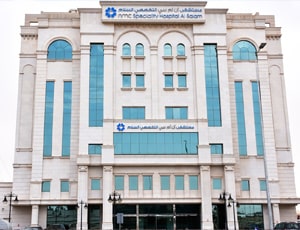
External Ventricular Drainage in NMC Specialty Hospital Al Salam: Costs, Top Doctors, and Reviews

Riyadh, Saudi Arabia

Apart from in-detail treatment procedures available, NMC Specialty Hospital Al Salam located in Riyadh, Saudi Arabia has a wide variety of facilities available for International Patients. Some of the facilities which are provided by them are Accommodation, Airport Transfer, Choice of Meals, Interpreter, SIM, TV inside room. Also listed below are some of the most prominent infrastructural details:

  • The hospital is situated at a prime location with easy access from Mecca-Khurais Road and Al-Imam Shafi road
  • 100 Hospital Rooms
  • 25 Intensive Care Units with modern equipment
  • 24-hour Pharmacy
  • 24-hour Emergency Services
  • Laboratory

Need Some Advice From Our Experts?

Request a Call Back Now!

Our team of healthcare experts would be happy to assist you

trusted Patientstrusted Patients+99
Trusted by 50000+ Patients
Required | alphabets and spaces
Required | A valid, working email address
Required | A valid contact

Process Involved for External Ventricular Drainage in Saudi Arabia

  • Consultation: To assess symptoms and determine if EVD is warranted, make an appointment with a neurosurgeon or neurologist.
  • Preoperative Assessment: To verify the diagnosis of hydrocephalus or other illness necessitating EVD, take a patient's medical history and symptoms and perform imaging studies.
  • Treatment Discussion: Based on the patient's condition, decide whether EVD is the most appropriate course of action or whether other treatments could be considered.
  • Surgical Planning: Discuss the procedure's benefits, risks, and expected recovery with the patient.
  • After Surgery Follow-up: Monitor recovery, deal with any issue, and check the procedure's effectiveness with follow-up imaging and symptom checking.
  • Acute Hydrocephalus
  • Traumatic Brain Injury
  • Intracranial Hemorrhage
  • Brain Tumors
  • Infections
  • Acute Hydrocephalus (increased intracranial pressure due to fluid buildup)
  • Traumatic Brain Injury (TBI) (with hydrocephalus or brain swelling)
  • Intracranial Hemorrhage (bleeding in the brain)
  • Brain Tumors
  • Post-Surgical Drainage
  • Infections (such as meningitis, requiring pressure relief)
  • Reduced Intracranial Pressure
  • Improved Neurological Function
  • Prevention of Further Brain Damage
  • Stabilisation of the Patient’s Condition
  • Neurologist
  • Neurosurgeon
  • Fill out the inquiry form: Fill out the form to provide us with the relevant information about your condition.
  • Consult with Our Healthcare Expert: One of our qualified specialists will contact you for a consultation.
  • Receive a Detailed Treatment Plan: After examining your situation, we will provide you with a detailed treatment plan that includes expert views and cost breakdowns for various choices.
  • Choose your preferred option: Choose the treatment option that suits you the best.

Instantly Connect with our External Ventricular Drainage Specialists

Doctor 1
Doctor 2
Doctor 3
Doctor 4
Doctor 5
Doctor 6
Doctor 7
Doctor 8
Our Services to Better your Experience

Opinion & Option

We submit the most accurate opinion and options from one or more countries for your review

Consult Privately

Consult with a certified specialist privately on our telemedicine platform even before you decide to travel

Logistics

We handle flights, visas, transfers, and accommodation—so you can focus on your health.

Recovery

Our In-house rehabilitation service packages to better your recovery and treatment outcome

Other Popular Countries for External Ventricular Drainage

Our network connects you with the leading medical tourism destinations globally, offering a wide range of cities, top doctors, and flexible pricing options.

Spain
Vietnam
United Arab Emirates
India

Frequently Asked Questions

External Ventricular Drainage package cost in Saudi Arabia has different inclusions and exclusions. The top hospitals for External Ventricular Drainage in Saudi Arabia covers all the expenses related to the pre-surgery investigations of the candidate. The External Ventricular Drainage package in Saudi Arabia includes the fees of the surgeon, hospitalization and anesthesia as well. Extended hospital stay, complications after the surgery or new diagnosis may affect the overall cost of External Ventricular Drainage in Saudi Arabia.

There are many hospitals across the country that offer External Ventricular Drainage to international patients. The following are some of the most renowned hospitals for External Ventricular Drainage in Saudi Arabia:

  1. Care National Hospital
  2. Riyadh Care Hospital
  3. NMC Specialty Hospital Al Salam

The recovery of the patient many vary, depending on several factors. However, on an average, patient is supposed to stay for about 15 days in the country after discharge. This is important to ensure that the surgery was successful. During this time, control and follow-up tests take place to check for medical fitness.

One of the topmost destinations for External Ventricular Drainage is Saudi Arabia. It has a variety of accredited hospital, affordable cost of treatment and some of the best medical fraternity. Some of the other destinations that are popular for External Ventricular Drainage include the following:

  1. the United Kingdom
  2. Tunisia
  3. India
  4. Malaysia
  5. Spain
  6. the United Arab Emirates
  7. Singapore
  8. Lithuania
  9. Turkey
  10. Thailand

Apart from the External Ventricular Drainage cost, the patient may have to pay for additional daily expenses such as for guest house after discharge and meals. The per day extra expenses in Saudi Arabia per person is about USD$ 55

External Ventricular Drainage in Saudi Arabia is offered in almost all metropolitan cities, including the following:

  • Riyadh

The average duration of stay at the hospital after External Ventricular Drainage is about 4 days for proper care and monitoring. The doctors team review the patient's recovery during this time with the help of blood tests and imaging scans. Once they feel that everything is on track, the patient is discharged.

There are about 3 External Ventricular Drainage hospitals in Saudi Arabia that are best known for their services. Apart from good services, the hospitals are known to follow all standard and legal guidelines as dictated by the local medical affairs body or organization.

Author

Dr. Vijita Jayan

BPT, MPT (Neuro)

18 Years of Experience

With over 18 years of distinguished clinical experience, Dr. Vijita Jayan is a highly accomplished Clinical Director and Rehabilitation Specialist, renowned for her expertise in neuro-rehabilitation, functional recovery, and mobility-dependent case management. Her extensive practical knowledge enables her to design and implement individualized, evidence-based rehabilitation protocols that consistently yield measurable patient outcomes. A prolific researcher and academic writer, she has authored numerous peer-reviewed articles and research papers, significantly advancing the field of rehabilitative medicine. The recipient of multiple prestigious accolades, Dr. Jayan is widely regarded as one of the foremost authorities in Physical Medicine and Rehabilitation, continually shaping neuro-rehabilitative care through research, innovation, and clinical excellence.. View More

Reviewer

⁠Dr Rakesh Kumar Dua

Spine & Neurosurgeon

25 Years of Experience

Dr. Rakesh Dua has more than 25+ years of clinical experience in spine surgeries. He is currently providing his services as Director, Neuro & Spine Surgery at Fortis Hospital, Shalimar Bagh. Before joining Fortis Hospital, he was associated with Max super-specialist Hospital, Shalimar Bagh as Director Neurosurgery & Head Neuro Spine, and with UCMS & GTB hospital as head of the neurosurgery department. View More