Your Notifications
All done, no notifications

Brachial Plexus Injuries/Stereotactic Procedures Cost in Noida

Costs starts from USD4500 to USD6500
Filters

The average cost of Brachial Plexus Injuries/Stereotactic Procedures in Noida approximately starts from USD 4500 - USD 6500

Cost of Brachial Plexus Injuries/Stereotactic Procedures in Major Cities of India

CityMinimum Cost (USD)Minimum Cost (INR)Maximum Cost (USD)Maximum Cost (INR)
AhmedabadUSD 4050346842USD 5850500994
BangaloreUSD 4500385380USD 6500556660
ChennaiUSD 4500385380USD 6500556660
DelhiUSD 4500385380USD 6500556660
FaridabadUSD 4500385380USD 6500556660
GhaziabadUSD 4500385380USD 6500556660
GurgaonUSD 4500385380USD 6500556660
GurugramUSD 4500385380USD 6500556660
HyderabadUSD 4500385380USD 6500556660
KochiUSD 4500385380USD 6500556660
KolkataUSD 4500385380USD 6500556660
MumbaiUSD 4500385380USD 6500556660
NoidaUSD 4500385380USD 6500556660
PuneUSD 4050346842USD 5850500994

Need Help Planning Your Treatment Abroad?

Your 24/7 AI Health Assistant

The brachial plexus is a network of nerves that extends from the spinal cord in the neck down the arm, controlling muscle movement in the wrist, hand, shoulder, and elbow. Brachial plexus injury is a medical emergency caused by trauma to the network of nerves called the brachial plexus, while some brachial plexus injuries are minor, others are more complex and require surgery for treatment. Damage to these nerves, also known as brachial plexopathy, can result in loss of function and sensation. Prompt medical intervention is crucial to evaluate the severity of the nerve damage and initiate appropriate treatment to facilitate recovery and prevent potential long-term complications.


Stereotactic surgery is a minimally invasive procedure that utilizes a three-dimensional coordination system to pinpoint targets within the body and perform actions such as injections, biopsies, ablations, and implantations. This precise surgical technique is essential for ensuring accurate diagnosis and effective treatment for patients. Stereotactic procedures can be performed on any organ in the body, allowing for targeted interventions and improved patient outcomes.

Stereotactic procedures can be classified into several categories based on their specific applications and techniques. Here are some common classifications:

  • Diagnostic Stereotactic Procedures: These procedures involve stereotactic techniques to precisely locate and biopsy abnormal tissue or lesions within the body for diagnostic purposes.
  • Therapeutic Stereotactic Procedures: Therapeutic stereotactic procedures aim to treat or manage various conditions by delivering targeted interventions to specific areas of the body.
  • Functional Stereotactic Procedures: Functional stereotactic procedures are performed to modulate neural activity or alleviate symptoms associated with neurological disorders. This includes deep brain stimulation (DBS) for conditions such as Parkinson's disease, essential tremor, and dystonia, as well as stereotactic ablative procedures for pain management or movement disorders.

Stereotactic procedures for brachial plexus injuries address chronic, treatment-resistant neuropathic pain or restore function when nerve reconstruction is impossible. These are done in various brain and spinal cord regions to interfere with pain signals and help patients for whom all other options have been tried.

You should seek medical advice if you experience progressive or persistent weakness, numbness, or pain of a burning character in your arm after trauma or if such symptoms have not been relieved through surgery or therapies. Timely diagnosis averts permanent nerve damage and ensures a better return.

Preparation involves neurological assessments, imaging (MRI, CT), and nerve conduction studies. If necessary, a pain specialist or neurosurgeon would suggest functional MR imaging of the pain centres. Patients should be aware of the medications considered or fasting protocols to be followed, and they should inform the consultant of any history of seizures, infections, or bleeding disorders.

Stereotactic procedures use a 3D coordinate system to accurately target deep brain or spinal cord structures. They usually consist of radiofrequency ablation and deep brain stimulation (DBS) or spinal cord stimulation of the targeted areas. The neurosurgeon uses frame-based or frameless stereotactic apparatus guidance to administer focused therapy with minimal disturbance to the surrounding tissues. It can be done through Stereotactic Brain Surgery, Stereotactic Radiosurgery (SRS), and Stereotactic Body Radiotherapy (SBRT).

The procedure rarely lasts more or less than 1–4 hours, depending on the technique. Technically, most patients must stay in a hospital for some monitoring period, often 1–3 days. Recovery can vary.

  • Bleeding
  • Infection
  • Unintended nerve or brain injury
  • Hardware malfunction (in stimulation procedures)
  • Lack of pain relief

  • Chronic pain relief and, in some cases, functional limb restoration.
  • It can lessen dependency on medications and improve living standards.

Post-operative recovery usually encompasses pain relief, wound care, and neurological evaluations. Follow-up imaging may also be required to check for treatment accuracy. Rehabilitation processes such as physical or occupational therapy usually start soon after the operation, especially if it offers at least partial motor function improvement.

The success rate depends on the nerve injury type and the damage extent; however, stereotactic procedures have demonstrated promising results in managing neuropathic pain from brachial plexus injuries. Pain relief can be achieved for 60-80% of patients, particularly in patients with localised intractable symptoms and those without any option for surgical reconstruction.

Would you like some help? We are available.

Get Help
Explore Hospitals ( 4 )
Brachial Plexus Injuries/Stereotactic Procedures in Sharda Hospital: Costs, Top Doctors, and Reviews

Noida, India

  • National Accreditation Board for Hospitals & Healthcare Providers (NABH)

Types of Brachial Plexus Injuries/Stereotactic Procedures in Sharda Hospital and its associated cost

Treatment OptionApproximate Cost Range (USD)Approximate Cost Range (INR)
Overall Brachial Plexus Surgery4708 - 7410383867 - 606008
Nerve Decompression Surgery2828 - 6065233128 - 500157
Nerve Grafting Surgery4707 - 8134389377 - 668292
Nerve Transfer Surgery6626 - 8332533537 - 683528
Free Muscle Transfer Surgery7560 - 9471607028 - 764877
Tendon Transfer Surgery4675 - 8017378504 - 642196
Nerve Repair Surgery2797 - 9373231094 - 768154
  • Address: Sharda Health City, Knowledge Park III, Greater Noida, Uttar Pradesh, India
  • Facilities related to Sharda Hospital: Choice of Meals, Interpreter, SIM, TV inside room, Accommodation
Brachial Plexus Injuries/Stereotactic Procedures in Metro Hospital: Costs, Top Doctors, and Reviews

Noida, India

  • National Accreditation Board for Testing and Calibration Laboratories (NABL)
  • National Accreditation Board for Hospitals & Healthcare Providers (NABH)

Types of Brachial Plexus Injuries/Stereotactic Procedures in Metro Hospital and its associated cost

Treatment OptionApproximate Cost Range (USD)Approximate Cost Range (INR)
Overall Brachial Plexus Surgery4601 - 7578382040 - 608432
Nerve Decompression Surgery2837 - 6169230993 - 503085
Nerve Grafting Surgery4748 - 7962378429 - 658079
Nerve Transfer Surgery6484 - 8455535283 - 683660
Free Muscle Transfer Surgery7568 - 9209618409 - 771438
Tendon Transfer Surgery4684 - 8062387948 - 642821
Nerve Repair Surgery2832 - 9264230947 - 767702
  • Address: Metro Hospital & Heart Institute, Buddh Vihar, Block X, Sector 12, Noida, Uttar Pradesh, India
  • Facilities related to Metro Hospital: Choice of Meals, Interpreter, SIM, TV inside room, Accommodation
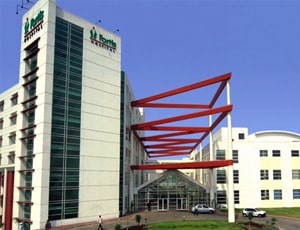
Brachial Plexus Injuries/Stereotactic Procedures in Fortis Hospital: Costs, Top Doctors, and Reviews

Noida, India

3.0 ( 1 Reviews )
  • National Accreditation Board for Hospitals & Healthcare Providers (NABH)
  • National Accreditation Board for Testing and Calibration Laboratories (NABL)

Types of Brachial Plexus Injuries/Stereotactic Procedures in Fortis Hospital and its associated cost

Treatment OptionApproximate Cost Range (USD)Approximate Cost Range (INR)
Overall Brachial Plexus Surgery5075 - 8088416167 - 666457
Nerve Decompression Surgery3054 - 6578250171 - 539739
Nerve Grafting Surgery5085 - 8734418064 - 718092
Nerve Transfer Surgery7100 - 9158581859 - 752207
Free Muscle Transfer Surgery8153 - 10162665860 - 834508
Tendon Transfer Surgery5062 - 8643416853 - 709243
Nerve Repair Surgery3038 - 10131250301 - 835446
  • Address: Fortis Hospital, Rasoolpur Nawada, Industrial Area, Sector 62, Noida, Uttar Pradesh, India
  • Facilities related to Fortis Hospital: Post operative followup, Mobility Accessible Rooms, Online Doctor Consultation, Air Ambulance, Religious Facilities
Brachial Plexus Injuries/Stereotactic Procedures in Jaypee Hospital: Costs, Top Doctors, and Reviews

Noida, India

  • National Accreditation Board for Hospitals & Healthcare Providers (NABH)
  • Joint Commission International, or JCI

Jaypee Hospital located in Noida, India is accredited by ISO, NABH, NABL. Also listed below are some of the most prominent infrastructural details:

  • 525 beds in the first phase
  • 150 Critical Care beds
  • 325 ward beds with Suite, Deluxe, Twin Sharing, and Economy options
  • 18 Modular OTs
  • 4 Cardiac Catheterization Lab with unqie Hybrid Operating Room
  • 24 bedded Advanced Neonatal ICUs20 bedded Dialysis Units
  • 2 Linear Accelerator (IMRT, VMAT, I
  • GRT), Wide Bore CT Simulator, one Brachytherapy Suite
  • True Beam STx Linear Accelerator
  • 2 MRI (3.0 Tesla) with High-Intensity Focused Ultrasound
  • 64 Slice PET CT, Gamma Camera, Dual Head 6 Slice SPECT CT
  • 256 Slice CT Scan, CT Simulation
  • Amongst the few GOLD LEED-certified hospital buildings in India
  • Appointment Scheduling
  • Flow motion 64 Slice PET CT technology
  • Pick and drop facility from/to the Airport
  • Foreign exchange facility
  • Treatment packages
  • Visa assistance
  • Admission in the hospital
  • Wi-Fi/internet service in the room
  • Travel arrangement for patient & attendant after discharge
  • Tele-consults after discharge
  • Dedicated Guest House for International Patients maintained by Jaypee Hospital
  • In-house translators for patient’s comfort
  • Assistance in getting doctor’s opinion
  • Registration with the Foreigners Regional Registration Office
  • Accommodation arrangements after discharge
  • Accommodation arrangement for the accompanying attendant
  • Customized diet for patient and attendant
  • Laundry services
  • Prayer room
  • Dialysis facility for 60 patients
  • Cadaver organs
  • Blood bank facilities
  • Advanced Laboratory facilities
  • Diagnostic and Radiology facilities
  • High-end Ultrasound facilities

Need Some Advice From Our Experts?

Request a Call Back Now!

Our team of healthcare experts would be happy to assist you

trusted Patientstrusted Patients+99
Trusted by 50000+ Patients
Required | alphabets and spaces
Required | A valid, working email address
Required | A valid contact

Process Involved for Brachial Plexus Injuries/Stereotactic Procedures in Noida

  • Pre-Operative procedures: MRI, CT, and EMG for diagnostic investigations.
  • Treatment options include nerve grafting, nerve transfers, muscle and tendon transfer, and physical rehabilitation therapy. For Stereotactic brain biopsy, radiosurgery (Gamma Knife, CyberKnife), and deep brain stimulation (DBS) for Parkinson's.
  • Patients with trauma-induced nerve injury, including those from accidents or sports injuries and injuries occurring to the infant at birth.
  • Weakness, numbness, or paralysis affecting the upper extremity (arm, shoulder, hand).
  • Patients with brain tumors, epilepsy, movement disorders (Parkinson's), or chronic pain.
  • Patients eligible for radiosurgery (Gamma Knife, CyberKnife) or deep-brain stimulation (DBS).
  • Electromyography (EMG)
  • Tendon lengthening
  • Joint stabilisation surgery
  • MRI-guided Focused Ultrasound (MRgFUS)
  • Thalamotomy/Pallidotomy
  • Recovery may be partial or complete, depending on the severity of the injury.
  • Best success if treated early, between 6-12 months after injury.
  • Very precise and causes minimal collateral damage to tissues.
  • Shorter recovery time as compared to conventional surgery.
  • Neurosurgeon
  • Orthopedic Surgeon
  • Neurologist
  • Radiation Oncologist
  • Rehabilitation Specialist
  • Fill out the inquiry form: Fill out the form to provide us with the relevant information about your condition.
  • Consult with Our Healthcare Expert: One of our qualified specialists will contact you for a consultation.
  • Receive a Detailed Treatment Plan: After examining your situation, we will provide you with a detailed treatment plan that includes expert views and cost breakdowns for various choices.
  • Choose your preferred option: Choose the treatment option that suits you the best.

Instantly Connect with our Brachial Plexus Injuries/Stereotactic Procedures Specialists

Doctor 1
Doctor 2
Doctor 3
Doctor 4
Doctor 5
Doctor 6
Doctor 7
Doctor 8
Our Services to Better your Experience

Opinion & Option

We submit the most accurate opinion and options from one or more countries for your review

Consult Privately

Consult with a certified specialist privately on our telemedicine platform even before you decide to travel

Logistics

We handle flights, visas, transfers, and accommodation—so you can focus on your health.

Recovery

Our In-house rehabilitation service packages to better your recovery and treatment outcome

Other Popular Countries for Brachial Plexus Injuries/Stereotactic Procedures

Our network connects you with the leading medical tourism destinations globally, offering a wide range of cities, top doctors, and flexible pricing options.

Spain
Thailand
Malaysia
Vietnam

Frequently Asked Questions

In Noida, the average starting cost for Brachial Plexus Injuries/Stereotactic Procedures is $5500. Many multispeciality hospitals which are JCI certified are approved to operate a Brachial Plexus Injuries/Stereotactic Procedures in Noida.

The Brachial Plexus Injuries/Stereotactic Procedures package cost in Noida varies from one hospital to another and may offer different benefits. The Brachial Plexus Injuries/Stereotactic Procedures package cost usually includes all the expenses related to pre and post surgery expenses of the patient. The Brachial Plexus Injuries/Stereotactic Procedures cost in Noida includes the cost of anesthesia, medicines, hospitalization and the surgeon's fee. There are many things that may increase the cost of Brachial Plexus Injuries/Stereotactic Procedures in Noida, including prolonged hospital stay and complications after the procedure.

Many hospitals in Noida perform Brachial Plexus Injuries/Stereotactic Procedures. The following are some of the most renowned hospitals for Brachial Plexus Injuries/Stereotactic Procedures in Noida:

Upon discharge from the hospital after Brachial Plexus Injuries/Stereotactic Procedures in Noida, the patients are advised to stay for about 15 days for recovery. This time frame is important to ensure that the surgery was successful and the patient is fit to fly back.

Noida is undoubtedly one of the best cities for Brachial Plexus Injuries/Stereotactic Procedures in the world. It offers the best medical expertise and good patient experience at an affordable cost. However, some of the other popular destinations for Brachial Plexus Injuries/Stereotactic Procedures include the following:

Apart from the Brachial Plexus Injuries/Stereotactic Procedures cost, the patient may have to pay for additional daily expenses such as for guest house after discharge and meals. These are the charges for daily meals and accommodation outside the hospital. The per day cost in this case may range from 25 USD.

There are many Brachial Plexus Injuries/Stereotactic Procedures surgeons who offer video telemedicine consultation to patients who need this treatment. The following are some of the top doctors offering Brachial Plexus Injuries/Stereotactic Procedures in Noida:

Some of the most sought after doctors available for online video consultation for Brachial Plexus Injuries/Stereotactic Procedures in Noida are:

Doctor NameCostBook Appointment
Dr. Rahul Gupta48Book Now

The patient has to spend about 3 Days in the hospital after Brachial Plexus Injuries/Stereotactic Procedures for proper recovery and to get clearance for discharge. During the recovery, the patient is carefully monitored and control tests are performed to see that everything is okay. If required, physiotherapy sessions are also planned during recovery in hospital.

Hospitals offering Brachial Plexus Injuries/Stereotactic Procedures in Noida are rated 3.0 on an average. This rating is calculated on the basis of different parameters such as the attitude of the nurses, cleanliness, quality of food, and the pricing policy.

There are about 3 Hospitals Brachial Plexus Injuries/Stereotactic Procedures hospitals in Noida that are best known for their services. These hospitals have the required expertise as well as infrastructure available to handly patients who need Brachial Plexus Injuries/Stereotactic Procedures. Apart from good services, the hospitals are known to follow all standard and legal guidelines as dictated by the local medical affairs body or organization.

Some of the most sought after doctors for Brachial Plexus Injuries/Stereotactic Procedures in Noida are:

Author

Dr. Vihan Gautam

BPT, MS in Healthcare Mgmt

3 Years of Experience

Dr. Vihan Gautam is a distinguished Rehabilitation Specialist and Healthcare Management Professional, holding a Bachelor of Physiotherapy (BPT) from Rajiv Gandhi University of Health Sciences and a Master of Science in Healthcare Management (MSc) from the prestigious University of London, United Kingdom. With specialized clinical experience and his advanced medical knowledge in neuro-rehabilitation, musculoskeletal disorders, and evidence-based physiotherapy practices, enables him to develop patient-centered rehabilitation protocols and AI-driven care models that deliver measurable functional recovery outcomes. His diverse contributions across international rehabilitation programs, multidisciplinary care, and AI-driven healthcare initiatives uniquely position him as an emerging leader in neuro-rehabilitative care globally. . View More

Reviewer

⁠Dr Rakesh Kumar Dua

Spine & Neurosurgeon

25 Years of Experience

Dr. Rakesh Dua has more than 25+ years of clinical experience in spine surgeries. He is currently providing his services as Director, Neuro & Spine Surgery at Fortis Hospital, Shalimar Bagh. Before joining Fortis Hospital, he was associated with Max super-specialist Hospital, Shalimar Bagh as Director Neurosurgery & Head Neuro Spine, and with UCMS & GTB hospital as head of the neurosurgery department. View More