Your Notifications
All done, no notifications

ALIF - Anterior Lumbar Interbody Fusion Cost in United Arab Emirates

USD 3000 - USD 55000

Affordable World-class Treatment - Accredited Hospitals - Free Treatment Plan in 24 Hrs

3
Days in Hospital
3-5 hrs
Procedure Time
85 - 95%
Success Rate
JCI/ISO 100,000+ Patients 24X7 Coordinator Visa & Travel handled
Your all-in-one medical travel platform for treatment, recovery & care.

Get Your Personalised Treatment Plan in Just 24 Hours.

Share your details to receive a personalised treatment plan, estimated costs, hospital recommendations, and expert guidance, “completely free.”

Required | alphabets and spaces
Required | A valid, working email address
Required | A valid contact
Connect with an Expert

Your information is protected with HIPAA-compliant security standards. We only share your details with hospitals after your consent.

Estimated Treatment Cost
USD 3000 - USD 55000
All-inclusive • Hospital + Medications + Recovery Assistance + Dedicated Care Coordinator

International Quality. Affordable Care.

How Much Does ALIF - Anterior Lumbar Interbody Fusion Cost in United Arab Emirates?

The cost of an ALIF operation in United Arab Emirates generally varies from USD 6000 - USD 17500.

The overall cost may also vary based on the complexity of the procedure, the surgeon's expertise, the duration of hospitalisation, and the use of advanced surgical technologies. Additionally, expenses related to follow-up care and rehabilitation can influence the total treatment cost.

Factors Affecting the Cost of ALIF - Anterior Lumbar Interbody Fusion

  • Hospital Facilities and Qualifications: Hospitals and spine clinics with international certifications in advanced areas tend to be more expensive because of their advanced infrastructure and competent medical personnel.
  • Surgeon's Experience: Surgeons who specialise in complicated spine surgeries are likely to charge higher rates for their consultation and treatment.
  • Difficulty of Surgery: Multi-stage spine fusion, corrective surgery, complex spine deformity, and inflammation of the nerves in the spinal column can add to the treatment cost.
  • Implant type used: Types of implants used, such as cages and titanium implants, bone grafting methods, and fixation implants, define the overall cost of the treatment.
  • Pre-surgical Testing: Different diagnostic procedures like MRI, CT, and X-ray scans, blood tests, and anesthesia tests increase the overall cost of treatment.
  • Innovative Surgical Methods: The use of minimally invasive approaches, navigation systems during the operation, robotic surgery, and high-quality imaging systems will increase the total cost.
  • Duration of hospital stay and recovery: Hospitalisation, medications, physical rehabilitation, and regular check-ups after the operation are also included in the overall treatment cost.

What's included in your ALIF - Anterior Lumbar Interbody Fusion quote?

ALIF surgery
fee, implant/cage, operating room charges
Spine specialist consultations
evaluation, planning, and follow-ups
3–7-day hospital stay
Inpatient care, pain management
Key: 7–14-day in-country follow-up
Wound check, imaging review, and spinal fusion assessment
Visa & medical-visa invite letter
Airport pickup & transfers

Cost of ALIF - Anterior Lumbar Interbody Fusion in Major Cities of United Arab Emirates

CityCost (USD)
Abu Dhabi $6,000 – $17,500 Explore More
Ajman $5,400 – $15,750 Explore More
Dubai $6,000 – $17,500 Explore More
Sharjah $6,000 – $17,500 Explore More

Alif Anterior Lumbar Interbody Fusion - United Arab Emirates Vs the World

$0 - $0
$6k - $12k
$6k - $12k
$8k - $13k
$8k - $15k
$10k - $20k
$12k - $17k
$14k - $28k
$16k - $28k
$20k - $100k
$22k - $38k
$25k - $38k
$25k - $45k
Tanya Bose
Author

MSc Biotechnology

4 Years of Experience

Tanya Bose is a medical content specialist with a strong medical background. She has completed her Bachelor's and Master’s in Biotechnology from Amity University. With a deep understanding of biomedical sciences and research, she develops authoritative and patient-focused medical content covering treatments, surgical procedures, and healthcare innovations. Her writing emphasizes accuracy, clarity, and evidence-based information to help readers better understand complex medical topics. She is dedicated to improving patient awareness and supporting informed healthcare decisions by delivering trustworthy medical insights in a clear and accessible format.
View More
⁠Dr Rakesh Kumar Dua
Reviewer

Spine & Neurosurgeon

25 Years of Experience

Last Reviewed - June 2026

Dr. Rakesh Dua has more than 25+ years of clinical experience in spine surgeries. He is currently providing his services as Director, Neuro & Spine Surgery at Fortis Hospital, Shalimar Bagh. Before joining Fortis Hospital, he was associated with Max super-specialist Hospital, Shalimar Bagh as Director Neurosurgery & Head Neuro Spine, and with UCMS & GTB hospital as head of the neurosurgery department.
View More

Need Help Choosing the Right Treatment? Talk to a Medical Advisor

Our dedicated Medical Patient Advisors are here to answer your questions, help you compare treatment options, estimate costs, and guide you through every step of your healthcare journey.

15 min
Average response time

Serving Patients Worldwide in Multiple Languages.

A spinal fusion procedure called anterior lumbar interbody fusion (ALIF) is used to treat lower back disorders such as degenerative disc disease, herniated discs, and spinal instability. ALIF uses an anterior (front) approach, where the surgeon accesses the spine by making an abdominal incision.

Doctors can lessen the strain on your spinal nerves by using bone grafts to replace your damaged disks. Ultimately, these grafts produce new bone that unites or combines vertebrae.

It is named after the process in which doctors carry out the procedure. In order to put a bone or titanium graft between your vertebrae (interbody) that will fuse or unite your vertebrae (fusion), surgeons must make an incision in your abdomen (belly) to access your lower back (lumbar) from the front (anterior) of your body.

A form of spinal fusion surgery called ALIF, or Anterior Lumbar Interbody Fusion, is used to treat lower back disorders like spondylolisthesis, degenerative disc disease, ruptured discs, and spinal instability. The surgery involves going into the spine from the front (abdomen) to remove a damaged disc and fuse two or more vertebrae using a bone graft and, occasionally, implants. The major objectives include restoring spinal stability, reducing chronic back or leg pain, and enhancing quality of life.

If you have numbness or tingling in your legs, weakness, or chronic lower back pain that doesn't go away with conservative measures like medicine or physical therapy, you should consult a spine expert. Surgery may be necessary in severe situations, including spinal instability or nerve compression. You can get quick evaluation and individualised care from MediGence's global network of board-certified spine surgeons.

The ALIF preparation process includes a thorough medical evaluation, physical examination, and imaging tests like MRIs, CT scans, and X-rays to evaluate disc health and spinal alignment. Consult your doctor about all of your supplements and medications since some might need to be stopped before surgery. Stopping smoking is also advised to facilitate healing. You will also be given instructions on when to stop eating or drinking before the treatment and how to get help after the procedure.

  • Imaging & Planning: The surgeon can use advanced imaging to identify the damaged disc and plan the fusion strategy.
  • Anaesthesia: General anaesthesia is used during the procedure.
  • Access via Abdomen: A small cut is made in the lower abdomen to reach the front of the spine.
  • Disc Removal: With caution, the injured intervertebral disc is removed.
  • Bone Graft Placement: To fill the disc space, a synthetic spacer or a bone graft, from your body or a donor, is placed.
  • Stabilisation: To stabilise the spine and encourage fusion, implants such as cages, screws, or plates may be utilised.
  • Closure of the Wound: A sterile dressing is applied, and the abdominal incision is sealed with staples or sutures.

Surgery usually takes one to two hours. If you have had prior abdominal surgery or if your surgical team needs to replace many damaged disks, your procedure may take longer.A hospital stay of two to four days is usually necessary for early recovery and monitoring.

  • Infection at the location of surgery.
  • Excessive blood loss that occurs during or following the operation.
  • Injury to the nerves may result in pain, weakness, or numbness.
  • Harm to the bladder, bowels, or surrounding blood arteries, among other internal organs.
  • A hernia occurs when a portion of the abdominal muscle or tissue pushes through the incision site.

ALIF allows direct access to the spine without disturbing back muscles, often leading to less post-operative pain and faster recovery than other fusion methods. It effectively restores disc height, spinal alignment, and nerve space, offering long-term relief from pain and neurological symptoms. For the right candidates, ALIF can significantly improve mobility and daily functioning.

Patients usually remain in the hospital for a few days following surgery. Important recovery components include early mobilisation, wound care, and pain control. A back brace could be suggested to aid in the healing process. Physical therapy starts slowly to rebuild strength and mobility. Depending on the degree of fusion and each person's healing rate, a full recovery may take weeks to months.

About 80% to 90% of patients report significant pain reduction and better function after using ALIF, indicating its high success rate. Results are significantly impacted by appropriate surgical planning, patient selection, and adherence to post-operative care guidelines.

85–95%

Significant improvement

3–7 days

Typical hospital stay

6–12 weeks

to typical return to work
Explore Hospitals ( 19 )

Dubai, United Arab Emirates

4.5 - 1 review · 100+ Beds · 165+ Procedures
JCI
Starting
USD 3000

Dubai, United Arab Emirates

100+ Beds · 161+ Procedures
JCI
Starting
USD 35000

Dubai, United Arab Emirates

1.0 - 1 review · 114+ Beds · 208+ Procedures
JCI NABH NABL
Starting
USD 12000

Dubai, United Arab Emirates

4.6 - 1 review · 300+ Beds · 212+ Procedures
JCI
Starting
USD 24000

Dubai, United Arab Emirates

200+ Beds · 174+ Procedures
JCI
Starting
USD 18000

Dubai, United Arab Emirates

4.7 - 2 reviews · 179+ Beds · 633+ Procedures
JCI
Starting
USD 8000

Dubai, United Arab Emirates

100+ Beds · 186+ Procedures
ACHS JCI
Starting
USD 32000

Abu Dhabi, United Arab Emirates

3.0 - 2 reviews · 750+ Beds · 177+ Procedures
JCI
Starting
USD 30000

Sharjah, United Arab Emirates

75+ Beds · 247+ Procedures
JCI
Starting
USD 6000

Dubai, United Arab Emirates

220+ Beds · 215+ Procedures
Starting
USD 18000

Get Your ALIF - Anterior Lumbar Interbody Fusion
Plan in 24 hrs.

Our experienced Medical Patient Advisors have supported 100,000+ patients across 120+ countries with personalised treatment plans, hospital recommendations, cost estimates, and travel assistance, all free.

HIPAA-Compliant Data SecurityShared Only with Your Consent

Free Consultation No Obligation Personalized Treatment Plan Response Within 24 Hours

Required | alphabets and spaces
Required | A valid, working email address
Required | A valid contact

Your medical info is kept HIPAA-style confidential. We never share with hospitals without your consent.

Process Involved for ALIF - Anterior Lumbar Interbody Fusion in United Arab Emirates

Following are the various stages of the ALIF treatment

  • Preoperative Evaluation Treatment Stages: This includes assessing the patient's medical history, physical examinations, and imaging tests (MRI, CT, and X-rays).
  • Anaesthetic and Incision: To obtain access to the spine, a little abdominal incision is performed while the patient is under general anaesthetic.
  • Disc Fusion and Removal: A bone graft or implant is inserted after removing the injured disc to encourage spinal stability and fusion.
  • Closure and Recovery: Following the closure of the incision, the patient is observed in the hospital for a few days before starting a formal rehabilitation program.
  • Spondylolisthesis
  • Herniated Bulging disc
  • Spinal deformities
  • Spinal stenosis
  • Degenerative Disc Disease

These are some of the conditions that made individuals eligible for the procedure:

  • Candidates must have chronic lower back pain that hasn't gone away despite conservative measures like physical therapy, medicine, or injections.
  • Individuals with spondylolisthesis, degenerative disc disease, spinal instability, or ruptured discs can benefit from ALIF.
  • To withstand surgery and recuperation, patients should generally be in good health.
  • To check eligibility for the procedure, a comprehensive evaluation involving imaging tests (MRI, CT scans, X-rays) and physical examinations is required.
  • Bone grafting
  • Minimally invasive ALIF
  • Posterior spinal fusion
  • Spinal Implants
  • Pain relief
  • Improved Quality of Life
  • Higher success rates of Fusion
  • Improved Nerve irritation
  • Minimal Side Effects
  • More significant space for larger implants
  • Neurologist:
  • Neurosurgeon:
  • Orthopedic surgeon:
  • Physical therapist:
  • Fill out the inquiry form: Fill out the form to provide us with the relevant information about your condition.
  • Consult with Our Healthcare Expert: One of our qualified specialists will contact you for a consultation.
  • Receive a Detailed Treatment Plan: After examining your situation, we will provide you with a detailed treatment plan that includes expert views and cost breakdowns for various choices.
  • Choose your preferred option: Choose the treatment option that suits you the best.
Jenny Wilson
Your Dedicated Medical Patient Advisor
Treatment planning • Hospital coordination • Multilingual support • Response within 15 minutes.
Our Services to Better your Experience

Opinion & Option

We submit the most accurate opinion and options from one or more countries for your review

Consult Privately

Consult with a certified specialist privately on our telemedicine platform even before you decide to travel

Logistics

We handle flights, visas, transfers, and accommodation—so you can focus on your health.

Recovery

Our In-house rehabilitation service packages to better your recovery and treatment outcome

Patient Stories

Ms Patience: Cosmetic Surgery
Ms Patience
Ms Patience: Cosmetic Surgery

Ms Patience from Uganda travelled to India for cosmetic surgery in May 2017. She got her treatment done in Asian…

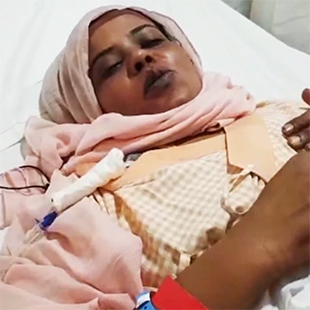
Patient Testimonial: Lobna from Sudan for Successful Open Craniotomy Surgery in India
Mrs. Lobna Salah Hassan
Mrs. Lobna Hasan from Sudan for Open Craniotomy Surgery in India

Lobna (from Sudan) was diagnosed with meningioma, a form of non-cancerous brain tumor. Her family members decided to take her…

Frequently Asked Questions

The cost of ALIF - Anterior Lumbar Interbody Fusion in United Arab Emirates typically ranges between USD 6000 - 17500, depending on the spinal condition, number of vertebral levels treated, type of implants used, surgical technique, hospital, surgeon's experience, duration of hospital stay, and postoperative care. The cost may include consultations, diagnostic tests, surgery, implants, anesthesia, hospitalization, medications, and follow-up care.

Some of the best hospitals in United Arab Emirates for ALIF - Anterior Lumbar Interbody Fusion include:
  • Aster DM Healthcare
  • Burjeel Hospital for Advanced Surgery Dubai
  • Burjeel Hospital, Abu Dhabi
  • Burjeel Specialty Hospital, Sharjah
  • Canadian Specialist Hospital
  • Choose an experienced spine surgeon or neurosurgeon who specializes in anterior lumbar fusion procedures. Reviewing the surgeon's qualifications, experience with ALIF, surgical outcomes, hospital facilities, use of advanced spinal technologies, and patient feedback can help you make an informed decision. Seeking a second opinion is also recommended.

    ALIF has an overall success rate of approximately 80-90%, depending on the underlying spinal condition, number of levels treated, patient's overall health, surgical technique, and postoperative rehabilitation. Outcomes vary between patients, and successful fusion may take several months.

    Hospitals in United Arab Emirates may use advanced MRI and CT imaging, intraoperative imaging, minimally invasive surgical approaches, navigation-assisted surgery, specialized interbody cages, bone graft substitutes, and neuromonitoring. These technologies can help surgeons achieve accurate implant positioning and spinal alignment.

    Potential complications of ALIF include infection, bleeding, blood clots, nerve injury, vascular or blood-vessel injury, damage to surrounding abdominal structures, implant displacement, non-union or failure of fusion, adjacent segment problems, and persistent or recurrent symptoms. The risks vary according to the patient's condition and surgical approach.

    Before travelling, gather your medical records, MRI or CT scans, X-rays, previous treatment reports, medication list, laboratory results, and passport. Complete an online consultation if available and follow your surgeon's instructions regarding medications, smoking, fasting, and preoperative investigations.

    Yes, MediGence provides online consultations for international patients before travel. Spine surgeons can review imaging studies, medical history, symptoms, and previous treatment reports to determine whether ALIF may be appropriate. This also helps with treatment planning, estimated costs, and travel guidance.

    Patients should bring a valid passport, visa, MRI or CT scans, X-rays, medical records, previous treatment or surgical reports, laboratory results, and a list of current medications. These documents help the spine specialist evaluate the condition and plan the surgery.

    Most international patients may need to stay in United Arab Emirates for approximately 2 to 3 weeks, depending on the complexity of surgery, hospital stay, postoperative recovery, rehabilitation, and follow-up requirements. The exact duration varies according to the patient's condition and surgeon's recommendations.

    Initial recovery after ALIF generally takes several weeks, while complete spinal fusion and recovery may take several months. Patients are usually encouraged to gradually increase activity under medical guidance and may require physiotherapy to improve strength, mobility, and function.

  • Submit your medical records and spinal imaging through the MediGence platform.
  • Get connected with experienced spine surgeons and leading hospitals.
  • Compare surgical options and estimated costs.
  • Coordinate consultations, diagnostic tests, surgery, hospitalization, and follow-up care.
  • Receive assistance with medical visas, travel, accommodation, and postoperative support.
  • United Arab Emirates offers experienced spine surgeons, modern hospitals, advanced spinal imaging and surgical technologies, and comprehensive rehabilitation services. Patients can benefit from advanced lumbar fusion procedures and personalized postoperative care at competitive costs.

    Not Sure About Your Treatment Plan? Get a Free Second Opinion

    Have your reports reviewed by independent oncology experts to help you make a confident treatment decision, all online within 48 hours.

    Upload Your Reports
    Free second opinion on your CAR-T plan