Explore trusted hospitals and care options, or get personalised support to find a suitable option based on your treatment needs, preferences, and budget.
Vinmec Phu Quoc Hospital is a trusted healthcare provider for Hip Dysplasia Treatment, offering hip preservation and reconstruction supported by experienced orthopedic surgeons, pediatric orthopedic specialists, advanced imaging facilities, and multidisciplinary rehabilitation teams. Established in 2015, the JCI- accredited hospital is situated in Phu Quoc, Vietnam and has 150 beds.
Hip Dysplasia Treatment aims to improve the alignment and stability of the hip joint while supporting normal development and reducing abnormal stress on the joint. Treatment varies according to age and anatomical findings. In younger children, maintaining the femoral head within the acetabulum may allow the socket to develop more normally, while older children and adolescents with persistent structural abnormalities may require corrective osteotomy or other reconstructive procedures.
Choosing Kalra Hospital for Hip Dysplasia Treatment gives patients access to experienced orthopedic specialists, pediatric hip surgeons, advanced ultrasound and radiographic imaging, modern surgical facilities, and structured rehabilitation services. Established in 1987, the NABH accredited hospital in Delhi, India has 110 beds and provides specialized hip and joint-preservation care.
Hip Dysplasia Treatment is individualized according to the patient's age, degree of hip instability, acetabular development, and response to previous treatment. Infants may be managed with a hip harness or brace, while patients requiring surgical correction may undergo closed reduction, open reduction, or bone realignment procedures. Follow-up imaging is used to monitor hip development, joint position, and treatment response, while rehabilitation supports mobility and functional recovery when appropriate.
Choosing Medical Park Canakkale Hospital for Hip Dysplasia Treatment gives patients access to experienced orthopedic specialists, pediatric hip surgeons, advanced ultrasound and radiographic imaging, modern surgical facilities, and structured rehabilitation services. Established in 2017, the ISO, JCI accredited hospital in Canakkale, Turkey has 92 beds and provides specialized hip and joint-preservation care.
Hip Dysplasia Treatment is individualized according to the patient's age, degree of hip instability, acetabular development, and response to previous treatment. Infants may be managed with a hip harness or brace, while patients requiring surgical correction may undergo closed reduction, open reduction, or bone realignment procedures. Follow-up imaging is used to monitor hip development, joint position, and treatment response, while rehabilitation supports mobility and functional recovery when appropriate.
Riyadh, Saudi Arabia
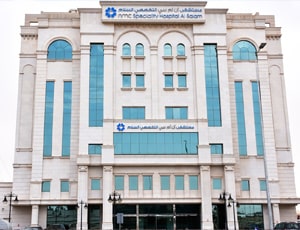
NMC Specialty Hospital Al Salam provides specialised Hip Dysplasia Treatment with a focus on accurate hip assessment, joint-preserving treatment, advanced pediatric orthopedic techniques, and individualized long-term follow-up. Established in 1999, the CBAHI accredited hospital is located in Riyadh, Saudi Arabia and operates 100 beds, with modern orthopedic, imaging, surgical, and rehabilitation infrastructure.
Hip Dysplasia Treatment can help improve hip stability and alignment and may reduce the risk of progressive joint damage when appropriately managed. Treatment planning considers the patient's age, hip morphology, severity of dysplasia, degree of displacement, skeletal maturity, and previous interventions. A detailed evaluation using physical examination and age-appropriate imaging, such as ultrasound or X-ray, helps the orthopedic team determine whether conservative management, reduction, bracing, osteotomy, or another reconstructive approach is most suitable.
MGM Healthcare offers advanced Hip Dysplasia Treatment using modern orthopedic techniques and individualized musculoskeletal care plans. Established in 2016, the NABH, NABL, JCI accredited hospital is located in Chennai, India and has 400 beds, providing comprehensive orthopedic care for local and international patients.
Hip Dysplasia Treatment is used to manage developmental dysplasia of the hip (DDH), a condition in which the hip joint does not develop normally and the femoral head may be unstable or improperly positioned within the acetabulum. Treatment depends on the patient's age, severity of dysplasia, hip stability, and stage of skeletal development. Options may include observation, bracing, closed reduction, or surgical procedures such as open reduction and pelvic or femoral osteotomy.
At Medstar Antalya Hospital, Hip Dysplasia Treatment is performed using specialised orthopedic and pediatric hip techniques with comprehensive clinical and imaging assessment. Established in 2009, this JCI accredited hospital in Ankara, Turkey has 124 beds and offers advanced pediatric orthopedic, joint preservation, and reconstructive services.
Hip Dysplasia Treatment may be considered when the hip joint is unstable, shallow, or inadequately developed. In infants, a harness or brace may be used to maintain the femoral head in the appropriate position while the hip develops. When non-surgical treatment is insufficient or the condition is diagnosed later, closed or open reduction may be required, sometimes combined with procedures to reshape the pelvic or femoral bones and improve joint stability.
At Vinmec Smart City Hospital, Hip Dysplasia Treatment is performed using specialised orthopedic and pediatric hip techniques with comprehensive clinical and imaging assessment. Established in 2020, this JCI accredited hospital in Ha noi, Vietnam has 500 beds and offers advanced pediatric orthopedic, joint preservation, and reconstructive services.
Hip Dysplasia Treatment may be considered when the hip joint is unstable, shallow, or inadequately developed. In infants, a harness or brace may be used to maintain the femoral head in the appropriate position while the hip develops. When non-surgical treatment is insufficient or the condition is diagnosed later, closed or open reduction may be required, sometimes combined with procedures to reshape the pelvic or femoral bones and improve joint stability.
Vinmec Da Nang provides specialised Hip Dysplasia Treatment with a focus on accurate hip assessment, joint-preserving treatment, advanced pediatric orthopedic techniques, and individualized long-term follow-up. Established in 2017, the JCI accredited hospital is located in Da Nang, Vietnam and operates 222 beds, with modern orthopedic, imaging, surgical, and rehabilitation infrastructure.
Hip Dysplasia Treatment can help improve hip stability and alignment and may reduce the risk of progressive joint damage when appropriately managed. Treatment planning considers the patient's age, hip morphology, severity of dysplasia, degree of displacement, skeletal maturity, and previous interventions. A detailed evaluation using physical examination and age-appropriate imaging, such as ultrasound or X-ray, helps the orthopedic team determine whether conservative management, reduction, bracing, osteotomy, or another reconstructive approach is most suitable.
Vinmec Nha Trang provides specialised Hip Dysplasia Treatment with a focus on accurate hip assessment, joint-preserving treatment, advanced pediatric orthopedic techniques, and individualized long-term follow-up. Established in 2017, the JCI accredited hospital is located in Nha Trang, Vietnam and operates 150 beds, with modern orthopedic, imaging, surgical, and rehabilitation infrastructure.
Hip Dysplasia Treatment can help improve hip stability and alignment and may reduce the risk of progressive joint damage when appropriately managed. Treatment planning considers the patient's age, hip morphology, severity of dysplasia, degree of displacement, skeletal maturity, and previous interventions. A detailed evaluation using physical examination and age-appropriate imaging, such as ultrasound or X-ray, helps the orthopedic team determine whether conservative management, reduction, bracing, osteotomy, or another reconstructive approach is most suitable.
Choosing Vinmec Can Tho Hospital for Hip Dysplasia Treatment gives patients access to experienced orthopedic specialists, pediatric hip surgeons, advanced ultrasound and radiographic imaging, modern surgical facilities, and structured rehabilitation services. Established in 2016, the JCI accredited hospital in Can Tho, Vietnam has 155 beds and provides specialized hip and joint-preservation care.
Hip Dysplasia Treatment is individualized according to the patient's age, degree of hip instability, acetabular development, and response to previous treatment. Infants may be managed with a hip harness or brace, while patients requiring surgical correction may undergo closed reduction, open reduction, or bone realignment procedures. Follow-up imaging is used to monitor hip development, joint position, and treatment response, while rehabilitation supports mobility and functional recovery when appropriate.
Choosing Batra Hospital for Hip Dysplasia Treatment gives patients access to experienced orthopedic specialists, pediatric hip surgeons, advanced ultrasound and radiographic imaging, modern surgical facilities, and structured rehabilitation services. Established in 1987, the NABH accredited hospital in Delhi, India has 495 beds and provides specialized hip and joint-preservation care.
Hip Dysplasia Treatment is individualized according to the patient's age, degree of hip instability, acetabular development, and response to previous treatment. Infants may be managed with a hip harness or brace, while patients requiring surgical correction may undergo closed reduction, open reduction, or bone realignment procedures. Follow-up imaging is used to monitor hip development, joint position, and treatment response, while rehabilitation supports mobility and functional recovery when appropriate.
Ajman, United Arab Emirates
Thumbay University Hospital, Ajman is a trusted healthcare provider for Hip Dysplasia Treatment, offering hip preservation and reconstruction supported by experienced orthopedic surgeons, pediatric orthopedic specialists, advanced imaging facilities, and multidisciplinary rehabilitation teams. Established in 2002, the JCI- accredited hospital is situated in Ajman, United Arab Emirates and has 350 beds.
Hip Dysplasia Treatment aims to improve the alignment and stability of the hip joint while supporting normal development and reducing abnormal stress on the joint. Treatment varies according to age and anatomical findings. In younger children, maintaining the femoral head within the acetabulum may allow the socket to develop more normally, while older children and adolescents with persistent structural abnormalities may require corrective osteotomy or other reconstructive procedures.
Kaunas, Lithuania
Meliva Kardiolita Hospital, Kaunas is a trusted healthcare provider for Hip Dysplasia Treatment, offering hip preservation and reconstruction supported by experienced orthopedic surgeons, pediatric orthopedic specialists, advanced imaging facilities, and multidisciplinary rehabilitation teams. Established in 1998, the JCI- accredited hospital is situated in Kaunas, Lithuania and has 8 beds.
Hip Dysplasia Treatment aims to improve the alignment and stability of the hip joint while supporting normal development and reducing abnormal stress on the joint. Treatment varies according to age and anatomical findings. In younger children, maintaining the femoral head within the acetabulum may allow the socket to develop more normally, while older children and adolescents with persistent structural abnormalities may require corrective osteotomy or other reconstructive procedures.
At Sagrat Cor University Hospital, Hip Dysplasia Treatment is performed using specialised orthopedic and pediatric hip techniques with comprehensive clinical and imaging assessment. Established in 1970, this accredited hospital in Barcelona, Spain has 323 beds and offers advanced pediatric orthopedic, joint preservation, and reconstructive services.
Hip Dysplasia Treatment may be considered when the hip joint is unstable, shallow, or inadequately developed. In infants, a harness or brace may be used to maintain the femoral head in the appropriate position while the hip develops. When non-surgical treatment is insufficient or the condition is diagnosed later, closed or open reduction may be required, sometimes combined with procedures to reshape the pelvic or femoral bones and improve joint stability.
Rajagiri Hospital is a trusted healthcare provider for Hip Dysplasia Treatment, offering hip preservation and reconstruction supported by experienced orthopedic surgeons, pediatric orthopedic specialists, advanced imaging facilities, and multidisciplinary rehabilitation teams. Established in 2014, the JCI- accredited hospital is situated in Kochi, India and it has adequate bed capacity.
Hip Dysplasia Treatment aims to improve the alignment and stability of the hip joint while supporting normal development and reducing abnormal stress on the joint. Treatment varies according to age and anatomical findings. In younger children, maintaining the femoral head within the acetabulum may allow the socket to develop more normally, while older children and adolescents with persistent structural abnormalities may require corrective osteotomy or other reconstructive procedures.
| Speciality | Orthopedics |
| Procedure | Hip Dysplasia Treatment |
| Success Rate | 85-95% |
| Recovery Time | 3-6 months |
| Treatment Time | 1-3 hours |
| Chances of Recurrence | Low |
Hip dysplasia treatment aims to correct the misalignment of the hip joint. Misalignment is a condition where the hip socket is shallow or improperly formed. In infants, non-surgical methods like Pavlik harnesses or hip abduction braces may be used to guide the hip joint into proper alignment. For older children and adults, surgical interventions such as hip arthroscopy or periacetabular osteotomy (PAO) are suggested by surgeons to reposition the hip joint. The procedure helps improve hip function and stability.
Medical conditions that can be treated through hip dysplasia treatment include developmental dysplasia of the hip (DDH) in infants and adolescents and acetabular dysplasia in adults.
In the case of single hip dysplasia, the patient can return to unrestricted activity usually within 3-6 months of the surgery. However, if the dysplasia is in both hips, the second surgery is usually scheduled a few weeks after the first one. The overall recovery may therefore take longer. Rehabilitation is strictly recommended after this surgery. Follow-up doctor appointments are a must. Patients are also recommended to increase weight-bearing activities slowly so as not to put unbearable pressure on the hip.
Living with hip dysplasia, where the hip joint doesn't form or work correctly, can be painful, limiting, and frustrating. For many adults, treatment, whether surgical or conservative, offers a chance not just to reduce pain