Browse verified doctors or let our care team help you find the doctor best suited to your condition, treatment goals, and budget.
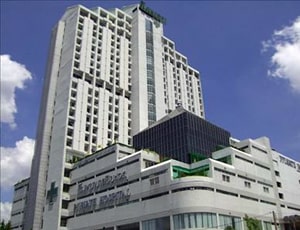
Piyavate Hospital, a prestigious private healthcare facility with more than 29 years of experience and 150 beds, is well-known on an international scale. The hospital has obtained accreditation for upholding global norms for the quality and services provided by healthcare providers (JCI: The Joint Commission International) and for complying with hospital standards (HA: Hospital Accreditation). Magnetic resonance imaging (MRI), computed radiography, a 64-slice CT scan, and 4D ultrasound are some of the diagnostic tools available at the hospital.
The neurosurgery division provides a range of cutting-edge techniques, including laparoscopic and minimally invasive techniques. The department also offers comprehensive medical consultations and physical therapy. Patients who require spinal fusion to address excessive motion between vertebrae or to stabilize the spine following herniated disc removal undergo the procedure at the hospital. This involves using different techniques designed to meet the unique needs of each patient to fuse two or more vertebrae. Dr. Chakri Thanyanopporn is a neurology specialist at the hospital.
Apollo Hospitals in India has some of the best surgical teams in the country at the helm for spine surgery. They perform a variety of spinal procedures, including minimally invasive spine surgery (MISS) and major spine surgery procedures like complex spinal reconstructions. Apollo Hospitals is a spine surgery pioneer and one of the region's leading institutions. The expert teams are well-known for providing exceptional patient care, adhering to strict infection control protocols, and conducting cutting-edge research.
In the hospital, spinal fusion-1-level, also known as spondylosyndesis or spondylodesis, is performed with extreme precision. The procedure is used to stop motion in spinal segments that are causing the patient pain. It helps with spine stabilization and decompression. Bone grafts, which can be allografts, autografts, or artificial substitutes, are used in the procedure. Dr. Ameet H Kulkarni is one of the known faces in the orthopedic department at Apollo Hospitals Bannerghatta.
Best doctors for Spinal Fusion at Apollo Hospitals Bannerghatta:
Faridabad, India
The spine center at Sarvodaya Hospital and Research Centre is outfitted with cutting-edge technology and equipment to ensure precise therapy for spinal conditions such as vertebral decompression. The hospital has diagnostic tools such as CT scans, MRI scans, ultra-modern Digital X-Rays, and so on (for excellent imaging and radiology support), a Neuronavigation system to diagnose and direct minimally invasive procedures, a Standing scanogram for whole spine x-rays, an ultra-modern drill, an advanced microscope, neural monitoring (NIM), and an MIS retractor system, among other things.
The hospital has an endoscopic spine unit that can perform minimally invasive spine surgeries such as spinal fusions with precision. The surgeon relieves the decompressions by connecting the two vertebrae with a bone-like material. Dr. Ashish Tomar is a senior consultant at Sarvodaya Hospital and Research Centre's orthopedics department.
Best doctors for Spinal Fusion at Sarvodaya Hospital and Research Centre:
| Speciality | Neurology |
| Procedure | Spinal Fusion |
| Success Rate | 75-90% |
| Recovery Time | 3-6 months |
| Treatment Time | 4-8 hours |
| Chances of Recurrence | 10-20% |
Spinal fusion is a surgical procedure in which two or more vertebrae in the spine are fused. It is performed to stabilize the spine, reduce pain, and improve overall spinal function. During the procedure, the surgeon uses bone grafts or artificial materials to create a solid bridge between the vertebrae to be fused. Metal implants such as screws, rods, or plates may also be used to provide additional support and stability during the healing process.
Spinal fusion can be used to treat various medical conditions affecting the spine, including degenerative disc disease, herniated discs, spinal fractures, spinal deformities (such as scoliosis or kyphosis), spinal infections, and spinal tumors. It is also commonly performed as part of the surgical treatment for spinal instability, spinal stenosis, and spondylolisthesis.
Recovery after spinal fusion surgery involves a period of immobilization and gradual rehabilitation. Patients may need to wear a brace or undergo physical therapy to support the spine and promote healing. Pain medication and activity modifications may be necessary during the initial stages of recovery. The length of the recovery process can vary depending on the individual, the extent of the surgery, and the specific condition being treated. It is important to attend follow-up appointments and undergo rehabilitation exercises to improve the pace of healing and restore function. Complete recovery can take several months.

Spinal fusion surgery is a complex procedure aimed at stabilizing the spine and reducing pain caused by spinal conditions such as degenerative disc disease, spinal stenosis, scoliosis, or spinal fractures.