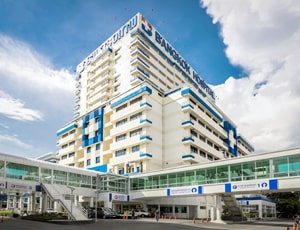
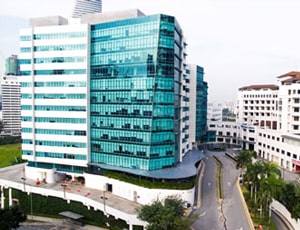
Kuala Lumpur, Malaysia
Number of Beds: 277
Year of Establishment: 2007
Medical Tourism Hospital of the Year 2024
Clinical Service Initiative of the Year 2024
Best in Community Involvement of the Year 2023
Brand of the Year in Healthcare of the Year 2023
Orthopaedic Service Provider of the Year 2023
Clinical Service Initiative of the Year 2023
Medical Tourism Hospital of the Year of the Year 2023
Top Children’s Hospital of the Year 2022
MRO Service Star of the Year 2022


Memorial Ankara Hospital is the region's most important healthcare facility. Its academic faculty includes specialist physicians, a patient-centered service approach, and excellent diagnosis and treatment facilities equipped with Turkey's most advanced medical technology. Memorial Ankara has a bed capacity of 230, with 60 intensive care units, 11 operating rooms, and 63 polyclinics. LED lamps used in operating rooms that meet international standards and employ the most advanced sterilization techniques provide greater comfort for both the patient and the operator. Because of the 256-sliced Computerized Tomography (CT) device, patients are exposed to far less radiation during surgery.
The technological infrastructure of Memorial Healthcare Group consists of systems outfitted with high-tech devices that meet international standards and are specifically designed for patient comfort. Many of the hospital's technologies are being used in Turkey for the first time. Septal defects, heart rhythm problems, congenital heart anomalies, heart valve diseases, and other conditions can be treated at the hospital using procedures such as coronary bypass surgery, minimally invasive heart surgery (small incision method), and robotic heart surgery. Prof. Cem YORGANCIOĞLU, Assoc. Prof. Mehmet ?AKICI, and Assoc. Prof. Mustafa Serkan DURDU are cardiac specialists at the hospital.

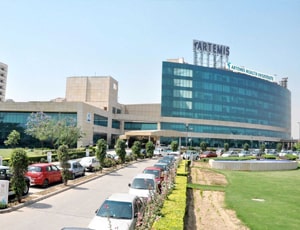
Artemis Hospital, Gurgaon has earned a high reputation for delivering the best results with ASD closure/repair in adults. This is mainly attributed to its latest technology, advanced equipment, patient-centric approach and world-class facilities. Artemis Hospital provides comprehensive tertiary level cardiac care with a “Human Touch”. Its state–of –the –art equipment is comparable to International Hospitals. The procedure is performed by adept heart specialists having acclaimed Clinical and International skills. Home to one of India’s top cardiothoracic surgery programs, Artemis Hospital, Gurgaon offers an advanced procedure to treat atrial septal defects (ASD) in adults. The hospita’s cardiothoracic surgeons are well trained in performing open-heart surgery to correct an atrial septal defect ASD. Artemis Hospital also offers a dedicated Cardiac Rehabilitation Program which is a critical aspect of speedy recovery. Cardiac catheterization is also used as a surgery option at the hospital in which a "patch" or special septal repair device is placed permanently in the heart to cover the hole.
Best doctors for Atrial Septal Defect (ASD) Repair at Artemis Health Institute :


Kuala Lumpur, Malaysia
Number of Beds: 724
Year of Establishment: 1999
Frost & Sullivan: 2024 Malaysian Hospital Market Leadership Award
College of American Pathologists (CAP) Accreditation
Healthcare Asia Awards 2024: Hospital of the Year (Malaysia)
Healthcare Asia Awards 2024: Health Promotion Initiative of the Year
Reader’s Digest Trusted Brand 2024
Newsweek World’s Best Hospitals 2024
World Stroke Organisation (WSO) Angels Awards 2023 - Gold Award (Q4)
World Stroke Organisation (WSO) Angels Awards 2023 - Gold Award (Q3)

The Heart Center at Bangpakok 9 International Hospital is among the top facilities in Thailand. The hospital has a team of experienced surgeons who use the latest techniques to perform atrial septal defect closure. The hospital offers thorough pre-operative, post-operative, and rehabilitation services to guarantee the patient receives the best results. Patients in the cardiac department of the hospital have access to a variety of diagnostic tests, including the electrocardiogram (ECG), chest X-ray, blood tests, dopplers, cardiac tomography, and cardiovascular magnetic resonance imaging (CMR).
Surgeons first determine the size of the hole in the atria before finalizing a treatment approach. Medications are prescribed to control the heartbeat and reduce the risk of blood clot formation. However, medications cannot correct this condition. Surgery is performed to correct the atrial septal defect. The doctors may suggest minimally invasive treatment approaches or open heart surgery. During the procedure, medium- to large-sized atrial septal defects are treated by patching the heart wall. The hospital also has a cath lab for catheter-based repairs. Heart muscles begin to grow to close the hole once the defect is fully repaired. Dr. Aramwong Thaveelap and Dr. Supreecha Tanamai are cardiac specialists at the hospital.

Ask your healthcare adviser for the best multiple options and choose the one that meets your expectations

| Speciality | Cardiac Sciences |
| Procedure | Atrial Septal Defect (ASD) Repair |
| Success Rate | 90-95% |
| Recovery Time | 2 to 4 weeks |
| Treatment Time | 2 - 2.5 hours |
| Chances of Recurrence | 4 - 6% |
ASD Repair is a surgical procedure used to repair a hole in the atrial septum, the wall that separates the upper chambers of the heart. The defect is closed with sutures or a patch during the procedure. It can be done with open-heart surgery or with minimally invasive techniques like cardiac catheterization.
Atrial Septal Defect (ASD) Repair is primarily used to treat atrial septal defects, which are congenital heart conditions characterized by abnormal openings between the atria. These defects can lead to the mixing of oxygenated and deoxygenated blood, potentially causing strain on the heart and lungs. The procedure helps restore proper blood flow and relieves related symptoms by fixing the defect.
After Atrial Septal Defect (ASD) Repair, the recovery period varies based on the surgical technique used and the patient in question. Patients should typically anticipate spending a few days in the hospital following the procedure. Medication may be prescribed to manage pain and prevent infection. Physical activity and strenuous exercise should be limited for several weeks, and follow-up appointments will be scheduled to monitor healing and overall cardiac health. With proper care and adherence to the recommended recovery guidelines, most patients can resume normal activities within a few months.
| Doctor Name | Cost | Book Appointment |
|---|---|---|
| Dr. Bikram K Mohanty | 35 USD | Book Now |
| Dr. Vichai Benjacholamas | 81 USD | Book Now |
| Dr. Juli Carballo | 833 USD | Book Now |
| Dr. Amit Malik | 23 USD | Book Now |
.jpg)
An Atrial Septal Defect (ASD) is a congenital heart defect characterised by an opening, or hole, in the septum separating the two upper chambers (atria) of the heart