Your Notifications
All done, no notifications

Trans Urethral Resection of Bladder Tumor (TURBT) Cost in Thailand

Costs starts from USD6000 to USD8000
Filters

How Much Does Trans Urethral Resection of Bladder Tumour (TURBT) Cost in Thailand?

The cost of Trans Urethral Resection of Bladder Tumour (TURBT) in Thailand typically ranges between USD 6000 - USD 8000.

However, this cost can vary depending on several factors, including the type and severity of the condition, treatment techniques chosen, the healthcare facility's location and reputation, the treating professionals' experience and specialisation, and the patient's overall health status.

Additionally, factors like the duration of treatment, the need for follow-up care, and the use of advanced technologies or specialised treatments can further influence the overall cost.

Factors Influencing the Cost of Trans Urethral Resection of Bladder Tumour (TURBT):

Transurethral resection of bladder tumours (TURBT) is a treatment used by surgeons to identify and treat bladder cancer simultaneously.

A physician performs TURBT by using a long, thin instrument called a cystoscope with a camera on it to locate and remove the bladder tumour. Your provider then sends the tumour to a lab for analysis by a pathologist. This aids in determining its grade—how different the cells appear from normal cells—and stage—how deeply it has penetrated your bladder wall.

The scope passes through your urethra, the tube that your urine passes through to exit your body to reach your bladder, so your healthcare practitioner doesn't need to make any incisions during TURBT.

Cost of Trans Urethral Resection of Bladder Tumor (TURBT) in Major Cities of Thailand

CityMinimum Cost (USD)Minimum Cost (THB)Maximum Cost (USD)Maximum Cost (THB)
BangkokUSD 6000196260USD 8000261680

Trans Urethral Resection of Bladder Tumor (TURBT) Cost : A Global Comparison

CountryMinimum CostMinimum Local CurrencyMaximum CostMaximum Local Currency
IndiaUSD 3500INR 299740USD 5500INR 471020
LithuaniaUSD 2500LTL 8552USD 4500LTL 15393
MalaysiaUSD 2500MYR 10600USD 5000MYR 21200
MoroccoUSD 3000MAD 27690USD 5000MAD 46150
PolandUSD 2500PLN 9400USD 5000PLN 18800
Saudi ArabiaUSD 3000SAR 11250USD 5000SAR 18750
SingaporeUSD 6000SGD 7740USD 15000SGD 19350
SpainUSD 3000ESP 441120USD 6000ESP 882239
ThailandUSD 6000THB 196260USD 8000THB 261680
TunisiaUSD 2500TND 7450USD 4500TND 13410
TurkeyUSD 2000TRY 78120USD 4000TRY 156240
United Arab EmiratesUSD 3500AED 12845USD 6000AED 22020
United KingdomUSD 3000GBP 2220USD 6000GBP 4440

Need Help Planning Your Treatment Abroad?

Your 24/7 AI Health Assistant

Transurethral resection of bladder tumor (TURBT) is a procedure utilized by Surgeons for both diagnosing and treating bladder cancer simultaneously.

During TURBT, a Surgeon employs a slender tool equipped with a camera, known as a cystoscope, to locate the tumor within the bladder and excise it. The removed tumor is then sent to a laboratory for examination by a pathologist. This analysis aids in determining the tumor's stage, indicating how deeply it has infiltrated the bladder wall, as well as its grade, which reflects the degree of abnormality in its cells compared to normal cells.

TURBT does not require any incisions; instead, the cystoscope is inserted through the urethra, the tube through which urine exits the body, to access the bladder.

Causes of tumor in the bladder

The causes of tumors in the bladder are not clear and well defined but it has been linked to smoking, chemical exposure to radiation, or a parasitic infection. The abnormal cells undergo some mutation that allows them to multiply nonorderly, which goes beyond control and does not die, thus giving rise to the tumor.

Classification:

Tumor Stage Classification: Tumors are staged based on how far they have grown into the layers of the bladder wall. The most commonly used staging system for bladder cancer is the TNM system, which stands for Tumor, Node, and Metastasis. The tumor stage is classified as follows:

  • Ta: Non-invasive papillary carcinoma
  • Tis: Carcinoma in situ (CIS)
  • T1: Tumor invades the subepithelial connective tissue
  • T2: Tumor invades the muscularis propria
  • T3: Tumor invades the perivesical tissue
  • T4: Tumor invades any of the following: prostate, uterus, vagina, pelvic wall, or abdominal wall.

The primary indications for TURBT are the staging, diagnosis, and treatment of bladder tumours, particularly non-muscle-invasive bladder cancer (NMIBC). Goals include removing apparent tumours, collecting tissue for biopsy, preventing recurrence, and guiding further treatment, such as intravesical therapy.

Consult a doctor if you have symptoms like hematuria (urine containing blood), frequent urination, pelvic pain, painful urination, or unexplained fatigue. Early diagnosis allows for better outcomes and less invasive treatments.

Your clinician will instruct you on how to prepare for the removal of a bladder tumour. By diligently adhering to their instructions, you can minimise your risk of problems. Before TURBT, you may be instructed to:
  • Eight hours before the operation, avoid eating anything.
  • Before the procedure, either suspend taking your medications or take it with a glass of water. Except on advice from your doctor, do not stop taking your pills.
  • Following the procedure, arrange for someone to take you home.
  • Before the treatment, shower or take a bath. Do not apply deodorants, lotions, or perfumes on that day.

  • Scope Insertion: The physician carefully inserts a cystoscope (a thin, tube-shaped instrument with a camera and light) into the bladder via the urethra to examine its lining.
  • Tumour Identification and Removal: After finding the tumour, the physician employs a small cutting tool on the scope to carefully remove the bladder tumour. The removed tissue is taken to a pathology laboratory for testing and diagnosis.
  • Bleeding Control: Following removal of the tumour, heat (electrocautery) is applied to the site to control any bleeding and close the bladder wall.
  • Scope Removal and Catheter Insertion: The cystoscope is removed. A urinary catheter can be placed through the urethra into the bladder to assist with draining urine and other fluids and prevent clot formation. However, a catheter is not always necessary.

It can take six weeks to feel completely recovered from a TURBT procedure.

  • Risks from anaesthesia (such as allergic reactions and respiratory distress).
  • Urinary tract infections.
  • Excessive bleeding or bleeding that lasts a long time.
  • Bladder trauma.

TURBT's capability to biopsy and destroy cancers that are not spread outside of your bladder is its major advantage. This reduces the number of procedures and risks you must undergo.

Patients can have mild bleeding or discomfort while urinating for a few days. Rest, fluids, and avoidance of strenuous activities are recommended. Catheter care (if necessary) and follow-up cystoscopy or intravesical therapy can be included in long-term management.

Outcome is based on tumour size, number, grade, and risk of recurrence. TURBT is very effective for non-muscle-invasive tumours, with 5-year survival rates for low-grade NMIBC of 80–90%. Because of the high risk of recurrence, follow-up is necessary.

Top Selling Packages for Trans Urethral Resection of Bladder Tumor (TURBT)

Trans Urethral Resection of Bladder Tumor (TURBT)

Amrita Hospital, Faridabad, India

USD 2200 USD 2700

Would you like some help? We are available.

Get Help
Explore Hospitals ( 2 )
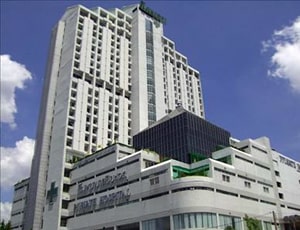
Trans Urethral Resection of Bladder Tumor (TURBT) in Bangpakok 9 International Hospital: Costs, Top Doctors, and Reviews

Bangkok, Thailand

  • Joint Commission International, or JCI

Types of Trans Urethral Resection of Bladder Tumor (TURBT) in Bangpakok 9 International Hospital and its associated cost

Treatment OptionApproximate Cost Range (USD)Approximate Cost Range (THB)
Overall TURBT Cost4957 - 9032177542 - 316537
Conventional TURBT2772 - 5536100741 - 198082
Laser TURBT4570 - 7383163438 - 259447
Electrocautery TURBT4255 - 6182155166 - 224448
Plasma Kinetic TURBT3428 - 8827121392 - 324051
  • Address: Bangpakok 9 International Hospital, International Hospital, Rama II Road, Bang Mot, Chom Thong, Bangkok, Thailand
  • Facilities related to Bangpakok 9 International Hospital: Choice of Meals, Interpreter, SIM, TV inside room, Accommodation
Trans Urethral Resection of Bladder Tumor (TURBT) in Piyavate Hospital: Costs, Top Doctors, and Reviews

Bangkok, Thailand

  • Joint Commission International, or JCI
  • ISO 9001

Types of Trans Urethral Resection of Bladder Tumor (TURBT) in Piyavate Hospital and its associated cost

Treatment OptionApproximate Cost Range (USD)Approximate Cost Range (THB)
Overall TURBT Cost5174 - 9200176673 - 318236
Conventional TURBT2799 - 569299562 - 201267
Laser TURBT4481 - 7313163521 - 264741
Electrocautery TURBT4299 - 6157155731 - 216911
Plasma Kinetic TURBT3324 - 9166122555 - 317262
  • Address: Piyavate Hospital, Khlong Samsen Road, Bang Kapi, Huai Khwang, Bangkok, Thailand
  • Facilities related to Piyavate Hospital: Choice of Meals, Interpreter, TV inside room, Accommodation, Airport Transfer

Need Some Advice From Our Experts?

Request a Call Back Now!

Our team of healthcare experts would be happy to assist you

trusted Patientstrusted Patients+99
Trusted by 50000+ Patients
Required | alphabets and spaces
Required | A valid, working email address
Required | A valid contact

Process Involved for Trans Urethral Resection of Bladder Tumor (TURBT) in Thailand

  • Consultation: Consult a urologist to evaluate the symptoms and review your medical history. Depending on symptoms and imaging tests, the physician will determine if a TURBT is needed.
  • Pre-surgical evaluation: Do a cystoscopy to examine the bladder and establish the existence of a tumor.
  • Treatment discussion: The urologist will explain the TURBT procedure, including its advantages, possible risks, and whether it will be adequate for tumor resection or if additional treatments such as intravesical therapy or chemotherapy are necessary.
  • Surgical planning: Know the details of the procedure, such as anesthesia choices, recovery, and complications.
  • Post-surgery follow-up: Periodic follow-up appointments for observation, results of biopsy, and other treatment such as chemotherapy or immunotherapy if required.
  • Bladder Cancer
  • Transitional Cell Carcinoma of the Bladder
  • Recurrent Hematuria
  • Bladder Irritation and Obstruction
  • Individuals diagnosed with bladder cancer, especially those with non-muscle invasive tumors.
  • Patients with recurrent hematuria (blood in urine), bladder irritability, or abnormal cystoscopy findings may require TURBT for diagnosis and treatment.
  • Higher-risk patients, such as those with a family history of bladder cancer, smoking history, or exposure to certain chemicals, may be at greater risk for bladder tumors and benefit from early intervention.
  • Removes visible bladder tumors, helping to control the disease.
  • It is a minimally invasive procedure with no need for an external incision.
  • Reduced risk of complications compared to open surgery.
  • Provides rapid symptom relief from bleeding, pain, or urinary obstruction.
  • Allows for accurate diagnosis and staging of bladder cancer.
  • Urologist
  • Medical Oncologist
  • Fill out the inquiry form: Fill out the form to provide us with the relevant information about your condition.
  • Consult with Our Healthcare Expert: One of our qualified specialists will contact you for a consultation.
  • Receive a Detailed Treatment Plan: After examining your situation, we will provide you with a detailed treatment plan that includes expert views and cost breakdowns for various choices.
  • Choose your preferred option: Choose the treatment option that suits you the best.

Instantly Connect with our Trans Urethral Resection of Bladder Tumor (TURBT) Specialists

Doctor 1
Doctor 2
Doctor 3
Doctor 4
Doctor 5
Doctor 6
Doctor 7
Doctor 8
Our Services to Better your Experience

Opinion & Option

We submit the most accurate opinion and options from one or more countries for your review

Consult Privately

Consult with a certified specialist privately on our telemedicine platform even before you decide to travel

Logistics

We handle flights, visas, transfers, and accommodation—so you can focus on your health.

Recovery

Our In-house rehabilitation service packages to better your recovery and treatment outcome

Other Popular Countries for Trans Urethral Resection of Bladder Tumor (TURBT)

Our network connects you with the leading medical tourism destinations globally, offering a wide range of cities, top doctors, and flexible pricing options.

Italy
United Arab Emirates
India
Vietnam

Conditions treated by Trans Urethral Resection of Bladder Tumor (TURBT)

Frequently Asked Questions

Trans Urethral Resection of Bladder Tumor (TURBT) cost in Thailand starts from about $6000. In Thailand, Trans Urethral Resection of Bladder Tumor (TURBT) is conducted across many multispecialty hospitals.

Trans Urethral Resection of Bladder Tumor (TURBT) package cost in Thailand has different inclusions and exclusions. Some of the best hospitals for Trans Urethral Resection of Bladder Tumor (TURBT) offer a comprehensive package that covers the end-to-end expenses related to investigations and treatment of the patient. The comprehensive Trans Urethral Resection of Bladder Tumor (TURBT) package cost includes the cost of investigations, surgery, medicines and consumables. A prolonged hospital stay due to delayed recovery, new diagnosis and complications after surgery may increase the cost of Trans Urethral Resection of Bladder Tumor (TURBT) in Thailand.

There are many hospitals across the country that offer Trans Urethral Resection of Bladder Tumor (TURBT) to international patients. The following are some of the most renowned hospitals for Trans Urethral Resection of Bladder Tumor (TURBT) in Thailand:

  1. Bangpakok 9 International Hospital (BPK 9)

While the speed of recovery may vary from patient to patient, they are still required to stay for about 14 days after discharge. This duration of stay is recommended to complete all the necessary follow-ups and control tests to ensure that the surgery was successful.

Apart from the Trans Urethral Resection of Bladder Tumor (TURBT) cost, there are a few other daily charges that the patient may have to pay. These are the charges for daily meals and accommodation outside the hospital. The per day cost in this case may start from USD 50 per person.

The following are some of the best cities for Trans Urethral Resection of Bladder Tumor (TURBT) in Thailand:

  • Bangkok
  • Krabi

Patients can also avail to attend a video teleconsultation with the Trans Urethral Resection of Bladder Tumor (TURBT) surgeon in Thailand. the following are some of the top doctors offering Trans Urethral Resection of Bladder Tumor (TURBT) in Thailand:

DoctorCostSchedule Your Appointment
Dr. Suchart ChaimuangrajUSD 81Schedule Now

After Trans Urethral Resection of Bladder Tumor (TURBT), the patient is supposed to stay for about 2 days in the hospital for recovery and monitoring. This phase is important to ensure that the patient is recovering well and is clinically stable. During this time, several tests are performed before the patient is deemed suitable for discharge.

There are more than 1 hospitals that offer Trans Urethral Resection of Bladder Tumor (TURBT) in Thailand. These hospitals have proper infrastructure for the treatment of patients who require kidney transplant. Additionally, these hospitals are known to comply with the international standards as well as local legal requirements for the treatment of patients.

Some of the most sought after doctors for Trans Urethral Resection of Bladder Tumor (TURBT) in Thailand are:

  1. Dr. Prasy Ahmed Abdalla
  2. Dr. Paiboon Iemsupakkul
  3. Dr. Phanu Tanjapatkul
  4. Dr. Boonlert Sukwatanasinit
  5. Dr. Santapon Chamnarnprai

Author

Dr. Vihan Gautam

BPT, MS in Healthcare Mgmt

3 Years of Experience

Dr. Vihan Gautam is a distinguished Rehabilitation Specialist and Healthcare Management Professional, holding a Bachelor of Physiotherapy (BPT) from Rajiv Gandhi University of Health Sciences and a Master of Science in Healthcare Management (MSc) from the prestigious University of London, United Kingdom. With specialized clinical experience and his advanced medical knowledge in neuro-rehabilitation, musculoskeletal disorders, and evidence-based physiotherapy practices, enables him to develop patient-centered rehabilitation protocols and AI-driven care models that deliver measurable functional recovery outcomes. His diverse contributions across international rehabilitation programs, multidisciplinary care, and AI-driven healthcare initiatives uniquely position him as an emerging leader in neuro-rehabilitative care globally. . View More